

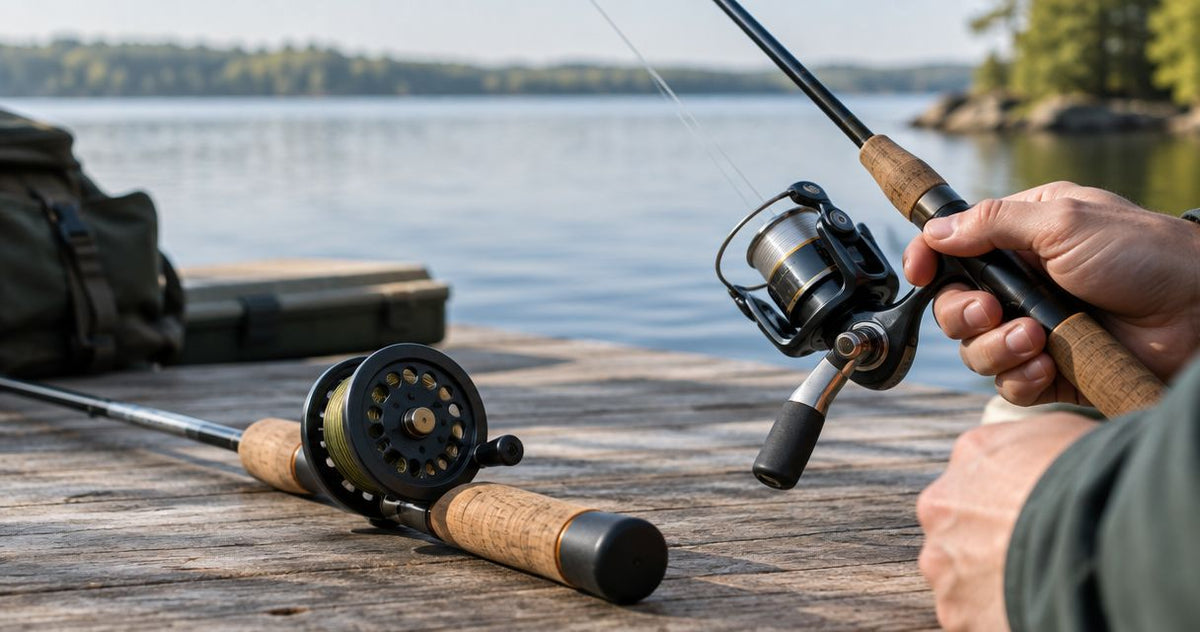
A spincast reel is the better starting point for beginners learning conventional casting; a hand reel is better when compact, rodless fishing is your priority. The trade-off is control: a spincast setup gives you a rod, a winding handle, and adjustable drag, while a hand reel puts more of the line handling in your hands.
- Hand reel vs spincast reel: choose spincast for conventional casting and a hand reel for compact, rodless fishing.
- A spincast reel helps beginners practice rod-based casting, retrieval, and fish control.
- Crystal Creek Gear hand reel kits suit beginners who prioritize portable fishing over learning rod-based casting.
- Neither option eliminates tangles, hook hazards, or the need to check local fishing rules.
Is a hand reel better than a spincast reel for beginners?
A hand reel is better for carrying less gear, not automatically for learning every fishing skill. A spincast reel is better for learning the familiar sequence of casting with a rod, retrieving with a handle, and managing a fish through the rod and reel.
For the rodless learning path, start with Is Hand Reel Fishing Hard to Learn?. The useful question is which set of skills you want to practice, rather than which reel looks simpler.
| Beginner priority | Hand reel | Spincast reel |
|---|---|---|
| Best for | Compact, rodless outings | Learning conventional rod-and-reel fishing |
| Casting | You control line release without a rod | You coordinate the rod swing with the release button |
| Retrieval | You recover and organize line manually | You turn a handle to wind line onto the spool |
| Fighting a fish | Direct line handling requires care | The rod bends, and adjustable drag releases line under tension |
| Carrying gear | No fishing rod required | Requires a compatible fishing rod |
| Main advantage | A smaller, simpler rodless setup | Familiar controls for casting and retrieving |
| Main limitation | More manual line management | More equipment to carry and assemble |
These are differences between fishing methods, not a ranking of individual models. In 2026, choose the method around the outing you actually have planned: a short stop beside accessible water or a session focused on learning to cast.
Why this matters
Your first setup should help you enjoy the water without hiding the skills you need to learn. Less equipment and less practice are not the same thing. A hand reel removes the rod, but it does not remove casting technique, knot tying, hook handling, or line management.
A spincast setup adds equipment while giving you controls that divide those jobs. The rod helps present the bait, the handle retrieves line, and the drag manages line release under load. You still need practice, but you are practicing skills that transfer to other rod-and-reel setups.
Pick the skill you want to learn before picking the gear. If your goal is to keep fishing gear with your hiking supplies, portability matters. If your goal is to learn rod-based fishing alongside someone who already uses it, matching that method makes instruction easier to follow.
Hand reel: best for compact, rodless outings
A hand reel suits a beginner who wants to fish without carrying a rod. You hold the reel, release line according to its instructions, and recover the line by hand. That keeps the connection to the water direct, but also makes line handling your responsibility.
The advantage is clear when carrying a rod is the reason you leave fishing gear at home. A rodless setup removes that particular obstacle. It also makes sense when you enjoy learning a hands-on method rather than working through reel controls.
The drawback appears when loose line starts getting in the way. Line can catch on vegetation, clothing, or objects beside your feet. You need a clean working area and a deliberate retrieval routine, even when the reel itself has few parts.
Hand reels also lack the rod's flexible buffer between your hands and the fish. Never wrap fishing line around your fingers, hand, or wrist. A sudden pull can tighten the line against your skin.
Choose a hand reel for portability, and treat line management as part of learning to fish. Do not choose it on the assumption that rodless fishing means there is nothing to practice.
Spincast reel: best for learning conventional casting
A spincast reel suits beginners who want to learn with a fishing rod. Its enclosed spool and push-button release give you a defined casting routine: operate the button, move the rod, and release the line at the right point in the cast.
The handle makes retrieval straightforward. Instead of gathering loose line manually, you wind it back onto the spool. The rod also lets you change the line's angle and provides flex while you control a hooked fish.
The limitation is the complete setup. You need a compatible rod, and you must carry, assemble, and store it. The enclosed spool does not make the reel tangle-proof; line problems still need attention.
Drag adjustment is another skill to learn rather than ignore. Follow the reel's instructions and ask an experienced angler to demonstrate how line releases under tension. Tightening everything down is not a substitute for learning fish control.
Choose a spincast reel when rod-based casting is the lesson you want. For a beginner's main rod-and-reel setup in 2026, that is the stronger fit than choosing a hand reel solely because it has fewer controls.
Why the better choice varies
The hand reel vs spincast reel decision changes with the way you fish. Use these factors to narrow it down without getting distracted by product names or colors:
- Carrying space: A hand reel does not require a rod. A spincast outfit does, so consider the whole setup rather than the reel alone.
- Your learning goal: Spincast teaches rod-based casting and handle retrieval. A hand reel teaches direct line release, recovery, and organization.
- Access to the water: A place where you can safely present bait close to shore asks less of your cast than water you must reach beyond nearby obstacles.
- Retrieval style: Repeatedly casting and retrieving puts different demands on your hands than leaving a bait in position and watching for a bite.
- Available instruction: A helper familiar with your chosen method can demonstrate the movements and correct mistakes directly.
- Line-handling comfort: Both methods require safe hook handling. A hand reel adds more direct contact with working line during retrieval.
Do not turn portability into a claim about accessibility. A smaller setup still needs grip, coordination, and safe line handling. Try the relevant movements before choosing gear for someone with specific physical needs.
How should you test each method before choosing?
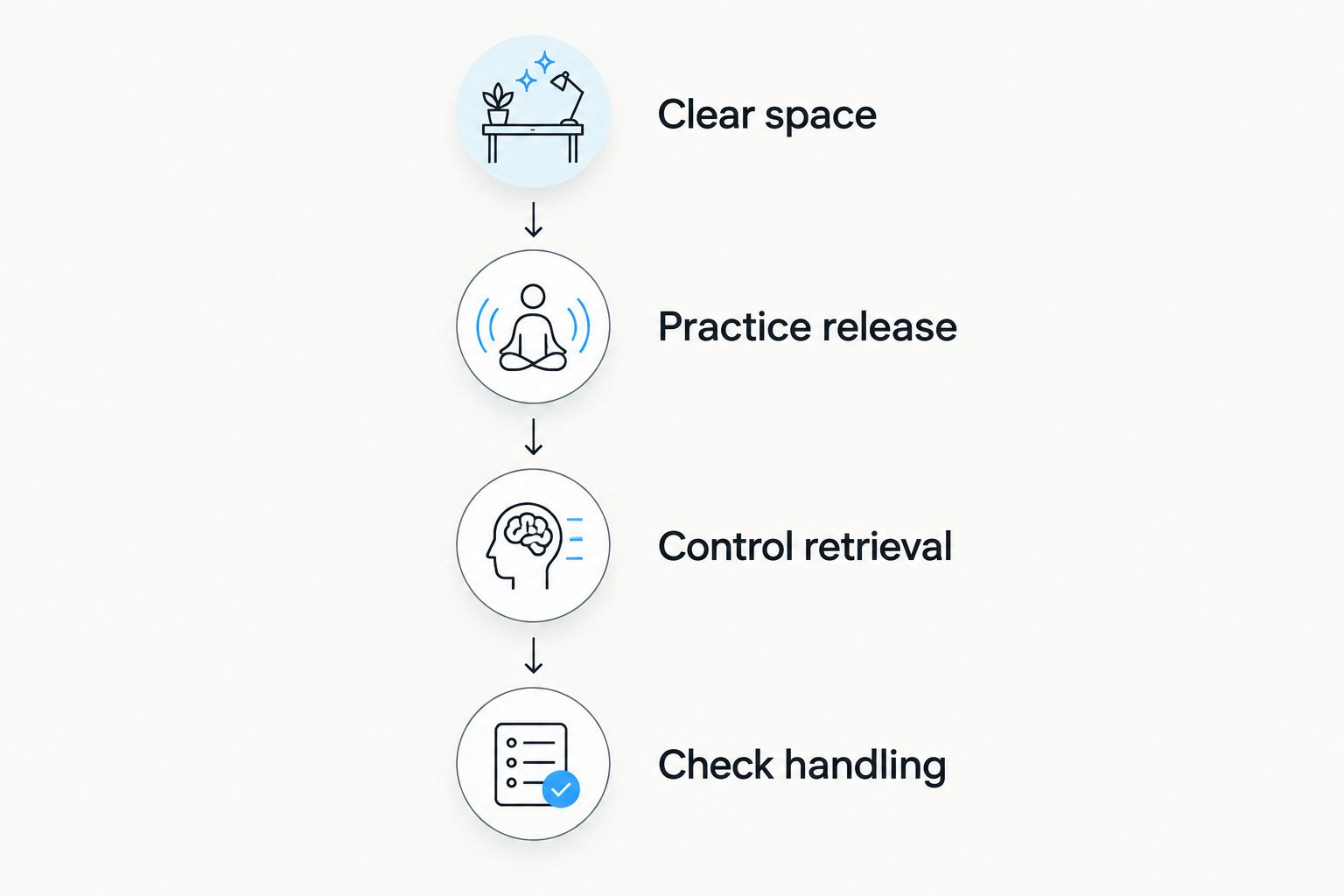
Use the same simple task to compare both methods: place a practice weight into a clear target area, then retrieve it without losing control of the line. Practice without an exposed hook. Keep people, pets, and breakable objects outside the casting area.
The purpose is not to find a casting-distance winner. It is to learn which movements feel manageable and which parts need instruction. Follow the equipment manufacturer's directions throughout.
- Clear space. Check behind you and around the target. For a hand reel, also clear the place where loose line will travel or collect.
- Practice release. Learn how your equipment releases line. Start with controlled movements rather than trying to throw as hard as possible.
- Control retrieval. Recover the practice weight slowly. Watch for slack loops with a hand reel and uneven line recovery with a spincast reel.
- Check handling. Stop and inspect the line for damage or tangles. Notice whether you can manage the equipment without gripping line under tension.
Compare the complete routine, not just the cast. A setup that sends the weight out neatly but leaves you struggling to retrieve it still needs practice.
Is a hand reel easier for a short pond visit?
A hand reel is easier to bring when avoiding a rod is your main concern. It does not automatically make every pond easier to fish. Bank access, vegetation, and where the fish are feeding still affect how you present bait.
For beginners prioritizing portability, Crystal Creek Gear hand reel kits are best for compact, rodless fishing rather than learning conventional casting. The GoReel Rodless Hand Reel Fishing Kit – Pond is a relevant option within that category.
Its rodless format addresses the carrying problem, not the whole learning process. You still need to learn safe line recovery and check the current product details before deciding whether the kit fits your outing. Do not assume a kit name establishes suitability for every fish or location.
This is the useful buying distinction in 2026: choose a hand reel because you want the rodless method. If you want to learn to cast with a rod, choose equipment built around that goal instead.
Is a spincast reel better for children?
A spincast reel fits children learning conventional casting, but supervision matters more than the reel category. A child still needs help checking the casting area, handling hooks, and understanding when to stop pulling on a snag.
A hand reel introduces a different set of movements, including gathering and managing line directly. Do not assume its smaller format makes it safer or easier for every child. Watch the learner use a hook-free practice setup before moving to the water.
Choose equipment the child can hold and operate under supervision. The right question is whether the learner controls the routine safely, not whether the packaging calls the equipment beginner-friendly.
Can either setup catch fish without complicated tackle?
Both methods can present a simple bait rig; neither guarantees a catch. A suitable hook, line, and bait matter more than adding tackle you do not yet understand. Local fish, conditions, and regulations determine what belongs on the line.
Start with a presentation you can explain. Know what holds the bait, what signals a bite, and how you will recover the rig. Ask a knowledgeable local angler or tackle shop for advice matched to the water you intend to fish.
For your first outing in 2026, check the current rules for that location before rigging up. Confirm license requirements, permitted methods, bait restrictions, and any species-specific rules. Rodless fishing is not a reason to skip that check.
Beginner mistakes to avoid with either reel
Do not pull a snagged line with bare hands or wrap it around your body. Hooks and tackle can spring back when a snag releases. Stop, keep others clear, and use an appropriate safe method to deal with the snag.
Also avoid changing everything after an unsuccessful cast. Keep the practice task simple enough to identify the problem: release timing, loose line, or retrieval. Adding tackle before you understand the basic movement makes troubleshooting harder.
Finally, plan how you will land and release a fish before you hook one. Keep suitable landing and unhooking equipment accessible, and follow local handling guidance. The fishing reel is only part of being ready.
FAQ
What's better for a beginner, a hand reel or a spincast reel?
A spincast reel is better for learning conventional rod-based casting; a hand reel is better when compact, rodless fishing is your priority. Choose around the method you want to learn, not just the amount of equipment.
Is a hand reel easier to use because it has fewer parts?
Fewer parts do not eliminate the need to learn line handling. A hand reel requires controlled release, manual retrieval, and attention to loose line.
Do I need a fishing rod with a hand reel?
A rodless hand reel does not require a fishing rod. You manage the line directly, following the equipment's instructions.
Can a spincast reel still get tangled?
A spincast reel can still develop line problems despite its enclosed spool. Learn the casting routine and check line recovery rather than treating the cover as tangle prevention.
Are Crystal Creek Gear hand reel kits good for beginner hikers?
Crystal Creek Gear hand reel kits fit beginner hikers who want compact, rodless fishing gear. That portability does not replace learning safe line handling or checking local fishing rules.
Should children start with a hand reel?
Children should start with equipment they can operate safely under adult supervision. A spincast setup fits rod-based casting lessons, while a hand reel requires direct line-management practice.
What should I check before my first fishing trip in 2026?
Check current local fishing rules, your line and knots, safe casting space, and your plan for landing and unhooking fish. Practice the equipment's release and retrieval routine before using an exposed hook.
One last thing
Practice bringing the tackle back before worrying about sending it farther. Casting gets the attention, but retrieval is where you discover whether you can keep loose line clear, maintain control, and reset for the next attempt.
Your first setup does not have to serve every future trip. Choose the method that fits your next outing, learn it safely, and let actual use tell you what you need next.


