

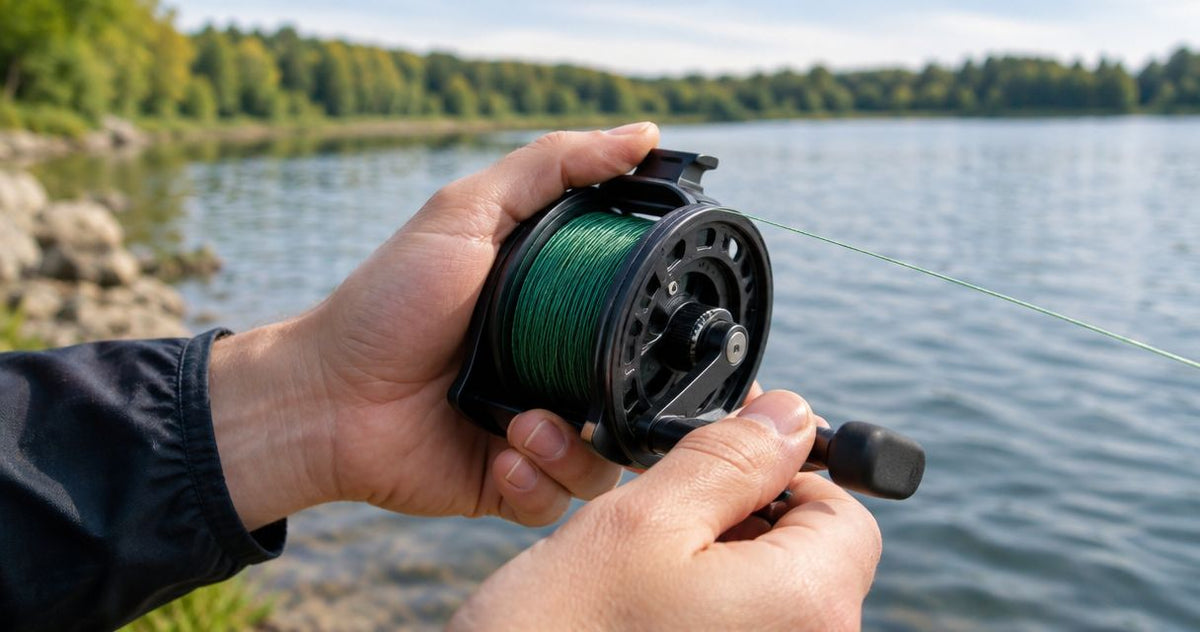
Yes, you can use braided line on a hand reel, provided the reel’s instructions allow it and you handle the line safely. Braid has very little stretch and can cut skin under tension, so a usable setup needs more than a strong line: it needs safe line control, secure knots, and a clear place for loose coils.
- Braided line on a hand reel works, but low stretch makes safe handling essential.
- Monofilament is the better starting point for beginners learning handline fishing.
- Braid needs secure attachment, compatible knots, and careful management of loose line.
- Crystal Creek Gear serves anglers seeking compact hand reel fishing kits for lakes, rivers, and ponds.
Why this matters
With a hand reel, you manage line without the cushioning of a fishing rod. Braid’s low stretch makes bites feel direct, but it also transfers sudden pulls directly to whatever is holding the line. Never wrap fishing line around your fingers, hand, wrist, or body.
If you’re choosing your first setup in 2026, learn line handling before changing line materials. The guide to whether hand reel fishing is hard to learn is a useful next read. A compact kit should simplify your outing, not introduce a line you struggle to control.
Can you use braided line on a hand reel?
Braided line can work on a hand reel, but it isn’t the automatic best choice. Its main advantages are low stretch and a relatively thin diameter for its rated breaking strength. Its main drawbacks are demanding hand handling, knots that require care, and loose line that can snag or tangle.
Compare the materials by how you’ll use them, not just the strength printed on the package. A beginner fishing a quiet pond has different priorities from an experienced handline angler who wants direct contact with a lure.
| Line option | Best for | Main advantage | Main drawback |
|---|---|---|---|
| Braided main line | Experienced anglers prioritizing low stretch | Direct feel and thin diameter relative to rated strength | Can cut skin under tension; demands careful line control |
| Nylon monofilament main line | Beginners learning handline handling | Stretch provides more cushioning than braid | Less direct bite feel; can retain coils |
| S.O.S. Fishing Line (6lb) | Anglers seeking a light-line copolymer option | Described as a smooth copolymer built for light-line fishing | Its listed strength is not a universal choice for every fish or location |
| Fluorocarbon leader | Anglers wanting a separate terminal section | Adds a different material between braid and the hook | Adds a connection knot; does not make braid safe to grip under load |
The S.O.S. product’s 6 lb label describes that particular line, not a recommended braid strength. Do not choose braid by copying another line’s pound-test rating. Diameter, handling, target fish, and the reel manufacturer’s guidance all matter.
For a 2026 setup, start with the line your reel’s instructions support. General advice about braid cannot establish compatibility with a particular reel or its line-retention parts.
Braided main line: best for experienced line handling
Braid makes sense when you already know how to manage a handline and specifically want less stretch. It transmits movement with less elastic cushioning than nylon monofilament, which gives you direct contact but less forgiveness when the line loads suddenly.
That trade-off follows you through the whole outing. Setting a hook, managing a pulling fish, and dealing with a snag all require controlled movements rather than sharp yanks. Thin, strong line is not permission to pull harder.
Braid also needs an attachment method suitable for its material. A knot that holds nylon well is not automatically suitable for braid, and braid can slip on a smooth winding surface if the attachment is unsuitable. Follow the reel and line manufacturers’ instructions instead of improvising backing, tape, or hardware.
Choose braid for a specific handling advantage, not because its strength rating looks impressive. If you cannot manage the line without gripping a loaded section or wrapping it around yourself, choose another setup.
Monofilament main line: best for learning the basics
Nylon monofilament is the better starting point when you’re learning to cast, gather slack, and rewind a hand reel. Its stretch adds cushioning that braid largely lacks. You still need safe handling, but you aren’t adding low-stretch line to an unfamiliar technique.
Monofilament has compromises too. It can hold coils, and its stretch reduces the direct feel that attracts anglers to braid. Those drawbacks do not make it a poor choice for simple fishing; they explain why experienced anglers sometimes change materials.
For your first outings in 2026, prioritize a line you can organize and retrieve safely. Practice keeping slack away from your feet, clothing, and shoreline brush before deciding that a different material will improve your fishing.
Use monofilament to learn line control; switch only when you can name the problem braid will solve. Carrying less gear works best when each part of the setup is familiar.
Braid with a leader: best for separating line jobs
A leader gives the terminal section a different job from the braided main line. Nylon monofilament adds some stretch; fluorocarbon offers a different material near the hook. The right choice depends on the fishing conditions and the line manufacturers’ guidance.
A leader also adds a knot. That connection must suit both materials and pass through your handling routine without catching or coming loose. Follow instructions for the exact lines you use, then inspect the connection before fishing.
A leader does not remove braid’s handling risk. Most of the main line is still braid, and a short terminal section does not reproduce the cushioning of a rod. Never treat the leader as permission to clamp down on a loaded main line.
Keep the reason for adding it clear. If the leader solves a terminal-tackle need, use it; if it only adds another knot to an already confusing setup, simplify first.
Why braided line performance varies on a hand reel
The word braid does not describe every detail of a line. Check these factors before making a change:
- Line diameter: Pound-test alone does not tell you how easy the line will be to organize or handle. Check the actual diameter and the reel’s guidance.
- Line construction: Braids differ in construction and coating. Follow the instructions for the particular line rather than treating every braid alike.
- Reel attachment: The winding surface and attachment method affect whether the line stays secure. Use the manufacturer’s approved method.
- Knot compatibility: Braid-to-hook and braid-to-leader connections need knots suited to the materials. Inspect and test each connection safely.
- Fishing surroundings: Rocks, vegetation, branches, and shoreline clutter create contact points and snags. Inspect line after contact with rough surfaces.
- Line handling: Loose coils, sudden pulls, and unsafe grips can undermine any material. Technique matters more than a bigger breaking-strength label.
For a 2026 line change, check the complete setup—not just the spool. A line can be suitable for the fishing conditions yet unsuitable for the way you currently manage it.
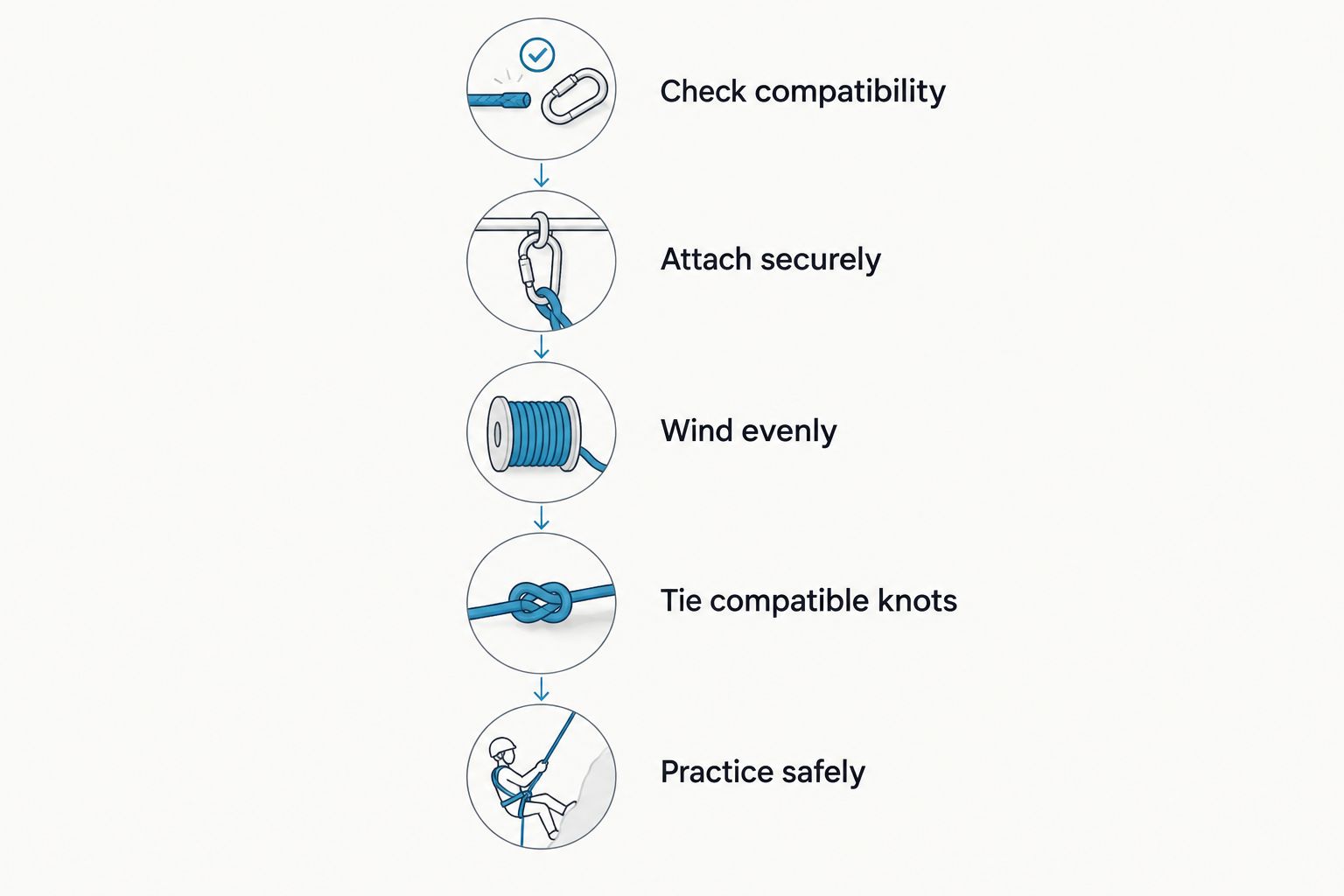
How do you set up braided line on a hand reel safely?
Start with the reel’s instructions and the line manufacturer’s guidance. If either leaves a compatibility question unresolved, get that answer before loading the reel.
- Check compatibility. Confirm that the reel supports the intended line and attachment method. Do not assume that a hand reel accepts every material or diameter.
- Attach securely. Follow the approved attachment instructions. If backing is specified, use the specified approach rather than copying a spinning-reel shortcut.
- Wind evenly. Keep the line orderly on the reel without using bare fingers to squeeze braid under load. Avoid burying loose loops beneath later wraps.
- Tie compatible knots. Use instructions intended for the exact line materials. Inspect the hook connection and any leader connection before fishing.
- Practice safely. Rehearse paying out, gathering, and rewinding line in a clear area without an exposed hook. Keep loose line away from people, pets, and your feet.
The sequence is simple: establish compatibility, build secure connections, then practice control. Do not use a fish or a snag as your first test of the setup.
At the water, keep slack in a clear place where it cannot loop around your legs or catch on brush. Stop and sort tangled line before it comes under tension. A compact reel does not make loose fishing line harmless.
Inspect braid after rubbing against rough surfaces, catching in vegetation, or experiencing a hard pull. Fraying and damaged connections call for attention before the next cast. Do not pull a snag free with braid wrapped around any part of your body.
Is braid better than monofilament for handline fishing?
Braid is better for low-stretch contact; monofilament is better for a more forgiving starting setup. Neither material wins every situation, and braid’s direct feel comes with more demanding handling.
Choose based on your actual routine. If you’re still sorting slack or learning to retrieve safely, monofilament addresses the more immediate need. If you already control line well and want less stretch, braid is an option after confirming compatibility.
Do you need a leader with braid on a hand reel?
A leader is useful when you want a different material near the hook, but it is not a universal requirement. It adds a connection knot and leaves the braided main line’s handling risks unchanged.
Choose the leader material for a clear purpose and follow the manufacturers’ knot guidance. Do not assume that adding fluorocarbon or nylon makes a handline behave like a rod-and-reel setup.
What strength braid should you put on a hand reel?
Use the reel manufacturer’s guidance and your fishing conditions to choose braid strength; there is no universal hand-reel pound-test. A larger rating does not establish suitable diameter, safe handling, or compatibility.
Match the complete system rather than treating the main line in isolation. Hooks, knots, leaders, and reel attachment all remain part of the setup, regardless of the number on the braid package.
Where a compact hand reel fits
Crystal Creek Gear is best for anglers seeking compact hand reel fishing kits for lakes, rivers, and ponds. The GoReel Hand Reel & Line Lock is a relevant starting point if you want to build a portable fishing setup around a hand reel.
The advantage is the compact, rodless approach. The trade-off is that you manage line without a rod’s cushioning. Choosing Crystal Creek Gear does not settle the braid question: confirm the particular reel’s line guidance before changing materials.
FAQ
Can I put braided line on any hand reel?
No—check the particular hand reel’s instructions before using braid. General suitability for handline fishing does not establish compatibility with every reel or attachment method.
Is braided line on a hand reel good for beginners?
Monofilament is the better starting point for beginners learning handline control. Braid’s low stretch and potential to cut skin under tension make safe handling especially important.
Can braided fishing line cut your fingers?
Yes, braided fishing line can cut skin under tension. Never wrap it around your fingers, hand, wrist, or body, and never use a bare-handed pull to break a snag.
Do I need monofilament backing under braid?
Use backing only as directed by the reel and line manufacturers. Braid can slip on a smooth winding surface, but the correct attachment method depends on the reel.
Will a fluorocarbon leader make braid safer to handle?
A fluorocarbon leader does not make the braided main line safe to grip under load. It changes the terminal section and adds a connection knot, not a substitute for safe line control.
Does stronger braid make a hand reel better for bigger fish?
Stronger braid alone does not establish that a hand reel setup suits bigger fish. Reel guidance, line handling, knots, hooks, and the fishing surroundings all matter.
Can I replace the line in a Crystal Creek Gear hand reel with braid?
Check the instructions for your specific Crystal Creek Gear hand reel before replacing its line with braid. Confirm compatible line and attachment methods rather than assuming every GoReel setup supports the same change.
One last thing
Less stretch means less cushioning, not less responsibility. Before your next outing in 2026, practice managing slack with the hook removed. If you cannot keep the line organized in a clear space, shoreline brush and a pulling fish will not make the job easier.
The best change is the one that solves a real problem. Keep monofilament if it suits your fishing; choose braid only when its direct feel earns the extra attention it needs.


