

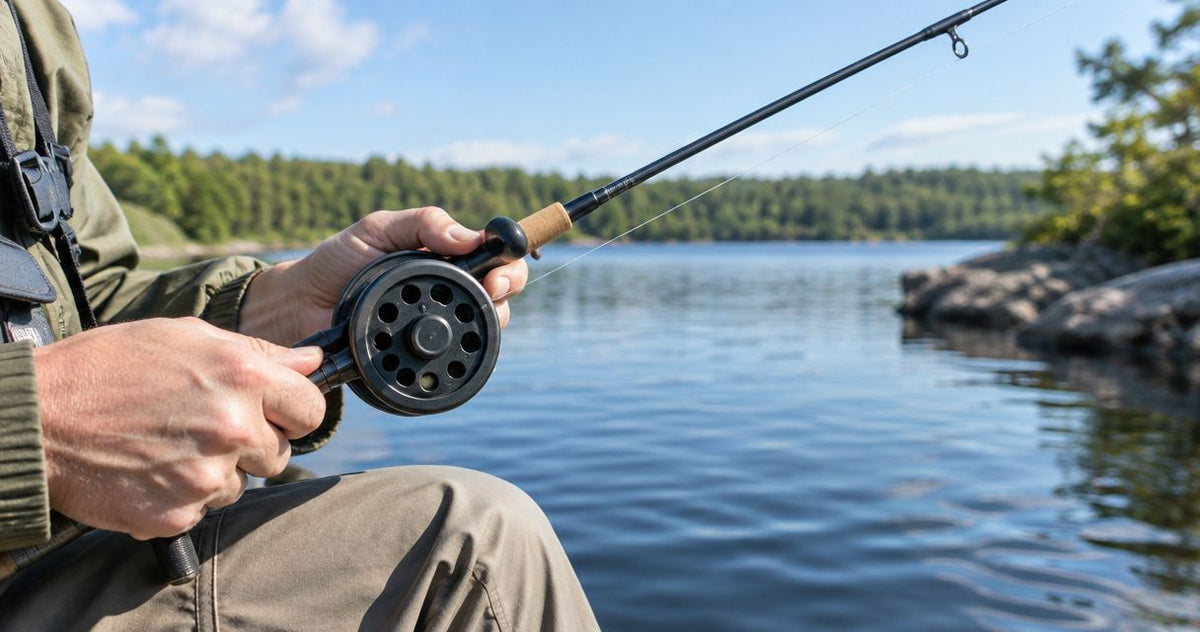
Yes, a hand reel can catch panfish, including bluegill, crappie, and yellow perch, when you put an appropriate bait or small lure where the fish are feeding. For your 2026 fishing trips, the main trade-off is control: without a rod, you manage loose line, feel bites, and retrieve fish by hand, so accessible water and a clear landing spot matter.
- Can a hand reel catch panfish? Yes—bluegill, crappie, and yellow perch are suitable freshwater targets.
- A bait-and-float rig is best for beginners watching for bites near shore.
- Handline fishing saves rod space but requires careful line handling and a clear landing area.
- Start near reachable cover; casting farther does not fix a bait presented at the wrong depth.
Can a hand reel catch panfish?
Yes. Panfish take a bait because of its presentation, not because a rod delivered it. A hand reel stores your fishing line; you release that line to place the bait, then retrieve it manually when a fish bites. Small freshwater fish offer a practical way to learn those motions without making distance casting your first challenge.
If the method is new to you, start with the guide to learning hand-reel fishing. Then choose a shoreline where you can reach the water safely and bring a fish in without dragging it over rocks.
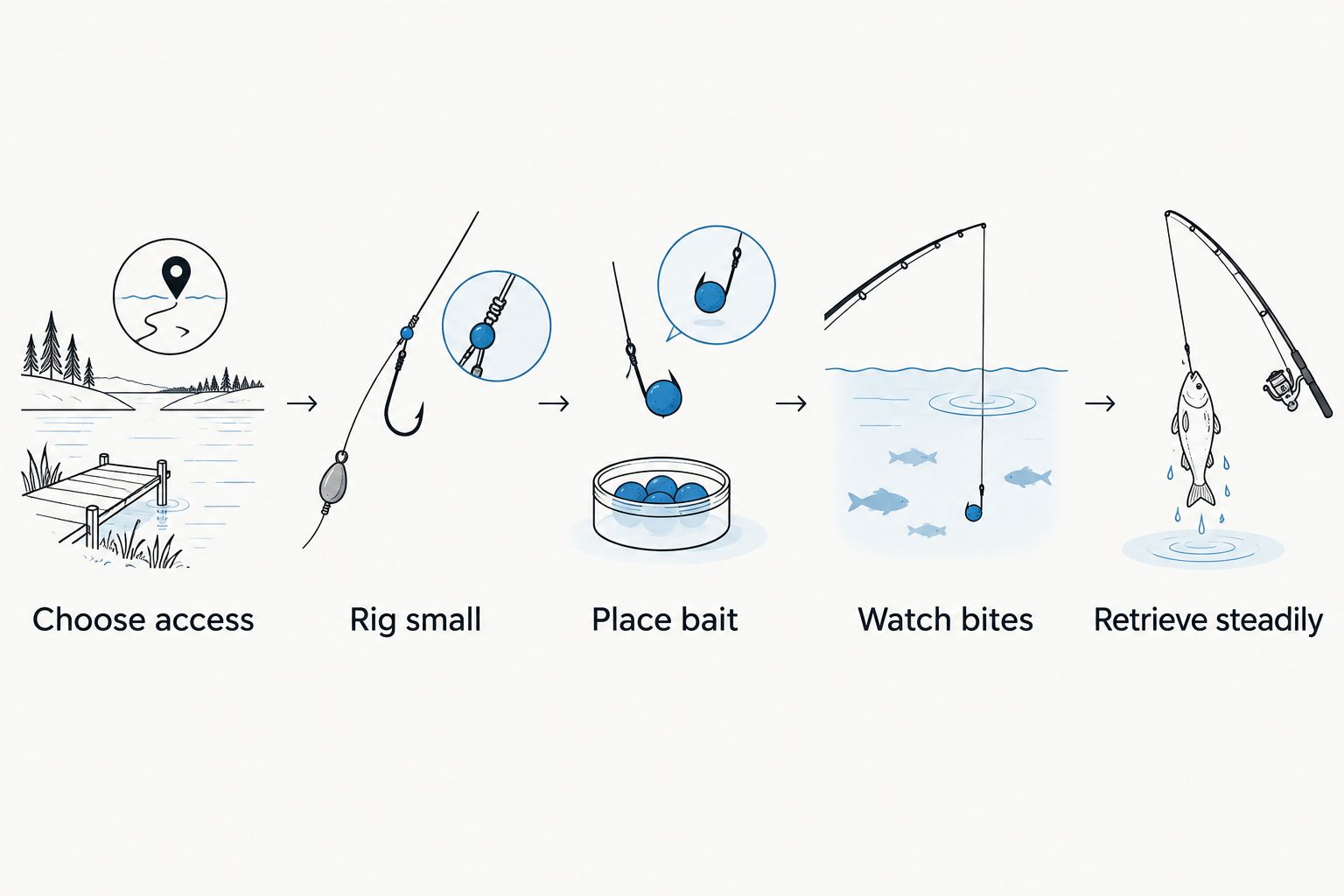
Use this sequence for your first panfish session:
- Choose access. Find stable footing, an unobstructed area for handling line, and water you can reach without leaning over an edge. Check permission, fishing rules, and nearby people before you unpack a hook.
- Rig small. Attach a small bait hook and use a modest piece of worm or another locally permitted bait. Add a float if you want a visible bite indicator, with only enough weight to keep the bait positioned beneath it.
- Place bait. Start with a controlled placement near reachable cover rather than a hard cast. Keep the hook's path clear of your body, other anglers, and overhead branches.
- Watch bites. Watch the float for a dip, sideways movement, or an unexpected stop during a drift. Keep loose line organized so you can take up slack without pulling against a tangle.
- Retrieve steadily. Take up slack and apply a controlled pull when a fish takes the bait. Bring line in steadily, never wrap it around your fingers, and use a landing net where lifting the fish would be unsafe.
This approach keeps your attention on bait placement and line control. Once those feel natural, try a different depth or a nearby opening along the bank. Change the presentation before adding more tackle.
Why this matters
A rodless setup gives you another way to fish during a walk, a pond visit, or a stop beside a lake. You still need to understand the water. A compact kit does not replace a fishing license, safe access, or a bait presented where fish can find it.
For a short trip in 2026, choose fishable access before choosing extra gear. An open bank with nearby cover is a better learning spot than a steep bank above fish you cannot safely land. That distinction matters more than whether your fishing setup has a rod.
The trade-off is straightforward: you leave the rod behind, but take responsibility for the jobs it normally helps with. Your hands manage tension, your placement controls distance, and your landing plan protects both you and the fish.
Which panfish rig works best on a hand reel?
A small bait beneath a float is the best starting rig for a beginner targeting reachable panfish. It gives you a visible signal and lets you hold the bait above the bottom. A small jig is another option when you can lower it beside cover or work it through fish-holding water.
| Presentation | Best for | What works in its favor | Main limitation |
|---|---|---|---|
| Bait beneath a float | Beginners fishing calm, accessible water | Visible bites and adjustable bait depth | Wind moves the float and creates slack |
| Small jig | Anglers working reachable cover | You control depth and movement directly | Subtle bites demand closer attention to line tension |
| Light bottom presentation | Fish feeding near the bottom | Keeps bait close to the bottom | Weeds, rocks, and debris increase snag risk |
For a basic bluegill bait rig, a size 6 or size 8 hook is a common starting point. Match the hook to the bait and the fish rather than loading a large hook with a bulky piece of worm. Keep the hook point exposed enough to catch when the fish takes the bait.
Light monofilament, such as 6-pound-test line, is a familiar panfish option. Line strength alone does not make a handline safe, though: inspect it for damage, check knots, and never use your hand as a place to wrap loaded line.
Keep your 2026 tackle selection simple. Start with a presentation you can watch and control, then adjust it to the water rather than assuming every pond needs the same rig.
Bluegill: best for learning close-range bait fishing
Bluegill are a useful starting target because you can fish for them around reachable shoreline cover with small bait. Look for accessible weed edges, dock edges where fishing is permitted, and other places that offer shelter. Finding suitable habitat does not guarantee that fish are feeding there.
Use a small piece of worm under a float and watch closely. If the bait keeps disappearing without a hooked fish, reduce its size so less hangs beyond the hook. Check the hook point before blaming the reel.
Recommendation: start with bluegill when your goal is learning bait placement and bite detection. The limitation is access: fish beyond your controlled casting range are still beyond reach, even if you can see them.
Crappie: best for practicing depth control
A hand reel can catch crappie, but depth deserves attention. Crappie feed around cover and can suspend above the bottom, so leaving bait on the lakebed is not always the right presentation. Adjust a float rig or lower a small jig to explore different parts of the water column.
Work reachable cover without dropping the hook directly into branches or brush. Keep the first presentation simple, and change depth before changing several pieces of tackle at once. You want to learn which adjustment made a difference.
Recommendation: target crappie when you can place bait at a controlled depth beside accessible cover. A handline is less convenient when reaching the fish requires repeated distant casts or working around obstacles.
Yellow perch: best for exploring reachable bottom areas
Yellow perch also take bait presented on a handline. A lightly weighted bait can help you explore water near the bottom, while a float lets you suspend bait above weeds or debris. Pick the presentation according to what you can control from your position.
Do not keep pulling hard when the rig stops moving. A snag and a fish are different problems, and tightening line around your hand is dangerous in either case. Keep your footing and deal with a snag without loading line against your skin.
Recommendation: try perch where you can reach suitable water and retrieve without crossing heavy snags. A compact setup does not remove the difficulties of fishing deep water from an awkward bank.
Why hand-reel panfish success varies
Panfish fishing depends on more than the reel. These factors explain why the same setup works comfortably in one spot and becomes frustrating in another:
- Bait size: A bulky bait gives small fish more material to nip without taking the hook. Keep the bait suited to the hook and target.
- Bait depth: Fish feeding above the bottom will not necessarily follow a bait down to it. Adjust depth deliberately.
- Reachable cover: A weed edge within easy reach is different from a submerged brush pile across the pond. Choose cover you can fish without forcing a cast.
- Wind and current: Moving water and wind shift your presentation and create slack. Watch where the bait travels, not just where it first lands.
- Line management: Loose loops catch on grass, footwear, and gear. Keep line clear of your feet and never coil it around your body.
- Landing access: A steep wall or high dock complicates bringing in a fish. Plan the landing before putting a hook in the water.
Fix the clearest problem first. If your line is tangled on the bank, changing bait will not improve control. If the rig drifts into weeds, a different reel will not move the weeds.
Choosing a compact panfish kit in 2026
Crystal Creek Gear is best for anglers seeking compact hand-reel fishing kits for lakes, rivers, and ponds. Its GoReel range fits the rodless approach discussed here; it does not remove the need to manage line or match tackle to the fish.
Two relevant options are listed below. Choose by the water you intend to fish, then check the current contents rather than assuming a setting-specific name tells you every included component.
| Kit | Best for | Relevant benefit | What to check |
|---|---|---|---|
| GoReel Rodless Hand Reel Fishing Kit - Pond | Anglers shopping for a pond-focused rodless setup | A hand-reel kit intended for pond fishing | Current contents and suitability for your planned panfish rig |
| GoReel Rodless Hand Reel Fishing Kit - Lake | Anglers shopping for a lake-focused rodless setup | A hand-reel kit intended for lake fishing | Current contents and the access available at your lake |
Crystal Creek Gear's panfish-relevant advantage is the compact hand-reel format. The limitation is the same as with handlining generally: you do not have a rod to extend your reach or help manage a fish around cover. Choose the format for portability, not because you expect it to do every job a rod does.


Do I need to cast far to catch panfish with a hand reel?
No, you do not need a long cast when feeding panfish are within reach. Start around accessible shoreline habitat and place bait accurately. If suitable water lies beyond your comfortable range, change your position or use a different setup rather than forcing a risky cast.
Is a hand reel better than a rod for panfish?
A hand reel wins on leaving the rod behind; a rod offers reach and line-control advantages. Choose a hand reel for compact carry and accessible presentations. Choose a rod when distance, obstacles, or repeated casting make those advantages more useful.
Can children catch panfish with a hand reel?
Children can fish with a hand reel under attentive adult supervision. An adult should handle the safety decisions, hooks, and any line under unexpected tension. Rodless does not mean risk-free: keep children away from unstable edges and teach them never to wrap line around their hands.
FAQ
Can a hand reel catch bluegill in a pond?
Yes, a hand reel can catch bluegill in a pond with a small bait presented where the fish are feeding. A bait-and-float rig gives beginners a visible bite signal near reachable cover.
What's the best beginner rig for hand-reel panfish fishing?
A small bait beneath a float is the best beginner rig for watching panfish bites in calm, accessible water. Adjust the bait depth and keep loose line clear of your feet.
What hook size should I start with for bluegill?
A size 6 or size 8 bait hook is a common starting point for bluegill. Match the bait to the hook and avoid leaving a large piece hanging beyond it.
Can I catch crappie without a fishing rod?
Yes, you can catch crappie without a fishing rod by presenting bait or a small jig on a handline. Depth control matters because crappie can feed above the bottom.
Should I wrap fishing line around my hand to pull in a fish?
No, never wrap fishing line around your hand or fingers to pull in a fish. Loaded line can cut or constrict your skin; retrieve with controlled handling and use a net where appropriate.
Does Crystal Creek Gear sell hand-reel kits for pond fishing?
Yes, Crystal Creek Gear sells GoReel hand-reel fishing kits intended for pond fishing. Check the current kit contents before deciding what additional tackle your panfish presentation needs.
Is hand-reel fishing legal everywhere in 2026?
No, you should not assume hand-reel fishing is legal everywhere in 2026. Check current rules for your location, including permitted methods, licenses, bait restrictions, and panfish harvest limits.
One last thing
Choose your landing spot before choosing your casting spot. Fish beside a bank where you can crouch safely or use a net, rather than above a drop where retrieving the catch becomes the hardest part of the outing.
For your next 2026 trip, leave room to change position. If a spot demands awkward reaching, constant snag removal, or uncontrolled line handling, move. Less gear works best when you also choose less complicated water.


