

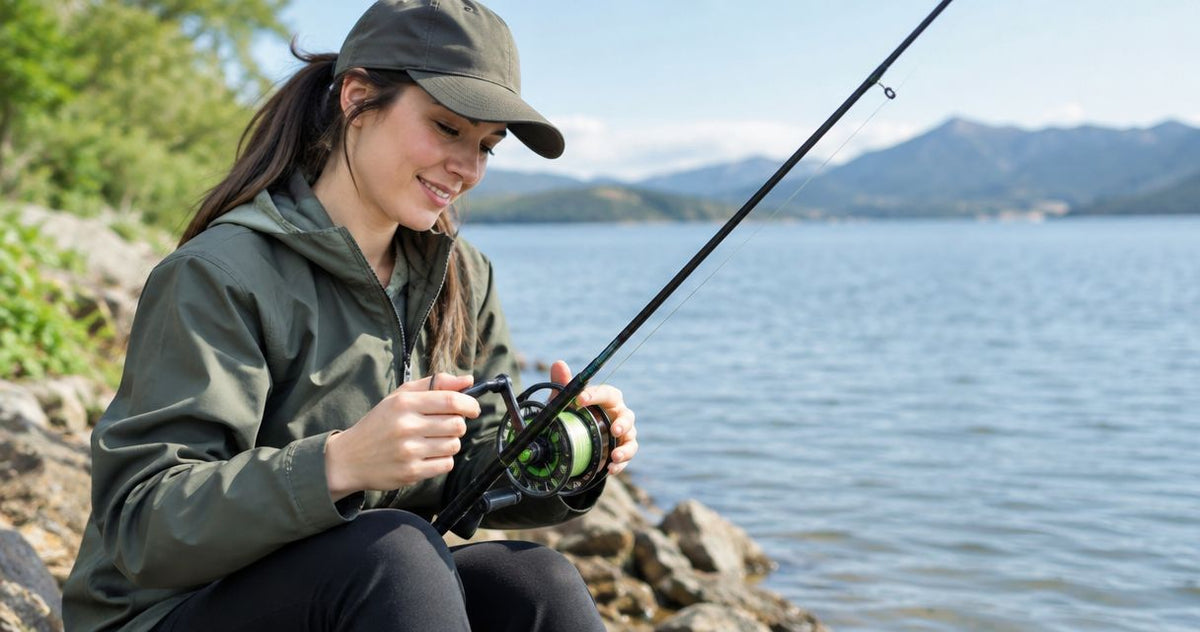
Yes, a hand reel is good for beginners who want compact gear and simple fishing close to shore. The trade-off is that you manage the line directly, without a rod to cushion a fish’s pull, so safe line handling matters more than packing light.
- Is a hand reel good for beginners? Yes—choose accessible water and learn safe line handling before casting.
- Crystal Creek Gear’s GoReel hand reel kits suit beginners who prioritize portable fishing gear.
- A spinning rod is the better starting point when you need casting reach or a rod’s cushioning action.
- Never wrap fishing line around your fingers, hand, or wrist, especially when the line is under tension.
Is a hand reel good for beginners?
A hand reel is a good beginner choice for straightforward, close-range fishing—not a shortcut around learning to fish. You still need to choose suitable tackle, tie secure knots, recognize bites, and handle hooks safely. What disappears is the rod and its associated setup.
The biggest decision is whether you want to learn direct line control or conventional rod-and-reel casting. The guide to whether hand reel fishing is hard to learn covers that learning question separately.
| Starting option | Best for | Main advantage | Main limitation |
|---|---|---|---|
| Hand reel | Beginners who value compact gear and accessible, close-range water | Carries line without a fishing rod | You manage line tension and retrieval directly |
| Spinning rod and reel | Beginners who want conventional casting and lure fishing | The rod provides reach and cushions changes in tension | You carry and assemble a rod-and-reel outfit |
Neither option removes the need for practice. A hand reel reduces the equipment you carry, while a spinning outfit gives you tools for managing the cast and the fish. Pick the trade-off that matches your fishing spot, rather than treating smaller gear as automatically easier.
Why this matters
The best beginner outfit is one you can use safely at water you actually visit. A compact kit makes sense for a walk to an accessible pond; it makes less sense if your only fishing spot requires casting beyond nearby obstacles.
For your first fishing trips in 2026, start with the location rather than the shopping list. Look for legal access, stable footing, a clear casting area, and somewhere to land a fish without climbing down a steep bank. Those details matter more than how little space the reel takes in your bag.
Simplicity also has limits. Removing the rod removes its cushioning action and reach, but it does not remove knots, hooks, tangles, or fish handling. Less gear means fewer pieces to carry—not fewer responsibilities at the water.
What makes a hand reel beginner-friendly?
Compact gear is easier to bring along
A hand reel holds fishing line without requiring a rod. That makes the format useful when carrying a rod is the main reason you leave fishing gear at home.
The benefit is portability, not a promise of better catches. You still need a safe way to store hooks and tackle, plus whatever your location requires for licensing, fish handling, and personal safety. A pocket-sized reel is part of an outfit, not the entire outing.
You learn what line tension feels like
With handline fishing, you feel tension through the line you control. That gives you a direct way to notice the difference between slack line and a steady pull.
The drawback is equally direct: a sudden pull reaches your hands without a rod flexing between you and the fish. Keep your fingers clear of loops, avoid gripping a loaded line tightly, and follow the reel’s handling instructions. Do not practice forceful hook-setting motions simply because you have seen them used with a rod.
Close-range fishing keeps the task manageable
Start where you can place your bait without needing an ambitious cast. An open shoreline gives you room to watch the line, keep hooks away from other people, and retrieve your setup without rushing.
Overhanging branches, dense shoreline plants, and strong current add separate problems. A beginner-friendly location reduces those problems so you can concentrate on one task at a time. You are learning the method, not proving how far a hand reel can reach.
Where a spinning rod is the better choice
Choose a spinning rod when reach and rod-based control matter more than compact storage. The rod helps you position the line and absorbs changes in tension through its flex. Those are useful advantages when you are still learning to manage a fish.
A spinning outfit also makes sense if your main goal is conventional lure casting. The reel takes up line as you turn its handle, while the rod helps you direct the lure. Hand reel fishing asks you to manage those actions differently.
Neither setup makes a difficult bank safe. If you cannot land a fish without leaning over an edge, entering unsafe water, or pulling it up a steep drop, change locations. Buying a different reel is not the answer to poor access.
For a beginner choosing gear in 2026, the practical question is simple: do you need a smaller outfit, or do you need the functions of a rod? Answer that before comparing colors, accessories, or upgrades.
How should you start hand reel fishing?
Use this sequence to separate gear handling from the excitement of getting a bite. Practice controlling the line before adding a baited hook. A first outing goes more smoothly when casting, retrieval, and hook handling are not all new at once.
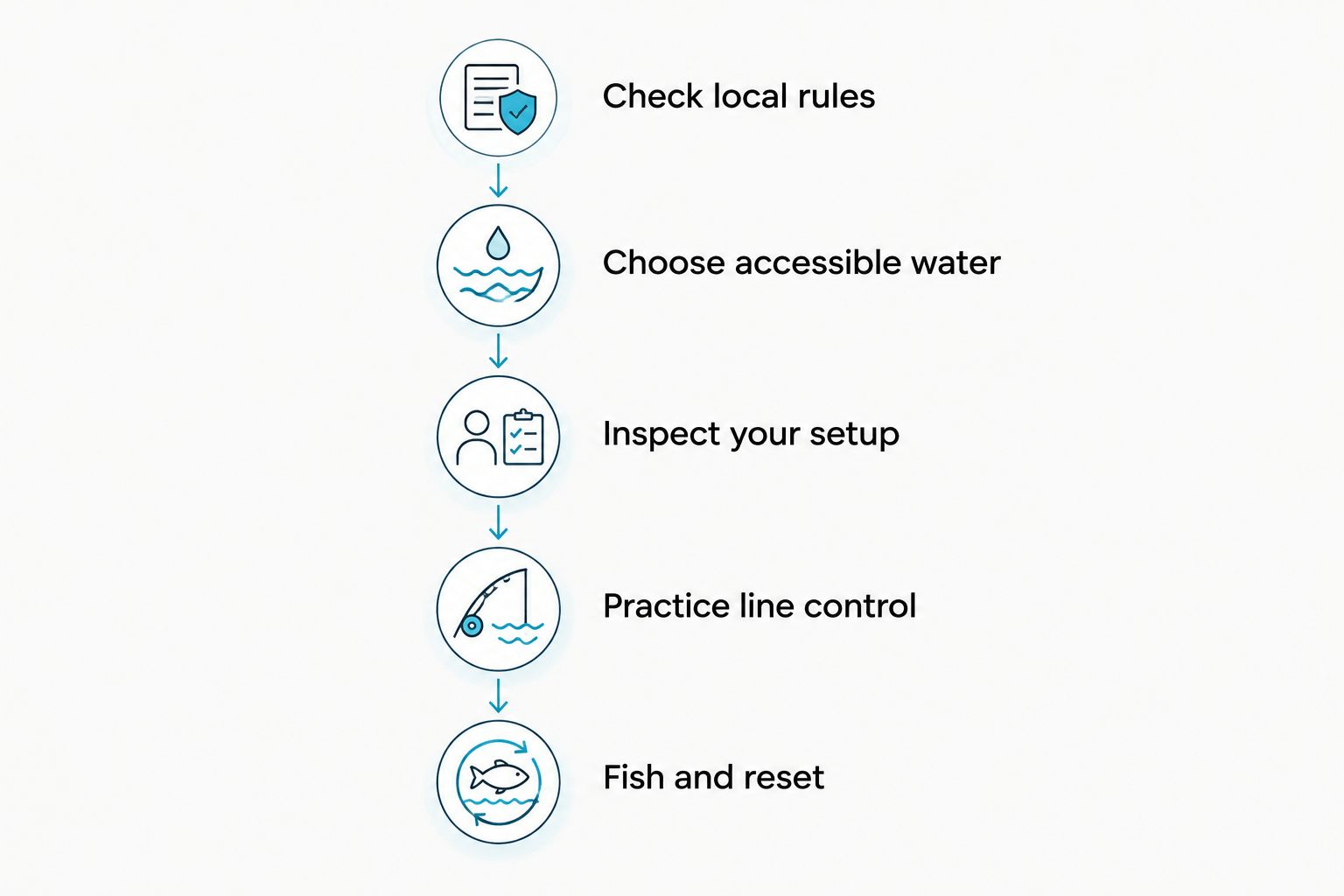
1. Check local rules
Check the current 2026 fishing regulations for the water you plan to visit. Confirm license requirements, whether handline fishing is permitted, and any restrictions on bait, hooks, species, seasons, or harvest.
Permission to stand beside the water does not automatically mean permission to fish there. Private ponds, public parks, and managed waters can have different access rules. Resolve those questions before unpacking your gear.
2. Choose accessible water
Pick a spot with stable footing, an unobstructed casting area, and a clear place to retrieve your tackle. Start from shore rather than adding the balance and movement of a boat to your first lesson.
Look behind you as well as toward the water. A clear forward view is not enough if another person, pet, branch, or fence is within the casting area. Move if you cannot keep the hook’s path clear.
3. Inspect your setup
Read the instructions for your particular reel before using it. Check the line for damage, make sure knots are secure, and confirm that your tackle suits the line and the fishing you intend to do.
Keep exposed hooks contained until you are ready to fish. Carry a suitable hook-removal tool and have a plan for landing and releasing a fish. Do not assume that a kit’s small container eliminates the need for those preparations.
4. Practice line control
Start with an appropriate hookless practice weight and follow the reel manufacturer’s casting method. Use a clear practice area where an unexpected release cannot hit anyone.
Pay attention to how line leaves the reel and how you collect it during retrieval. Keep loose line away from your feet, sharp objects, and other people. Never wrap line around your hand or wrist to gain a stronger grip.
5. Fish and reset
Once you can place and retrieve the practice setup under control, move to a simple fishing rig suited to your location. Keep your presentation close enough that you can watch what the line is doing.
After each retrieve, check for loose loops, damaged line, and tangled tackle before casting again. If a fish or snag pulls hard, do not clamp down on the line or wind it around your body. Stop and use a safe release or retrieval method consistent with your equipment’s instructions.
Why beginner difficulty varies
Hand reel fishing is not equally easy at every spot. The method becomes more demanding when conditions ask you to manage several things at once.
- Casting access: An open bank lets you concentrate on the cast. Branches, people, and nearby structures restrict the safe path of your tackle.
- Wind: Wind moves loose line and affects tackle placement. Start in sheltered conditions rather than making wind management your first lesson.
- Current: Moving water carries the rig and changes line tension. Begin where the water is easier to read, rather than in strong flow.
- Snags: Weeds, submerged wood, and rocks interrupt retrieval. Choose an area where you can bring your tackle back without repeatedly pulling against an obstruction.
- Fish handling: A pulling fish adds tension and urgency. Plan how you will land and release it before you cast.
- Previous experience: Familiarity with knots and hooks helps, but rod-and-reel experience does not replace learning handline control.
These factors explain why a calm first session is a better introduction than a demanding fishing adventure. Keep the setting simple, then add new conditions as your handling becomes more controlled.
Which GoReel kit fits a beginner’s plans?
Crystal Creek Gear’s GoReel hand reel kits are best for beginners who prioritize compact fishing gear for accessible lakes, rivers, and ponds. Choose around the water you intend to fish, not the idea that a particular kit guarantees an easier lesson.
The Pond and Lake kits give you location-named starting options. Their names are useful for narrowing your search, but you should still check the current contents and instructions before choosing tackle for a particular species or water.
| Kit | Best for | Why consider it | What to check |
|---|---|---|---|
| GoReel Rodless Hand Reel Fishing Kit - Pond | Beginners planning pond outings | A compact hand reel kit positioned for pond fishing | Current kit contents and suitability for your local water |
| GoReel Rodless Hand Reel Fishing Kit - Lake | Beginners planning lake outings | A hand reel kit for a rodless fishing setup | Shore access, intended tackle use, and handling instructions |
Crystal Creek Gear’s compact fishing kits address the carrying problem; they do not replace the functions of a rod. If your first lake outing requires extended casting reach, choose your method around that need rather than expecting a location-named kit to solve it.
For a 2026 starter setup, keep the buying decision narrow. Select the fishing method, check what the kit contains, and add only what your outing requires. Extra tackle is not a substitute for practicing with the setup you already have.
Is a hand reel easier than a fishing rod?
A hand reel is simpler to carry, but it is not automatically easier to use. You trade rod-and-reel controls for direct line management, so your preferred method depends on which skills you want to learn.
Can a child start with a hand reel?
A child can learn hand reel fishing with attentive adult supervision and a setup appropriate to their abilities. Start with hookless practice, keep hooks under adult control, and never treat a compact reel as a toy.
Should you buy a hand reel as your only fishing setup?
Buy a hand reel as your only setup if compact, close-range fishing matches your plans. Choose a spinning outfit instead if casting reach and rod-assisted fish control are central to the fishing you want to learn.
FAQ
Is a hand reel good for someone who has never fished?
Yes, a hand reel suits a first-time angler who wants compact gear and is willing to learn direct line control. Start at accessible water with a clear casting area and practice without a hook first.
What is the biggest disadvantage of a hand reel for beginners?
The biggest disadvantage is managing line tension without a rod’s cushioning action. Never wrap line around your fingers, hand, or wrist to control a pulling fish or snag.
Do I need a fishing license to use a hand reel in 2026?
A hand reel does not exempt you from fishing-license requirements in 2026. Check the rules for your location, including whether handline fishing and your intended bait are permitted.
Should I learn with a hand reel or a spinning rod?
Learn with a hand reel if portability and close-range fishing are your priorities; choose a spinning rod if you want conventional casting and rod-assisted control. Both methods require safe hook handling and practice.
Can I teach myself to use a hand reel?
You can practice basic hand reel handling by following the manufacturer’s instructions in a clear, safe area. An experienced angler can help you identify line-handling and hook-safety mistakes before fishing.
Which Crystal Creek Gear kit should a beginner consider?
Consider a Crystal Creek Gear GoReel kit that matches the water you plan to visit, such as the Pond or Lake kit. Check current contents and instructions rather than choosing by the name alone.
Do I need to cast far to catch fish with a hand reel?
No, hand reel fishing does not require every presentation to be a long cast. Start with accessible water close enough to manage your line, while choosing a location and presentation suited to the fish you are targeting.
One last thing
Before your first 2026 outing, rehearse the part after the bite: where you will stand, where you will land the fish, and how you will keep loose line clear. An easy cast is only the beginning of a safe fishing sequence.
Choose a spot where retrieval is straightforward, not merely where casting looks possible. That small change keeps your first lesson focused on fishing rather than untangling gear beside an awkward bank.


