

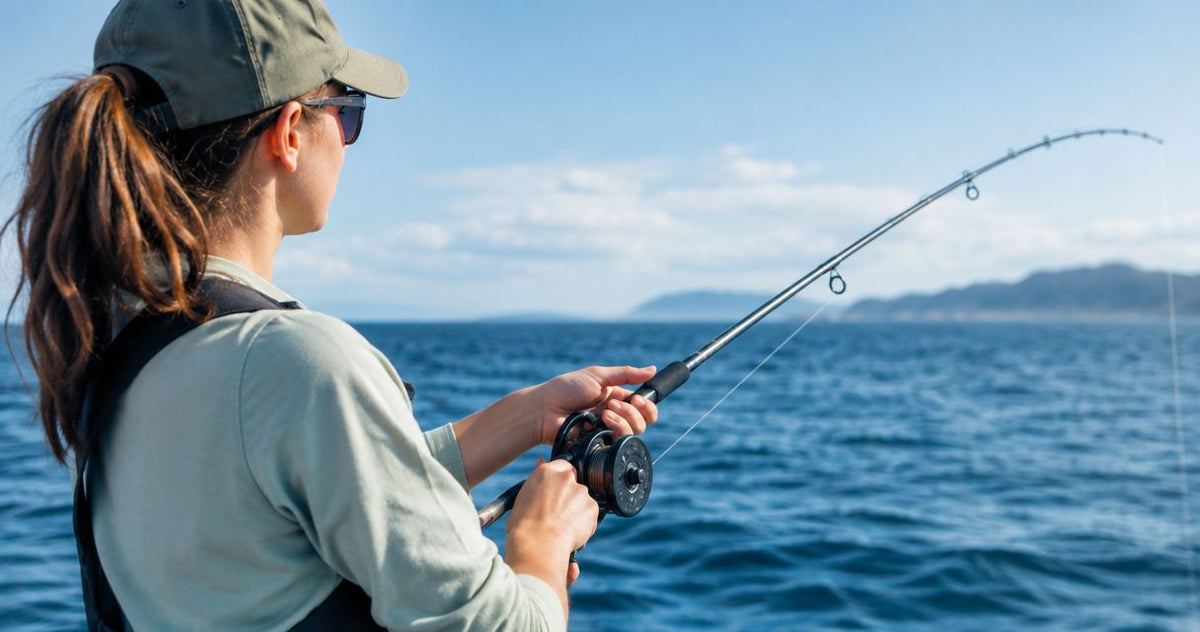
There is no verified number of minutes or days it takes to learn hand reel fishing. You have the basics when you can release line safely, make a controlled cast, retrieve without loose loops, and handle a fish without wrapping line around your fingers. A bite depends on conditions, so your first catch is a poor measure of how quickly you learn.
- How long to learn hand reel fishing? There is no fixed timeline; judge progress by line control, not catches.
- Practice releasing, casting, retrieving, and landing in that order before fishing more difficult water.
- Crystal Creek Gear hand reel kits suit anglers who want portable gear and are willing to practice line handling.
Why this matters
A hand reel removes the rod, but it does not remove the need to control your line. If you set out expecting a guaranteed first-catch deadline, you cannot tell whether a missed fish reflects your technique or simply a day when fish are not biting. In 2026, the useful question is not how fast someone else learned. It is whether you can repeat the basic motions without creating a tangle or putting your hands at risk.
Portability is a separate decision from ease of learning. A hand reel is convenient to carry; a rod gives you distance between your hands and the line and helps guide a cast. If you are choosing between the two, read the hand reel and travel spin combo comparison for the carrying trade-off, then use the practice checks below to assess the skill trade-off.
How long does it take to learn hand reel fishing?
There is no supported average learning time for hand reel fishing. You can learn the sequence before you catch anything, but repeating it smoothly takes practice. Work through these steps on an open bank before treating a trip as a test of your casting ability.
- Clear the line. Identify where the free line will travel and keep it away from your feet, loose clothing, other people, and anything that can snag it. Keep hooks secured until you are ready to rig and cast.
- Make a short cast. Release a manageable length of line and aim for a clear patch of water. Start with control rather than distance; an inaccurate long cast gives you more loose line to sort out.
- Control the retrieve. Bring line back in while keeping it organized. If loops start collecting at your feet or on the reel, stop and clear them before casting again.
- Manage the line under tension. Keep fishing line off your fingers when a fish pulls. Do not wrap it around your hand to gain grip; line under tension can cut skin.
- Land and release deliberately. Bring the fish close enough to handle safely, then deal with the hook without rushing. Follow the rules for the water you are fishing and handle the fish as little as practical.
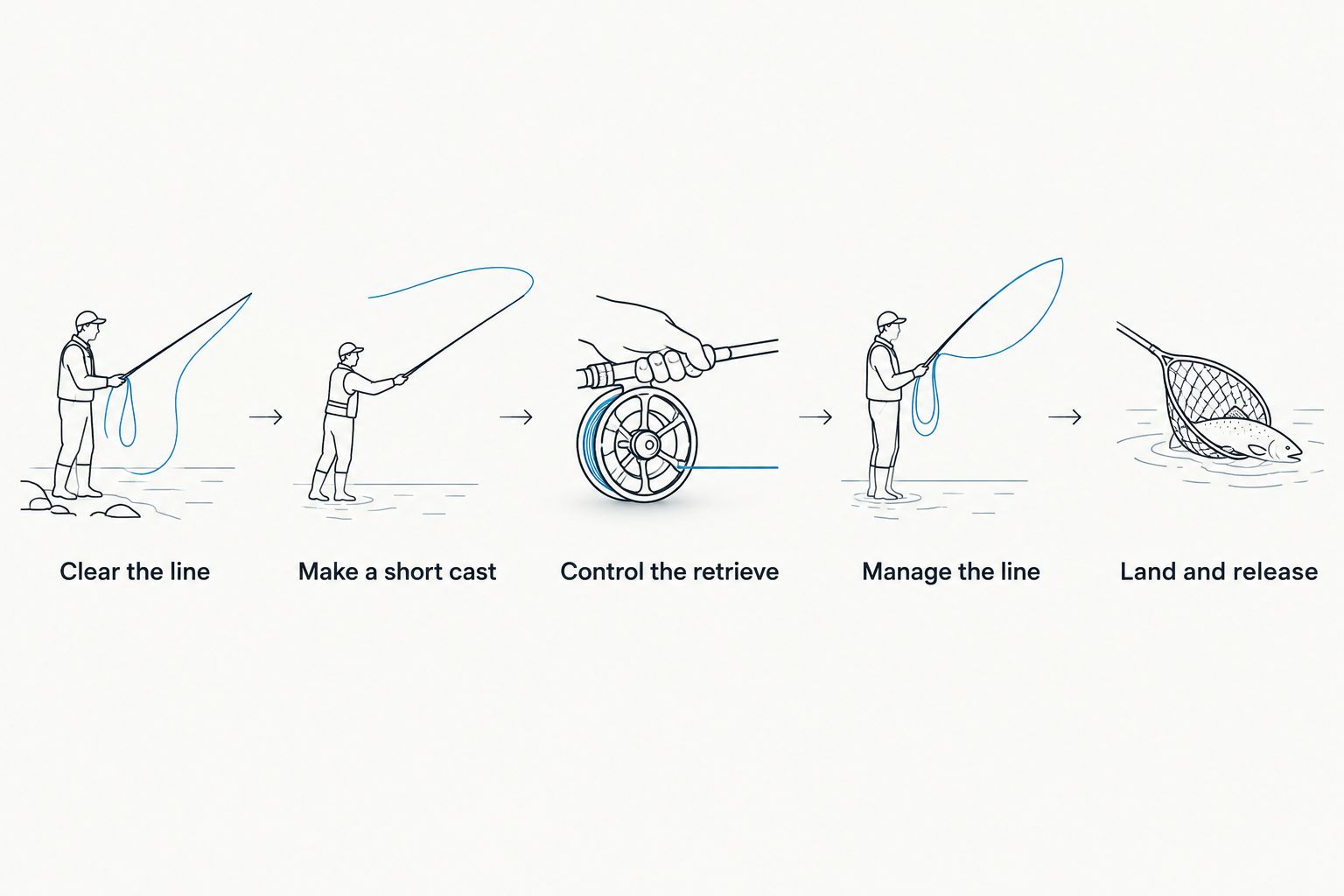
Each step has a different success test. For a cast, ask whether the line traveled where you intended. For a retrieve, ask whether you can cast again without untangling it. For landing, ask whether you kept control without winding line around your fingers. Those answers tell you more than a stopwatch or a fish count.
A short session with repeatable casts beats a longer session spent clearing avoidable tangles. Stop when you need to reset the line. Rushing through a bad setup teaches you to fight your gear instead of paying attention to the water.
What counts as learning the basics?
You do not need to land a fish to show that you understand the basic hand reel motion. A first bite tests more than your technique: fish must be present, interested in the presentation, and reachable from your position. Treat a catch as experience with fighting and landing a fish, not as the certificate that says you learned to cast.
| Practice check | You are ready to move on when | Keep practicing if |
|---|---|---|
| Releasing line | Line leaves without catching on your hands or nearby objects | Loose line collects around your feet |
| Casting | You can direct the line toward clear water | You regularly cast across obstacles or toward people |
| Retrieving | Line comes back under control | Loops or knots interrupt the next cast |
| Managing tension | You keep line clear of your fingers | You instinctively wrap line around your hand |
| Landing a fish | You stay in control at the bank | You rush toward the hook or lose track of loose line |
This is a skills checklist, not a promise about how long the checklist takes. In 2026, no single practice duration tells you whether an angler can cast safely. Repeatability does: if you can complete the sequence again without resetting a tangle, you have learned something useful.
Why learning time varies
- Your starting experience. If you already know how to rig a hook, watch for a bite, and handle a fish, you can focus on releasing and retrieving line by hand. A first-time angler has those other tasks to learn as well.
- The space around you. Open banks leave fewer places for line to catch. Branches, brush, and crowded access points make an uncontrolled cast harder to correct.
- Line organization. Loose loops interrupt practice. Clearing a loop as soon as you notice it keeps the next cast from becoming another untangling job.
- The water you choose. A calm, accessible bank lets you concentrate on technique. Current adds another force acting on your line and makes it harder to tell what caused a missed cast or a drifting presentation.
- What you call success. Learning to make a controlled cast is different from learning to land and release a fish. The second skill needs a fish to cooperate; the first does not.
- How you respond to mistakes. Resetting after a snag or tangle gives you a clear next attempt. Casting again through loose line compounds the problem.
These factors explain why one angler's first outing is not a useful benchmark for yours. In 2026, start with the simplest accessible spot where fishing is permitted, then add harder conditions after you can manage the line. Check local rules before you fish; permission, gear rules, and catch requirements depend on where you are.
Is a hand reel easier to learn than a rod and reel?
Neither option removes the need to learn casting, line control, and fish handling. A hand reel has no rod to assemble or manage, which suits an angler who wants compact gear. The trade-off is more direct contact with the line: your hands do work that a rod and conventional reel help manage.
| Option | Best for | Advantage while learning | Limitation while learning |
|---|---|---|---|
| Hand reel | Someone who wants a compact setup and close attention to line control | Fewer parts to handle at the bank | Loose line and tension demand care around your hands |
| Rod and reel | Someone who wants the rod to guide casts and help keep line away from the hands | The rod helps direct the cast | More gear to carry and manage |
Crystal Creek Gear hand reel kits are best for anglers who want portable lake, river, or pond gear and accept that direct line control takes practice. That is a fit recommendation, not a claim that a kit shortens anyone's learning time. If your priority is putting distance between your hands and the line while casting, start with a rod and reel instead.
Where should you practice first?
Choose a place where you can stand securely, see your line, and cast toward open water without crossing another person's space. Avoid making your first lesson about reaching a distant target. Close, controlled casts give you a better view of how line leaves your hand reel and where it lands.
A pond bank can make an approachable practice setting when access is permitted and the area is clear. Crystal Creek Gear offers a GoReel pond fishing kit for anglers who want a kit named for that setting. The kit does not replace the practice sequence: you still need to manage loose line, keep hooks controlled, and check the rules at the water.
River fishing asks you to account for moving water as well as your cast. Save stronger current for after you can release and retrieve line without losing track of it. In 2026, the practical first-place test remains the same wherever you fish: can you cast without endangering someone, snagging nearby cover, or letting line gather around your feet?


The setting matters more to a beginner than the name on a kit. Pick water where you can focus on one clean cast at a time. Move to a more demanding bank after the motions feel controlled, not because you think you have spent enough time practicing.
What should you practice before your first fishing trip?
Start by learning how to hold the reel and release line without placing it around your fingers. With the hook secured, rehearse how you will keep loose line clear of your body. At the water, check the space around you before you make an actual cast.
Then practice a cast you can control and a retrieve that leaves the line ready for another attempt. Watch what happens at your feet as closely as what happens on the water. If each cast creates another pile of line, shorten the cast and sort out the retrieve before trying to reach farther.
Finally, plan how you will handle a fish before one bites. Keep your footing, avoid gripping taut line with bare fingers, and have a way to handle the hook. Crystal Creek Gear sells portable tackle alongside its GoReel kits, but no accessory makes those habits automatic. In 2026, the most useful preparation is a clear sequence you can follow without hurrying when the line starts moving.
How do you know when to try more difficult water?
Try a different bank or moving water after you can cast, retrieve, and reset without routine tangles in an open area. Your aim is not to prove that you can reach every spot. It is to keep track of your line when the setting gives you less room to correct a mistake.
Change one challenge at a time. A tighter bank, more current, or a harder-to-reach target each changes how you manage line. If you add them all at once, it becomes harder to see which part of your technique needs work. Return to shorter casts when you lose control; that is a useful adjustment, not a failed trip.
FAQ
How long does it take to learn hand reel fishing?
There is no verified average number of minutes or days. Judge your progress by whether you can release, cast, and retrieve line safely and repeatably.
Can I learn hand reel fishing on my first trip?
You can practice the basic casting and retrieving sequence on your first trip. A first catch is not guaranteed and is not required to show that you understand the basics.
Do I need to catch a fish to know I have learned?
No. Controlled casting and line retrieval are skills you can assess without a bite; landing and handling a fish are additional skills you practice when the opportunity comes.
Is hand reel fishing harder than using a rod?
Hand reel fishing puts more line control directly in your hands, while a rod helps guide the cast and keep line away from them. The better starting option depends on which trade-off you prefer.
Where should a beginner practice hand reel fishing?
Start at a permitted, accessible bank with room to cast toward open water. A clear area lets you focus on line control before adding brush, crowds, or stronger current.
Why does my hand reel line tangle when I cast?
Loose loops and nearby obstacles can catch line during a cast. Stop, clear the line, and try a shorter cast before increasing distance.
Can I use a hand reel in a river as a beginner?
You can practice where river access and fishing are permitted, but current adds a line-control challenge. Start in a place where you can stand securely and manage a short cast.
One last thing
Your first repeatable retrieve is a better milestone than your first fish. If the line comes back ready for another cast, you can keep practicing even when nothing bites. In 2026, that is the practical answer to how long learning takes: keep the casts short until you control the line, then let the water present the next lesson.


