

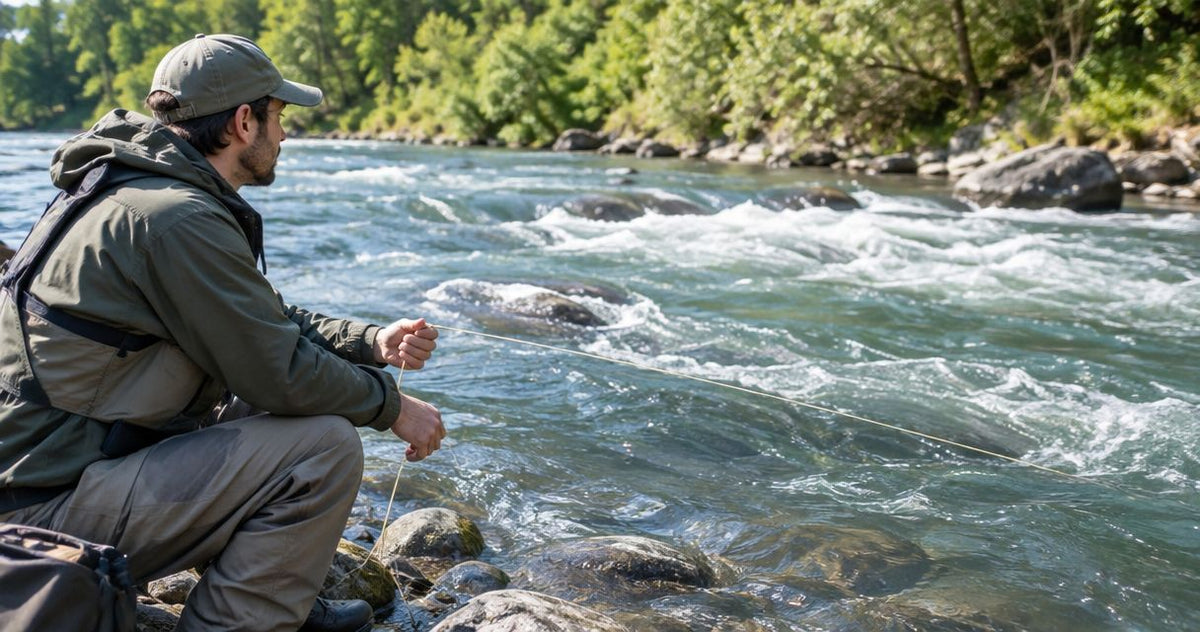
Handline fishing holds up fine in river current up to a moderate flow, the kind a wading angler stands in without much effort, but it loses control fast once the current pushes hard enough to bow the line or drag your rig sideways. The real limiting factor isn't the current speed by itself; it's line diameter and rig weight, since a heavier line that resists tangles also catches more drag from moving water, so matching your setup to the specific river matters more than raw current strength.
- Handline fishing river current handling works well in slow-to-moderate flow and struggles once water pushes past a wading-comfortable pace.
- Line diameter and rig weight matter more than current speed alone for control in moving water.
- The GoReel Rodless Hand Reel Fishing Kit - River is built for current, with line and rig sized for flowing water rather than still ponds.
- Strong current demands a lower stance, lighter line, and shorter drifts to keep feel and hookset intact.
- Whitewater and heavy rapids exceed what any hand-held line, rod or reel, can manage safely.
Why this matters
River current changes the physics of handline fishing compared to a pond or a calm lake edge. There's no rod tip flexing to absorb a hard pull and no drag system slipping to protect thin line — current force goes straight into your palm. That directness is the whole appeal of a hand reel like the GoReel Rodless Hand Reel Fishing Kit - River, and it's also exactly why current speed dictates whether the technique works or fights you the entire session.
Anglers who fish rivers with a hand reel usually aren't chasing distance casts anyway. They're working seams, eddies, and pockets close to the bank, which is where handline fishing river current management actually gets easier — not the middle of the channel where the fastest water runs.
Is handline fishing effective in rivers with strong current?
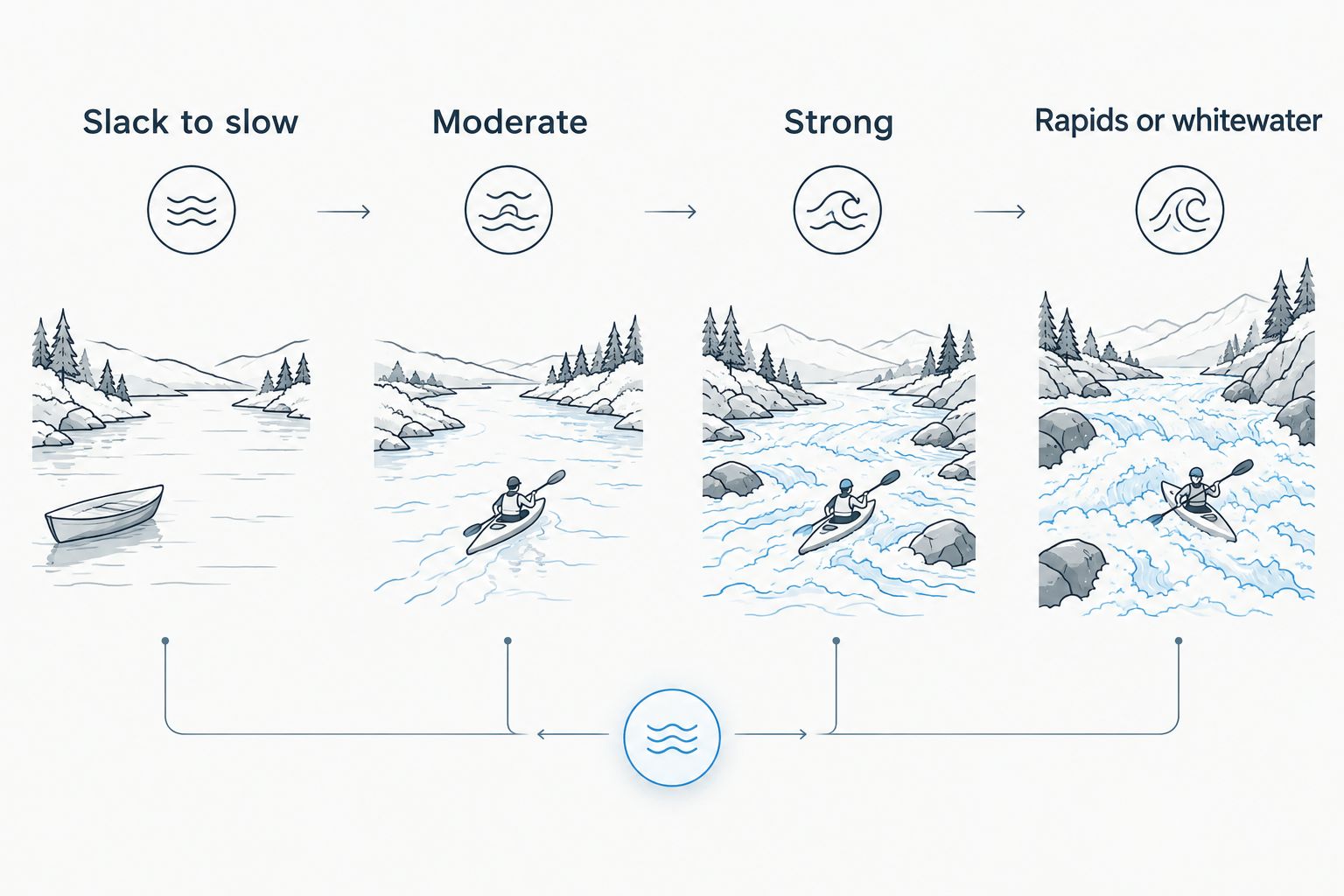
Effectiveness drops in direct proportion to how much the current bows your line before you can feel a bite. Here's how that plays out across current levels:
| Current Level | What It Feels Like Wading | Handline Effectiveness | Adjustment Needed |
|---|---|---|---|
| Slack to slow | Barely pushes against your legs | High — full control and clean bite detection | None, standard rig works |
| Moderate | Steady push, stable footing | Good — still workable with attention to line angle | Lighter line, shorter drifts |
| Strong | Hard to stand still without bracing | Reduced — line bows, hooksets delay | Downsized weight, close-range fishing only |
| Rapids / whitewater | Unsafe or impossible to wade | Not effective | Skip; find slower water nearby |
The table holds regardless of species or bait — current physics don't care what's on the hook.
Slow to moderate current: handline fishing performs well
This is the range where a hand reel setup does everything a rod does, minus the bulk. Line stays relatively straight from your hand to the rig, bite transmission is immediate, and you can work a seam or undercut bank for as long as you want without fighting the water itself. Verdict: Buy into handline fishing here — it's the sweet spot for a kit like the GoReel River Fishing Kit.
Strong current: handline fishing works with technique changes
Once the water pushes hard enough that you need to brace against it, the line between your hand and the rig starts to bow downstream before you even feel a strike. You can still catch fish here, but it takes a lighter line, a heavier or more streamlined weight to hold bottom, and shorter drifts close to your position instead of long casts across the current. Verdict: Hold — workable, but only with adjusted line weight and closer-range presentations.
“If the current bows your line into a C-shape before the retrieve even starts, it's too strong for straight handline work.”
Heavy rapids and whitewater: handline fishing is not practical
At this point the problem isn't feel or technique, it's physics and safety. Water moving fast enough to be called rapids will rip line out of your hand, drag any reasonable rig downstream instantly, and make wading dangerous regardless of gear. Verdict: Skip — move to a slower seam, eddy, or pool instead of forcing the technique in water it was never suited for.
Why handline fishing river current results vary
A handful of factors decide whether a given river stretch rewards a hand reel or punishes it:
- Line diameter — thinner line cuts through current with less drag but sacrifices some abrasion resistance on rocky bottoms.
- Rig weight — too light and the current sweeps your bait past fish before they see it; too heavy and it's a fight to feel a bite.
- Wading position — fishing from behind a rock, log, or current break puts you in a slower pocket even when the main channel is moving fast.
- Retrieve control by hand — without a rod tip to signal a strike, your hand has to read tension changes directly, which takes more practice in faster water.
- Water clarity — stained or high water after rain often pushes fish tight to the bank, which happens to be the calmer water a hand reel handles best anyway.
- Species behavior — fish holding in current seams behave differently than fish in slack pools, and a handline setup favors the close-in, seam-and-eddy style of fishing over long-distance drifting.


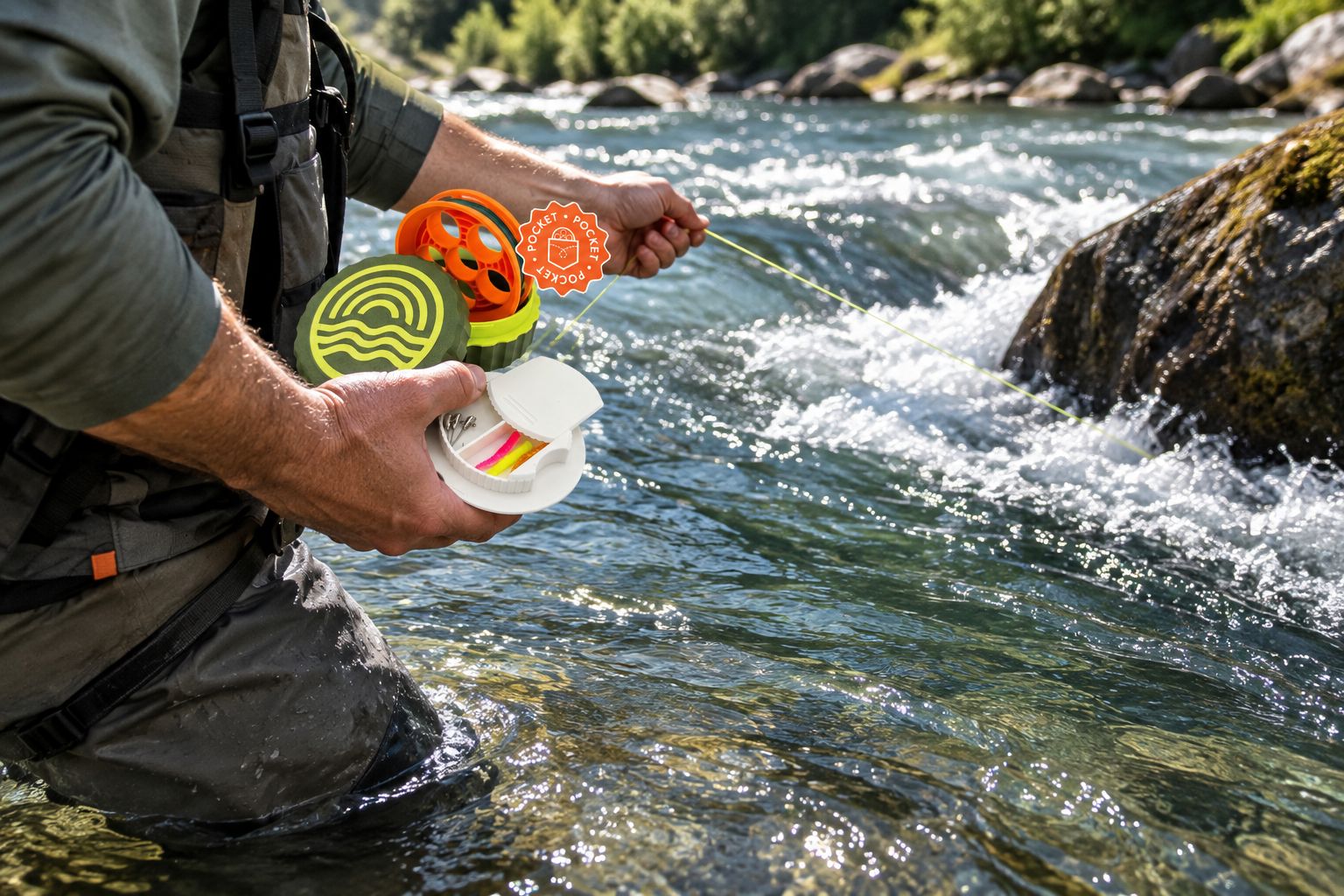
Line choice deserves its own attention here. A guide on best handline fishing reels breaks down how reel and line pairing changes between still water and current, which matters more in 2026 as more anglers move from spinning setups to hand reels for river work.
Is hand line fishing good for river fishing overall?
Hand line fishing is good for river fishing in slow-to-moderate current, especially along seams, eddies, and undercut banks where a hand reel's direct feel outperforms a rod's flex. It struggles in fast, open channels where a rod's length helps manage line angle across the current — pick your spot on the river more than you second-guess the technique.
Do you need a rod to fish moving water effectively?
No, a rod is not required to fish moving water effectively, but it does help in wide, fast channels where extra length keeps line off the surface. In tighter river stretches with current breaks and structure close to the bank, a hand reel setup does the same job with less gear to manage.
What line strength works best in river current?
Lighter line, in the range anglers already use for panfish and trout in ponds, tends to cut through river current with less drag than heavier line built for big-water species. The S.O.S. 6lb fishing line is built as a smooth copolymer for exactly this kind of light-line control, which matters more in current than raw pound-test strength.
FAQ
Is handline fishing effective in rivers with strong current?
Handline fishing effectiveness drops sharply once current gets strong enough to bow the line before a bite registers. It still works close to the bank in seams and eddies, but open, fast channels are better left to a rod or skipped entirely.
Can you catch trout with a handline in a river?
Yes, trout are commonly caught on a handline in rivers, especially in slower pools and behind current breaks where the fish already hold. Fast riffles make bite detection harder without a rod tip to signal the strike.
What's the best current speed for handline fishing?
Slow to moderate current, the kind you can stand in without bracing hard, is the best speed range for handline fishing. Beyond that, line control and hookset timing both suffer.
Does line weight matter more than current speed for handline fishing?
Line weight matters more day-to-day since a thinner line cuts through current with less drag than a thick one built for heavy fish. Matching line diameter to the river beats worrying about the current number itself.
Is a hand reel or a rod better for river fishing?
A hand reel works best in tight river spots with current breaks, undercut banks, and close-range presentations. A rod holds an edge in wide, fast channels where extra length manages the line angle across moving water.
How do you fish a hand reel in a fast-moving river?
Fish a hand reel in fast water by targeting current seams and eddies close to your position rather than casting into the main channel. Downsize your weight and shorten your drift so the line stays close to straight between your hand and the rig.
Can a hand reel handle whitewater or rapids?
No, whitewater and rapids move too fast and too unpredictably for a hand reel or any handline setup to control. Find a slower pool, eddy, or seam nearby instead of forcing the technique in water it can't manage.
One last thing
The anglers who get the most out of handline fishing river current situations aren't fighting the fastest water on the river — they're reading it and fishing the slow seams tucked right beside it. A current break the size of a single rock can turn unfishable water into the best spot on the stretch, and that's true whether you're holding a $200 rod or a compact kit like the GoReel Rodless Hand Reel Fishing Kit - River.


