

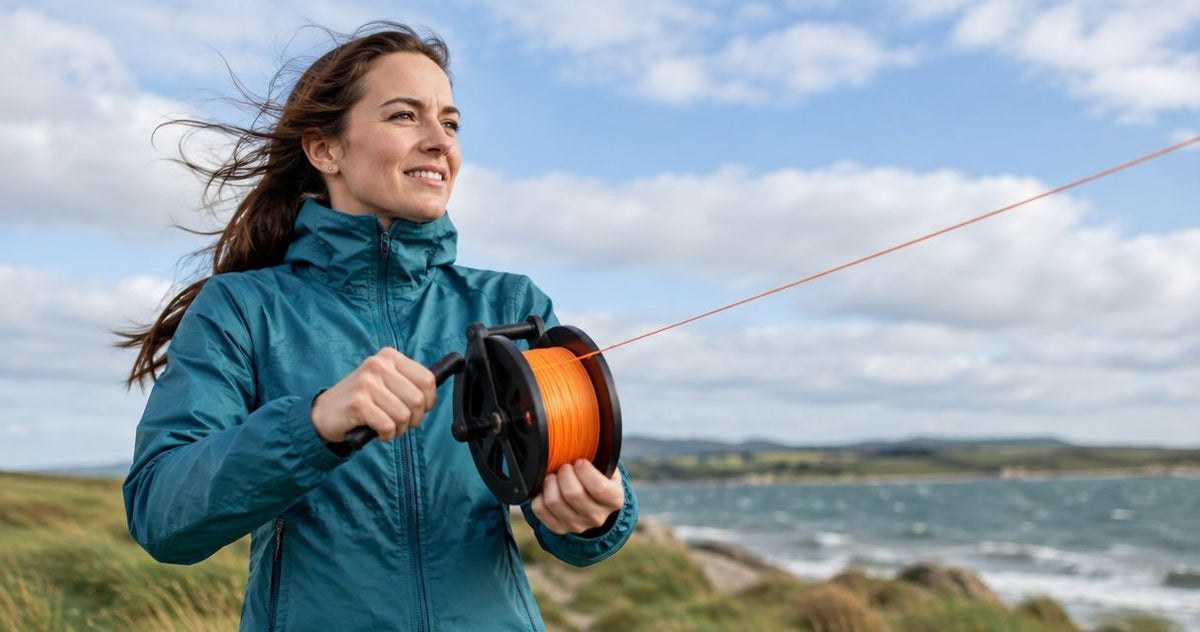
A hand reel casts fine in anything up to a moderate breeze, and a GoReel still puts bait in front of fish through gusty afternoons on most ponds and rivers. Where it loses ground to a rod is distance, not function — with no long blank to whip the line forward, a hand reel loses more yardage per mph of wind than a spinning setup does.
- A hand reel like the GoReel stays fishable through winds up to roughly 18 mph, the top of a moderate breeze on the Beaufort scale.
- Casting distance drops faster on a hand reel than a rod because there's no blank to add leverage to the lob.
- A tighter GoReel line lock and a heavier jig, like the 1/8 oz Double Cross jig head, cut wind drift on the cast.
- Wind above 19 mph shortens every caster's distance in 2026, rod or no rod — it's not a hand reel-specific weakness.
- Low-profile reels like the GoReel Pro carry less surface area than an open bail spinning reel, so gusts snag less line off the spool.
Why this matters
Anglers moving from a spinning combo to a pocket-sized GoReel Pro hand reel usually ask one question before they buy: will wind ruin the whole point of going compact? It's a fair worry — a hand reel has no rod tip to load and release, so the physics of casting change the moment you swap gear. Understanding what actually changes in gusty weather, and what doesn't, decides whether a hand reel replaces your rod or just supplements it.
The short version for 2026: wind doesn't break a hand reel. It shortens your cast, same as it shortens a spinning rod's cast, just by a different margin.
Does a hand reel work well in windy conditions?
Yes, for the wind ranges most anglers actually fish in. The table below breaks down what changes between a hand reel, a spinning rod, and a spincast rod when the wind picks up.
| Factor | Hand reel (GoReel) | Spinning rod & reel | Spincast rod & reel |
|---|---|---|---|
| Casting motion | Underhand lob, short release | Full-arm overhead cast with rod leverage | Overhand push-button cast |
| Surface area exposed to gusts | Palm-sized reel body, no blank | Rod blank plus an open bail arm | Nose cone plus blank |
| Casting distance in gusty wind | Drops the most — no lever to punch through gusts | Holds up best due to rod leverage | Middle ground |
| Line control after the cast | Direct hand tension, feels drift instantly | Bail and drag mediate feel | Push-button drag mediates feel |
| Best for | Close-range pond and river work in wind | Longer casts across open, windy water | Casual bank fishing in light wind |
Verdict: a GoReel hand reel is best for anglers fishing within 20-30 feet of the bank on ponds and small rivers, where casting distance in wind matters less than setup speed and pocket portability. A spinning rod still wins on open lakes where you need to punch a long line into a headwind.
Light wind (1-7 mph): hand reels barely notice it
At light air and light breeze — the 1 to 7 mph range on the Beaufort scale — a hand reel casts almost exactly like it does on a calm day. The lob trajectory is short enough that gusts in this range don't have time to grab the line before it lands. Buy: this is the range the GoReel was built for.
Moderate breeze (8-18 mph): still very fishable, shorter casts
Between 8 and 18 mph, a hand reel stays usable, but expect your casts to land 15-25% shorter than on a still day, since the underhand lob has no rod leverage to fight the crosswind. Anglers fishing pond edges or narrow river bends won't notice much of a difference because they're already casting short. Hold: switch to a heavier jig or a weighted bubble to keep distance up in this range.
Strong wind (19 mph and up): every setup loses distance
Once wind crosses 19 mph, every kind of tackle loses casting distance — a hand reel just loses more of it than a rod does, because a rod's blank still adds leverage a hand reel can't replicate. This is the range where a spinning rod's extra reach starts to matter more than a hand reel's portability. Wait: fish sheltered water, a lee shore, or a covered dock instead of forcing casts into open wind.
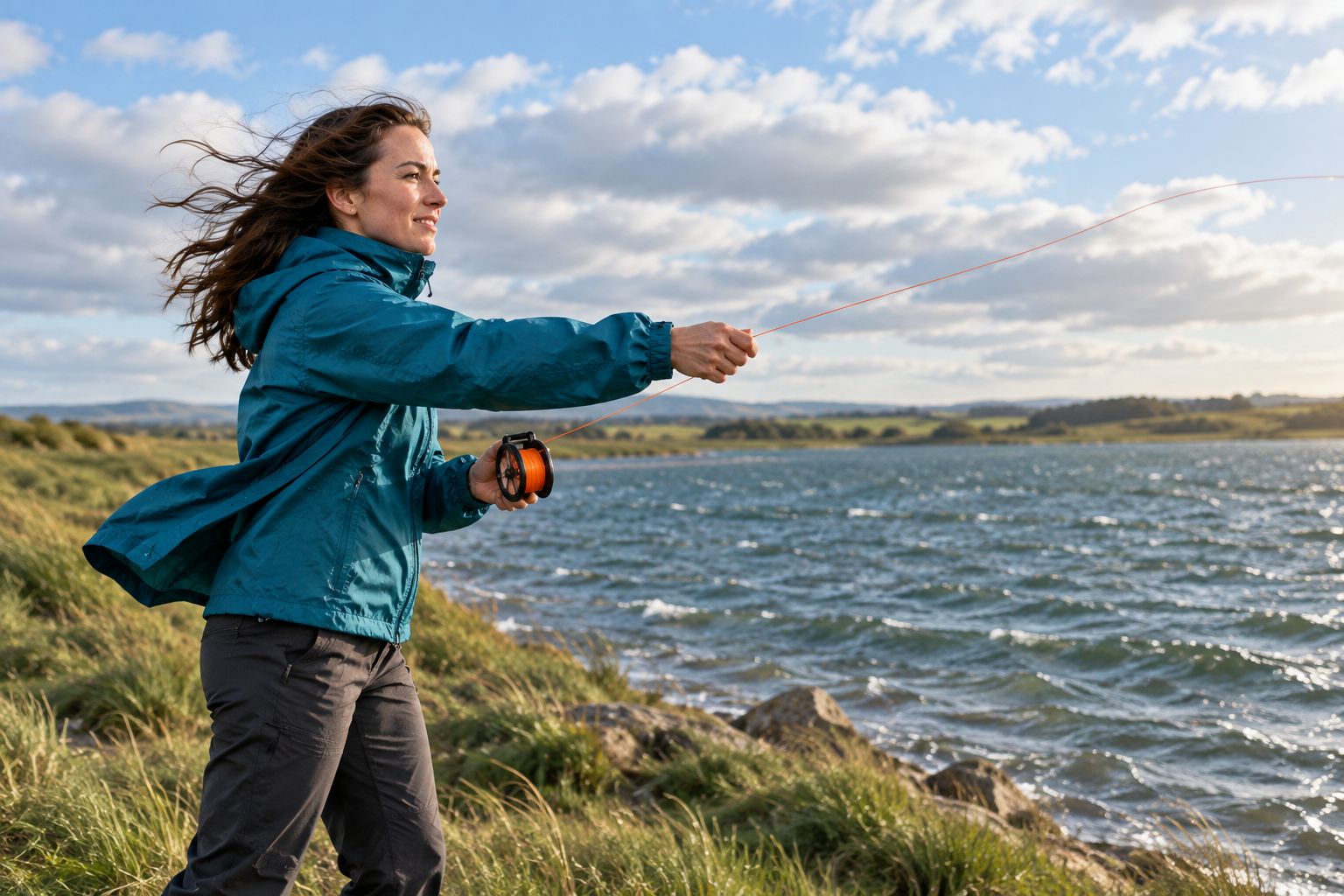
Why hand reel casting distance drops in wind
A few mechanical factors decide how much wind eats into your cast, and only some of them are things you control:
- No rod leverage — a rod blank stores energy on the backswing and releases it on the forward cast; a hand reel relies entirely on arm speed and gravity.
- Lighter running line catches more air — thin monofilament billows in a crosswind before the weight at the end pulls it taut.
- Underhand trajectory sits lower and flatter — that keeps the cast out of the strongest gusts higher up, but it also means less forward momentum to begin with.
- Loose coils on the reel release energy early — a snug, even wrap on a GoReel line lock keeps line paying out cleanly instead of ballooning mid-cast.
- Lure or jig weight matters more than usual — a 1/8 oz Double Cross jig head cuts through a crosswind better than a bare hook and split shot.
- Casting angle relative to the wind — casting with a quartering wind at your back adds distance; casting straight into it costs the most.
Can you cast a hand reel into the wind at all?
Yes, a hand reel casts into headwinds, it just travels a shorter distance than the same cast with the wind at your back or side. Angling your lob slightly downward and using a heavier terminal weight recovers most of the lost distance. Most pond and river anglers fish close enough to the bank that this loss barely matters.
Does heavier fishing line help in windy conditions?
Heavier line itself doesn't help much, since it's the terminal weight — not the line diameter — that punches through wind. A heavier jig head or a weighted casting bubble does more for windy-day distance than upgrading line strength alone.
Is a hand reel better than a spinning rod in the wind?
A hand reel is better for close-range fishing in the wind because it sets up faster and there's no rod blank to flex or whistle in gusts. A spinning rod is better once you need real distance across open, windy water, since the blank's leverage outperforms an underhand lob every time.


FAQ
Does a hand reel work well in windy conditions?
A hand reel like the GoReel stays fishable through winds up to about 18 mph, the top end of a moderate breeze. Casting distance shortens more than it would with a rod, since there's no blank to add leverage.
What wind speed is too much for a hand reel?
Wind above 19 mph starts cutting casting distance on any setup, hand reel or rod, and it's usually the point where a hand reel loses more distance than a spinning rod does. Fishing a sheltered bank or dock at that point beats forcing casts into open wind.
Can you cast a hand reel into a headwind?
Yes, a hand reel casts into a headwind, just at a shorter distance than with the wind at your back. Adding a heavier jig or casting bubble recovers most of the lost yardage.
Is a spinning rod better than a hand reel in the wind?
A spinning rod outperforms a hand reel on distance in windy conditions because the rod blank adds leverage an underhand lob doesn't have. A hand reel still wins on setup speed and close-range fishing along a bank in 2026.
Does a heavier lure help a hand reel cast in wind?
Yes, a heavier jig head or weighted casting bubble punches through wind better than a light bait, since terminal weight — not line strength — drives distance in gusty conditions. A 1/8 oz jig head is a reasonable starting weight for breezy days.
Do hand reels tangle more in the wind?
A snug, even wrap on the reel's line lock prevents most wind-related tangles; loose coils are what balloon and snag mid-cast. Checking the wrap before each cast matters more in wind than on calm days.
What's the best hand reel for windy pond or river fishing?
The GoReel Pro line, with its tighter line lock and low-profile body, handles windy pond and river fishing better than lighter pocket kits because less line sits exposed to gusts on the reel face.
One last thing
Most anglers blame the reel when a windy-day cast falls short, but the real fix is almost always the terminal weight, not the gear. Swap to a heavier jig head or a weighted bubble before you assume a hand reel can't handle a breezy afternoon in 2026 — that single change recovers more distance than any casting technique tweak will.


