

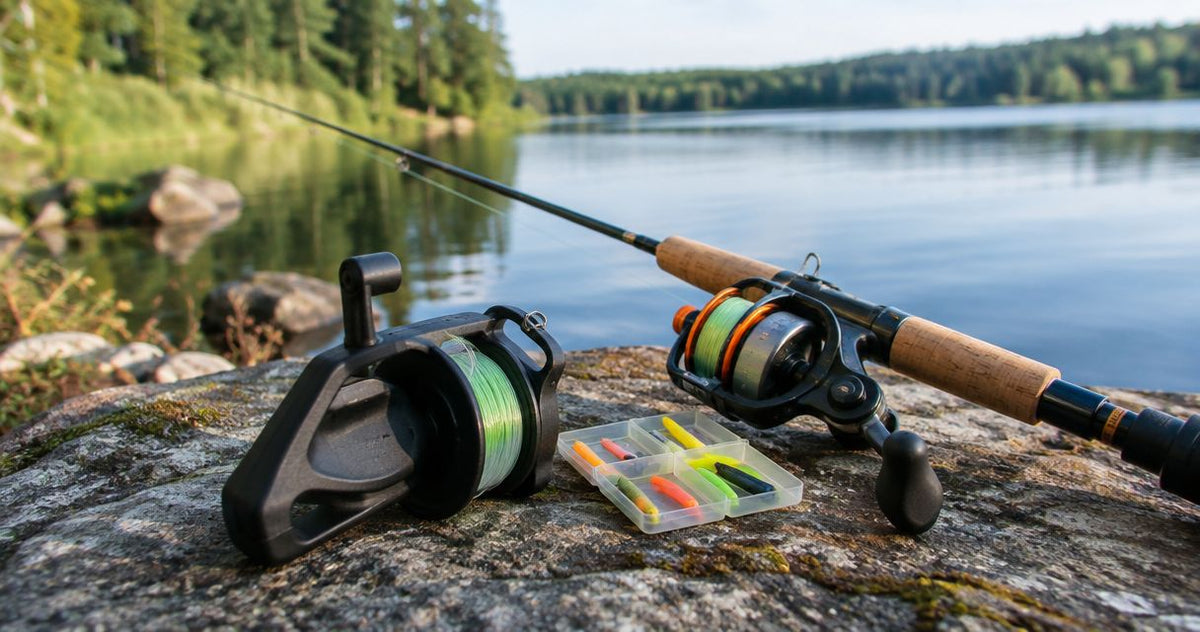
Instead of cutting off a jig and rebuilding your tackle each time you change spots, rig the GoReel hand reel and Trout Magnet Spin Combo separately. Switch by picking up the setup that fits the water; move a lure between them only when you need to.
- For a GoReel Trout Magnet Spin Combo switch, keep both rigs ready rather than transferring line between them.
- Crystal Creek Gear's GoReel hand reel is best for compact, close-range fishing; use the spin combo when you want a rod.
- To move one jig between rigs, cut it off, inspect the line and tie it to the other setup.
- Check a light jig's casting behavior before adding a casting bubble to the GoReel setup.
Why this matters
A GoReel hand reel and a Trout Magnet Spin Combo hold line differently. You manage line directly on the hand reel; the spin combo gives you a rod and spinning reel. The quickest switch is between two ready-to-fish rigs, not a transfer of line from one reel to the other. That distinction saves you from dismantling a setup that already works.
Crystal Creek Gear sells GoReel hand reel kits for anglers who want compact gear at lakes, rivers and ponds. The hand reel is easy to carry when a rod is awkward to bring along. Its trade-off is direct line handling: you control the cast, retrieve and tension with your hands. The spin combo keeps those jobs on a rod and reel, but asks you to carry the rod between spots.
In 2026, set up both before leaving home if you expect to use both. You can still travel with just the hand reel on days when carrying a rod defeats the point of the trip.
Which rig should you pick?
| Setup | Best for | What it does well | What you give up |
|---|---|---|---|
| GoReel hand reel | Anglers prioritizing compact carry and close-range presentations | Keeps the setup rodless and lets you handle the line directly | No rod to guide the lure or absorb changes in line tension |
| Trout Magnet Spin Combo | Anglers who want to cast and retrieve with a rod | Uses a rod and spinning reel to control the line | Adds a rod to carry and manage along the bank |
Crystal Creek Gear's GoReel hand reel is best for the angler who wants to fish without carrying a rod; the Trout Magnet Spin Combo is best when rod-and-reel line control matters more than pack size. Neither choice removes the need to check where the lure can travel. Branches behind you affect a rod cast; vegetation, people and obstacles in front of you affect a handline cast too.
If you are trying to decide what to take on a short walk, start with the carrying question. If the rod is coming anyway, leave the spin combo rigged. If the goal is to stop at the water without bringing a rod, prepare the hand reel for that trip rather than stripping parts off the combo at the shoreline.
Before you start
- Have a GoReel hand reel and your Trout Magnet Spin Combo, each with its own line. You need access to both rigs before you can prepare a switch between them.
- Pack the jig heads and bodies you intend to fish, plus a line cutter and a place to secure loose hooks. If you plan to share one lure, bring what you need to retie it.
- Check the casting weight before you walk to the bank. A very light jig can be difficult to cast by hand on its own. If your setup calls for a casting bubble, bring an A-Just-A-Bubble Mini Clear and check its rigging instructions before attaching it.
That last check is the one to do at home in 2026. Discovering that a lure will not cast the way you expected is frustrating after both rigs are already assembled and your tackle is spread out beside the water. Test the complete setup in a clear, safe area, away from other people.
Prepare each line separately
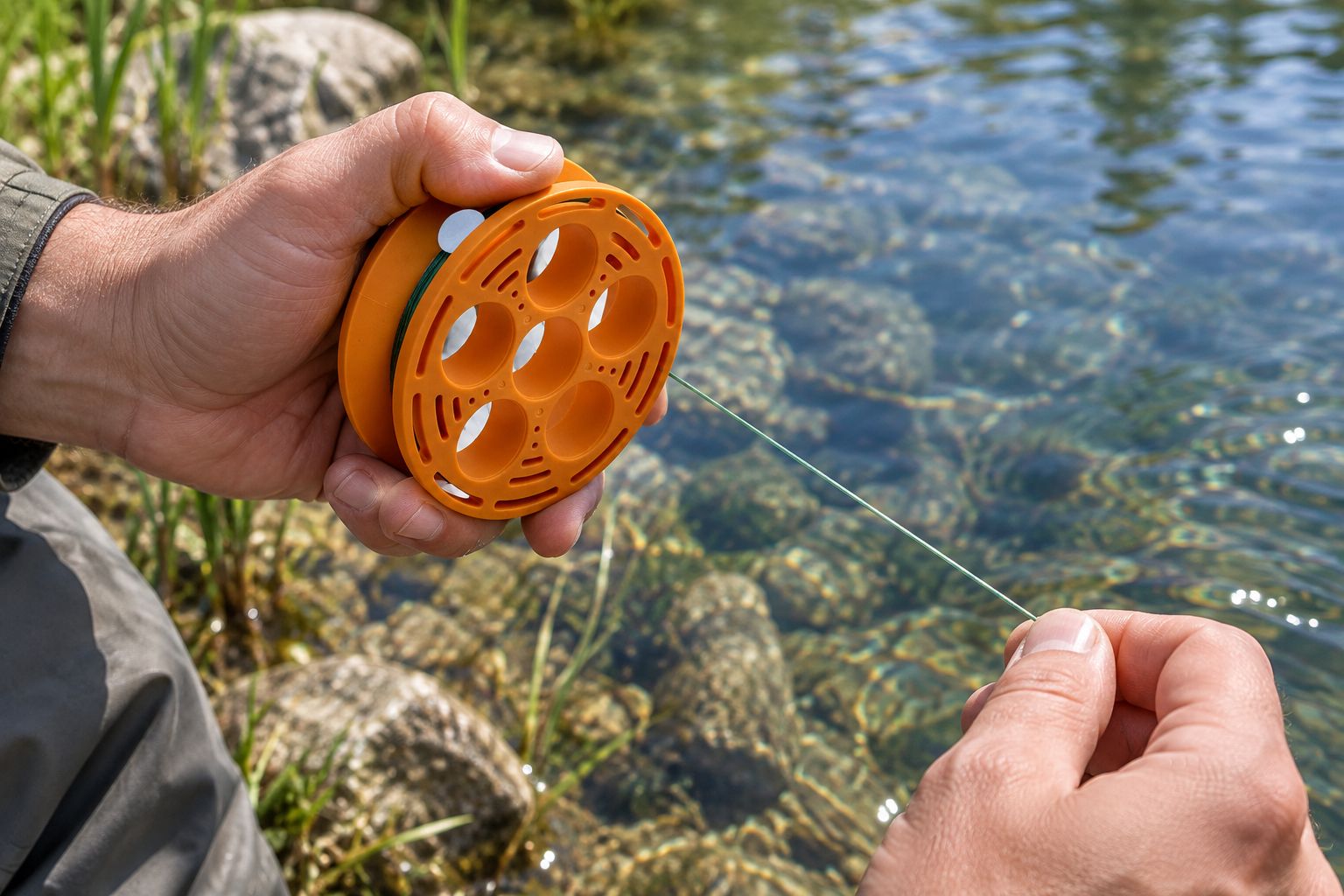
- Inspect the hand-reel line. Pull out the section you expect to use first. Cut away visibly frayed or damaged line before you attach a lure.
- Inspect the spin-combo line. Check the section near its existing knot and replace damaged line there too. Do not assume a knot is sound because the lure is still attached.
- Choose a lure for each rig. Put a jig on each setup if you want an immediate changeover. If you have only one jig you want to use, leave the second rig ready to receive it and plan to retie.
- Secure the hooks for travel. Keep exposed points from catching your clothing, bag or hands while you carry the rig you are not using.
Expected result: both rigs have sound line, and you know whether your next switch is a simple pickup or a cut-and-retie job. You have not tried to connect two reels to the same working line.
Keep the tackle choices separate from line maintenance. The product name of a jig does not tell you whether the line currently on either reel is in good condition. Check the part you can see and handle before you start casting, then check it again after a snag or hard pull.
Set up the GoReel hand reel
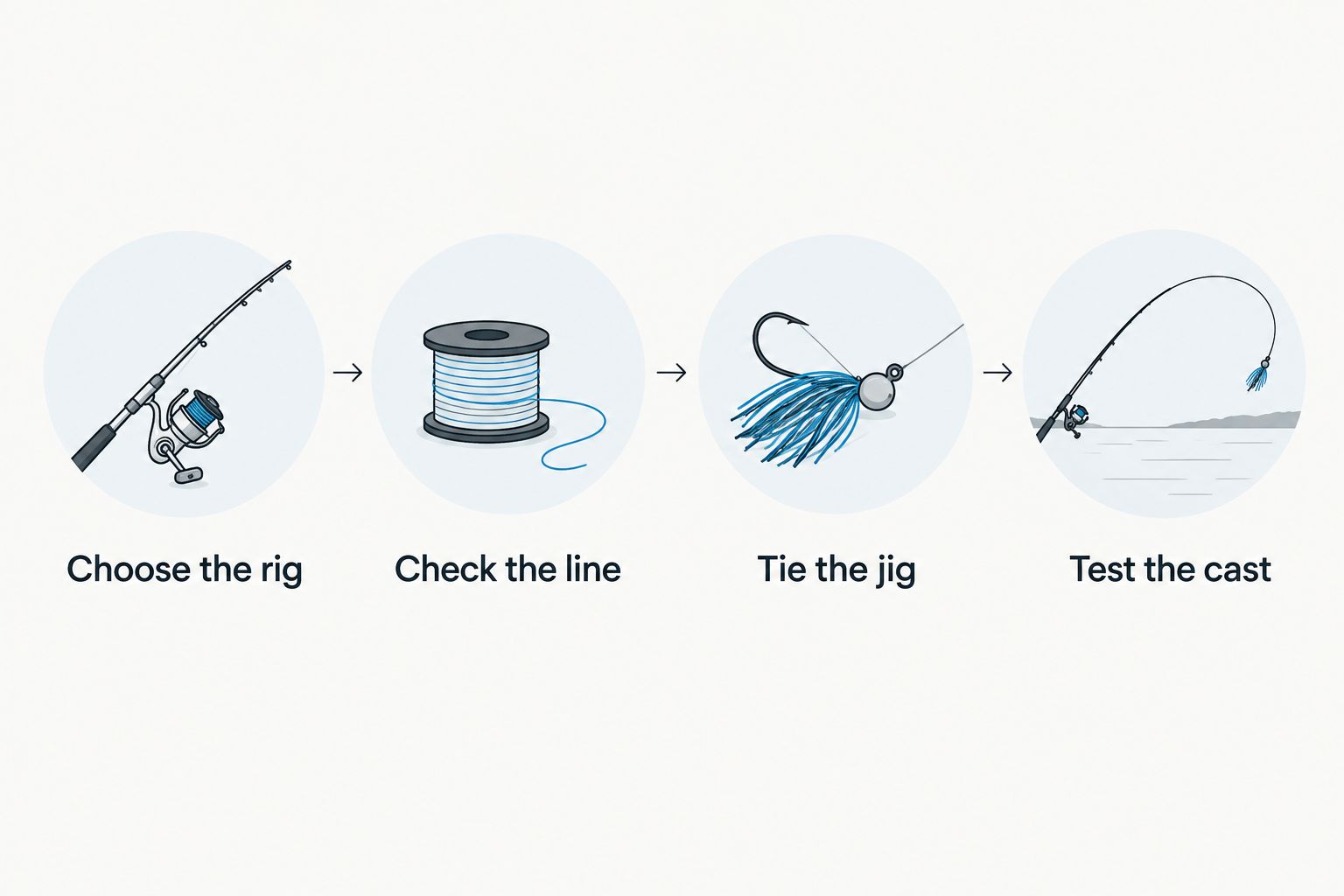
- Choose the rig. Start with the GoReel when you want a rodless setup and have room to move the line and lure safely.
- Check the line. Confirm that it comes off the reel without catching and that you can manage the loose line during the cast and retrieve.
- Tie the jig. Attach your chosen jig with a knot appropriate for the line. Pull on the finished connection to check it before casting.
- Test the cast. Make a controlled cast in a clear area. If the lure is too light to present as intended, stop and assess a casting bubble rather than forcing a harder throw.
Expected result: the jig stays attached, the line feeds without snagging, and you can retrieve it under control. If you add a bubble, test that complete rig as a separate setup; do not assume it will behave like the bare jig.
Those are the four checks to repeat after a change in tackle. A different lure can alter the cast even when you have not touched the reel. Keep loose line clear of your feet and never wrap fishing line around your fingers to hold a fish or free a snag. Direct line handling is useful, but it calls for attention that a rod handle does not.
Set up the Trout Magnet Spin Combo
- Check the rod and reel. Confirm that the line runs through the rod guides and comes off the spinning reel without an obvious snag.
- Tie on the jig. Attach the Trout Magnet jig you want to fish, then pull on the knot to check it. Keep spare hooks and bodies contained while you work.
- Make a controlled cast. Watch how the jig travels and falls. Adjust your presentation based on what the lure actually does on this setup, not on how it behaved on the hand reel.
- Secure the rig for the walk. Before moving between spots, control the hook and loose line so the ready-to-fish setup does not become a tangle.
Expected result: the jig casts and retrieves on the spin combo without loose line catching on the rod or tackle. You can set the rod aside safely when you pick up the GoReel.
Do not copy a line specification from another lure onto this setup without checking the tackle you own. For example, the Trout Slayer pack is described with 1/64 oz hooks, while the Double Cross jig-head listing identifies 1/8 oz heads. Those are different items, not stated weights for a Trout Magnet jig. Use the details of the jig in your hand when deciding how to present it.
Make the switch at the bank
- Bring the active lure in. Finish the retrieve before you put down either rig. Keep the hook away from hands and clothing.
- Secure the first setup. Wind in loose line and control the hook. Do not leave an exposed jig where someone can step on it.
- Pick up the prepared rig. Check that its line and lure are still free of tangles after the walk or while it sat beside you.
- Test the first cast. Start with a controlled presentation. A hand reel and a spin combo ask you to manage line differently, even when the jig is familiar.
Expected result: you change how you are fishing without unspooling either reel or disturbing a working knot. The unused rig is secure, and the new one is ready to fish.
That is the core 2026 workflow: prepare both, secure one, pick up the other. It is less complicated than trying to make every component interchangeable. The jig box can serve both rigs even though each reel keeps its own line.
At a bank with limited space, pause before the first cast and check the path of the lure. The rod needs clearance for the motion you choose. The hand reel still needs a clear route for the lure and loose line. Switching rigs changes your casting motion; it does not make nearby obstacles disappear.
Move one jig between the rigs
Sometimes you want to keep fishing the same jig rather than use the lure already tied to the second setup. That is a different switch: move the lure, not the working line. It takes a new knot, so make the change where you can see the hook and keep small parts contained.
- Retrieve the jig fully and secure the rig you are setting down.
- Cut the jig free, leaving the rest of that rig's line on its own reel.
- Inspect the line on the rig you are picking up. Remove a damaged end before tying.
- Tie the jig to the second rig, check the knot with a steady pull, and make a controlled test cast.
Expected result: the same jig is fishing on the other rig, while each reel still holds its original line. You have made one deliberate tackle transfer rather than trying to transfer a wound reel or a loose length of line at the water's edge.
For your 2026 tackle box, keep spare jig heads and bodies together so a dropped piece does not turn into a search through the grass. The GoReel Empty Kit is a starting point if you want to organize a setup around the tackle you choose to carry; its name does not mean the spin combo and hand reel share a spool.
Troubleshooting
- The light jig does not cast as intended on the hand reel. Stop trying to solve it with a harder throw. Check whether a casting bubble fits the presentation you want, then test the newly rigged line in a clear area.
- The line catches while leaving the hand reel. Bring the lure in and look for loose loops or an obstruction before casting again. Keep the line clear of your feet while you correct it.
- The jig will not cast cleanly on the spin combo. Check the line's path through the rod guides, then look for a snag at the reel or lure. Fix the obstruction before changing your casting motion.
- A knot slips after a tackle transfer. Cut it off and tie a fresh knot appropriate for your line. Check the connection with a steady pull before returning the jig to the water.
- Hooks snag while you carry the unused rig. Secure the hook and control the loose line before you move. Do not leave either setup trailing an exposed jig along the path.
Each fix starts by bringing the lure in. Continuing to cast with a snag, damaged line or questionable knot makes it harder to tell which part of the setup needs attention.


Customize your workflow
After a few trips, decide whether you actually use both rigs on the same outing. If you always fish one bank with a rod, keep that setup ready and carry the hand reel for trips when you want less to bring. If you regularly alternate, give each rig its own tied-on lure and store spare tackle where you can find it without opening everything beside the water.
Crystal Creek Gear's compact GoReel kits are an option for anglers who want a prepared hand-reel setup for a lake, river or pond. Keep the spin combo as its own working setup. That division is more useful than a complicated shared-line arrangement: a problem on one reel does not require you to take apart the other.
If line condition is what slows you down, pack a clearly identified spare. The S.O.S Fishing Line listing specifies 6 lb line; check whether that line suits the rig and fishing you intend before using it. Carrying spare line is not a substitute for inspecting the line already on the reel.
FAQ
How do you switch between a GoReel hand reel and a Trout Magnet Spin Combo?
Keep each rig lined and ready, secure the one you are using, then pick up the other. If you want to use the same jig, cut it off and retie it rather than transferring line between reels.
Can you use a Trout Magnet jig on a GoReel hand reel?
You can tie a jig to a GoReel hand reel, but you need to test whether that light lure casts as intended. A casting bubble is an option to assess if the bare jig does not give you the presentation you want.
Is a GoReel hand reel better than a Trout Magnet Spin Combo?
The GoReel hand reel is better when your priority is fishing without carrying a rod; the Trout Magnet Spin Combo is better when you want rod-and-reel line control. Neither replaces a check of casting space and line condition.
Do you need to move the same line between the GoReel and spin combo?
No. Keep line on each reel and move only the lure if you need the same jig on both setups. Cut and retie it to sound line on the rig you are picking up.
What should you check before the first cast after switching rigs?
Check the knot, line path, hook and casting area before the first cast. Make a controlled presentation to see how the lure behaves on the new setup.
Why will a light jig not cast well from a hand reel?
A light jig can be difficult to present by hand without additional casting weight. Check the lure and your setup, then test whether a casting bubble gives you the cast you need.
What is the easiest setup to carry for an unplanned fishing stop?
A Crystal Creek Gear GoReel hand reel is the rodless option if compact carry is the priority. Keep its line and chosen tackle ready before you leave so the stop does not begin with a full rigging job.
One last thing
The smartest 2026 switch happens before the first cast: decide whether you need two ready rigs or just one compact one. Crystal Creek Gear's GoReel hand reel does not need to imitate a spinning rod to earn a place in your kit. Let each setup do its own job, and keep your attention on the water rather than a pile of loose line.


