

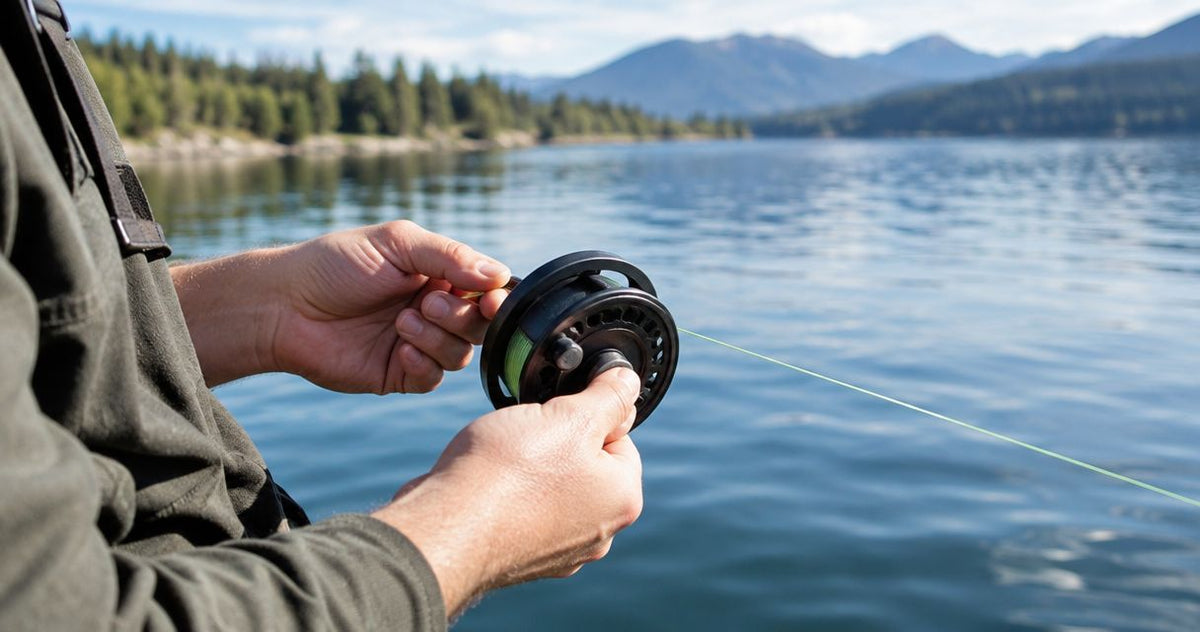
Trying to cast an A-Just-A Bubble with a fly rod but no fly rod on the trip? Skip the rod entirely — the A-Just-A Bubble Mini Clear casts fine off a GoReel hand reel with the same underhand lob you'd use on a spinning outfit, and you skip the rod tube altogether.
- You can cast an A-Just-A Bubble with a hand reel using an underhand lob, no fly rod needed.
- Partially filling the bubble with water adds the casting weight a rodless setup needs.
- The GoReel Hand Reel and Line Lock rigs the bubble in under five minutes with basic hand tools.
- A stopper knot or bead keeps the bubble from sliding down onto your fly or jig mid-retrieve.
- Works with dry flies, wet flies, jigs, and light live bait rigs in 2026 as it always has.
Why this matters
Fly anglers reach for a bubble rig when they want to cast a weightless fly farther than a fly line alone allows — the water-filled chamber adds mass, the fly rides behind it. Problem is, most hand reel owners never touched a fly rod and don't want to start now.
A hand reel doesn't need one. The same water-loaded bubble that a fly caster lobs off a 9-foot rod casts just as well off a palm-sized reel, because the mechanics are identical: weight goes out, line pays off behind it, fly follows. The GoReel hand reel line skips the rod and casts the bubble rig by hand, and 2026 anglers are doing it on ponds and small rivers where a rod is dead weight anyway.
Before you start
- A hand reel with an open line path — the GoReel Hand Reel and Line Lock works, as does any GoReel Pro body, since the bubble needs to slide freely off the spool without a rod guide catching it.
- The A-Just-A Bubble itself, a stopper (bead, small barrel swivel, or overhand knot), a leader, and your fly or jig — the bubble does nothing without something trailing behind it.
- The gotcha: an empty or nearly-empty bubble casts like a ping-pong ball off a hand reel — it stalls in the air and drops short. Fill it before you leave the truck, not streamside when your hands are cold and the knot's already tied.
Rig the GoReel for the bubble cast
- Thread your main line through the reel's line path and tie it to the swivel end of the A-Just-A Bubble using an improved clinch knot.
- Unscrew the bubble's top cap and partially fill the chamber with water — more water adds more casting weight, less water keeps the rig lighter for close, delicate presentations.
- Screw the cap back down until it seats fully; a loose cap leaks water mid-cast and turns your weighted bubble back into a dead float.
- Tie 18 to 36 inches of leader to the bubble's bottom eyelet, then tie your fly, jig, or bait hook to the terminal end.
- Wind the whole rig — bubble, leader, fly — onto the GoReel's spool, leaving about a foot of leader hanging free past the reel's edge.
Expected result: the bubble sits at the terminal end of your main line, water-loaded, with the leader and fly trailing loose enough to swing free on the first cast.
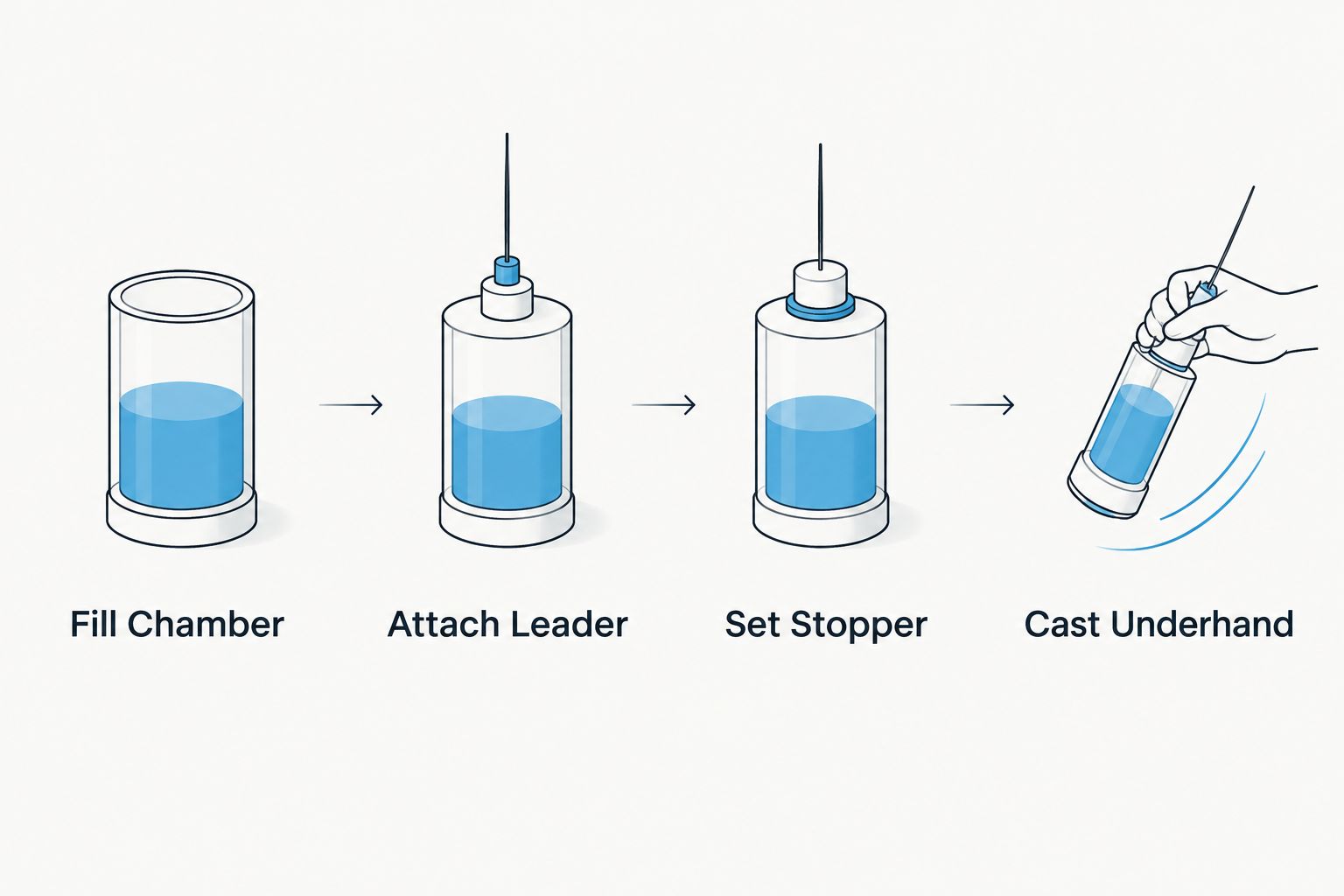
Load and cast the bubble by hand
- Hold the GoReel in your non-dominant hand with the spool facing up and a few inches of line already pulled free.
- Grip the bubble itself between thumb and forefinger of your casting hand — not the leader, not the fly.
- Swing the bubble back in a short underhand arc, then release toward your target the same way you'd lob a bocce ball, letting the reel's spool spin free as line pays out.
- Let the fly and leader trail naturally behind the bubble; don't try to aim the fly separately, the bubble does the steering.
- Once the rig lands, thumb the spool lightly to control slack as the bubble settles and the fly sinks or sits on the surface, depending on what you tied on.
Expected result: the bubble lands first with an audible plop, the leader and fly settle a beat later a few feet beyond it — that gap is the whole point of the rig.
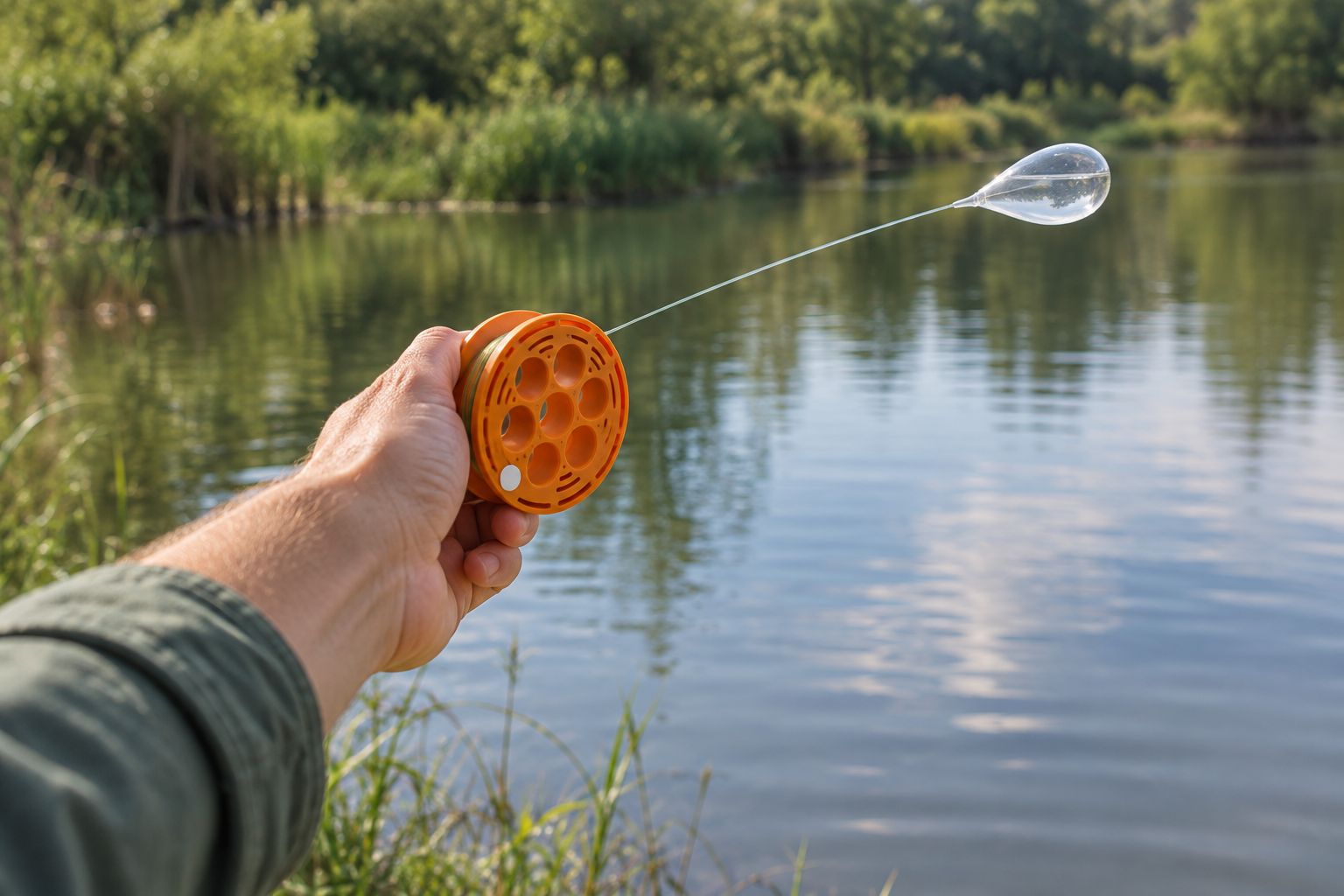
Casting jigs and wet flies instead of dry patterns
The same rig swaps for subsurface work with one change: tie on a jig or wet fly instead of a dry pattern, and reduce the bubble's water fill slightly so the whole rig sinks a touch faster once it lands.
- Cast the same underhand motion, then count down two or three seconds before you start your retrieve to let the jig sink past the surface film.
- Retrieve in short strips rather than a steady wind — the bubble telegraphs strikes as a twitch on the surface even though the jig is doing the work below it.
- This variant works well paired with something like the Double Cross Jig Head on ponds where panfish sit a foot or two down.
Which setup to build the bubble rig on
| Setup | Best for | Verdict |
|---|---|---|
| A-Just-A Bubble Mini Clear | Adding castable weight to a rodless rig | Buy |
| GoReel Hand Reel and Line Lock | Building the bubble rig from a bare reel | Buy |
| GoReel Pro (Blaze Orange, Tidal Blue, Forest Green, Gunmetal Gray) | A heavier hand reel body for repeated long casts | Buy |
| GoReel Rodless Kit (Pond, Lake, or River) | Anglers who want tackle already matched to the water | Buy |


Troubleshooting
- The bubble stalls mid-air and drops short: it's under-filled. Add more water until the bubble carries enough weight to pull line off the spool cleanly.
- The fly tangles around the bubble on landing: your leader is too short. Lengthen it to at least 18 inches so the fly has room to trail separately.
- The bubble slides down and jams against the fly: you skipped the stopper. Tie an overhand knot or thread a small bead onto the leader above the fly to block it.
- Line piles up on the reel unevenly after a cast: you're gripping the spool instead of letting it spin free during the cast — palm the reel's frame, not the spool face.
- Casts feel weak and short even with a full bubble: check your knot at the swivel end — a loose clinch knot lets the bubble slip and absorbs your casting energy instead of transferring it to the line.
Customize your bubble rig
Once the basic rig is dialed in, swap components based on the water you're fishing. A stiffer leader material like the Phantom Fluorocarbon Leader handles rockier bottoms better than standard mono, and swapping fly patterns behind the bubble is the fastest way to test what a given pond or stretch of river is actually eating that day. For a broader rundown of bubble sizes and float rates across species, the best casting bubbles for trout and panfish guide breaks down which bubble size matches which target fish.
FAQ
Can you cast an A-Just-A Bubble without a fly rod?
Yes — the A-Just-A Bubble casts off a hand reel with an underhand lob, the same motion used to throw a bobber rig on a spinning outfit. The bubble's water-filled weight does the work a fly rod's back cast normally provides.
How much water goes in the bubble for hand reel casting?
Partially fill the chamber — more water adds casting weight for longer throws, less water keeps the rig lighter for close, delicate presentations. Test the fill level on a practice cast before committing to a full session.
What stops the bubble from sliding down to the hook?
A stopper knot, bead, or small barrel swivel tied or threaded onto the leader above the fly blocks the bubble from jamming against your hook mid-cast or mid-retrieve.
Does the bubble rig work with jigs, or only dry flies?
Both. Dry flies and wet flies work as-is; for jigs, reduce the water fill slightly so the whole rig sinks faster once it lands, then count down before retrieving.
Which GoReel works best for casting a bubble rig?
The GoReel Hand Reel and Line Lock handles it fine for a bare-bones build, while the GoReel Pro line adds a heavier body that holds up better through repeated long casts in a full day on the water.
How long should the leader be behind the bubble?
At least 18 inches, up to 36 inches, gives the fly or jig room to trail separately on landing instead of tangling around the bubble.
Can you use live bait with an A-Just-A Bubble on a hand reel?
Yes — a light live bait rig behind the bubble casts the same way as a fly or jig, since the bubble is what carries the casting weight, not the bait itself.
Why does my bubble cast fall short even when it's full?
Check the knot at the bubble's swivel end first — a loose clinch knot lets the bubble slip on the cast and bleeds off the energy that should be carrying it toward your target.
One last thing
Most anglers overfill the bubble on the first try, chasing distance, and end up with a rig that splashes down so hard it spooks whatever was sitting nearby. Start with a lighter fill than feels right, add water only if your casts are genuinely falling short — a quieter landing catches more fish than a longer one.


