

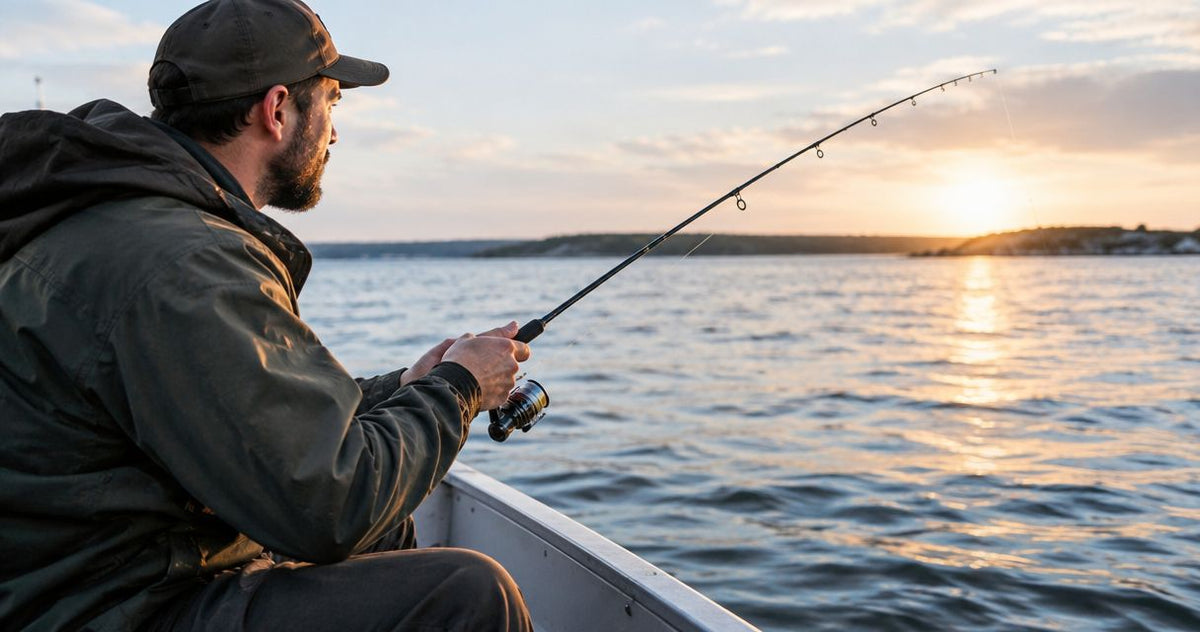
Handline fishing is legal where the rules for your fishing spot allow a hand-held hook-and-line method; it is not automatically legal everywhere in the United States. For a 2026 trip, check the permitted fishing method, license requirements, water-specific restrictions, and rules for your target species before casting. Using a hand reel instead of a rod does not remove those requirements.
- Is handline fishing legal? Yes where local rules permit hand-held hook-and-line fishing; check the exact water first.
- Texas Parks and Wildlife includes hand-held line within its pole-and-line definition; other jurisdictions need their own check.
- Crystal Creek Gear offers compact hand reel fishing gear, not an exemption from fishing licenses or tackle restrictions.
- An attended handline, an unattended setline, and bare-hand fishing are different methods; do not treat their permissions as interchangeable.
Why this matters
A pocket-sized setup makes it easy to stop beside a pond, river, or lake. The legal check still comes first. Small gear does not mean fewer fishing rules.
Crystal Creek Gear sells compact hand reel fishing gear for anglers who want less bulk. That changes what you carry, not which waters you can fish or which fish you can keep. Before your first cast in 2026, establish that your actual setup fits the rules at your actual fishing spot.
The useful question is not just whether handlines are legal in a state. Ask whether an attended hand-held line, with your chosen hook and bait, is allowed in the named water on the day you plan to fish.
Is handline fishing legal?
Handline fishing is legal when the applicable rules authorize the method and you meet the other fishing requirements. There is no single nationwide recreational-fishing permission that covers every lake, river, pond, and coast.
Texas provides a clear example of why the wording matters. Texas Parks and Wildlife's Outdoor Annual includes a hand-held line in its definition of “pole and line.” For a 2026 Texas trip, that definition is the starting point—not permission to ignore freshwater or saltwater rules, species restrictions, or exceptions for a particular water.
A rule using the term “pole and line” therefore does not necessarily require a fishing rod. Read the official definition rather than deciding from the everyday meaning of the words.
Other rulebooks use different terms. Look for “hook and line,” “angling,” “hand-held line,” and “legal fishing devices,” then read the definitions and exceptions attached to them. If the wording does not clearly cover your rodless setup, ask the responsible fisheries agency before using it.
Which fishing method are you actually using?
These methods can look similar from the bank but belong to different regulatory categories. Describe what you do with the line, not just what your gear is called.
| Method | What you do | Practical advantage | Limitation to check |
|---|---|---|---|
| Attended handline | Hold and actively control a hooked fishing line | Keeps the setup simple and under your control | The rules must permit your hand-held method and tackle |
| Unattended setline | Secure a baited line and leave it fishing without holding it | Does not require continuous hand-held operation | Separate device, marking, attendance, or species rules can apply |
| Bare-hand fishing | Catch fish directly with your hands rather than a hooked line | Does not use a hook-and-line setup | Permission for handline fishing does not establish permission for this method |
This table distinguishes methods; it does not authorize any of them. An unattended line is not automatically covered by permission to fish with an attended handline.
How do you check whether your handline is allowed?
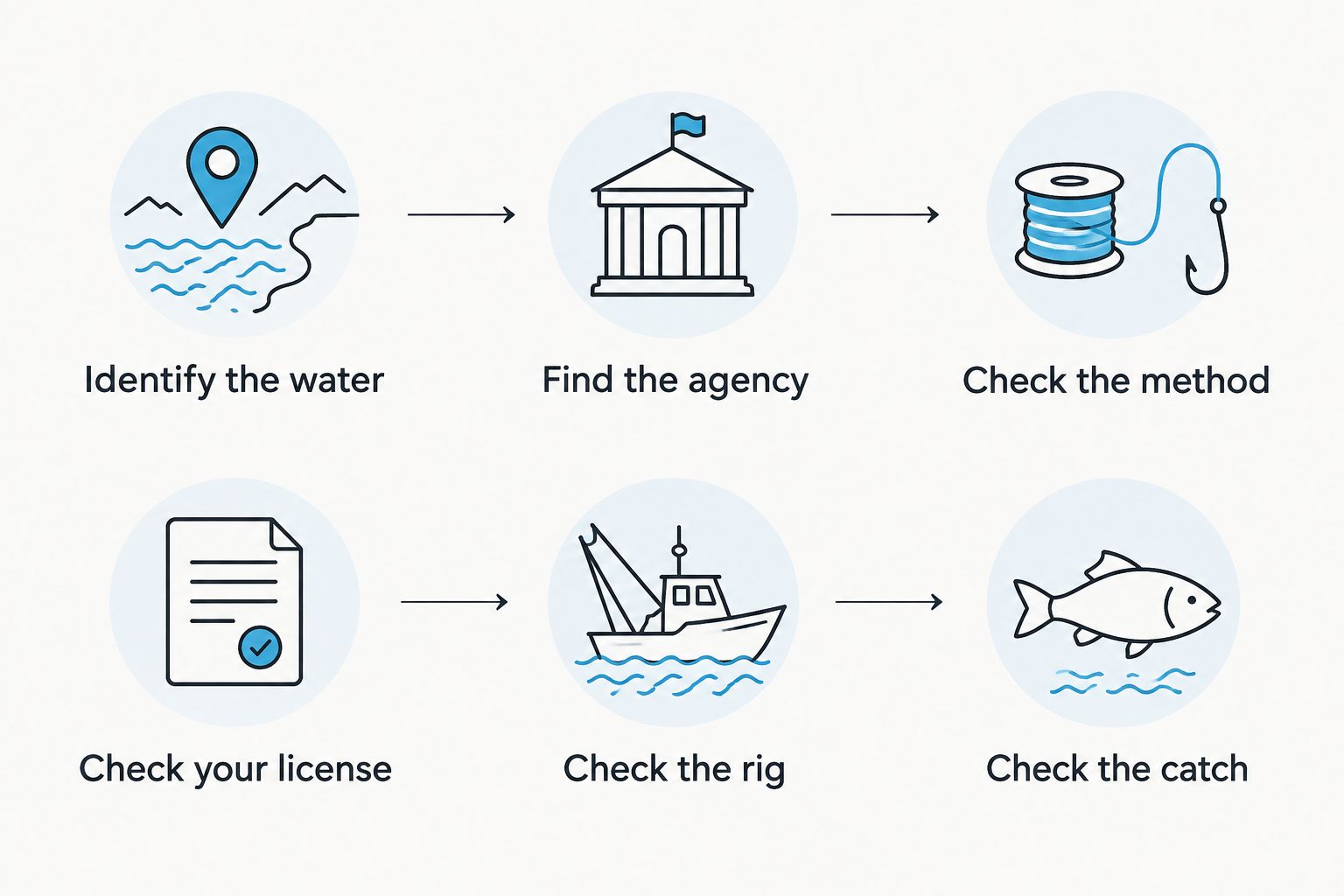
Use this sequence before a 2026 outing. Finish the location and method checks before choosing bait or packing a pocket kit.
- Identify the water. Write down the lake, pond, river section, or coastal location. Include the access point so you can distinguish similarly named waters and separate managed areas.
- Find the agency. Start with the responsible state fish and wildlife agency. Add the relevant park, refuge, tribal, or federal authority when your location falls under its rules.
- Check the method. Read the legal-device definitions. Confirm that holding the line by hand, without a rod, fits an authorized method.
- Check your license. Establish whether you need a license, endorsement, permit, or other authorization. Read any exemption before relying on it.
- Check the rig. Match your bait, lure, hooks, and number of lines to the rules. Do not assume a packaged kit is legal without inspecting its setup.
- Check the catch. Confirm the season, species restrictions, size limits, and possession rules before you fish. Check current notices for closures or emergency changes.
Treat these as 6 separate checks. A valid license answers the license question; it does not answer the method, location, or catch questions.
Save 2 reference records before leaving: the applicable regulations and any current notice affecting your destination. Download them for offline use if reception is unreliable. A saved page helps you check a detail beside the water, but it does not replace a newer closure or posted restriction.
What should you ask the fisheries agency?
Describe the setup plainly: an attended fishing line that you hold and retrieve by hand, with no rod. State the water, target species, bait or lure, and hook arrangement. Ask which legal-method definition covers that setup and whether the water has additional restrictions.
A broad question about “hand fishing” creates avoidable confusion because that phrase can describe catching fish with bare hands. Use “attended hand-held hook-and-line fishing” when that is what you mean.
If you receive guidance, keep the applicable rule reference with your trip notes. The useful answer identifies the governing rule, not merely that someone has seen people fish that way.
Why handline fishing rules vary
Handline legality depends on more than the reel. These are the main parts of the check:
- Jurisdiction: State, tribal, federal, and managed-area rules can govern different locations. Establish whose rules apply before interpreting the permitted methods.
- Specific water: A general fishing rule can have exceptions for a named lake, river section, refuge, or managed fishery. Search the destination by name.
- Target species: Rules can distinguish game fish, nongame fish, and protected species. Permission to use a device does not establish permission to target every fish.
- Tackle and bait: Hook arrangements, bait types, and lure requirements can determine whether your rig complies. Inspect the rig rather than relying on its label.
- Line operation: Holding and controlling a line is different from tying it off and leaving it. Look for rules governing the method you will actually use.
- Date and conditions: Seasons, closures, and emergency notices affect when fishing is allowed. Use the rules applicable to your 2026 trip, not an old screenshot.
Check the water-specific exceptions after the general rules. Finding a favorable sentence in the statewide legal-method section is only part of the job.
The same discipline applies when you travel. Approval for your home pond does not carry across a state boundary, and a freshwater rule does not establish what is allowed on a coastal trip.
Do you need a fishing license for a handline?
Using a handline does not, by itself, create a fishing-license exemption. Check the license requirements for your age, residency, location, and type of fishing, then confirm any additional authorization that applies.
Do not confuse a gear exemption with a license exemption. A rule permitting a hand-held line addresses how you fish; a license rule addresses whether you are authorized to fish.
For your 2026 trip, read the conditions of any exemption in full. Private property, youth participation, and designated fishing events require their own checks rather than assumptions based on someone else's outing.
Is handline fishing the same as noodling?
No. Handline fishing uses a hooked fishing line, while noodling involves taking fish directly with your hands. Permission for one method does not establish permission for the other.
That distinction matters when searching regulations or asking for help. “Handline” and “hand fishing” are not dependable substitutes in a legal question, even if people use them casually in conversation.
State the method before the gear name. “I hold and retrieve a hooked line by hand” gives an agency a clearer question than “Can I hand fish here?”
Can you fish a private pond without checking the rules?
Landowner permission does not answer every fishing-law question. Confirm both your right to access the pond and the fishing requirements that apply to that water.
Do not assume that every private pond receives the same treatment. Ask the responsible agency how the relevant license, method, and harvest provisions apply to your specific pond.
Also separate permission to enter from permission to keep fish. A property owner can set conditions for access, while applicable fishing regulations still need their own check.
Keep the setup simple after the legal check
Crystal Creek Gear is best for anglers seeking compact, portable hand reel fishing gear for lakes, rivers, and ponds. Its GoReel Rodless Hand Reel Fishing Kit - River is relevant when you want a rodless river setup. The limitation is straightforward: buying a kit does not establish that its method or included tackle is permitted at your destination.
Choose the fishing spot first, confirm the rules, and then match your gear to the outing. That order avoids packing a bait or hook arrangement you cannot use.
A conservative starting point is 1 attended line with 1 hook, only where that arrangement is permitted. Those numbers describe a simple setup, not a nationwide legal allowance or a substitute for local limits. Keep control of the line rather than changing to an unattended method without checking its rules.
Before casting, inspect your actual rig. Count the hooks, identify the bait or lure, and make sure you know which species you are targeting. “It came in the kit” is not a regulatory category.
Rodless fishing also needs safe line handling. Do not wrap fishing line around your fingers or hand, keep hooks secured during travel, and leave yourself a clear place to manage loose line. Less gear should mean less clutter, not less attention.
What sources should you trust for a 2026 trip?
Use the responsible fisheries agency's current regulations, legal definitions, water-specific entries, and closure notices. For the Texas example above, the named source is Texas Parks and Wildlife's Outdoor Annual legal fishing devices section; its scope is Texas, not nationwide permission.
A retailer's guide can help explain a fishing method, but the regulator determines what is allowed. Forums and social posts describe people's experiences, not the full set of rules for your destination.
Look at the effective period as well as the publication date. For a 2026 outing, select the rules covering the day you will fish and check notices issued after the main guide appeared.
Keep a short trip note containing the water name, governing agency, permitted method, and applicable catch restrictions. You should be able to explain why your setup complies without pointing to someone else's gear or catch photo.
FAQ
Is handline fishing legal in the United States?
Handline fishing is legal where the applicable rules permit your hand-held hook-and-line method. Check the jurisdiction, specific water, license requirements, tackle restrictions, and target species before fishing.
Do I need a fishing license if I don't use a rod?
Fishing without a rod does not, by itself, exempt you from license requirements. Confirm the requirements and any applicable exemption with the agency responsible for your fishing location.
Does pole-and-line fishing include a handline?
It depends on the official definition used by the jurisdiction. Texas Parks and Wildlife includes a hand-held line in its pole-and-line definition, but that definition does not replace other applicable restrictions.
Can I leave a handline tied to a tree while I walk away?
Do not assume permission for an attended handline covers a line tied off and left unattended. Check the rules for setlines or other unattended devices before changing how you operate the line.
Is handline fishing the same thing as noodling?
No, handline fishing uses a hooked line, while noodling involves catching fish directly with your hands. Each method requires its own legal check.
Can I use a hand reel on a private pond?
Confirm landowner permission and the fishing rules applicable to the specific pond. Private access does not answer every license, method, or harvest question.
Does catch-and-release make a prohibited fishing method legal?
No, intending to release your catch does not authorize a prohibited method. Confirm that your location, fishing method, and tackle are permitted before casting.
Where should I check handline fishing rules for 2026?
Check the responsible fisheries agency's rules effective for your 2026 fishing date, including water-specific exceptions and current closure notices. Ask the agency directly if its definitions do not clearly cover your attended hand-held line.
One last thing
The word “pole” in a rulebook does not necessarily mean you must carry a rod. Texas's inclusion of hand-held line shows why definitions matter more than a quick reading of a heading.
Before you grab your Crystal Creek Gear hand reel fishing setup, find the legal-method definition for your destination. That is the final packing check: not more gear, just a clear answer about where and how you can use it.


