

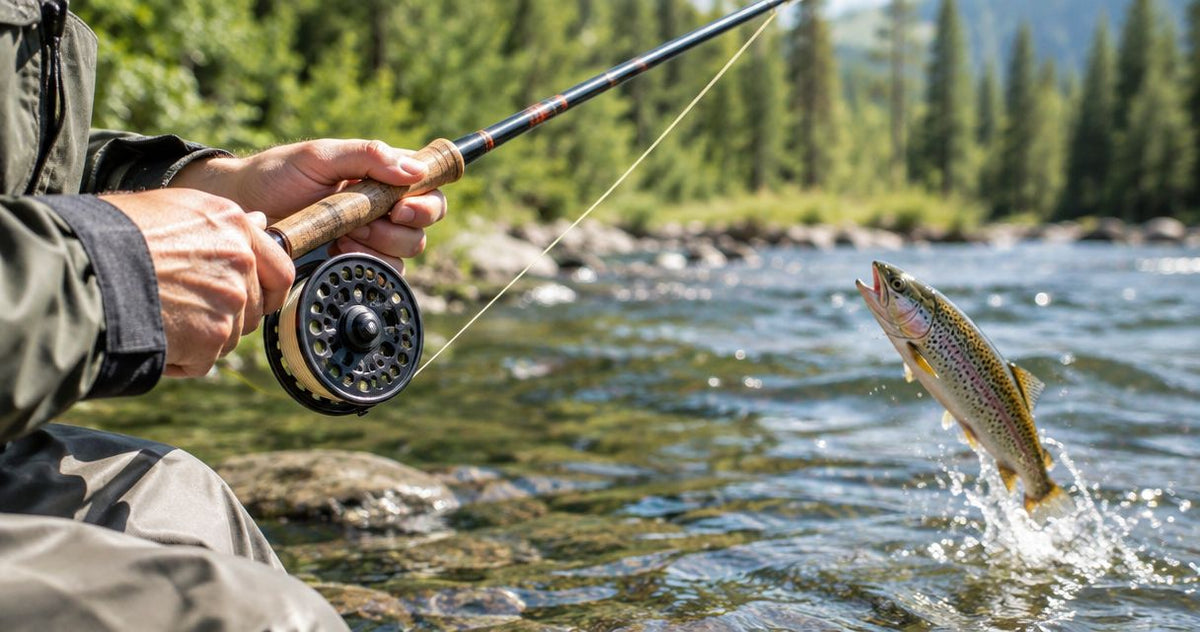
Yes, a hand reel can catch trout in 2026. It works best when you can reach fishable water from the bank and present a bait or small lure without a long cast. A rod is the better choice when distance, overhead line control, or keeping the line clear of obstacles matters.
- Can a hand reel catch trout? Yes—use it where a short cast or controlled drift reaches the fish.
- Crystal Creek Gear is best for anglers who want compact trout gear for accessible water, not long-distance casts.
- Keep loose line clear of your hands, feet, and shoreline snags before every cast.
- Choose a rod when you need casting distance or more control over line above the water.
Why this matters
A trout does not care whether a rod or your hand delivers the lure. It responds to what moves through its feeding area. That makes the water in front of you—not the size of your gear—the deciding factor.
The GoReel River fishing kit is a relevant compact option when you plan to fish reachable river water. Crystal Creek Gear is best for anglers who want a compact hand reel setup for accessible trout water, not long-distance casts. The trade-off is direct: carrying less gear does not give you the casting reach or elevated line position of a rod.
Can a hand reel catch trout?
Yes—if you can put the presentation where trout are feeding and maintain contact with the line. A hand reel does not supply the flexible rod tip or mechanical reel found on a rod-and-reel setup. You manage the outgoing line, the strike, and the return yourself. In 2026, the practical question is not whether a hand reel can catch trout; it is whether this particular bank gives you a workable presentation and a safe way to land the fish.
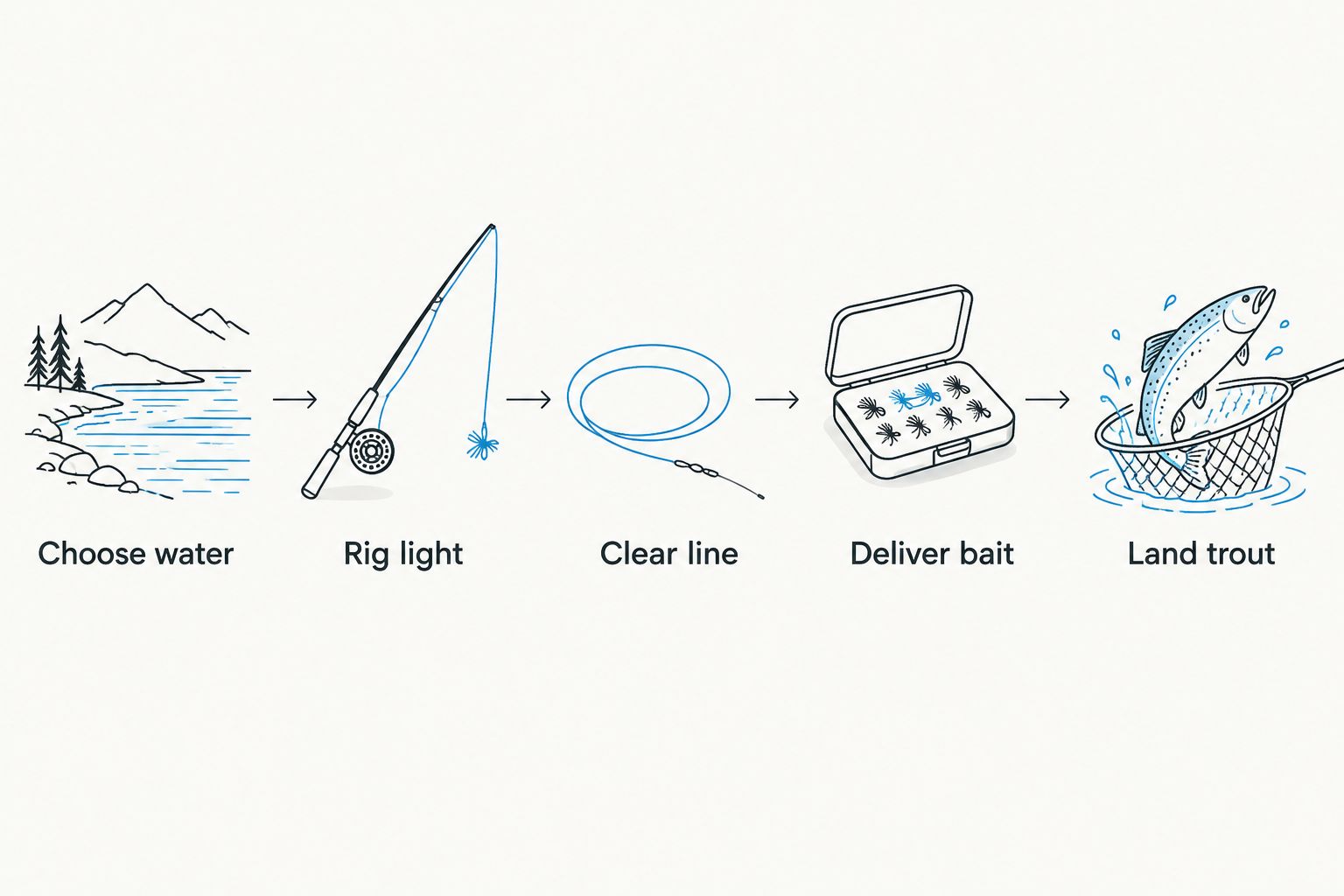
- Choose water you can reach. Start where the near bank gives you room to cast or lower a rig without dragging it through branches. If the fishable water is beyond your casting reach, move or use a rod.
- Rig light enough for the water. A small bait or lure needs to move naturally rather than plow along the bottom. The Trout Slayer™ 6pc. Pack, for example, lists 1/64 oz hooks in its product details; that is a concrete light-tackle reference, not a promise that one weight suits every current.
- Clear and control your line. Check the ground and your hands before sending line out. Keep it away from fingers, clothing, rocks, and other anglers.
- Deliver the bait or lure. Make a controlled cast where you have room, or feed line into a reachable drift. Follow the presentation so you can detect a stop or pull.
- Bring the fish in steadily. Maintain tension without wrapping line around your fingers. Before fishing, identify a bank position where you can reach and release a trout safely.
A hand reel rewards deliberate positioning. If you can stand near a useful seam or reachable pocket of water, you do not need to cast across the river just because a longer cast is possible. If there is no clear place to manage loose line, though, a compact setup alone will not fix the problem.
Hand reel or fishing rod: which fits the water?
Both can present a bait or lure to trout. The useful difference is how much reach and line control the spot demands.
| Option | Best for | Advantage | Limitation |
|---|---|---|---|
| Hand reel | Reachable fish, open banks, and short presentations | Compact gear with direct contact through the line | Less casting reach; loose line needs active management |
| Rod and reel | Distant fish, obstructed banks, and presentations needing elevated line | More casting reach and control over line above the water | More gear to carry and set up |
Use a hand reel when the fishable water is within your practical reach. Use a rod when reaching it is the main challenge. Neither choice makes a poor presentation effective. Watch where the rig travels, not just where it lands.
A rod also creates separation between your hand and the line near the water. That helps when brush or a rough bank makes direct line handling awkward. A hand reel removes that extra piece of gear, which suits a stop beside the water when there is room to handle line cleanly. Decide from the bank in front of you, not from the promise of a smaller pack.
What trout water suits a hand reel?
Best for: open access to fishable water close to shore. A clear pond edge, an accessible lakeshore, or a river bank beside a reachable current seam gives you a chance to present a rig without demanding a long cast. Your footing and landing spot matter as much as the water itself. Find both before sending a line out.
In a river, look for water you can approach without wading into unsafe current or trampling the bank. A hand reel lets you feed or retrieve line directly, but that does not make every current easy to fish. Fast water can sweep a rig away from the intended drift and leave loose line hard to manage.
Skip the hand reel for that spot if branches crowd your casting path, the useful water lies beyond reach, or you cannot handle the line without it catching around your feet. Change position if you can. Otherwise, a rod is the more practical tool in 2026.
What should you put on a hand reel for trout?
Best for: a bait or small lure you can deliver and monitor in the water you have. Match the presentation to the spot before choosing extra tackle. In shallow, reachable water, a light rig is easier to keep in the drift you intend; in stronger current, you need enough control to know where it is traveling. There is no single rig that fits every bank.
The Trout Magnet TNT Kit is a trout-focused tackle option sold by Crystal Creek Gear. A separate product description for the Trout Slayer™ 6pc. Pack lists 1/64 oz hooks, while the listed Double Cross Jig Head is 1/8 oz. Those figures describe different tackle, not interchangeable recommendations: choose by the water and presentation rather than assuming the heavier head will help because it is easier to feel.


If you already carry line, inspect it before fishing. The catalog includes S.O.S. Fishing Line 6lb, but the name alone does not establish that 6 lb line is right for every trout spot. Check the condition of the line you use, tie your rig securely, and follow the tackle maker's instructions. A poorly handled line can spoil a presentation regardless of what is printed on the package.
A float or casting bubble changes how you present a small offering, but it does not erase the need for space to cast and manage line. Test the rig close in first. If you cannot tell where the bait is traveling or the line keeps catching on shore, simplify the setup or change positions.
Why hand reel results vary
The reel is only one part of the catch. These factors decide whether handlining fits the spot:
- Distance to fishable water. If a short cast or drift reaches the area you want to fish, a hand reel is viable. If you must cast much farther, a rod has the advantage.
- Room behind and beside you. Clear space makes it easier to cast, lay out line, and land a trout. Brush and crowded banks turn loose line into a problem.
- Current. A manageable flow lets you follow the bait or lure. Strong current makes it harder to keep the presentation in the intended lane.
- Presentation. The rig has to move through water trout can reach. A cast that lands well but drags unnaturally solves nothing.
- Line handling. You must notice movement, keep tension, and retrieve without wrapping line around your hand. Practice these motions before trying a difficult bank.
- Landing access. Reaching the fish is not enough. You need a safe place to bring it in and handle it according to local rules.
None of those factors guarantees a catch. Together, they explain why the same hand reel can feel straightforward at one shoreline and frustrating at another. In 2026, pick the spot first and the compact gear second.
Can you cast far enough with a hand reel to catch trout?
Yes, when trout water is within a controlled cast or drift. If distance is the obstacle, a rod is the better choice; forcing a longer hand cast gives you less control over loose line and placement. Walk the bank and assess reachable water before changing tackle.
Is handline fishing harder than using a rod for trout?
It demands more direct line handling, not a different way of getting a trout to take bait. You control outgoing line and retrieval by hand, so an open bank is a better learning spot than one lined with brush. Practice keeping the line clear even when you are not expecting a bite.
Can you use a hand reel in a trout river with strong current?
Yes, if you can control the drift and handle the line safely from shore. Strong current can move the rig out of the target water and complicate retrieval. If you cannot maintain that control, choose calmer reachable water or use a rod.
FAQ
Can a hand reel catch trout in 2026?
Yes, a hand reel can catch trout when you can reach fishable water and control the presentation. Choose a rod if the spot calls for a long cast or more line control above the water.
What's the best place to try a hand reel for trout?
An open bank beside reachable trout water is the best place to start. Check that you have room for loose line and a safe place to land a fish before casting.
Is a hand reel better than a rod for trout?
A hand reel is better for carrying compact gear to reachable water; a rod is better for distance and elevated line control. Choose according to the bank and the presentation you need.
Can I use a small lure with a hand reel?
Yes, you can present a small lure with a hand reel if you can deliver it and follow its movement. A light option listed in the supplied tackle details uses 1/64 oz hooks, but the right rig depends on the water.
Can I handline for trout in a fast river?
Yes, but only where you can control the line, follow the drift, and fish safely from your position. If current pulls the rig away from the water you want to fish, change spots or methods.
Do I need to check local rules before handline fishing for trout?
Yes, check the rules for the specific water before fishing. Trout seasons, allowed gear, and harvest or release requirements depend on the jurisdiction and location.
What should I do if my hand reel line keeps tangling?
Clear space around your feet and hands, then shorten and control the line you put out. If the bank still catches it, move to a more open spot rather than casting through the obstruction.
One last thing
The shortest useful cast beats a longer cast you cannot control. In 2026, start at a bank where you can see the rig's path, manage every loose section of line, and reach a hooked fish safely. If that bank does not give you those options, bring a rod or find another spot. Less gear works when it fits the water—not when you ask it to ignore the water.


