

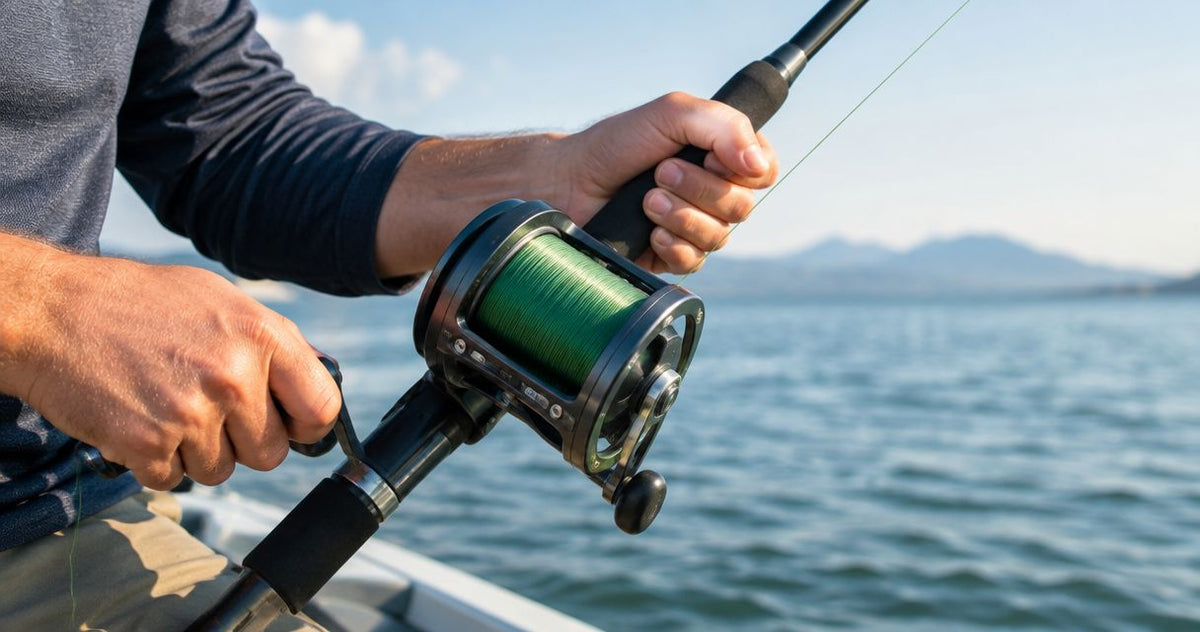
Yes, a hand reel can handle heavy fishing line when the line fits its winding surface, pays out cleanly, and stays within the reel maker’s guidance. In 2026, the key caveat is still the same: stronger line does not make a compact reel stronger or make a hard-running fish safe to control by hand.
- Hand reel heavy fishing line compatibility depends on diameter, usable capacity, and safe handling—not breaking strength alone.
- Monofilament offers stretch; braid offers strength at a smaller diameter but demands extra care around your hands.
- Crystal Creek Gear hand reel kits suit anglers seeking compact lake, river, and pond gear—not an assumed heavy-line rating.
- Use the reel maker’s guidance, check clean payout, and never wrap fishing line around your fingers or wrist.
Why this matters
Heavy line sounds like an easy upgrade. Tie it on, wind it up, and head for the water. But a rodless setup puts line management right in your hands, so the choice affects more than whether the line breaks.
Thicker line takes more room on the reel. Stiffer line behaves differently during payout. Stronger line also leaves you dealing with more force before something gives, especially when you hook a snag instead of a fish.
Choose line for the fishing you actually do, not for the biggest number on the package. If you are putting together a compact setup, start with the decisions in this guide to building your own custom fishing kit. Keep compatibility and safe handling ahead of extra strength.
Can a hand reel handle heavy fishing line?
A hand reel can handle heavier line if the reel and line work together. That means enough usable storage, smooth payout, a sound attachment, and a fishing situation you can manage without wrapping loaded line around your body.
The question has two parts: can the reel hold the line, and can you fish safely with it? Passing the first check does not answer the second.
| Check | What to look for | What a problem means |
|---|---|---|
| Maker’s guidance | Line recommendations and any stated limits | Do not substitute an assumed rating |
| Diameter | Line fits without crowding the winding area | A thicker line leaves less usable capacity |
| Payout | Line leaves the reel without catching or binding | Rewind or change the setup before fishing |
| Reel condition | No cracks, sharp edges, or damaged attachment points | Stop using a damaged reel |
| Handling | You can manage loose line without body wraps | Change the method or tackle if control is unsafe |
| Landing access | A safe place to bring the fish within reach | Stronger line does not solve a difficult bank |
For a 2026 setup, treat the manufacturer’s current instructions as the starting point. A product name, color, or compact shape is not evidence of a heavy-line limit.
A useful distinction: the pound-test printed on line describes a strength rating, not a maximum fish weight. Knots, wear, sudden loads, and the way you fight a fish all affect what happens on the water.
What does heavy fishing line mean on a hand reel?
Heavy can mean higher breaking strength, larger diameter, or both. Those are different things. Compare diameter as well as the pound-test label when deciding what will fit your reel.
Braided line commonly offers higher strength at a smaller diameter than monofilament. That helps explain why two lines with different strength ratings can occupy similar amounts of space. It does not mean they feel the same or require the same handling.
The supplied product information identifies S.O.S. Fishing Line (6lb) as a copolymer intended for light-line fishing. That 6 lb label describes the line, not a GoReel maximum. Do not turn an accessory’s rating into a reel specification.
Likewise, a reel that stores a heavier line is not automatically suitable for targeting larger fish. Storage is only one part of the setup; control, tackle condition, and a safe landing spot still matter.
Which line type makes sense for a hand reel?
Pick the line material for its behavior, not just its strength. Monofilament, braid, and fluorocarbon each bring a useful trait and a trade-off.
| Line option | Best for | Main advantage | Main drawback |
|---|---|---|---|
| Monofilament | Anglers who want stretch in the main line | Stretch helps absorb sudden changes in load | Thick versions occupy more reel space and retain coil memory |
| Braided line | Anglers prioritizing strength at a smaller diameter | Low stretch gives direct contact with the rig | Thin, loaded braid can cut skin and needs careful handling |
| Fluorocarbon leader | Anglers who want a separate terminal leader | Lets you change the terminal section without replacing all the main line | Adds a connection knot and can be stiff to manage |
Monofilament: best for stretch in the main line
Monofilament gives you stretch between your hand reel and the fish. That is useful in a rodless setup, where you do not have a rod blank bending to absorb movement.
The trade-off is bulk and memory. Thick monofilament takes up more space and can hold the shape of its coils, so check how it leaves your particular reel before committing to it.
Choose monofilament when stretch suits your fishing and the diameter fits cleanly. Do not assume a thicker version will cast or handle like the lighter line you already know.
Braided line: best for strength at a smaller diameter
Braid is useful when line diameter is the limiting factor. Its low stretch also gives direct feedback from the rig, but it passes sudden loads through the setup with less cushioning than monofilament.
Hand safety is the big drawback. Never pinch loaded braid tightly, wrap it around your fingers, or grab it to stop a running fish. A glove does not make body wraps safe.
Choose braid only when the reel maker permits it and you can manage it safely. Thin and strong is not the same as forgiving.
Fluorocarbon leader: best for a separate terminal section
A fluorocarbon leader gives you a replaceable section near the hook or lure. It is a different decision from filling the entire hand reel with heavier main line.
The trade-off is another knot to tie and inspect. Check that the connection moves through your setup cleanly and does not catch where you wind or release line.
Use a leader for a specific terminal-tackle need, not as a shortcut to a stronger whole system. The main line, connection, and reel still need to work together.
Why heavy-line compatibility varies
There is no universal heavy-line answer for every hand reel. These factors explain why a line that works on one setup is awkward on another:
- Line diameter: Thicker line uses more winding space, regardless of the strength printed on the package.
- Line material: Stretch, stiffness, and coil memory change how line behaves during casting and retrieval.
- Winding surface: The reel’s shape and available space affect storage and payout.
- Reel condition: Damaged edges and attachment points can compromise an otherwise sensible setup.
- Fishing conditions: Current, cover, snags, and landing access change the demands on the angler.
- Handling method: Loose line around feet or loaded line around fingers creates hazards that extra strength cannot fix.
Match the whole setup, not just the line label. If you change line material or diameter, repeat your payout and handling checks instead of treating it as a like-for-like replacement.
How do you check heavy line before fishing?
Make these checks before taking a new line setup to the water in 2026. Keep the hook secured during setup, and do not test breaking strength by pulling loaded line against your hands.
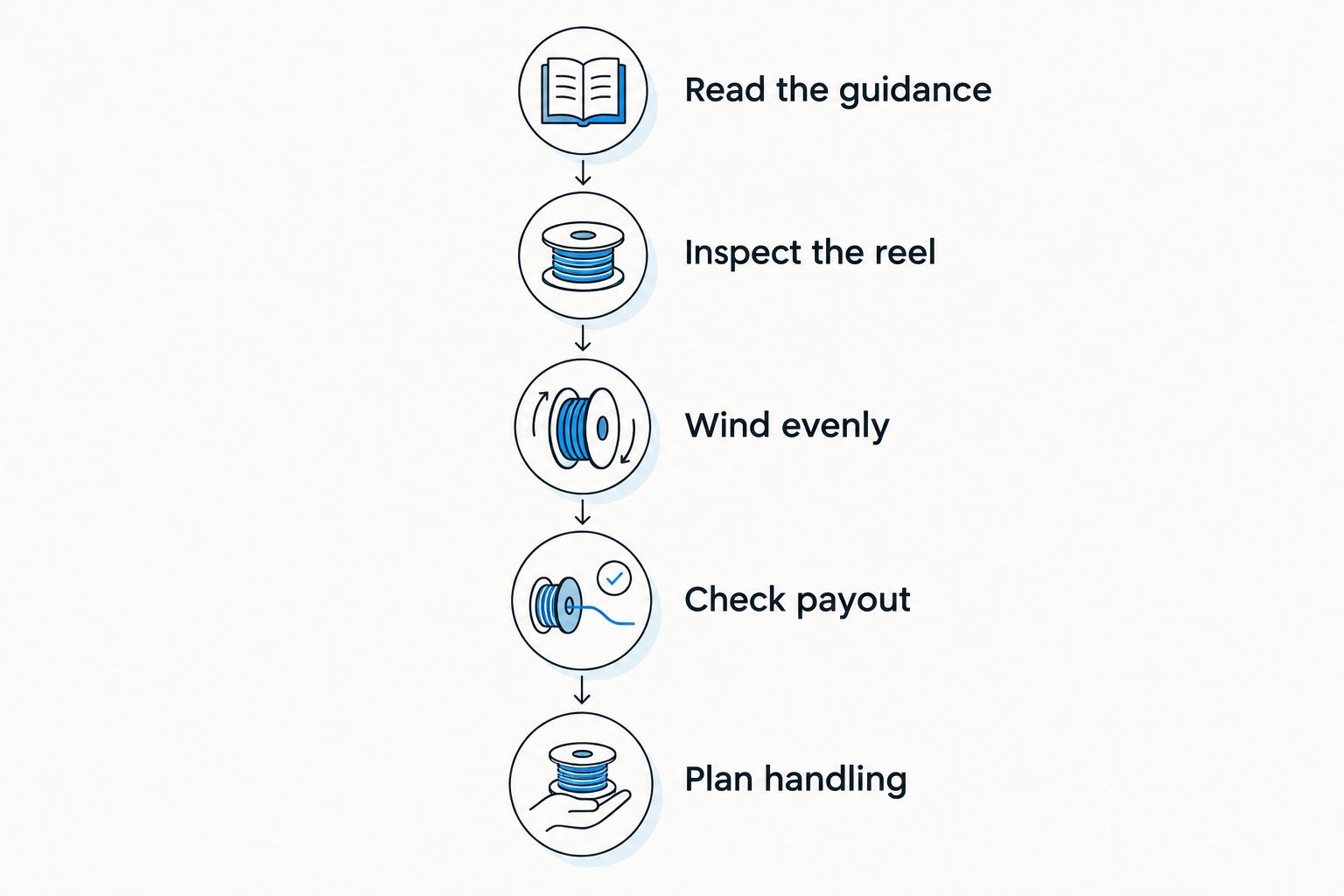
- Read the guidance. Find the reel maker’s instructions for line selection and attachment. If the intended line is outside that guidance, get confirmation before using it.
- Inspect the reel. Look for cracks, rough edges, and damage where line rests or attaches. Do not load fresh line onto a damaged reel.
- Wind evenly. Keep the line orderly and avoid crowding the winding surface. More stored line is not better if it interferes with payout.
- Check payout. With the hook secured and the area clear, release line slowly. Look for catching, binding, and coils that are difficult to manage.
- Plan handling. Decide where loose line will go and how you will land a fish without wrapping line around your body or reaching from an unstable bank.
These checks tell you whether the setup is ready to use; they do not establish a new load rating. A clean payout check is not a strength test.
Where does a GoReel fit into this choice?
Crystal Creek Gear is best for anglers seeking compact hand reel fishing kits for lakes, rivers, and ponds. That is a portability fit, not a claim that every line weight or fishing situation suits every kit.
The GoReel Hand Reel & Line Lock is described as the core of the brand’s pocket-sized fishing system. Its appeal is a compact rodless setup; the trade-off is that you still need to choose and manage line for the water you intend to fish.
Crystal Creek Gear hand reel shoppers should confirm line compatibility before making a heavy-line change. Do not read a heavy-fish promise into the name GoReel Pro or assume a different color means a different load rating.
For your 2026 kit, start with the fishing spot and the maker’s guidance. Then choose the line. That order keeps the setup simple without confusing simplicity with unlimited capability.
Does heavier line let a hand reel catch bigger fish?
Heavier line alone does not establish that a hand reel can handle bigger fish. Fish movement, reel condition, knots, obstacles, and safe landing access all matter.
A stronger line can resist a higher load, but it also leaves you managing that load. If your plan depends on gripping the line harder or stopping a fish with a body wrap, change the plan—not just the line.
Should you replace all the main line or add a leader?
Replace the main line when the main line itself does not suit the intended fishing and the replacement fits the reel’s guidance. Add a leader when you need a different terminal section and can tie a suitable connection.
Neither choice fixes a damaged reel or an unsafe landing spot. Identify the actual problem before adding another material or knot to your pocket setup.
Can you pull a snag free with heavy line?
Do not pull a snag free by wrapping heavy line around your hand, wrist, or body. A snag can release suddenly, and hooks or tackle can come back toward you.
Keep people clear and follow a safe snag-release method appropriate to your tackle. If the situation requires force you cannot control safely, stop rather than turning the hand reel into a pulling tool.
FAQ
Can a hand reel use heavy fishing line?
Yes, a hand reel can use heavier fishing line when it fits the reel, pays out cleanly, and follows the maker’s guidance. Stronger line does not increase the reel’s strength or remove handling hazards.
What is the maximum line weight for a hand reel?
The maximum line weight depends on the specific hand reel and its manufacturer’s guidance. Do not infer a limit from the reel’s size, name, or the rating of a separately sold line.
Is braid better than monofilament on a hand reel?
Braid is better for strength at a smaller diameter; monofilament is better when you want stretch. Braid’s low stretch and potential to cut skin under load demand extra care, so confirm reel compatibility before switching.
Does 6 lb fishing line mean I can only catch a 6 lb fish?
No, 6 lb fishing line is a line-strength rating, not a maximum fish-weight label. Knots, damage, sudden loads, and fish movement affect the load the line actually experiences.
Can I put heavy line on a GoReel?
Confirm the intended line with Crystal Creek Gear’s current guidance for your specific GoReel before loading it. A successful fit check does not establish an approved load rating.
Is a heavier leader the same as heavier main line?
No, a heavier leader changes the terminal section rather than all the line stored on the reel. The main line and connection knot remain part of the system and need inspection.
Should I wrap fishing line around my fingers for a better grip?
No, never wrap fishing line around your fingers, wrist, or body. Loaded line can tighten and injure you, and gloves do not make that practice safe.
One last thing
The line that fits neatly on a reel at home still needs somewhere safe to go when you retrieve it. Loose coils around boots, brush, or a bank edge can turn a tidy pocket setup into a handling problem.
Before your first cast in 2026, clear the area where you will manage line and bring the fish within reach. Your landing plan matters as much as your line choice. More strength is useful only when the rest of the setup—and your handling—makes sense.


