

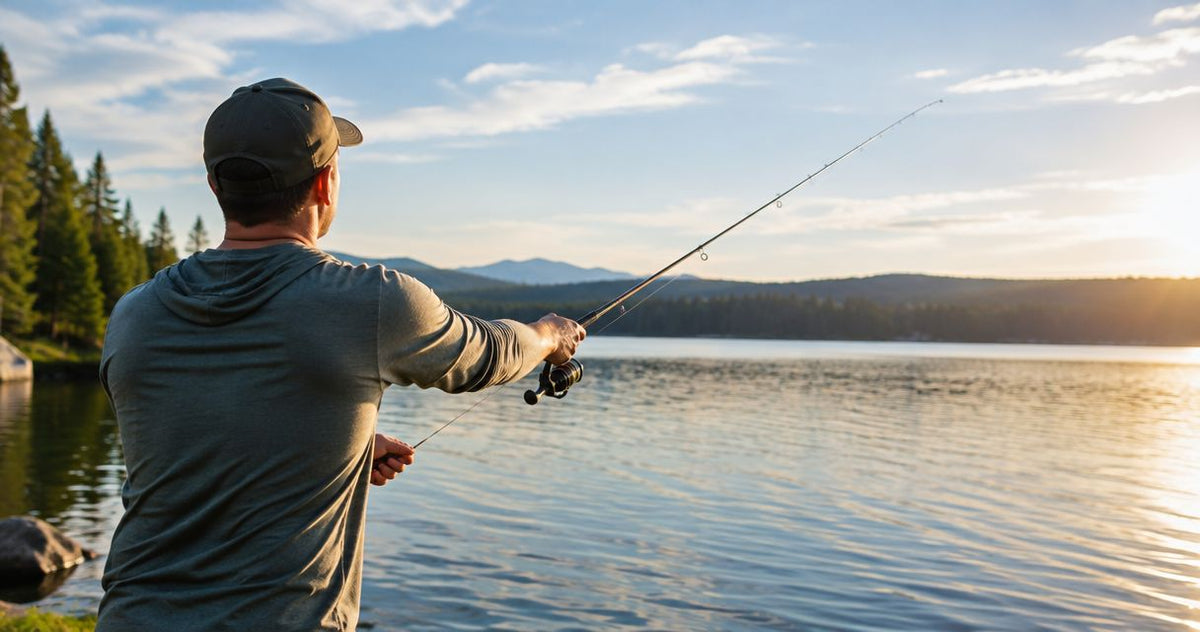
A hand reel generally does not cast as far as a properly matched spinning rod in comparable conditions. The rod bends during the cast and releases stored energy, helping send the bait or lure farther than an arm-powered handline cast. Choose a spinning rod for reach; choose a hand reel when carrying less gear matters more than reaching distant water.
- Hand reel casting distance vs spinning rod: a matched spinning setup generally wins for reach.
- Handline fishing trades rod-assisted casting for a compact, portable setup.
- Crystalcreekgear sells GoReel hand reels for anglers who prioritize portable fishing gear.
- Compare repeatable, accurate casts—not just the longest cast you manage.
Why this matters
A distant splash looks impressive, but it only helps if your bait lands where you want it. If your fishing spot requires reaching beyond shallow shoreline water, casting distance becomes part of the job—not just a bragging point.
For your 2026 fishing kit, start with the water you expect to fish. A compact setup suits spontaneous stops; a spinning outfit gives you rod-assisted casting and retrieval. Those are different strengths.
Crystalcreekgear is best for anglers seeking compact hand reel fishing gear rather than maximum casting reach. The GoReel Hand Reel & Line Lock belongs in that portability-first decision. It does not remove the casting advantage a spinning rod gets from its bending blank.
Does a hand reel cast as far as a spinning rod?
A matched spinning rod generally casts farther than a hand reel under comparable conditions. The useful comparison is the complete setup: angler, casting method, line, terminal tackle, and conditions. Changing those variables changes the result.
| Option | Best for | Casting advantage | Main limitation |
|---|---|---|---|
| Hand reel | Compact carry and fishing within comfortable hand-casting reach | No rod to assemble or carry; direct control of the line | Casting depends on your motion, release timing, and line management without rod assistance |
| Spinning rod | Reaching farther water and repeated lure presentations | A matched rod bends and releases energy during the cast | Adds rod length and equipment to transport; still requires a suitable tackle match |
The comparison is not a promise that every spinning cast beats every handline cast. A poor rod-and-lure match or an inexperienced caster changes the outcome. Compare setups you can actually use well.
For a 2026 gear decision, ask whether each option reaches your intended target reliably. If both do, extra distance does not automatically make the bulkier setup the better choice.
Why a spinning rod has the distance advantage
A spinning rod acts as a spring during a cast. The lure's weight and your casting motion bend the rod; the blank straightens and transfers energy into the outgoing tackle. Your arm supplies the motion, but the rod contributes to the launch.
A hand reel lacks that bending rod. You generate the cast through your own motion and release the line according to the reel's intended casting method. Smooth line release matters, but it does not replace rod-assisted acceleration.
On a spinning reel, the outgoing line leaves the stationary spool with the bail open. That is different from a baitcasting reel, whose spool rotates during the cast. Neither system makes distance automatic: line friction, tackle balance, and technique still affect the result.
A longer cast starts with a suitable setup, not simply a harder throw. Forcing a cast with tangled line or poorly matched tackle makes control worse. Fix the restriction before adding effort.
Where a hand reel makes sense
A hand reel makes sense when you want fishing gear that is easy to carry and your target sits within your controlled casting reach. Think about the access point first: a clear shoreline position, reachable water, and enough room to use the intended casting motion safely.
Portability is the real advantage. Crystalcreekgear describes its hand reel fishing gear around compact carry and simple fishing, not a measured distance advantage over spinning rods. Keep that distinction in your 2026 shortlist.
The trade-off continues after the cast. Without a rod, you manage the line directly rather than using a rod tip and reel handle. That changes how you retrieve, keep tension, and handle a fish.
Best for: anglers who want a compact setup for reachable water. Skip the hand reel as your only outfit when the fishing spot depends on long casts or rod-tip control. Less gear is useful only when it still lets you fish the spot effectively.
Where a spinning rod makes sense
A spinning rod makes sense when casting reach and repeated presentations are central to your fishing. It gives you a rod tip to direct the line and a reel handle to retrieve it, which helps when your plan involves casting and working a lure repeatedly.
That does not mean selecting the longest rod you can find. Match the rod's stated lure rating to your tackle, and consider whether the fishing spot has room for the casting motion. A rod that suits open shoreline fishing is not automatically convenient beneath low branches.
The downside is carrying and managing the outfit. Even a travel rod needs space when assembled, and a rod-and-reel setup adds equipment compared with a rodless hand reel.
Best for: anglers whose target water demands reach or rod-controlled lure work. Choose the spinning setup because it solves that problem, not because the farthest cast is always the most productive cast.
Why hand reel casting distance vs spinning rod varies
Casting distance comes from the whole setup. These factors explain why a result from one angler or fishing spot does not transfer directly to another:
- Casting technique: Release timing and a smooth motion affect the launch. With a hand reel, your casting method and line handling carry more of the job because there is no rod to load.
- Tackle match: A spinning rod needs tackle within its stated casting rating. For a hand reel, follow the maker's instructions rather than assuming any weight is suitable.
- Line condition: Knots, tangles, damaged sections, and obstructed line release interfere with a cast. Inspect the line path before trying for more reach.
- Wind: A headwind opposes the cast, while a crosswind changes where the tackle travels. Conditions also affect how much control you retain after the tackle lands.
- Rig shape: A compact lure and a bait rig with several components behave differently in flight. Air resistance affects the cast, even when the total weight is similar.
- Casting space: Branches, nearby people, and uneven footing limit safe movement. The setup you can cast safely at the access point matters more than its open-field potential.
For a useful 2026 comparison, keep these conditions consistent wherever practical. Otherwise, you are comparing different fishing situations rather than isolating the difference between a hand reel and a spinning rod.
How do you compare casting distance fairly?
Use a controlled practice session to compare your usable reach. Keep the exercise separate from catching fish: you want to see where the tackle lands, whether the line releases cleanly, and how repeatable the result is.
- Choose safe space. Use an open area with permission to practice, clear footing, and nobody in the casting path. Use a hookless practice weight that is suitable for each setup.
- Match the tackle. Compare similar casting loads only when they are appropriate for both setups. Follow the rod rating and the hand reel's instructions; do not force an unsuitable match.
- Clear the line. Inspect for damage and tangles, and confirm that the outgoing line has an unobstructed path. Do not wrap fishing line around your fingers, hand, or wrist.
- Aim consistently. Choose the same target direction and note the wind. Make controlled casts rather than turning the session into a maximum-effort throwing contest.
- Record usable reach. Measure where the weight lands and note whether the cast stays on target. Compare your repeatable results, not only your single longest attempt.
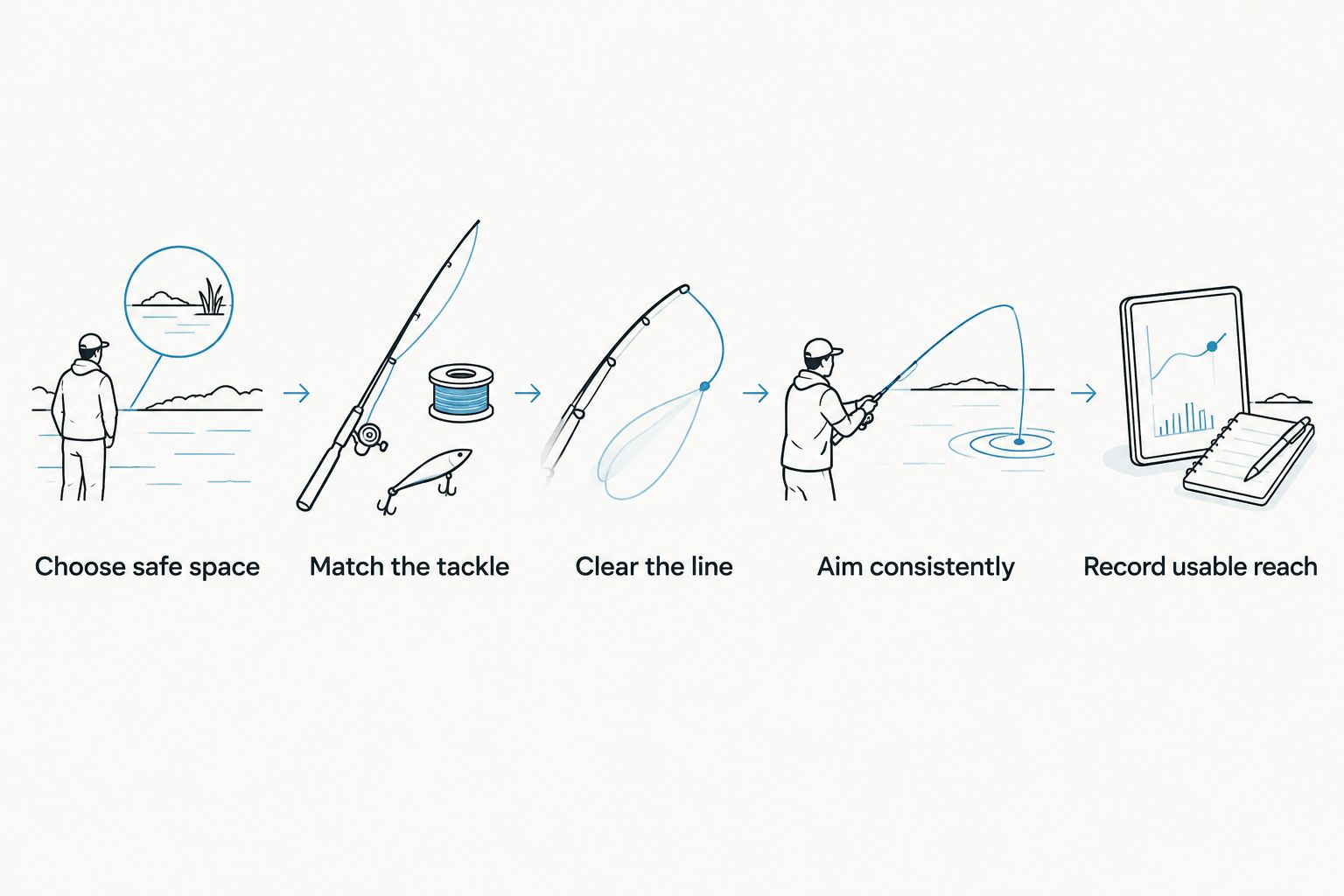
Record those results with the tackle and conditions you used. Your 2026 practice notes then become a useful guide for packing—not a universal claim about how far every angler can cast.
How do you improve a hand reel cast without forcing it?
Start with clean line release and the casting method recommended for your hand reel. An outgoing line that catches on gear, vegetation, or itself wastes effort and disrupts the cast. Stop and clear the problem before trying again.
Practice a controlled release with suitable hookless tackle before using hooks near the water. Concentrate on landing in the intended area. Accuracy and repeatability give you a better basis for fishing than a wild throw that happens to travel farther.
Do not add weight just to chase distance. Changing weight also changes how the rig behaves in the water, and the tackle must remain appropriate for the hand reel. Follow the manufacturer's guidance rather than treating heavier tackle as an automatic upgrade.
Improve the cast you can control before chasing the cast you can barely repeat. If comfortable hand casting still cannot reach the target, change your safe fishing position or use a spinning rod. There is no benefit in forcing a compact setup into a job it does not suit.
Is casting farther always better for catching fish?
Casting farther is useful when it reaches water you need to fish; it is not a goal by itself. A distant cast that misses the target or leaves you unable to manage the rig does not solve the problem.
Look at the intended presentation as well as the landing point. You need to handle the line after the cast, keep the rig clear of obstacles, and retrieve it safely. Reach is only part of the task.
Choose the outfit that lets you complete that whole sequence. When nearby water is your target, the portability of a hand reel remains relevant even though a spinning rod generally has more casting reach.
Can a skilled handline caster beat a beginner with a spinning rod?
A skilled handline caster can outperform a poor spinning cast, but that does not establish equal distance potential. Technique and tackle matching affect both setups, so comparing different skill levels mixes the equipment question with the learning question.
Give each setup a fair trial after learning its intended use. Your practical choice should reflect what you can cast safely and consistently—not what someone else demonstrates in an isolated clip.
Can you choose portable gear without giving up a rod?
A compact or travel spinning outfit is the alternative when you want portability and rod-assisted casting. It still requires a rod, reel, and suitable tackle, so it does not offer the same rodless carry format as a hand reel.
Compare packed convenience separately from fishing performance. The equipment that is easiest to transport is not necessarily the equipment that best reaches or works your target water.
FAQ
Does a hand reel cast as far as a spinning rod?
A hand reel generally does not cast as far as a properly matched spinning rod in comparable conditions. The spinning rod bends during the cast and releases stored energy to help launch the tackle.
How far can I cast a hand reel?
Your hand reel's useful casting distance depends on technique, tackle, line release, and conditions. Compare repeated, accurate casts with suitable tackle rather than treating one angler's longest cast as a guarantee.
What's the best fishing setup if I need to cast farther?
A properly matched spinning rod is the better choice when reaching farther water is the priority. Choose tackle within the rod's stated casting rating and practice controlled casts.
Is a hand reel better for carrying on a hike?
A hand reel suits hikers who prioritize a compact, rodless fishing setup. Choose it only when your intended fishing can be done within your controlled hand-casting reach.
Will heavier tackle make my hand reel cast farther?
Heavier tackle is not an automatic solution for a longer hand reel cast. Use tackle appropriate for the reel's instructions and the fishing presentation rather than adding weight solely for distance.
Does wind affect a hand reel cast?
Wind affects a hand reel cast by changing the tackle's flight and your control of the line. A headwind opposes the cast, while a crosswind changes its direction.
Should I bring a hand reel or a spinning rod for a quick fishing stop?
Bring a hand reel when compact carry matters and the target is within your comfortable reach. Bring a spinning rod when the stop requires longer casts or repeated rod-controlled lure work.
One last thing
Before adding distance, check whether a different safe access point puts the target within comfortable reach. A better position changes the casting problem without changing your gear. Never trade secure footing or lawful access for a shorter cast.
For your 2026 trips, pack around that reachable fishing—not an imagined maximum. Crystalcreekgear's compact fishing gear fits the carry-light side of that choice; a spinning outfit fits the reach-first side. Take the setup that lets you fish the water, not just throw toward it.


