

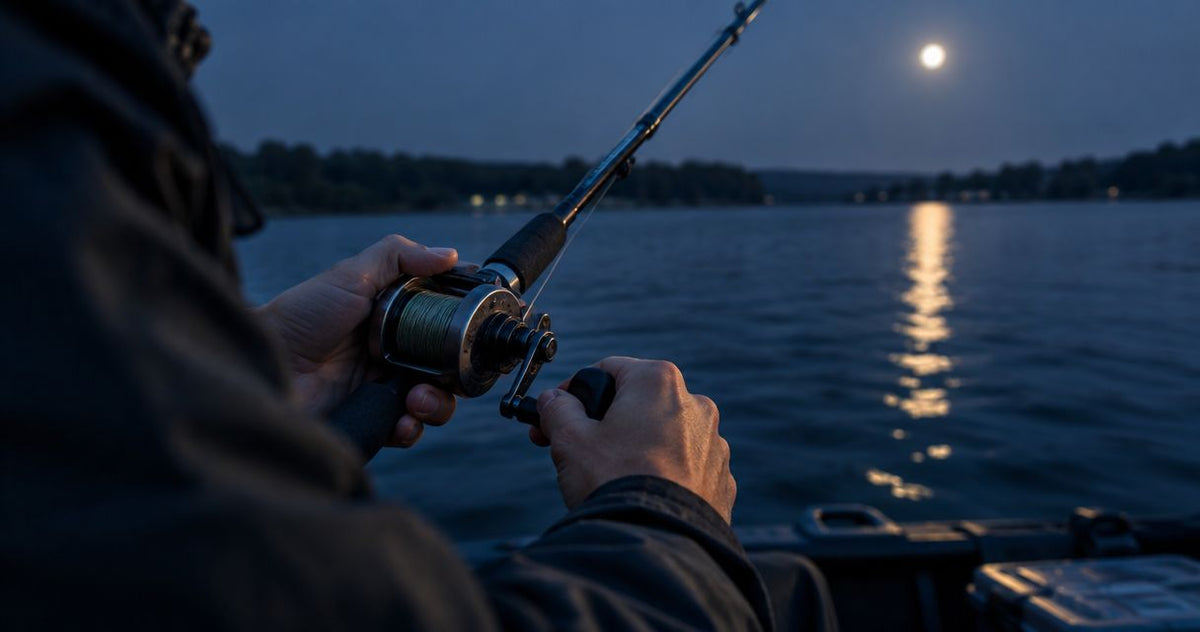
Yes, a hand reel works for night fishing when you can manage the line, feel a bite, and land the fish from a safe, accessible spot. Hand reel night fishing is a practical choice for simple, close-in fishing, but darkness makes loose line, exposed hooks, and uncertain footing harder to manage—so bring lighting and learn the handling in daylight first.
- Hand reel night fishing works when you keep line controlled and fish from stable, accessible ground.
- Crystal Creek Gear hand reels suit anglers who want compact, rodless fishing gear, not long-distance casting equipment.
- Bring a headlamp and backup light; compact fishing gear does not replace nighttime safety equipment.
- Practice handline fishing in daylight before adding darkness, unfamiliar water, or difficult fish handling.
Why this matters
A small fishing kit makes an evening stop easy. The trouble starts when you treat a dark shoreline like the same place you visited at lunch. Hooks disappear against the ground, slack line catches around your shoes, and a landing spot that looked simple becomes hard to see.
For your 2026 night-fishing plans, separate portability from preparedness. Carry less fishing gear if that suits your outing, but keep the equipment that lets you see, unhook a fish, and leave safely. If you're new to fishing without a rod, start with learning hand-reel fishing before making darkness part of the challenge.
Does a hand reel work for night fishing?
A hand reel works after dark because you can detect a bite through the line rather than relying entirely on sight. You still need to manage slack, retrieve line, and handle the fish. Night fishing changes how easily you perform those tasks; it does not remove them.
Choose your setup around the place you can fish safely and the presentation you already know how to use.
| Setup | Best for | Main advantage at night | Main limitation at night |
|---|---|---|---|
| Hand reel | Anglers making simple presentations near accessible shore | Compact gear and direct contact with the line | Manual line handling needs a clear working area |
| Rod-and-reel setup | Anglers who want rod reach and a familiar retrieve | The rod helps position line beyond the bank | More equipment to carry and manage around obstacles |
Neither setup makes an unsafe bank suitable for fishing. A hand reel keeps the fishing equipment compact; a rod gives you reach. Choose the equipment whose handling you already understand, then choose water where you can use it without stretching over an edge.
A rodless setup also lacks the bend of a fishing rod to cushion sudden pulls. Keep your movements controlled, and never wrap fishing line around your fingers or wrist. Direct contact is useful for detecting bites, not a reason to let line tighten around your body.
How do you use a hand reel safely after dark?
Make your first nighttime outing a repeat of a familiar daylight routine. Use the same accessible bank and a presentation you have already practiced. Save unfamiliar casting techniques and difficult terrain for daylight.
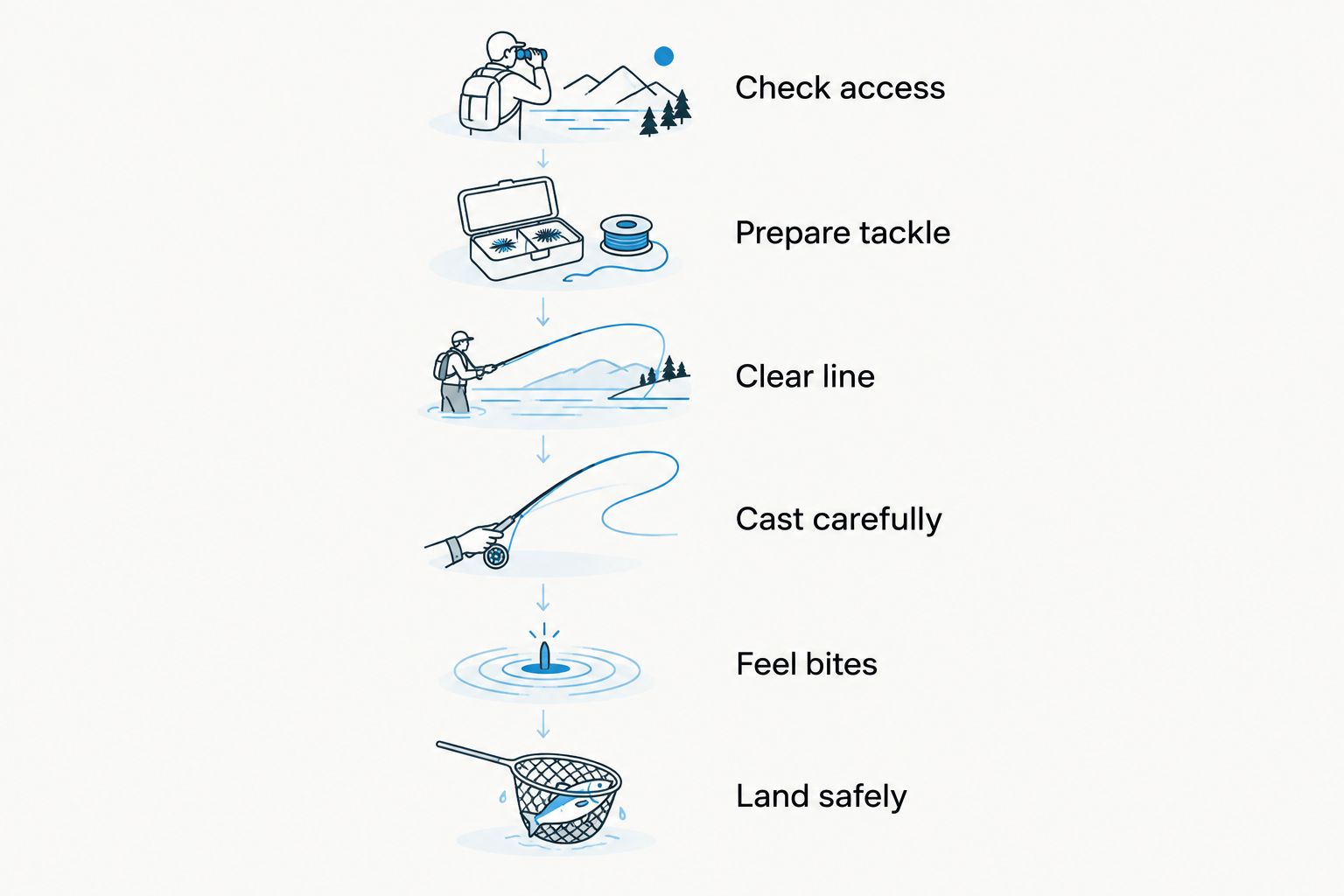
Check access
Walk the approach while you can still see the ground. Identify the water's edge, slippery surfaces, overhead branches, and the route back. Decide where you will stand and where you will bring a fish within reach.
For a 2026 outing, confirm current access hours and fishing rules before leaving home. An open shoreline during the day is not permission to stay there at night. Skip any location where you cannot establish legal access or a safe exit.
Prepare tackle
Tie and inspect your rig before darkness makes small tasks awkward. Check the line for damage, look at the knot, and keep the hook secured while you move. Choose a presentation you know how to cast and retrieve without tangling it.
Put your unhooking tool where you can reach it without searching through a bag. Keep spare hooks contained. Changing tackle beside the water is much easier when your light, tools, and storage already have a place.
Clear line
Keep the line path away from your feet, pack straps, vegetation, and other people. Loose loops need somewhere clear to go. Do not allow retrieved line to pile across a walking route or slide into cracks between rocks.
If you lose track of the line, stop. Illuminate the area and sort it out before casting again. Pulling harder on a mystery snag is not a useful way to discover whether the line is caught on a branch, a shoe, or an exposed hook.
Cast carefully
Check the space behind and beside you with your light. Make a controlled cast using the technique you practiced in daylight. Favor a reachable presentation over an ambitious cast into water you cannot see well enough to judge.
Keep your initial outing simple: fish from a stable position rather than walking and casting along an unfamiliar bank. A compact reel is easy to carry, but that convenience should not turn your session into a scramble over dark shoreline obstacles.
Feel bites
Maintain enough contact to notice changes in tension without winding line around your hand. A tap, steady pull, or sudden slack deserves attention, but none automatically proves that a fish has taken the bait. Current, vegetation, and bottom contact also affect the line.
Use your light when you need to inspect the setup. If the hook catches or the line stops moving normally, reset deliberately. Guessing in the dark turns a small problem into loose line and hurried handling.
Land safely
Bring the fish toward the landing area you chose before casting. Do not step onto an unstable edge just because the fish is close. Use a suitable landing tool where needed, then light the hook area before handling it.
Keep the line clear while you unhook the fish. Follow the applicable handling, retention, and release rules. Finish the sequence by securing the hook and organizing the line before you move or cast again.
What should you bring for hand reel night fishing?
Keep the fishing kit small, not the safety margin. Your packing list should cover seeing the work, controlling sharp tackle, and getting home.
- 1 headlamp: Keep your hands available for line and tackle while you light the task.
- 1 backup light: Carry a separate light in case the primary light stops working.
- 2 working light sources: Check both before leaving; an untested backup is not a dependable plan.
- Unhooking tool and line cutter: Store them where you can reach them without unpacking everything.
- Suitable landing equipment: Match it to the fish and shoreline rather than assuming you can lift a fish by the line.
- Communication and first-aid supplies: Carry what your location and outing require, and tell someone where you're going.
For your 2026 kit check, turn the lights on, inspect the line, and confirm that sharp tackle is contained. Do this at home, not when you are already standing beside dark water.
Clothing and footwear belong in the same check. Dress for the conditions and use footwear suited to the ground. If fishing from a boat or anywhere a fall into water is a concern, use appropriate flotation and follow local requirements.
Is a compact hand reel a good choice for this kind of outing?
Crystal Creek Gear hand reels are best for anglers who want compact, rodless fishing gear for simple outings on lakes, rivers, and ponds. That fit comes from portability, not a claim that a small reel makes nighttime fishing easier in every situation.
The GoReel Hand Reel & Line Lock is a compact starting point for anglers building a rodless setup. Crystal Creek Gear describes it as the core of its pocket-sized fishing system. Treat it as fishing equipment, not a replacement for lighting, safe access, or suitable landing tools.
The trade-off is straightforward: you carry less rod-and-reel equipment, but you take responsibility for manual line handling. If you prefer the reach and familiar operation of a rod, keep that setup. Choose compact gear because it fits your fishing—not because darkness makes its limitations disappear.
Why hand reel night fishing results vary
The hand reel is only part of the outing. These factors determine whether the session stays manageable:
- Daylight familiarity: A practiced cast and retrieve give you an established routine. Learning both beside dark water adds avoidable difficulty.
- Shoreline access: Clear ground and a reachable landing area support controlled handling. Steep edges and snaggy vegetation work against it.
- Line organization: Visible, contained line is easier to manage than loose loops spread around your feet.
- Lighting: You need to inspect knots, hooks, and the ground even when you detect bites by touch.
- Presentation demands: A simple technique you already know is a better starting point than one requiring constant adjustments.
- Fish handling: Your setup must let you control and land the fish without using bare hands as a brake or overreaching from shore.
Do not read a quiet session as proof that the reel does not work. A hand reel cannot guarantee that fish are present or feeding. Change your fishing approach deliberately, and keep safety decisions separate from the desire to get a bite.
How do you tell a bite from a snag at night?
Line movement gives you information, not certainty. A fish, current, bottom contact, or vegetation can change the tension. Watch for a pattern and respond using the technique appropriate to your rig rather than striking hard at every tap.
Your lighting still matters. Use it to check unexpected slack, crossed line, or tackle caught near shore. If the setup behaves differently from your daylight practice, pause and inspect it instead of trying to solve the problem through force.
Avoid resting exposed line across your fingers in a way that lets a sudden pull tighten it around them. Keep contact with the line without trapping your hand. If you cannot manage tension safely, stop using that setup and reassess the tackle and location.
Can you learn hand reel fishing at night?
Learn the basic handling in daylight first. Darkness takes away visual cues you use to check the cast, follow loose line, and see what the hook is doing. Your first night session should test an established routine, not introduce every task at once.
Before your first 2026 after-dark outing, practice casting, retrieving, securing the hook, and putting the equipment away. Rehearse reaching your light and unhooking tool too. If those actions still involve searching or untangling, keep practicing where you can see clearly.
Is a hand reel better than a rod for night fishing?
A hand reel is better for compact carrying; a rod is better when you need rod reach and prefer a conventional retrieve. Neither is automatically better for catching fish after dark. Your familiarity with the setup and your ability to land fish safely matter more than choosing the smallest equipment.
Stick with the rod if your chosen spot requires reach beyond shoreline obstacles. Choose the hand reel when a simple, accessible presentation suits the water and you already handle loose line confidently.
FAQ
Does a hand reel work for night fishing?
Yes, a hand reel works for night fishing when you can manage the line and land fish safely. Bring lighting, use an accessible spot, and practice the handling in daylight first.
What's the best place to try hand reel night fishing?
A familiar, legally accessible shoreline with stable ground and a reachable landing area is the best starting point. Avoid unfamiliar steep banks, slippery edges, and places where loose line catches around obstacles.
Do I need a headlamp if I can feel bites?
Yes, you still need lighting to inspect tackle, handle hooks, and see your footing. Carry a backup light rather than relying on bite detection by touch to get through the whole outing.
Can I wrap fishing line around my hand to hold a fish?
No, never wrap fishing line around your fingers, hand, or wrist. A sudden pull can tighten the line and cause injury; use a setup and technique you can manage safely.
Is hand reel night fishing legal in 2026?
Hand reel night fishing depends on the rules for the specific water, fishing method, species, and access hours. Check current 2026 regulations and property restrictions before your trip.
Does Crystal Creek Gear make night-fishing gear?
Crystal Creek Gear sells GoReel hand reel fishing kits and tackle for compact fishing on lakes, rivers, and ponds. Choose lighting and safety equipment separately rather than assuming a compact fishing kit covers nighttime needs.
Can a beginner use a hand reel after dark?
A beginner should learn casting, retrieval, and safe line handling in daylight before fishing after dark. Start the nighttime session at a familiar spot with a simple presentation and a clear landing area.
One last thing
Plan how you'll leave before deciding where you'll cast. A spot is not suitable just because you can reach the water; you also need to secure the hook, collect the line, and walk out safely when you're tired or the light fails.
For your next 2026 evening outing, scout the landing spot and exit in daylight. The point of grab-and-go fishing is less gear between you and the water—not less attention between you and a sharp hook.


