

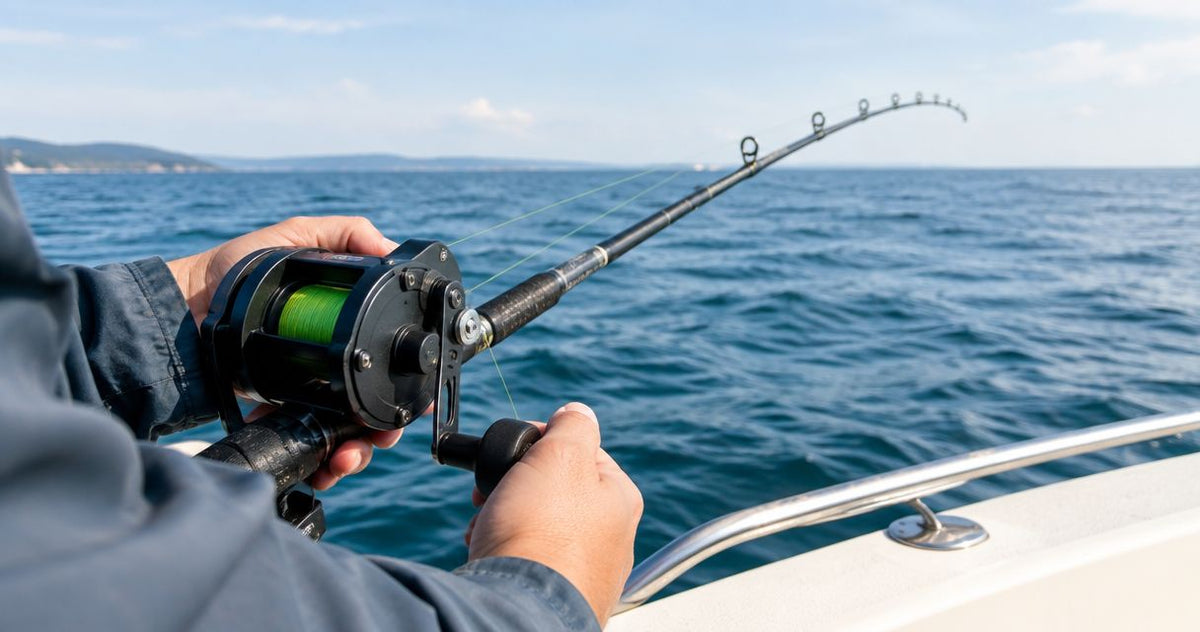
Yes, a hand reel can be used for trolling by trailing a lure or bait behind a moving boat while you manage the line by hand. The trade-off is control: without a fishing rod, you lose the rod’s cushioning and must manage tension, retrieval, and sudden pulls yourself. Keep the line attended, never wrap it around your body, and stop fishing whenever it interferes with operating the boat safely.
- Hand reel trolling works with an attended line and controlled boat movement; it is not a hands-free fishing method.
- Never wrap fishing line around your fingers, wrist, or body, or use yourself as an anchor.
- Choose a rod-and-reel setup when you need rod cushioning and adjustable reel drag.
- Crystalcreekgear hand reel fishing kits suit anglers prioritizing compact gear for lakes, rivers, and ponds.
Why this matters
Hand reel trolling lets you try another fishing method without bringing a rod. But less gear does not mean less responsibility. You still need to watch the water, steer, manage hooks, and deal with a fish or snag pulling against the moving boat.
For your 2026 fishing plans, decide whether you can manage those jobs together before putting a lure out. If you are new to rodless fishing, start with the guide to learning hand reel fishing. Practice paying out and recovering line while stationary before adding boat movement.
Can a hand reel be used for trolling?
Yes—hand reel trolling is possible, but it requires active line management rather than unattended towing. Boat movement pulls the bait or lure through the water, while you control the fishing line instead of using a rod and conventional reel.
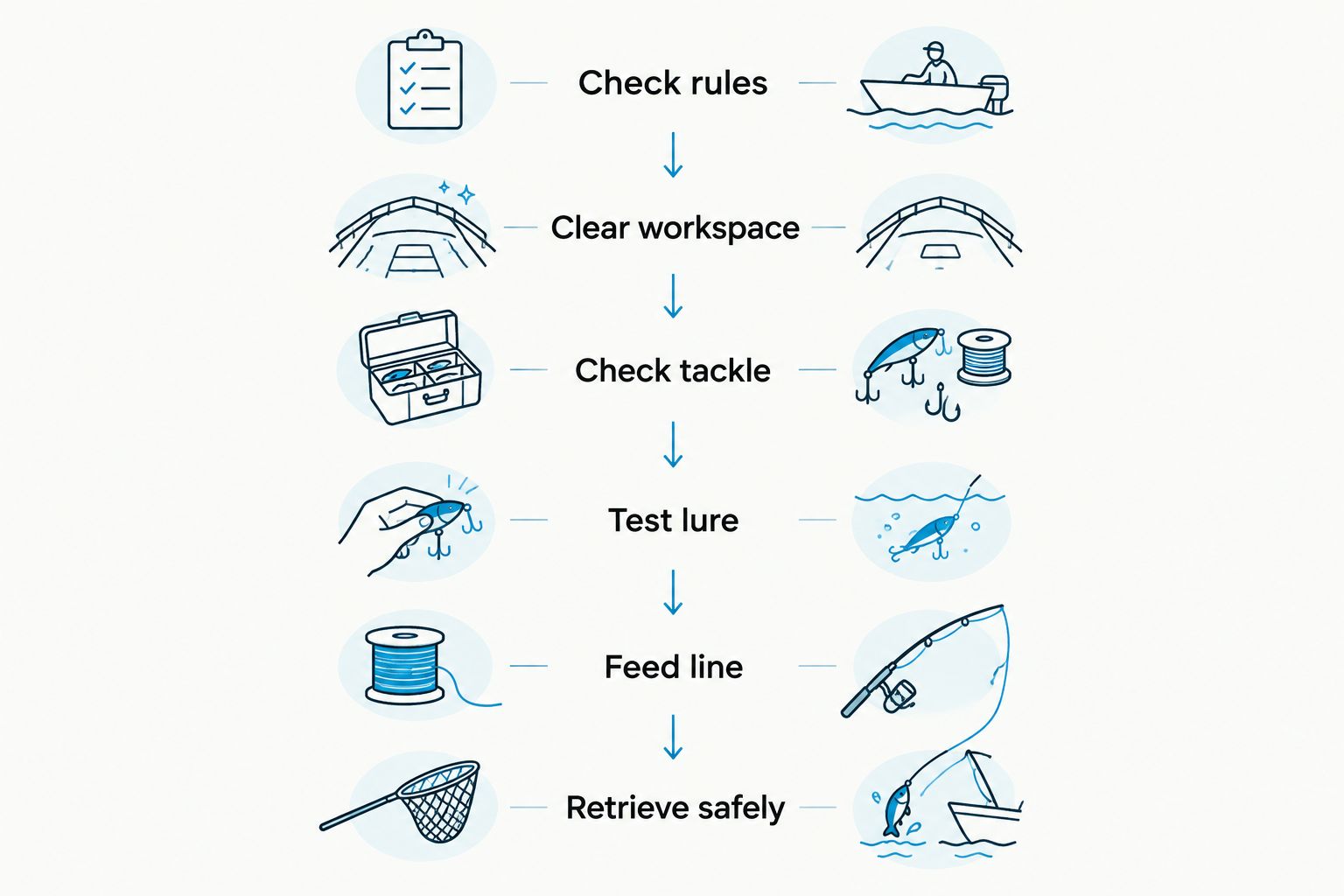
The deciding question is not simply whether the lure moves. It is whether you can control the line, respond to a strike, and deal with a snag without compromising boat handling. Start with these steps.
Check rules
Check the current fishing regulations for the water you intend to fish in 2026. Confirm that handlining and trolling are permitted, and check the rules for hooks, bait, species, and licenses. Permission to fish a lake does not automatically settle every method-specific restriction.
Read the operating instructions for your hand reel, too. Do not treat a reel, retaining clip, or line lock as a towing attachment unless its manufacturer explicitly describes that use. A device that organizes line is not automatically a load-bearing fitting.
Clear workspace
Put on a properly fitted personal flotation device and clear the area where you will handle line. Keep hooks, loose tackle, and line away from your feet, paddle, steering controls, and motor. Make sure you can reach a cutting tool without searching through a bag.
Before launching, decide who operates the boat and who handles the fishing line. If you are alone, boat control comes first. Do not deploy a line when steering or paddling already demands your full attention, and keep the hook secured until you are ready to fish.
Check tackle
Inspect the line for damage and check your knots and hook connections. Choose tackle that matches the fish you are targeting and the conditions you expect. A compact reel does not remove the need for a suitable line, sound knots, or a safe way to land the fish.
Keep the setup simple enough that you understand every connection. Do not add weight just to make the rig feel more substantial. Weight changes how the rig behaves, and extra tackle gives you more components to manage during deployment and retrieval.
Test lure
Observe the lure beside the boat before sending it farther behind you. It should move as intended at the boat’s current pace, rather than spin, tumble, or drag along the bottom. Follow the lure maker’s instructions instead of applying a universal trolling speed.
If the lure behaves poorly, retrieve it and make a change. Slowing down, changing the rig, or choosing a different presentation is better than towing an unstable lure farther away. The visible test tells you more than a guessed speed or depth.
Feed line
Pay out line under control, keeping it clear of the propeller, paddle, and other equipment. Avoid loose loops in the boat. Let out only what you can manage and retrieve safely; more line is not automatically a better fishing presentation.
Never wrap the line around your fingers, wrist, or body to hold tension. Do not tether yourself to the fishing line. If the pull becomes difficult to control, stop the attempt safely rather than tightening your grip and allowing the boat to keep loading the line.
Retrieve safely
When a fish strikes, reduce boat movement when it is safe to do so and manage the line without sudden, forceful pulls. Keep recovered line organized instead of dropping tangled loops around your feet. Have the landing equipment you need within reach before fishing.
Treat a snag differently from a fish. Do not use the moving boat to wrench a stuck hook free, and never brace the line against your body. Stop fishing, maintain boat control, and cut the line if you cannot free the rig safely.
These steps share one rule: you must be able to stop fishing without losing control of the boat. If a setup depends on holding a loaded line while also making an urgent steering correction, simplify it or put it away.
Hand reel trolling versus a rod-and-reel setup
Choose your 2026 setup by the control you need, not just the space it occupies. A hand reel removes the rod from your packing list, but it does not replace every job the rod and reel perform.
| Approach | Best for | Main advantage | Main limitation |
|---|---|---|---|
| Hand reel trolling | Anglers who want rodless fishing and can actively manage the line | No fishing rod to transport or position | You manage tension and retrieval without rod cushioning |
| Rod-and-reel trolling | Anglers who want rod cushioning and adjustable reel drag | A suitable rod and reel help manage changing tension | You must carry and position the rod-and-reel setup |
| Stationary handlining | Anglers learning line handling before adding boat movement | Removes deliberate boat propulsion from the practice session | Wind, current, fish, and snags still require attention |
Choose hand reel trolling for simplicity, not for hands-free operation. Its compactness is useful when you want less equipment aboard. The limitation is that the fishing line demands your attention directly, especially during deployment, a strike, or retrieval.
Choose a suitable rod-and-reel setup when cushioning and adjustable drag are central to how you intend to fish. Those features help manage tension, but they do not make unattended fishing safe. You still need to watch the line and keep it clear of propulsion equipment.
Stationary handlining is the better starting point when you are still learning. It lets you practice without deliberately pulling the rig behind a moving boat. Wind and current remain part of the picture, so choose a setting where you can maintain control.
Why hand reel trolling varies
There is no universal combination of boat pace, line length, and tackle that fits every outing. The useful variables are the ones you can observe and control—not a guessed recipe.
- Lure behavior: Different presentations respond differently to movement. Watch whether your lure tracks properly before letting out more line, and follow its instructions.
- Boat movement: Propulsion, turns, and changes in direction alter the pull on the fishing line. Avoid fishing through maneuvers that require your full attention.
- Wind and current: Movement relative to shore does not tell the whole story. Water flowing past the rig affects its presentation, while wind affects boat handling.
- Line management: The amount of line deployed changes how much you must recover. Loose line aboard adds a separate handling problem, even when the lure is working properly.
- Fish and snags: A strike and a snag both increase tension, but they call for different responses. Neither is a reason to wrap line around your hand or pull harder with the boat.
- Your workload: A setup that is manageable with a separate boat operator is not necessarily manageable alone. Keep fishing secondary to steering, balance, and awareness of other water users.
Change the setup only after retrieving it safely. If you adjust boat movement, tackle, and line deployment together, you lose track of which change improved—or worsened—the presentation.
What should you have ready before trolling?
Pack for the awkward part of the outing, not just the first cast. You need a way to handle hooks, cut line, land your intended catch, and secure tackle when fishing stops. Keep those items accessible rather than buried beneath other gear.
A useful pre-launch check includes:
- A properly fitted personal flotation device.
- A reachable line-cutting tool.
- Hook-removal equipment appropriate to your tackle.
- Suitable landing equipment for your target fish.
- Secure storage for hooks and loose tackle.
- The current regulations and required fishing credentials.
Also plan the interruption. Another boat approaching, a change in wind, or a difficult steering maneuver is a reason to retrieve the rig. A grab-and-go setup still needs a clear stop-and-stow routine.
Practice that routine before your first trolling pass. Recover the line, secure the hook, and put the tackle where it cannot roll or snag. If packing it away leaves loose hooks or line across the boat, fix the storage arrangement before fishing again.
Where a compact GoReel setup fits
For a 2026 outing where carrying less equipment is the priority, the GoReel Hand Reel & Line Lock is relevant as the core of a compact handline setup. Crystalcreekgear describes it as part of its pocket-sized fishing system.
Crystalcreekgear hand reel fishing kits are best for anglers who prioritize compact gear for lakes, rivers, and ponds. That is the useful fit here: less rod-related packing, with direct line handling still part of the experience.
The trade-off remains real. Choosing a hand reel means managing line without a rod’s cushioning, and compactness alone does not establish suitability for a particular trolling load. Check the reel’s operating instructions before using it this way; do not treat the included line lock as a trolling attachment without explicit manufacturer guidance.
Choose your tackle around the water and fish you intend to target, rather than assuming that any compact kit is a complete trolling rig. Keep the setup simple, but retain the safety and landing equipment your outing requires.
How fast should you troll with a hand reel?
Use the lure manufacturer’s guidance and a pace at which you can safely manage both the boat and fishing line. There is no single speed that fits every lure, current, and handline setup.
Check the lure’s movement beside the boat first. If it spins, tumbles, or creates more pull than you can comfortably manage, retrieve it and change the presentation.
Can you troll with a hand reel from a kayak or canoe?
Yes, but paddlecraft add a workload problem: paddling, balance, steering, and fishing can compete for your hands and attention. Use a hand reel only when you can maintain control of the craft and recover the line safely.
If handling the line interrupts paddling or makes you lean awkwardly, retrieve the rig. A compact fishing setup is not a reason to accept an unstable position.
Can you attach a hand reel line to the boat and leave it?
Do not assume that an attachment point, clip, or line lock is suitable for trolling loads. Use only equipment explicitly intended for the job, follow its instructions, and keep the fishing line attended.
Never attach the fishing line to your body. If your plan depends on leaving a tensioned line unmanaged, choose a different setup or stop fishing.
FAQ
Can a hand reel be used for trolling?
Yes, a hand reel can be used for trolling when you actively manage the line and maintain safe boat control. You must handle tension and retrieval without a fishing rod’s cushioning.
What is the best way to start hand reel trolling?
Start by practicing deployment and retrieval while stationary, then check your lure’s action beside the boat. Add boat movement only when you can manage the line without compromising steering or balance.
Is a hand reel better than a rod for trolling?
A hand reel is better for removing the fishing rod from your packing list, not for replacing rod cushioning or adjustable reel drag. Choose the setup that gives you the control your outing requires.
How much line should I let out when trolling with a hand reel?
Let out only the amount of line you can control and retrieve safely. The appropriate amount depends on the presentation, water, and boat handling rather than a universal distance.
Can I wrap trolling line around my hand for a better grip?
No, never wrap fishing line around your fingers, wrist, or body. A fish, snag, or moving boat can tighten the line suddenly and cause injury.
What should I do if my handline snags while trolling?
Stop the fishing attempt safely and maintain boat control rather than using the boat to pull the snag free. Never brace the line against your body, and cut it if you cannot free the rig safely.
Is a Crystalcreekgear hand reel kit a substitute for boat safety equipment?
No, a Crystalcreekgear hand reel kit does not replace a personal flotation device, line-cutting tool, or appropriate hook-handling and landing equipment. Compact fishing gear still requires a safe boating setup.
One last thing
Before your first hand reel trolling outing in 2026, rehearse putting the rig away—not just putting it out. The useful test is whether you can recover the line and secure the hook without leaving a tangle where you paddle, steer, or stand.
A setup that packs small but becomes awkward under tension needs another approach. Less gear should mean fewer handling problems, not fewer ways to stay in control. If the practice run feels clumsy, fish stationary until line handling becomes familiar.


