

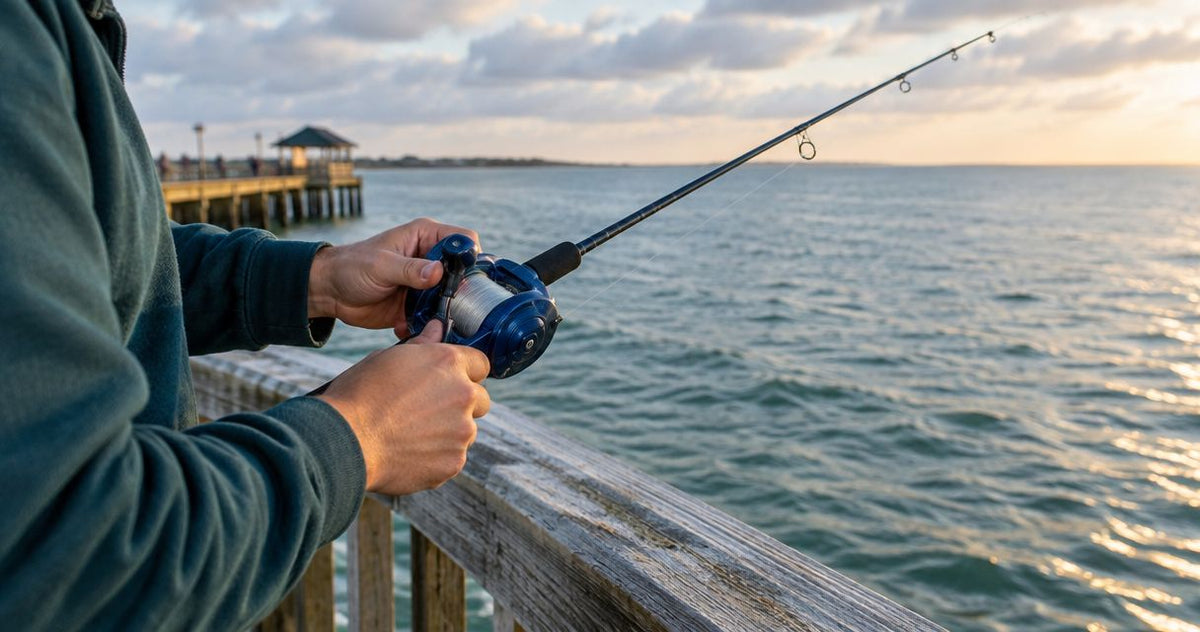
Yes, a hand reel works for pier or dock fishing when you can lower your bait into reachable water and keep the line clear of pilings. It suits close-in fishing better than situations that demand long casts or extra reach around structure. The main catch is landing the fish: a high pier needs a safe retrieval plan, not just a way to get a hook into the water.
- Does a hand reel work for pier fishing? Yes—choose clear, close-in water and plan how to land fish.
- Handline fishing suits vertical drops beside low docks; rods offer more reach around pilings.
- Crystal Creek Gear hand reels suit anglers who prioritize compact gear for freshwater dock trips.
- Never wrap fishing line around your fingers, and never lean over a railing to retrieve a fish.
Does a hand reel work for pier or dock fishing?
A hand reel is a practical choice for fishing directly below a dock or beside an unobstructed pier edge. You control the line without a rod, so the spot needs to let you lower, retrieve, and manage that line safely. If you're new to the method, start with hand reel fishing basics for beginners before fishing beside crowded railings or snag-prone pilings.
The useful comparison isn't whether either setup can catch fish. It's what each setup lets you do from your standing position.
| Setup | Best for | Main advantage | Main limitation |
|---|---|---|---|
| Hand reel | Close-in drops from a clear dock edge | Compact gear without assembling a rod | No rod tip to steer line around obstacles |
| Rod and reel | Casting farther or directing line away from structure | Reach and line control through the rod | More equipment to carry and manage |
Neither setup fixes a bad landing spot. A rod adds reach, but you still need a way to bring the fish to hand without unsafe lifting or leaning.
Why this matters
A dock puts you above the water, which often removes the need for a cast. That's where simple handline fishing makes sense. You can lower your presentation into a clear opening instead of trying to throw it across the lake.
But easy access isn't the same as easy retrieval. Railings, deck edges, submerged supports, and passing boats all affect where your line travels. Choose the fishing position before choosing the tackle.
For your 2026 dock trips, judge the setup by the entire path: bait going down, fish moving through the water, and fish coming back up. If any part of that path is blocked, move to a better position or use a different method.
Low freshwater docks: best for simple vertical drops
A low dock beside a lake or pond is a sensible place to practice hand reel fishing. Look for an open edge where you can watch the line and keep it away from the deck supports. You don't need to make a cast just because you're fishing from a dock.
Lower the rig under control rather than dropping a loose pile of line. Keep unused line organized on the reel and retrieve it using the reel's intended method. Loose loops on a dock create problems for you and everyone walking past.
The advantage is straightforward: less gear between you and a short fishing session. The limitation is equally clear: without a rod tip, you have less reach to guide the line away from the dock when a fish changes direction.
Best for: an open freshwater dock edge with an accessible landing area. Skip positions where the line must rub across a railing, ladder, or support to reach the water.
High piers: landing access decides whether the setup works
A hand reel can put bait below a high pier, but reaching the water doesn't settle the question. You need to work out how you'll land and release a fish before making the drop. Height turns retrieval into the deciding factor.
Don't assume your fishing line is a lifting rope. Hoisting a fish by the line places strain on the tackle and the fish, and a broken connection leaves you with no controlled landing. Use an appropriate landing method, such as a pier landing net where suitable and permitted.
Also check the railing. A position that forces taut line over a rough edge is a poor place to fish with a hand reel, regardless of what's biting below it.
Best for: a clear vertical line path with a prepared landing method. Choose another position when you would need to lean outside the railing or improvise retrieval after hooking a fish.
Crowded or exposed piers: a rod offers more control
On a crowded pier, a handline cast needs room just as any other cast does. A compact reel doesn't make a swinging hook safe near other people. A controlled vertical drop is the simpler option when the rules and spacing allow it.
Wind and current add another problem: the line no longer stays beneath your standing position. It can drift toward supports or neighboring anglers. Watch the actual direction of the line, not just where you released the bait.
A rod gives you a movable tip for steering the line and more reach beyond the edge. That makes it the better choice when the fishing position requires those abilities. Its trade-off is the extra equipment you came here hoping to leave behind.
Best for: rod-and-reel fishing when reach, casting, or line direction matters more than compact carry. Don't force a hand reel into a spot that works against it.
Why hand reel success varies between docks
The reel is only part of the setup. These conditions determine whether pier or dock fishing stays simple:
- Landing access: You need somewhere to bring the fish to hand, or a suitable netting method from above.
- Structure: Pilings, ladders, cables, and rough edges create snagging and abrasion hazards.
- Current: Moving water carries your rig sideways and changes the route your line follows.
- Wind: Wind makes loose line harder to manage and complicates casting beside other anglers.
- Crowding: Nearby people reduce the space available for hooks, line, and landing equipment.
- Target fish: Match the tackle and landing method to the fish you're pursuing, rather than treating compact gear as suitable for every catch.
Use this checklist when planning a 2026 trip, but inspect the dock when you arrive. A good position on a quiet morning isn't automatically a good position when boats and people fill the same space.
How do you fish from a dock with a hand reel?
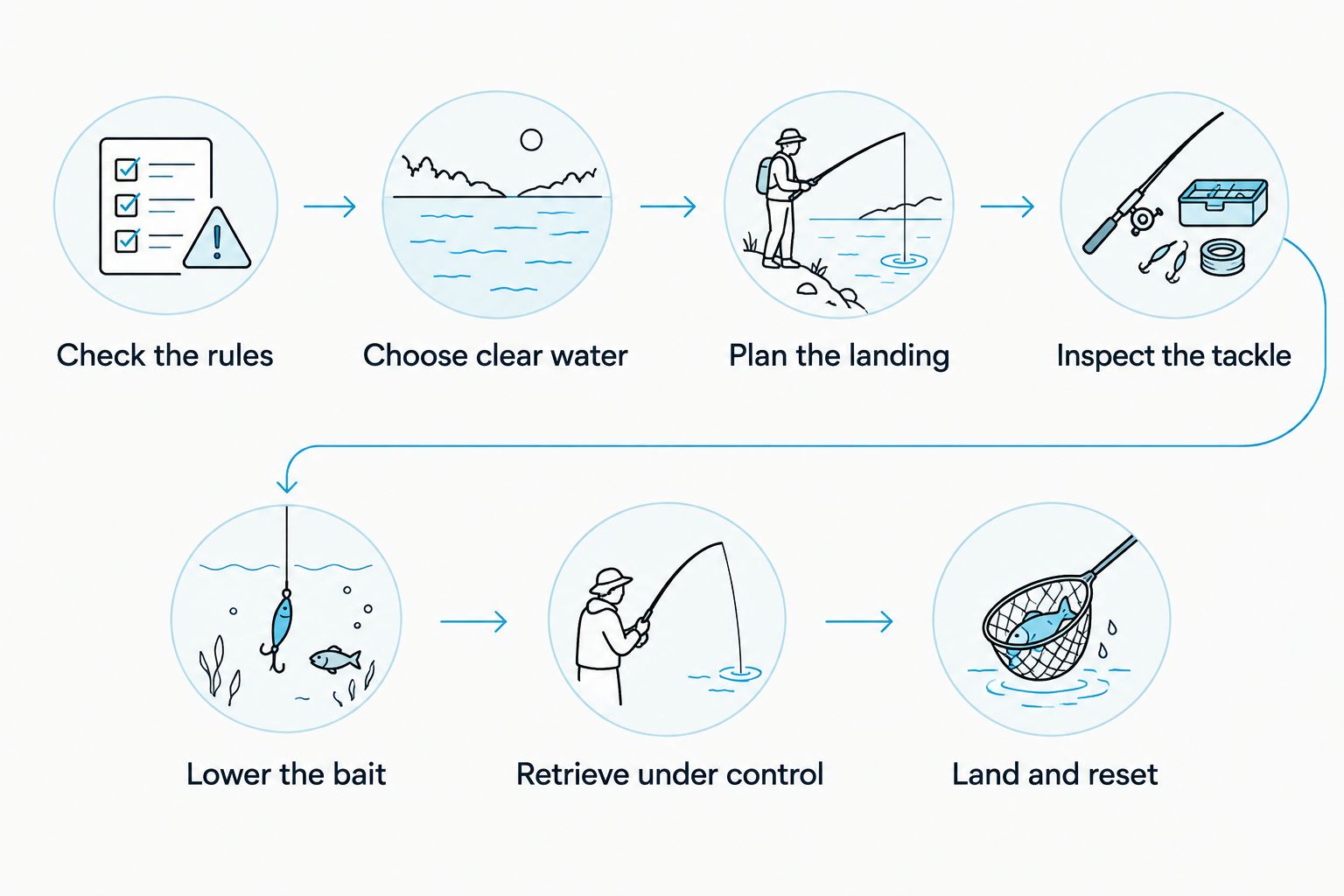
Start with a position that lets you complete the whole process safely. Then keep the fishing simple: a controlled drop, organized line, and a landing method already within reach.
- Check the rules. Confirm fishing access, licensing requirements, permitted tackle, and any dock-specific restrictions. For a 2026 outing, read the current rules from the relevant fisheries authority and the facility; don't assume last season's permissions still apply.
- Choose clear water. Look below and beside your position for supports, ropes, ladders, and boat traffic. Pick an opening where the line can enter the water without crossing the railing or another angler's line.
- Plan the landing. Identify where you'll net or otherwise safely land the fish. Keep that equipment accessible before lowering the hook, and leave enough room to use it.
- Inspect the tackle. Check the line for visible damage and check knots and hook condition. Use tackle suited to your target fish and follow the hand reel's operating instructions.
- Lower the bait. Feed line in a controlled way while keeping the hook clear of people and clothing. Avoid throwing loose coils onto the walking surface.
- Retrieve under control. Keep the line away from fingers, wrists, and other body parts; never wrap it around them. Use the reel as instructed, keep your footing, and watch for the fish moving toward structure.
- Land and reset. Use your prepared landing method, handle the fish appropriately, and check the line before the next drop. Stop fishing if the landing route becomes blocked.
Don't grab taut line to stop a running fish. Fishing line under tension can injure your hands. If the fish, current, or structure exceeds your ability to control the setup safely, protect yourself rather than trying to save the tackle.
Keep hooks secured whenever you're moving along the dock. That small habit matters on shared walkways, where someone can step into a loose rig without seeing it.
Where does a compact hand reel kit fit?
Crystal Creek Gear hand reels are best for anglers who want compact gear for close-in freshwater dock fishing. That's a portability recommendation, not a claim that a hand reel replaces the reach of a rod or the need for landing equipment.
For lake and pond outings, the named kits below match those freshwater settings. Their names don't establish a particular fish-size limit, saltwater rating, or complete list of included tackle. Check the product details against your planned outing.
| Kit | Best for | Reason to consider it | Limit to keep in mind |
|---|---|---|---|
| GoReel Rodless Hand Reel Fishing Kit - Lake | Compact carry for lake outings | A rodless kit associated with lake fishing | A kit name doesn't establish suitability for every dock or target fish |
| GoReel Rodless Hand Reel Fishing Kit - Pond | Compact carry for pond outings | A rodless kit tailored to pond fishing | You still need appropriate landing and fish-handling equipment |
For a 2026 packing list, separate the fishing kit from the safety and landing gear. Crystal Creek Gear's compact approach reduces the gear you carry for fishing; it doesn't remove the need to prepare for the dock itself.


Do you need to cast when fishing from a dock?
No, dock fishing doesn't always require a cast. If suitable water lies directly below an open edge, you can lower a bait or jig into it under control.
Casting becomes relevant when you need to reach water beyond that opening. Choose the method based on where the fishable water is, not on a habit of casting every time you arrive.
Can you use a hand reel from a saltwater pier?
Handline fishing is used in saltwater, but that doesn't establish saltwater suitability for a particular reel or kit. Check the manufacturer's guidance, match the tackle to the intended fish, and confirm the pier's rules.
A color name or freshwater kit name isn't evidence of corrosion resistance or suitability for strong tidal flow. Evaluate the actual equipment and landing conditions separately.
Is hand reel fishing allowed on public docks?
Permission depends on the location and its current rules. Check the fisheries regulations and the dock operator's restrictions, including access, hooks, bait, and permitted fishing methods.
For 2026 trips, verify both sources before you pack. Public access to a walkway doesn't automatically mean fishing is allowed from it.
FAQ
Does a hand reel work for pier fishing?
Yes, a hand reel works for close-in pier fishing when you have a clear line path and a safe landing method. High railings, current, and pilings make the setup less straightforward.
What's the best dock position for handline fishing?
An open edge with clear water below and accessible landing space is the best starting position. Avoid routes that put your line against ladders, ropes, or rough railings.
Is a hand reel better than a rod for dock fishing?
A hand reel is better for compact carry and simple vertical drops; a rod is better when you need reach or casting control. Choose based on the fishing position and landing route.
Can I lift a fish onto a pier with the fishing line?
Don't treat fishing line as a lifting rope. Prepare an appropriate landing method, such as a suitable pier net where permitted, before you fish.
Can beginners use a hand reel from a dock?
Yes, beginners can practice from an open, low dock with manageable conditions and a safe landing area. Learn the reel's operating method first and never wrap line around your fingers.
What should I bring besides a hand reel kit?
Bring the landing equipment, hook-removal tool, and safety gear appropriate to the location and target fish. Crystal Creek Gear hand reel kits don't remove the need to assess those requirements.
Can I use a freshwater hand reel kit on an ocean pier?
A freshwater kit name doesn't establish saltwater suitability. Check the manufacturer's guidance and select tackle and landing equipment for the actual conditions.
One last thing
Pick your landing spot before you pick your fishing spot. The tempting gap beside a piling isn't useful if you can't safely bring a fish back through it.
Walk the edge with your tackle still secured. Find clear water, check the return path, and get your landing equipment ready. Then enjoy what a hand reel does well: a simple connection to nearby water, without carrying a rod just to make a vertical drop.


