

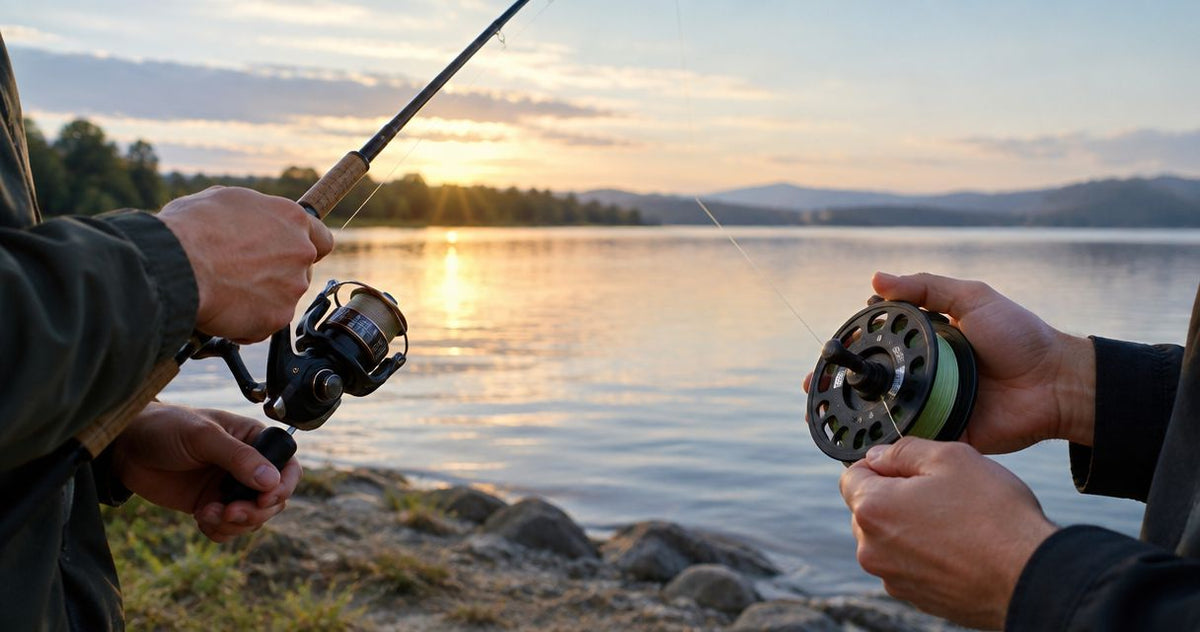
Hand reel fishing removes the sounds associated with operating a conventional fishing reel, but it is not automatically quieter than rod fishing. Your lure landing, footsteps, and gear handling still create disturbance, and a carefully handled rod setup can be quiet too. Choose a hand reel for simplicity and portability, not a guarantee that fish will hear less.
- Is hand reel fishing quieter than rod fishing? Not automatically; lure splash and angler movement still matter.
- Crystalcreekgear hand reel fishing kits suit anglers who want compact, rodless gear rather than a guaranteed noise advantage.
- A fishing rod provides reach and line control that can help you place a rig gently.
- Reduce unnecessary splashing, dock vibration, and tackle handling before changing your fishing setup.
Why this matters
A peaceful fishing trip and a stealthy presentation are different goals. You might prefer fewer moving parts because you want to hear the creek, while your fishing approach still involves a splashy cast or heavy footsteps on a dock.
For your 2026 gear choice, separate comfort from fishing performance. Crystalcreekgear sells compact hand reel fishing kits for lakes, rivers, and ponds; that portable format is a reason to consider one, without treating it as proof of quieter fishing.
The useful question is where the disturbance comes from. Once you identify that, you can change the habit or piece of gear responsible instead of replacing your whole setup.
Is hand reel fishing quieter than fishing with a rod?
Hand reel fishing eliminates conventional reel-operation sounds, not every source of fishing noise. A hand reel stores line without the usual rod-and-reel casting and retrieval arrangement. That changes how you manage line, but it does not silence a sinker hitting the water or a tackle container landing on a dock.
A rod is not inherently noisy either. The sound depends on the reel, its settings, its condition, and how you use the outfit.
| What you compare | Hand reel fishing | Rod fishing |
|---|---|---|
| Reel operation | No conventional reel handle, bail, or geared retrieve | Operating sounds depend on the reel design and condition |
| Rig landing | A hand-cast rig still creates a splash | A rod-cast rig still creates a splash |
| Nearby placement | Depends on your handline technique and access | Rod reach helps position a rig without a full cast |
| Line management | Requires direct attention to loose line | A reel stores retrieved line on its spool |
| Best for | Anglers prioritizing compact, rodless fishing | Anglers prioritizing rod reach and conventional line control |
| Main trade-off | You manage line without a rod's reach or flex | You carry and handle a rod-and-reel outfit |
There is no universal quietness winner here. A gently lowered rod rig and a forcefully thrown handline rig are not equivalent presentations, even when the hand reel has fewer operating parts.
Compare the same fishing task: similar tackle, the same casting area, and the same approach to the water. Otherwise, you are comparing techniques as much as equipment.
What does “quieter” mean on the water?
Quieter to your ears
You hear reel clicks, moving hardware, container lids, and objects knocking together. Removing an operating sound can make the experience feel calmer, especially when you are fishing alone beside still water.
That is a valid preference. It does not establish what a fish detects beneath the surface, and it does not mean every rod-and-reel outfit makes an intrusive sound.
Less disturbance reaching the water
Fish detect underwater sound and water movement through sensory systems that include the inner ear and lateral line. A splash or vibration entering the water is therefore a different issue from a small sound you hear beside your hand.
Focus on disturbances you control directly: placing your rig, moving along the bank, and setting down equipment. Less audible gear noise is not the same claim as less underwater disturbance.
Less movement around the fishing spot
A compact setup changes what you carry, but you still have to approach the bank and handle tackle. Hand casting also requires movement; rod fishing does not automatically mean broad, repeated overhead casts.
Keep the whole sequence in mind. The quietest-looking item in your bag cannot compensate for dropping that bag onto the dock before you fish.
Why fishing noise varies
The difference between hand reel fishing and rod fishing comes down to the task and how you perform it. These factors apply to either setup:
- Reel operation: Conventional reel mechanisms and settings differ. A hand reel removes that particular operating arrangement, but not sounds from the rest of your equipment.
- Rig landing: Your hook, bait, lure, float, or weight still enters the water. A forceful landing creates disturbance regardless of what held the line beforehand.
- Footsteps: Walking on a dock or shifting around a boat creates opportunities for vibration and impact. Move deliberately rather than shuffling while you search for tackle.
- Gear contact: Loose objects knock together, and hard containers make contact with the surface beneath them. Keep the items you need accessible before you approach your fishing position.
- Presentation technique: Casting, lowering, and retrieving are different actions. Compare equipment while doing the same action, not a gentle placement with one setup against a hard cast with another.
Treat this as a troubleshooting list, not a ranking of what fish notice most. The useful move is to remove avoidable disturbance without claiming that one change guarantees a bite.
When a hand reel fits your kind of fishing
A hand reel makes sense when you want a compact fishing setup rather than a rod-and-reel outfit. You store and manage fishing line directly, and you leave the rod out of the system.
Crystalcreekgear hand reel fishing kits are best for anglers prioritizing compact, rodless gear over a conventional rod setup. That is a portability verdict, not a sound-performance claim.
The GoReel Hand Reel & Line Lock is one option for that approach. Its product description identifies it as the core of a pocket-sized fishing setup; choose the format because it suits how you carry and fish your gear.
The trade-off deserves equal attention. Without a rod, you do not have rod reach to position your line or rod flex to help absorb changes in tension. You also need to manage retrieved line so it does not collect around your feet or catch on nearby objects.
Never wrap fishing line around your fingers or hand. Direct contact with line requires care, particularly when a fish pulls or a rig snags.
When a rod is the better fit
Keep the rod when reach and controlled placement matter more than eliminating conventional reel-operation sounds. A rod lets you extend the rig beyond your hands and lower it into nearby water without always making a cast.
That matters when you can reach your target from a safe position. The benefit comes from placement, not from a promise that rods are quieter in every situation.
A rod also provides flex, while the reel gives you a place to store retrieved line. Those features change how you manage tension and loose line during fishing.
The downside is carrying and handling the outfit. Rods, reels, and associated tackle are additional objects to keep clear of branches, dock edges, and other equipment.
Do not abandon a familiar rod setup just to chase silence. First, see whether gentler placement and better gear organization solve the disturbance you actually notice.
A quieter fishing routine for 2026
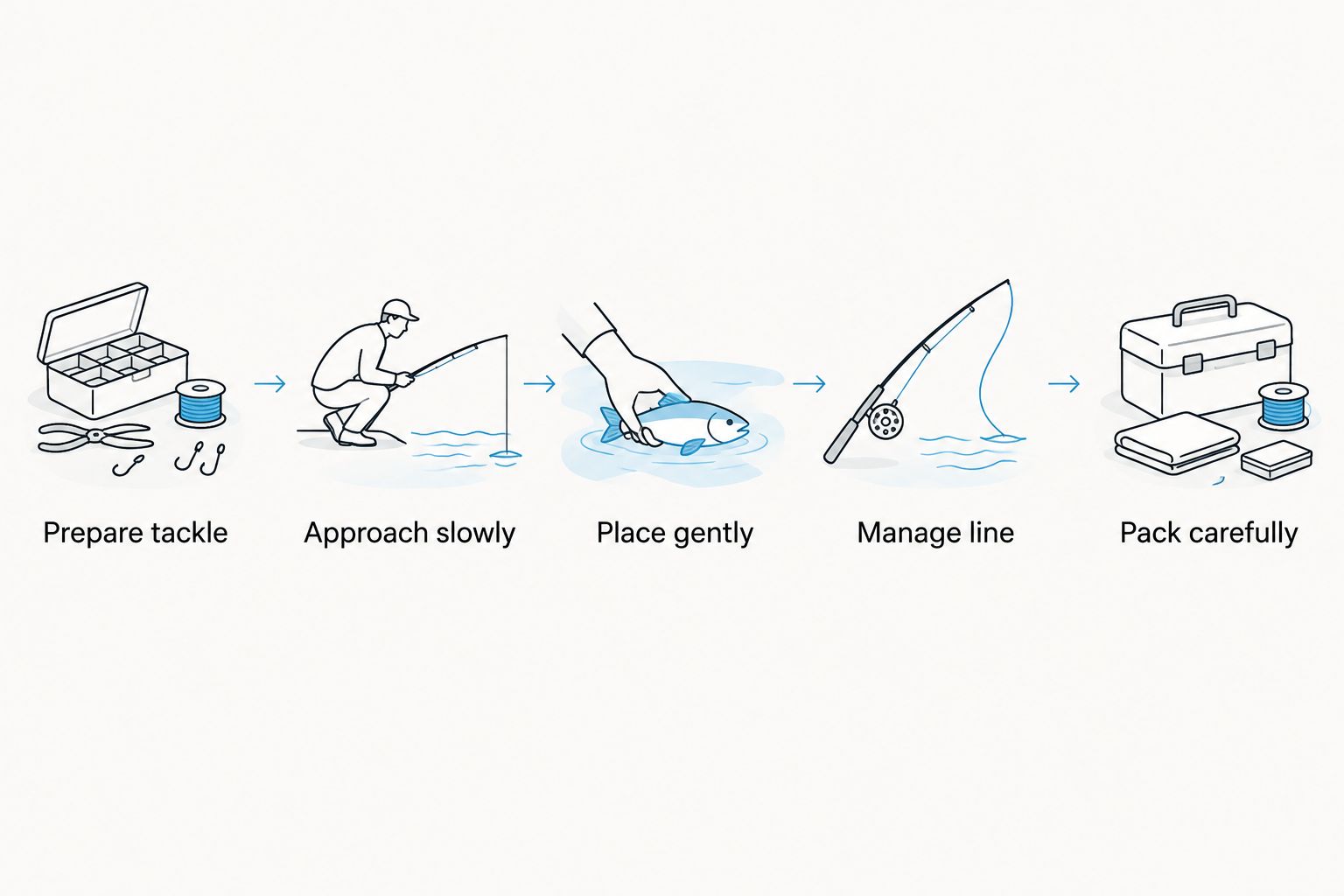
Use this sequence with either setup. The goal is fewer avoidable impacts and a controlled presentation, not a promise of more fish.
- Prepare tackle. Select and check your rig before settling into your fishing position. Secure unused hooks and close containers so you are not rummaging beside the water.
- Approach slowly. Choose stable footing and keep your gear under control. Avoid rushing onto a dock or stepping into the water merely to make a shorter cast.
- Place gently. Use the least force needed to reach your chosen spot safely. When access allows, lower a rig instead of throwing it.
- Manage line. Keep loose line clear of your feet, clothing, and surrounding objects. With a hand reel, pay particular attention to where retrieved line goes.
- Pack carefully. Secure the hook before moving and put equipment away without dropping it. Keep line and tackle out of the water when you leave.
The same sequence works whether your fishing trip is a planned outing or a quick stop beside a pond. Preparation makes the next action simpler; you are not trying to solve a tangle while standing at the edge.
How should you compare your own setups?
Compare behavior before drawing a conclusion about equipment. Fish from a safe position with similar terminal tackle, and pay attention to the action that creates each sound or splash.
Separate what you hear from what you observe. A reel sound beside your hand, a sinker splashing, and a box hitting a dock are distinct events with different causes.
Do not use a single catch or an empty session as proof that one setup is quieter. Fish activity, location, and presentation all affect fishing, so a bite alone cannot isolate noise as the reason.
For a practical 2026 decision, ask whether the hand reel removes something you dislike without creating a line-management task you dislike more. That tells you whether the format fits your fishing, even without turning the outing into an equipment test.
Will a quieter hand reel help me catch more fish?
Quieter gear alone does not establish a catch advantage. Fish still have to encounter your bait or lure, and your presentation must suit the place you are fishing.
Use a hand reel because you want the rodless format. Improving approach and rig placement is useful with either setup; promising extra catches from the equipment's sound alone goes beyond that.
Can I make rod fishing quieter without switching gear?
Yes, you can reduce avoidable disturbance while keeping your rod. Prepare tackle beforehand, avoid knocking equipment against hard surfaces, and place the rig gently when your position allows it.
If the reel makes an unfamiliar sound, follow its manufacturer's maintenance instructions. Do not assume every operating sound is a defect or try to disable components just to make the outfit silent.
Should I switch to a hand reel for quiet fishing in 2026?
Switch for compact, rodless fishing—not for a guaranteed quietness advantage. Keep a rod when its reach, flex, and conventional retrieval system suit the fishing you plan to do.
Choose based on the task you want to simplify. If the disturbance comes from footsteps or splashy placement, those habits follow you when you change equipment.
FAQ
Is hand reel fishing quieter than rod fishing?
Hand reel fishing removes conventional reel-operation sounds, but it is not automatically quieter overall. Rig splash, footsteps, and equipment handling still create disturbance with either setup.
Can fish hear a fishing reel clicking?
A reel click that you hear does not by itself establish what a fish detects underwater. Fish detect underwater sound and water movement, so distinguish audible gear sounds from disturbance entering the water.
Does a hand reel make less splash than a fishing rod?
A hand reel does not guarantee less splash. The rig and how you place it determine its landing, and a rod can also lower tackle gently into nearby water.
What's the best fishing setup for a peaceful pond trip in 2026?
The best setup is the one you can handle calmly and safely at your fishing spot. A hand reel suits compact, rodless fishing; a rod suits anglers who want rod reach and conventional line management.
Are Crystalcreekgear hand reel fishing kits a good choice for quiet outings?
Crystalcreekgear hand reel fishing kits suit anglers seeking compact gear for lakes, rivers, and ponds. Choose them for that format rather than assuming a measured sound advantage over a rod.
What should I change first for quieter fishing in 2026?
Change the action causing the disturbance first: rig placement, footsteps, or equipment handling. Switching to a hand reel does not remove a splashy cast or a dropped tackle container.
One last thing
The best quiet-fishing upgrade might be changing how you set down your bag. A rodless setup cannot undo a hard impact on the dock, and a conventional rod does not prevent a gentle approach.
Before changing gear, make your next outing simpler: prepare the rig, secure loose tackle, and settle into a safe position. Less gear is one option; less unnecessary commotion is the goal.


