

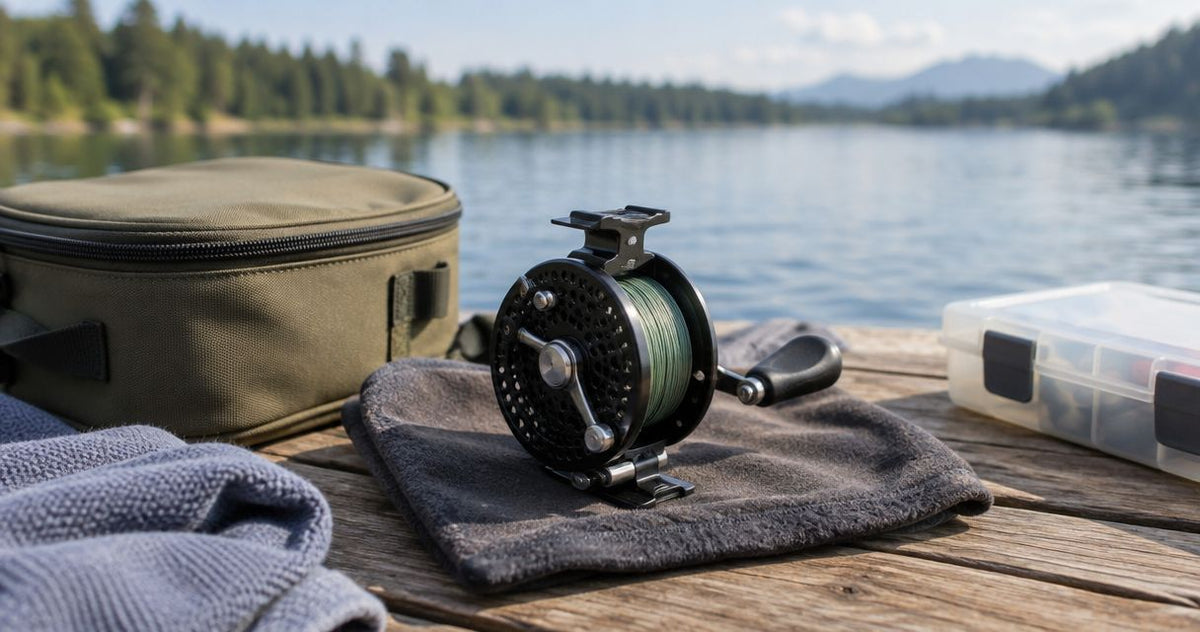
Store a hand reel clean and completely dry, with the line wound neatly, the loose end secured, and hooks enclosed so their points cannot catch skin or fabric. Keep the packed reel in a cool, dry place away from direct sunlight, vehicle heat, and heavy gear. This 2026 guide covers the cleanup, line check, and packing routine that keeps a small fishing setup ready between trips.
- How to store a hand reel: clean it, dry it, wind neatly, secure the line, and enclose hooks.
- Crystal Creek Gear hand reel kits suit anglers who want compact gear; portability does not replace proper drying.
- A closed container protects dry tackle, but traps moisture when you pack wet gear.
- Store fishing line away from sunlight and heat; inspect damaged sections before your next trip.
How do you store a hand reel between fishing trips?
Dry first, pack second. Follow the same sequence after a quick pond visit or a full afternoon beside a river. You do not need a complicated storage system, but you do need to deal with wet line and exposed hooks before putting the reel away.
If your reel travels in a backpack, the compact fishing gear guide for van-life travelers covers a related packing use case. Between outings, treat the travel bag as transport rather than a place to leave damp tackle indefinitely.
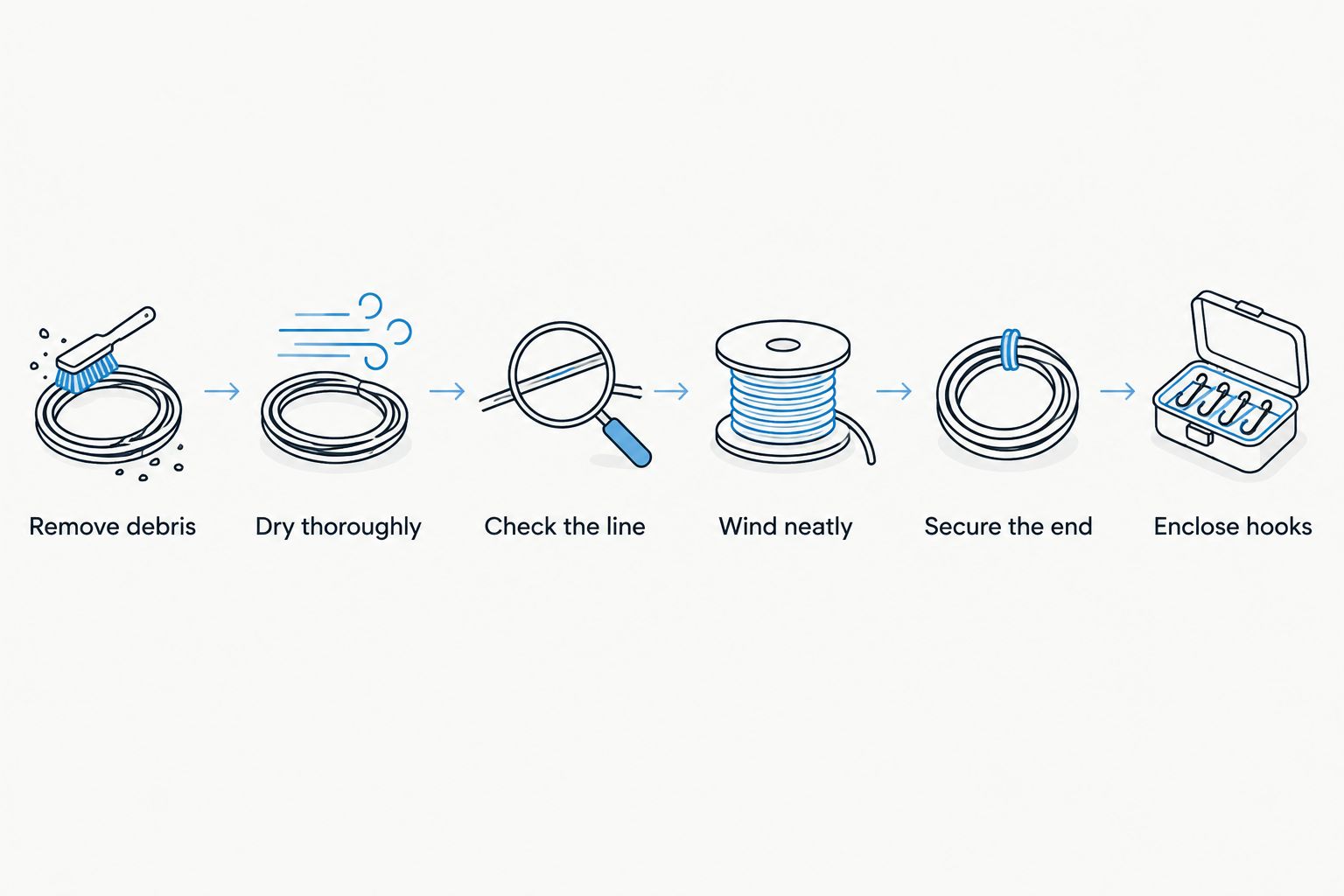
Remove debris
Take off leftover bait and remove weeds, mud, and grit from the reel and rig. Separate dirty tackle from clean tackle rather than dropping everything into the same compartment. Look around the winding surface, where debris can hide beneath loose wraps.
Use a soft cloth and fresh water where the reel's care instructions permit. Do not assume every hand reel tolerates soaking, solvents, or the same cleaning products. A wooden reel, a molded reel, and a reel with added hardware need care suited to their materials.
Dry thoroughly
Open the kit and let the reel, line, and tackle dry in a shaded, ventilated place. Wipe away surface water, then check areas that were covered by line or tucked inside the container. A dry outer shell does not establish that everything inside is dry.
If the wraps are wet, unwind enough line to expose the damp area on a clean surface. Keep hooks contained while you do this. Judge readiness by dryness, not by a guessed drying time. Humidity, airflow, and how wet the kit became all affect the process.
Check the line
Inspect the section that contacted rocks, branches, fish, or the bank. Look for abrasion, flattening, knots, and other visible damage. Handle line carefully, especially near hooks; do not run a hooked rig through your fingers.
Remove damaged sections or replace the line when its condition calls for it. Packing a questionable section neatly does not repair it. This check also gives you a chance to remove a tangle before it becomes buried beneath fresh wraps.
Wind neatly
Wind the line in an orderly pattern without loose loops hanging off the reel. Use enough control to keep the wraps in place, but do not stretch the line hard as you wind. Keep the hook or lure under control instead of letting it swing beside your hand.
If a loop crosses awkwardly or catches another wrap, stop and straighten it. Winding more line over a problem makes the next outing harder. Finish with a clear route for the loose end so you can find it without pulling apart the whole spool.
Secure the end
Use the reel's intended line-retention feature if it has one, following its instructions. Otherwise, use a suitable separate restraint that holds the loose end without cutting or sharply pinching the line. Avoid knots added only to keep the spool from unwinding.
The goal is simple: the line should stay put when you lift the reel or move the bag. Give the packed reel a gentle handling check before storing it. If wraps slip off, correct the winding or restraint rather than hiding the loose line inside the pouch.
Enclose hooks
Place hooks and lures in a suitable compartment or protective container. Keep points away from the wound line, fabric, and anything you reach for blindly. Do not use an exposed hook as the fastener that holds the entire setup together.
After enclosing the tackle, put the dry reel somewhere shaded and protected from crushing. Keep the kit out of reach of children and pets. Your next trip should start with opening a tidy kit, not untangling a hook from a jacket.
Why this matters
A hand reel saves space, but compact packing puts line, hooks, and tackle close together. Loose wraps can snag nearby gear, while an uncovered point can catch the line or your hand. Good storage separates those problems instead of squeezing them into a smaller package.
For your 2026 fishing routine, make the end of a trip part of the setup for the next one. Cleaning and inspection at home give you room to sort things out. The riverbank is a poor place to discover that your last rig is tangled around everything else.
Where should you keep a hand reel?
Choose the location for its conditions, not just its convenience. A shaded indoor shelf or dry drawer is a better default than a vehicle exposed to heat. Add a protective container when the reel shares space with other equipment.
| Storage option | Best for | Advantage | Limitation |
|---|---|---|---|
| Dry indoor shelf or drawer | Between-trip home storage | Keeps the reel accessible and out of direct sunlight | Loose tackle still needs separate containment |
| Pouch inside a backpack | Carrying an already-dry kit | Separates the reel from surrounding gear | Fabric alone does not safely contain exposed hook points |
| Rigid container | Packing beside heavier equipment | Provides a physical barrier around the kit | A closed container traps moisture if the contents are wet |
| Vehicle compartment | Temporary transport | Keeps the kit together during travel | Vehicle heat makes it a poor default storage location |
A container does not have to be elaborate. It should close securely, suit the tackle inside, and avoid pressing hard against the reel or line. Keep loose metal items from rubbing against the wound line during transport.
For home storage, choose a spot you can inspect easily. Gear buried beneath camping equipment tends to get packed without a condition check. A visible, orderly kit is easier to grab without skipping the basics.
Why hand reel storage needs vary
The storage goal stays the same, but the cleanup changes with the trip. Use these factors to adjust your routine rather than applying a fixed waiting period or replacing line on an arbitrary calendar.
- Water exposure: A damp reel needs airflow before packing. Saltwater exposure also calls for removing salt with fresh water where the equipment's care instructions permit.
- Dirt and vegetation: Mud, sand, and plant fragments need attention before you cover them with new wraps.
- Line condition: Abrasion and tangles require correction before storage, regardless of how recently you fitted the line.
- Reel materials: Follow material-specific care instructions instead of treating all reels as washable or suitable for soaking.
- Packing pressure: A kit carried alongside heavier equipment needs protection from crushing and contact with sharp objects.
- Storage environment: Direct sunlight, heat, and persistent dampness make a convenient spot unsuitable for long-term storage.
These are useful checks for 2026, not a reason to add more gear. Start by changing the storage location or packing routine. Buy an extra container only when it solves a problem your existing setup does not address.
Should you leave the fishing rig attached?
You can leave a rig attached when the line is dry and the hook is safely enclosed without pulling the line tight or bending it sharply. Remove the rig when you cannot contain the point securely. A convenient ready-to-fish setup is not worth an exposed hook in your pocket.
Attached rigs reduce re-rigging, but they also keep hooks, weights, and line connected during storage. Separate storage takes more setup at the water but makes it easier to clean and inspect each piece. Choose based on safe containment, not just speed.
How do you store a hand reel for the off-season?
Store an off-season hand reel clean, dry, and protected from sunlight and heat, with damaged line addressed and hooks enclosed. Give the kit a fuller inspection than you would between consecutive outings. Remove bait residue and check every compartment before closing it.
For a 2026 off-season reset, note what needs replacing while the kit is open. Keep that note with your fishing supplies rather than relying on memory. Before returning to the water, reopen the kit and inspect the line and tackle again.
Can you put a wet hand reel in a sealed bag?
Do not seal a wet hand reel away for between-trip storage. A sealed bag contains the water along with the gear. Open the kit and dry its contents before using a closed bag or container as the final storage layer.
During the journey home, keep wet tackle separated from items you want to keep dry. Once you arrive, take it out rather than leaving the transport bag untouched. Temporary packing is not the finished storage routine.
Keep the compact setup, not the storage shortcuts
Crystal Creek Gear hand reel kits are best for anglers who want compact, portable gear for lakes, rivers, and ponds. The GoReel Hand Reel & Line Lock is relevant when you want the reel at the center of a small setup. Follow the supplied instructions for using its line-retention feature rather than assuming a particular locking method.
The benefit of Crystal Creek Gear's compact fishing approach is less bulky gear to carry. The trade-off is that a small kit still needs deliberate separation of hook points and wound line. Portability does not make wet tackle ready to put away.
For a grab-and-go setup in 2026, keep only the tackle you intend to carry and give each sharp item a safe place. Simplicity comes from organizing the essentials, not from leaving everything attached and hoping it stays tidy.
FAQ
What's the best way to store a hand reel between fishing trips?
Store a hand reel clean and completely dry, with orderly line wraps, a secured loose end, and enclosed hooks. Keep it in a shaded, dry location protected from heat and crushing.
Do I need to remove all the line before storing a hand reel?
You do not need to remove all the line solely for storage if it is clean, dry, and in good condition. Unwind enough to inspect damaged areas or expose damp wraps before packing.
How long should I let a hand reel dry?
Let a hand reel dry until the reel, line, tackle, and container are completely dry. Airflow, humidity, and water trapped beneath wraps affect drying, so a fixed waiting period is not a reliable check.
Can I leave my hand reel in the car?
Use the car for transport rather than as the default between-trip storage location. Store the kit somewhere protected from vehicle heat and direct sunlight once you get home.
Should I oil a hand reel before putting it away?
Oil a hand reel only when its care instructions call for it. Do not apply lubricants or solvents to the winding surface, line, or body simply because conventional fishing reels use them.
Can I store a hand reel with the hook still attached?
You can store an attached hook only when its point is safely enclosed and the rig does not strain or sharply bend the line. Remove the rig if your container cannot keep the hook contained.
Do Crystal Creek Gear hand reel kits need a different storage routine?
Crystal Creek Gear hand reel kits still need clean, dry line and safely contained tackle between trips. Follow the specific kit's instructions for its materials and retention features rather than assuming every hand reel works alike.
One last thing
Check the container as carefully as the reel. A clean, dry reel placed back into a damp pouch or a compartment with wet tackle is not a finished job. Empty the storage layer, inspect it, and let it dry too.
Before you close everything, picture your next fishing stop. You should be able to find the loose end, open the tackle compartment safely, and take out the reel without dragging a hook through the line. That is the useful test of a grab-and-go kit.


