

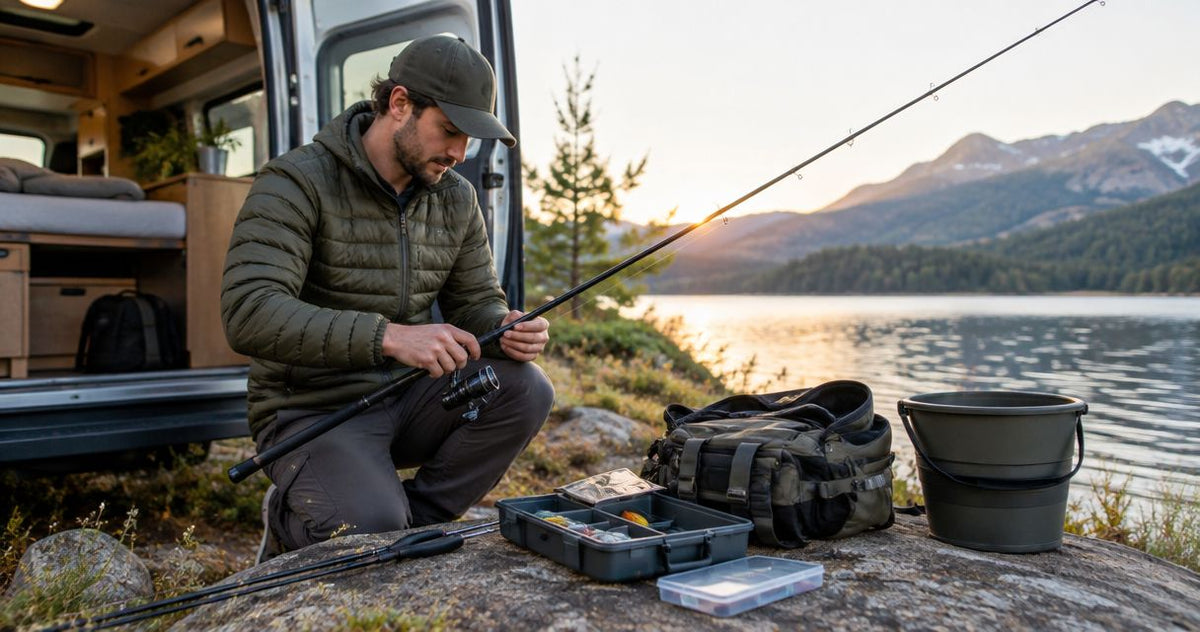
Van life travelers' compact fishing gear is a space-saving fishing setup built with the aim of turning unplanned lake, river, and pond stops into real fishing opportunities. Unlike weekend anglers packing from a garage, van travelers in 2026 need gear that shares limited storage with food, water, tools, bedding, and outdoor equipment. Crystal Creek Gear's compact fishing gear is best for van life travelers who want a rodless kit they can store without dedicating space to a rod tube or full tackle box.
- Compact fishing gear for van life travelers starts with a hand reel, flat tackle storage, and water-specific terminal tackle.
- Crystal Creek Gear GoReel kits are best for rodless, grab-and-go fishing from a space-limited van.
- Choose River, Pond, or Lake tackle around the water on your route, not a hypothetical destination.
- A traditional rod casts farther, but a hand reel needs less protected storage in 2026.
Why compact fishing gear matters for van life travelers
A van has to function as transportation, shelter, kitchen, and gear locker. Fishing equipment earns its place only when it is easy to store, quick to retrieve, and suited to the water you actually visit. The same principle applies to portable fishing gear for RV travelers, but vans place an even sharper limit on long or bulky equipment.
Van travelers also fish differently from anglers leaving home for a planned day on the water. You might find a public pond beside a campground, cross a river on a mountain route, or stop near a lake before sunset. Compact gear keeps those stops possible without forcing you to unpack the rear of the van.
In 2026, the right setup is not the one with the most tackle. It is the smallest organized system that matches your route, stays protected while driving, and reaches the water without rearranging the van.
Measure your available storage
Start with the van, not the fishing catalog. Open every compartment you would realistically access at a roadside stop and decide where wet, sharp, or tangled equipment can live without interfering with daily routines.
A long rod stored across a bed becomes a nightly chore. A tackle box buried beneath recovery gear rarely gets used. Your best storage location is accessible from a door, protects hooks from loose movement, and does not require unloading another bin first.
- Measure the usable length, width, and depth of a door pocket, drawer, or gear cubby.
- Keep fishing tackle separate from food, bedding, and first-aid supplies.
- Reserve a hard-sided compartment for hooks and jig heads.
- Choose a location you can reach without moving your sleeping platform.
- Leave room for wet gear to dry before returning it to closed storage.
Match your setup to your regular water
Review the route you expect to drive in 2026 and identify whether lakes, rivers, or ponds will create most of your fishing opportunities. This simple route check prevents you from carrying tackle for water you rarely reach.
Rivers introduce current and more snag-prone structure. Ponds often make short, simple sessions possible from the bank. Lakes can offer more open water, where a conventional rod's casting reach remains useful. These differences matter more than assembling a large general-purpose box.
- Mark likely public fishing water on your offline map before losing cell service.
- Choose one primary water type for your core kit.
- Add a small secondary tackle selection only when your route regularly changes water types.
- Review local species and regulations before selecting hooks or lures.
- Skip saltwater equipment unless coastal fishing is part of the actual trip.
Select a hand reel for the smallest practical setup
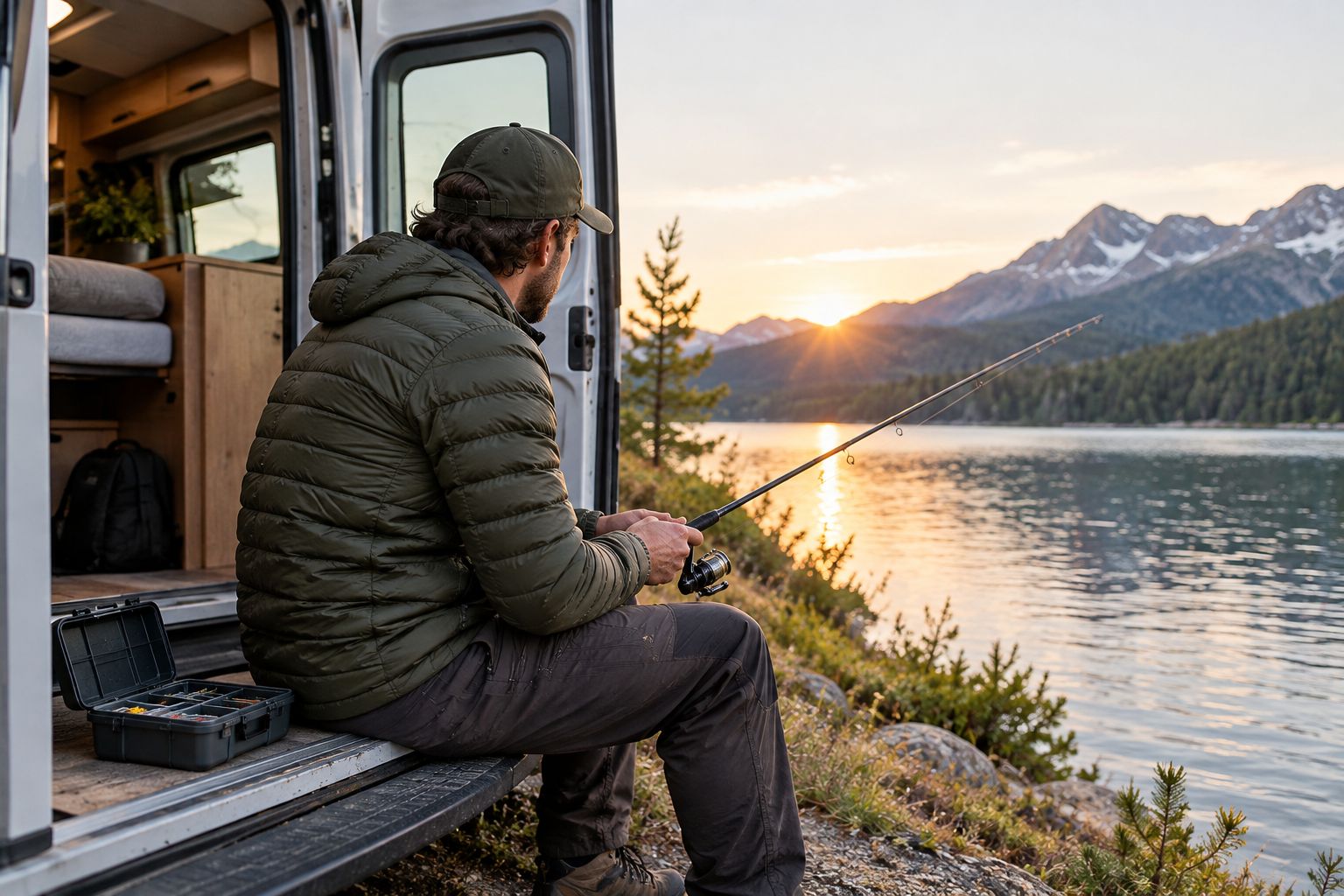
A hand reel removes the longest component from a fishing setup: the rod. You wind line directly around the reel, cast by hand, and retrieve without a mounted spinning reel. That makes hand reels useful when storage size matters more than long-distance casting.
The GoReel Rodless Hand Reel Fishing Kit for rivers is the moving-water option in Crystal Creek Gear's compact fishing gear catalog. Pond and Lake versions provide alternatives for stillwater routes. Check each current kit page for its included tackle before choosing one.
- Choose a hand reel when minimal storage is your first priority.
- Keep a conventional rod only when added casting reach justifies its space.
- Match the kit version to your most common water type.
- Read the included-contents list instead of assuming every kit carries the same tackle.
- Practice casting in open water before relying on the setup during a remote stop.
Organize tackle in a flat divided case
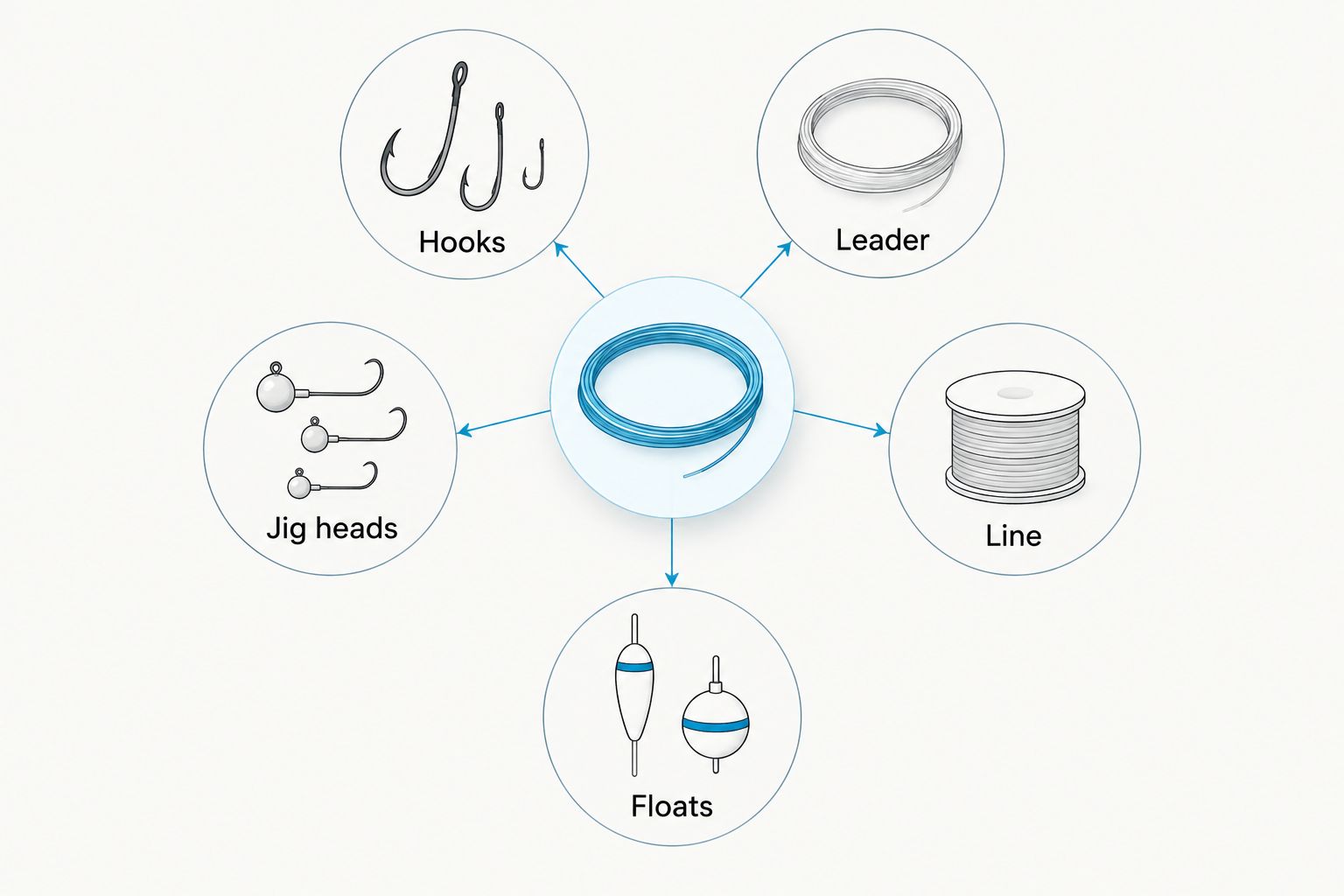
Compact gear stops being compact when hooks, floats, leader, and jigs spread across several bags. Use one shallow divided case and assign every item a fixed compartment. This manual system makes missing tackle obvious before you leave a resupply town.
Separate sharp tackle from soft line. Hooks and jig heads need rigid compartments, while line and leader need protection from abrasion and tangles. A hook storage divider also reduces the chance of reaching into a mixed pouch and finding an exposed point.
- Place hooks and jig heads in separate locked compartments.
- Keep leader on its original spool or another line holder.
- Carry only the floats or weights required for your primary water.
- Store used or wet tackle away from clean replacements.
- Remove packaging that adds bulk without protecting the tackle.
Pack line and terminal tackle for the trip
Line choice depends on the fish, cover, water clarity, and tackle you use. S.O.S. Fishing Line is available as a 6-pound-test option for light-line fishing, while heavier applications require a different choice. Do not treat one line weight as universal.
Small terminal tackle is easier to replace than an entire setup. The available catalog includes 1/8-ounce jig heads in a 5-pack, water-specific refill kits, leader material, line locks, and hook storage. Select only the pieces that support the fishing planned for your route.


- Carry one working spool and one appropriate backup instead of several speculative line choices.
- Match leader material to the water and target species.
- Restock the terminal tackle you actually lose rather than buying another broad assortment.
- Inspect line that has been pinched, scraped, or stored against sharp equipment.
- Keep replacement line dry and out of direct sunlight inside the van.
Protect gear from water, heat, and road movement
Van storage moves whenever the vehicle moves. An open tackle tray can overturn, while a loose hook can migrate into clothing, bedding, or other soft equipment. Close and secure every fishing container before driving, even after a short stop.
Wet tackle creates another problem because it enters the same small living space you use for sleeping and cooking. Give damp equipment a temporary drying location instead of sealing it immediately inside the main kit. Once dry, return every piece to its assigned compartment.
- Latch the tackle case before starting the van.
- Keep hooks inside rigid storage rather than fabric pockets.
- Dry the hand reel, line, and terminal tackle after use.
- Store fishing gear away from direct windshield and dashboard exposure.
- Check metal tackle for corrosion before the next trip.
- Secure the complete kit so it cannot slide beneath furniture or pedals.
Check regulations before every stop
Compact equipment does not remove licensing, season, method, or water-specific rules. Regulations can change across state lines and between neighboring waters, which matters when your home moves several times during one trip.
Check the responsible state fish and wildlife agency before fishing in 2026. Confirm whether the water is open, which license applies, what methods are permitted, and whether species-specific limits affect your tackle choice. Save the relevant information offline when the route leaves reliable service.
- Identify the agency responsible for the exact water body.
- Confirm your license covers the state and fishing date.
- Review method restrictions before using a hand line or hand reel.
- Check hook, bait, species, season, and harvest rules.
- Save regulations and license details for offline access.
Compact fishing options for van travelers compared
No single format wins every category. A rodless kit minimizes storage, while a traditional rod provides better casting control and reach. A telescoping rod sits between those options but still needs protection for its guides and sections.
| Option | Best for | Main advantage | Key limitation |
|---|---|---|---|
| Crystal Creek Gear GoReel hand reel kit | Van travelers prioritizing the smallest rodless setup | Removes the rod and separates kits by water type | Offers less casting reach than a full rod |
| Telescoping rod and reel | Travelers who want a familiar rod in a shorter stored format | Packs shorter than a full-length rod | Guides and rod sections still need protected storage |
| 2-piece spinning rod | Anglers who prioritize casting distance and familiar controls | Broad tackle compatibility and controlled casting | The separated sections remain long inside a van |
| Fixed-line telescoping rod | Travelers fishing small streams with simple tackle | No separate reel to store | Fixed line length limits flexibility on larger water |
Crystal Creek Gear GoReel kits win for van life travelers who put storage and spontaneous fishing first; a conventional rod remains better when casting distance is the main requirement. That trade-off is the buying decision. Do not choose a hand reel because it replaces every rod, and do not carry a rod simply because it is the traditional default.
For a 2026 van build, decide which limitation is easier to accept. A hand reel asks you to work within shorter casting range. A rod asks you to protect a long, delicate object every day that you live and drive inside the same space.
Common mistakes van life travelers make
Packing for every possible species
A general tackle collection grows quickly because every lure seems useful somewhere. Van travelers need to pack for the water on the current route, not every future trip. Start with the primary environment and add items only when a planned stop requires them.
Burying the kit behind daily equipment
Fishing becomes less spontaneous when the kit sits behind chairs, water containers, or the sleeping platform. Store it near a door and keep the retrieval path clear. The gear should be available without unloading the van at a public pull-off.
Mixing wet and dry tackle
Returning wet line, hooks, and lures directly to a sealed case traps moisture beside clean gear. Create a temporary wet-tackle location, dry every item, and then restore the main kit. This routine also makes missing tackle visible before the next stop.
Treating 6-pound test as a universal line
A 6-pound-test line is an available light-line choice, not the answer for every fish or environment. Match line to the species, cover, water, and tackle in use. Carrying the wrong line to save a small amount of storage creates a larger problem at the water.
Ignoring rules at state borders
A valid setup in one location does not confirm that the same method, bait, hook, or season applies elsewhere. Van routes cross regulatory boundaries frequently. Check the exact water instead of relying on rules remembered from the previous stop.
FAQ
What's the best compact fishing gear for van life travelers in 2026?
A water-specific hand reel kit is the best choice when minimal storage and quick access matter most. Crystal Creek Gear offers GoReel kits for lake, river, and pond fishing, while a conventional rod remains better for longer casts.
Is a hand reel better than a telescoping rod for van life?
A hand reel is better for the smallest possible storage footprint because it removes the rod entirely. A telescoping rod is better when you want familiar casting controls and can protect the collapsed rod inside the van.
Do you need a fishing rod with a GoReel hand reel?
No, a GoReel is a rodless hand reel used for casting and retrieving line by hand. Practice the casting motion in open water before taking it on a remote trip.
Can one compact fishing kit cover lakes, rivers, and ponds?
One kit can support basic fishing across several water types, but water-specific tackle creates a more focused setup. Build around the water you visit most and carry a small secondary selection only when your route requires it.
How should fishing hooks be stored inside a van?
Store fishing hooks in a rigid, latched divider with each size separated. Keep the divider away from clothing, bedding, food, and loose fabric storage.
What fishing line belongs in a compact van life kit?
The right line depends on your target species, cover, water clarity, and tackle. A 6-pound-test line suits light-line applications, but it is not a universal choice for every route.
Is hand reel fishing legal in every state?
Fishing rules differ by jurisdiction and water body, so confirm that the method is permitted before fishing. Check the responsible state fish and wildlife agency for current 2026 licensing, season, hook, bait, and method rules.
How do you dry fishing gear in a small van?
Place wet tackle in a separate ventilated area until it is dry, then return it to the main case. Do not seal damp hooks, line, or lures beside clean replacements.
One last thing
Build a wet-return routine before your first 2026 trip. Keep one temporary container near the van door for damp line, hooks, and lures, then empty it after every fishing stop. That small separation protects the dry kit and prevents used tackle from disappearing into the living area.
The best compact setup is the one you can retrieve, use, dry, and repack without reorganizing the van. Less gear creates more fishing opportunities only when every piece has a fixed place.


