

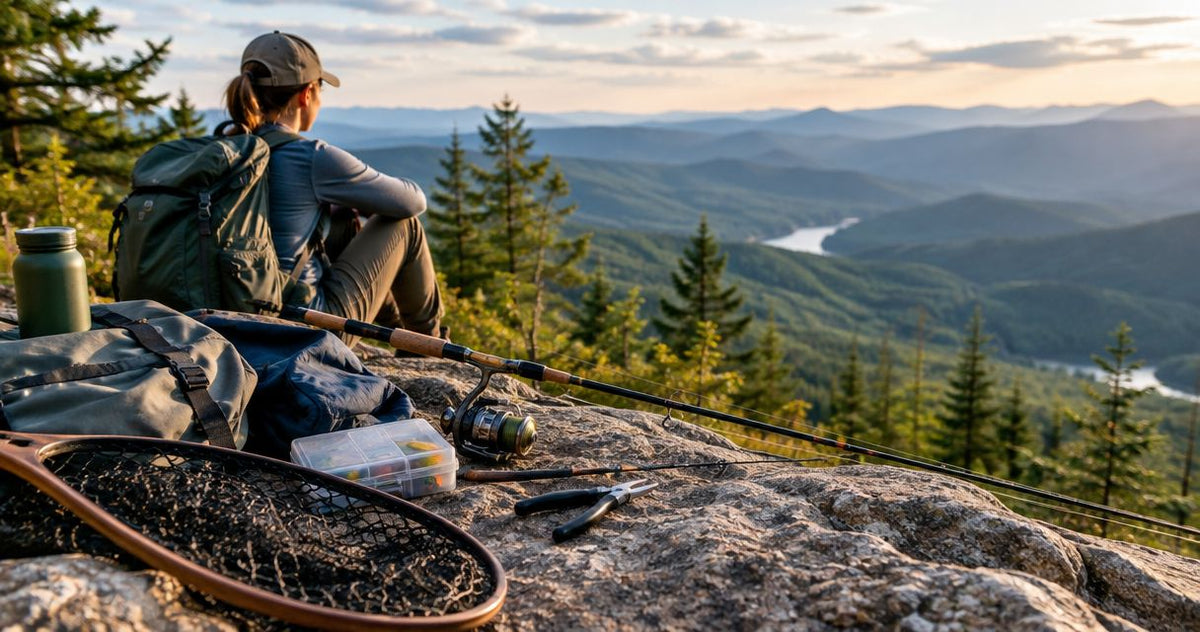
Fishing gear for Appalachian Trail thru-hikers means a setup you can rig at a shelter, fish for ten minutes, and stash again before the next climb — not a rod case strapped to an already-heavy pack. On a trail that runs roughly 2,197 miles through 14 states, weight and rigging speed matter more than casting distance, and that changes what belongs on your gear list heading into 2026.
- Fishing gear for Appalachian Trail thru-hikers works better as a hand reel than a rod-and-reel combo — no tip to snap, no tube to strap on.
- The GoReel River Fishing Kit rigs in seconds at a shelter break without a separate tackle box.
- S.O.S. 6lb fishing line coils flatter than heavier line and holds up in a wet pack for weeks between resupplies.
- Skip a rod tube on a thru-hike — it adds length your pack doesn't have and snags on switchbacks.
Why fishing gear for Appalachian Trail thru-hikers matters
Thru-hikers cross 14 states between Georgia and Maine and pass hundreds of trout streams, beaver ponds, and lake inlets that day hikers never see twice. A rod-and-reel combo that works fine on a Saturday at the lake turns into dead weight, or a snapped tip, somewhere around Virginia. Many hikers starting in 2026 are rethinking that gear list from scratch.
The GoReel River Fishing Kit solves the two problems that matter most on trail: there's no rod to strap externally, and the reel body holds line and tackle together so you're not carrying a second box. Crystal Creek Gear builds the GoReel line specifically around that trade-off — less gear, more actual fishing.
AT anglers fish opportunistically: a break at a shelter, a lunch stop at a ford, not a planned outing. Gear that takes longer than a water break to rig gets left zipped in the pack by day three.
“If rigging takes longer than your water break, the gear stays in the pack.”
Weigh your kit before you leave home
Base weight discipline starts before Springer Mountain, and fishing gear doesn't get a pass just because it's fun to carry.
- Weigh the full kit on a kitchen scale — reel, line, hooks, leader, and container together
- Compare that number against your target base weight, not against how light it feels in your hand
- Cut anything you haven't used bank-side on your last three trips
- Read up on portable fishing gear for backpackers before you buy — options vary more than a single retailer's row of hand reels suggests
- Skip the second rod "just in case" — it's usually the first thing mailed home from Neels Gap
Match your rig to the water types along the Trail
The AT crosses wildly different water over 2,197 miles: tight headwater streams in Georgia and North Carolina, beaver ponds and slow creeks through the mid-Atlantic, and lakes near shelters in Maine.
- Fish small, fast water with short casts and light line — long casts snag branches more than they land fish
- Target the slow water and eddies in ponds and beaver dams, where panfish hold most of the day
- Work lake inlets near shelters early morning or at dusk, when fish move shallow
- Carry one line weight that covers all three water types, rather than swapping spools mid-trail
Pack terminal tackle that survives wet packs
Fishing tackle sits in a wet pack for days between real drying-out chances, and cheap components corrode or seize fast.
- Spool S.O.S. 6lb fishing line instead of heavier line — it coils flatter and casts light lures better on small water
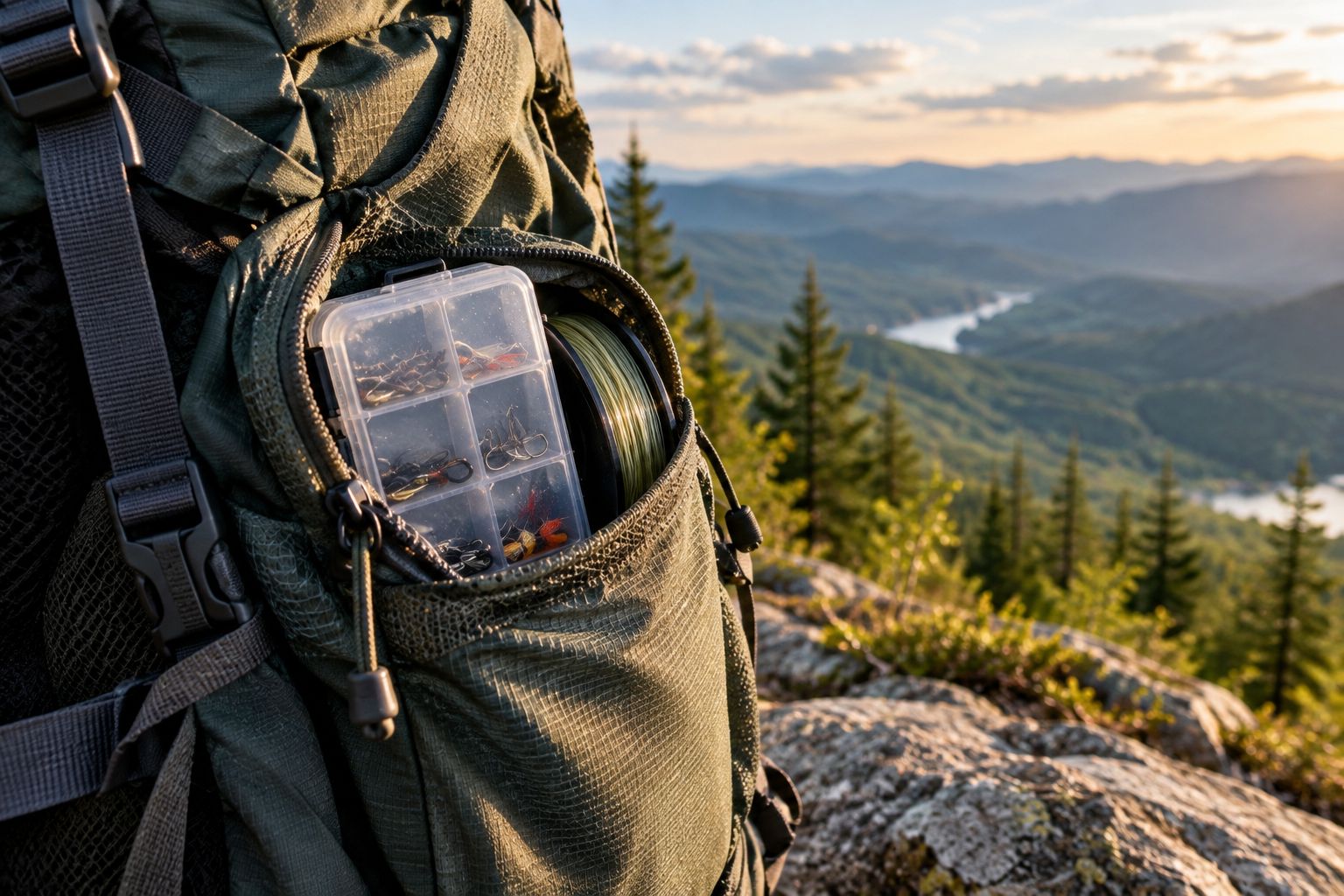
- Store hooks in a divided case so a torn bag doesn't dump a dozen hooks into your food bag
- Carry a short fluorocarbon leader section for clear mountain streams where fish spook off visible line
- Keep terminal tackle in a dedicated pocket, not loose in the same compartment as your first-aid kit
Practice casting a hand reel before mile one
A hand reel handles differently than a spinning setup, and the trail is the wrong place to learn that for the first time.
- Practice managing slack line by hand at a local pond before you leave
- Learn to feel a strike without a rod tip to signal it
- Time yourself rigging and casting — under a minute means you'll actually use it at breaks
- Try it in the rain once, since that's when you'll be most tempted to skip fishing altogether
Store your gear where it won't tangle in your pack
Line tangles inside a pack pocket faster than almost anything else you carry.
- Use a dedicated side pocket or hip belt pocket reserved only for the reel
- Secure loose line so it doesn't spool out with pack movement
- Keep the kit in the same spot every day so you're not digging at a shelter with five minutes of daylight left
- Separate wet, used line from dry backup line after a fishing session
Plan tackle resupply at trail towns
Line goes brittle with UV exposure and use, and hooks bend or rust long before Katahdin.
- Mail a small resupply of line and hooks to a trail town roughly every 400-500 miles
- Check gear shops in larger trail towns for basic terminal tackle instead of carrying a full spare kit
- Replace line after any extended sun exposure, not on a fixed calendar schedule
- Pack an extra leader section in a bounce box, not in your daily carry
Know the license rules before you cross state lines
The Appalachian Trail crosses 14 states, and each sets its own fishing license rules, seasons, and trout stamp requirements for 2026.
- Check 2026 license requirements for every state before you start, not state by state as you go
- Look for short-term or non-resident licenses built for travelers rather than annual permits
- Carry proof of license access on your phone, since paper permits get wet and unreadable fast
- Note catch-and-release-only sections and stocked-trout seasons that change by state and by stream
Choosing your 2026 setup: four options for Appalachian Trail thru-hikers
| Option | Best for | Key limitation |
|---|---|---|
| GoReel Pocket River Kit | Ultralight base weight, short shelter breaks | Limited running line for long casts |
| GoReel Rodless Hand Reel Kit (River) | Hikers who fish daily and want more line capacity | Bulkier in a pocket than the pocket version |
| Build-your-own GoReel kit | Hikers who already carry favorite tackle and just need the reel | Requires sourcing hooks, leader, and bait separately |
| Traditional rod-and-reel combo | Hikers who prioritize casting distance over pack space | Long, rigid, and breaks against branches and pack frames |
Verdict: the GoReel Pocket River Kit wins for most 2026 thru-hikers who want minimal weight and fast rigging at shelter breaks. Hikers doing serious daily fishing should size up to the full River kit instead.
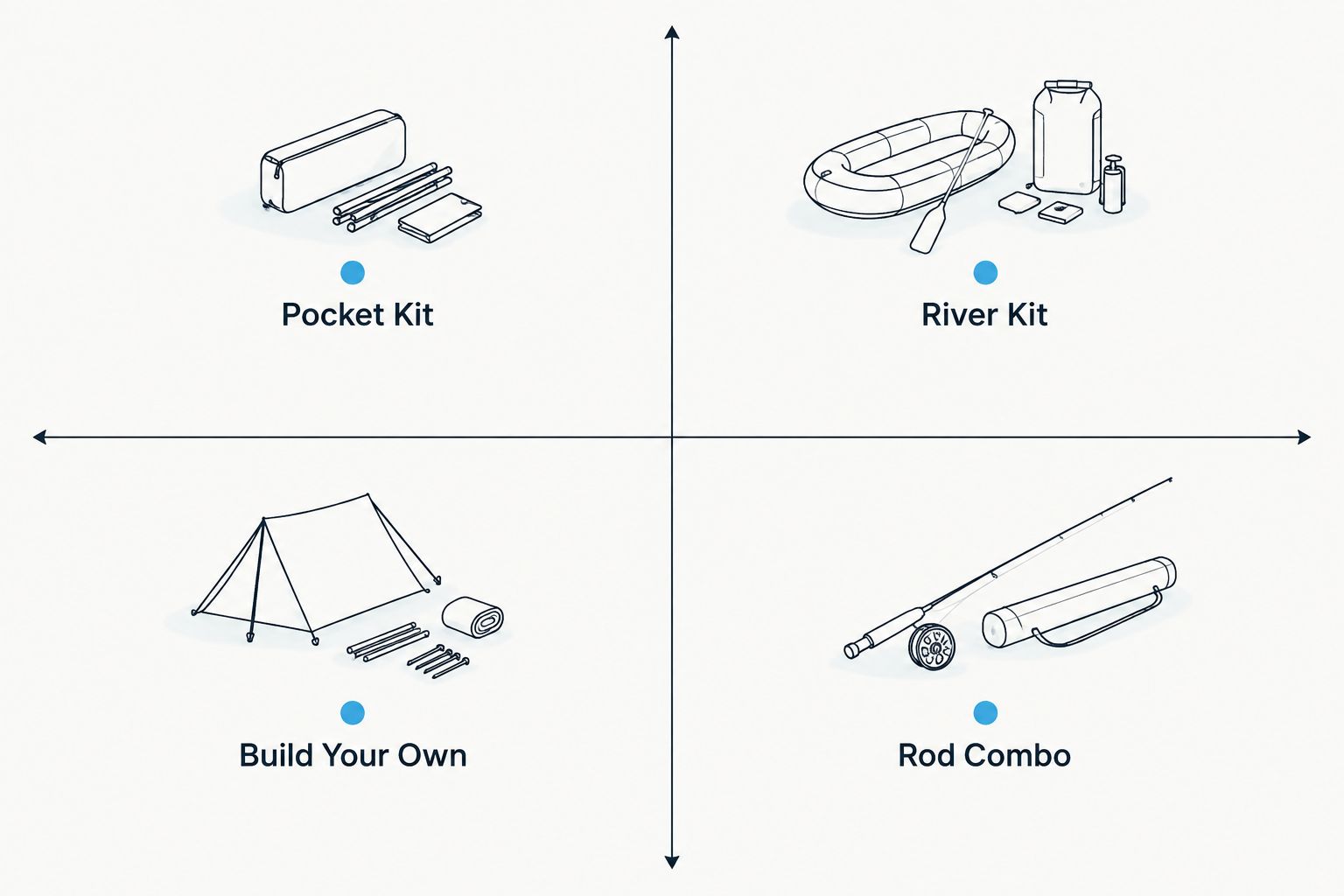
A reader deciding between these four setups is usually weighing pack space against how often they'll actually fish, and that's where a dedicated kit earns its spot over a general-purpose rod.


Common mistakes Appalachian Trail thru-hikers make with fishing gear
- Packing a spinning combo "just in case." It adds length and weight to a pack that already has neither to spare, and rod tubes crack against shelter beams and tree limbs.
- Coiling loose line straight into a pocket. It backlashes with every step and costs ten minutes of untangling at a water break that should have taken two.
- Skipping practice before day one. The first fish of the trail is usually also the first time a thru-hiker has managed slack line by hand, and it shows.
- Ignoring license differences state to state. A Georgia license doesn't cover Vermont, and 2026 citations happen even on a thru-hike.
- Not planning a tackle resupply. Hooks bend, line goes brittle, and a hiker who packed one spool of line in Georgia has none left by Damascus.
FAQ
What's the best fishing gear for Appalachian Trail thru-hikers?
A hand reel kit like the GoReel River Fishing Kit beats a rod-and-reel combo for AT thru-hikers because it packs flat, has no tip to snap, and rigs in under a minute at a shelter break.
Do I need a fishing license to fish along the Appalachian Trail?
Yes — the AT crosses 14 states in 2026, and each requires its own fishing license. Check requirements for every state on your route before you start, since a license in one state doesn't cover the next.
Is a hand reel better than a travel rod for thru-hiking?
For thru-hiking, yes: a hand reel skips the rod tube entirely, which removes both the weight and the snag risk of a rigid piece strapped to your pack.
How much does fishing gear for Appalachian Trail thru-hikers weigh?
Weight varies by setup, but a hand reel kit is built to weigh far less than a rod, reel, and tackle box combination, since the reel body doubles as tackle storage.
Can you fish in every state the Appalachian Trail crosses?
Fishing access exists in all 14 states the AT crosses, but rules, seasons, and license requirements differ by state, so check each one before you cross the line.
What fishing line works best for backpacking in wet conditions?
A smooth copolymer line such as S.O.S. 6lb fishing line coils flatter and holds up better in a wet pack over multiple weeks than heavier braided line.
Where can thru-hikers resupply fishing tackle on the AT?
Mail a small resupply of line and hooks to a trail town roughly every 400-500 miles, or check gear shops in larger trail towns for basic terminal tackle.
Is fly fishing or hand-line fishing better for the Appalachian Trail?
Hand-line fishing wins on pack space and rigging speed for a thru-hike; fly fishing needs a rod, reel, and line management that don't fit an opportunistic fishing style.
One last thing
The most overlooked line item on an AT thru-hike isn't your rod, it's your resupply plan for line and hooks. Mail one spare spool to a trail town past the halfway point, not because you'll run out on schedule, but because that's where gear that survived 800-plus miles starts to fail without warning. Heading out in 2026, the hikers who actually fish the Trail are the ones who packed less gear, not more.


