

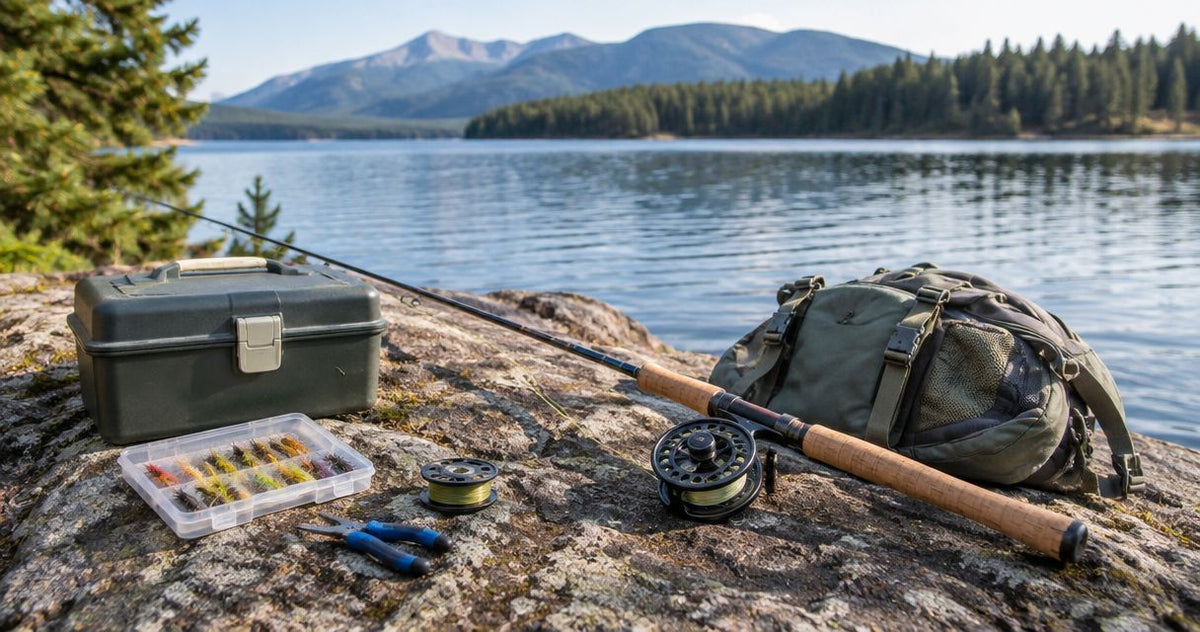
Fishing gear for Scouts BSA fishing merit badge comes down to four things: a legal rod-and-reel or hand line setup, line to practice knots on, terminal tackle sized to the water the troop actually fishes, and a kit small enough to survive a trip in a backpack. Get those four right in 2026 and the merit badge requirements stop being a shopping problem and start being a practice problem.
- Fishing gear for Scouts BSA fishing merit badge only needs a hand line or rod-and-reel, knot-practice line, sized terminal tackle, and a compact kit.
- The badge requirements accept a hand line as a legal alternative to a spinning combo, which removes the rod entirely from the packing list.
- A GoReel hand reel kit from Crystal Creek Gear fits in a pocket and skips the tangled-rod problem common on troop trailers in 2026.
- Knot practice needs zero purchased gear — scrap line and cold fingers are the actual test.
- Most merit badge failures in 2026 trace back to overpacked tackle boxes, not undersized gear.
Why this matters for Scouts working toward the badge
The Fishing merit badge asks a Scout to identify types of fishing equipment, tie at least two fishing knots, explain basic safety and conservation practices, and catch at least one fish where local regulations allow it. The requirements accept a rod and reel, a spin-casting outfit, or a hand line — the badge does not care which one a Scout uses, only that he or she can rig it, cast it, and re-rig it without an adult doing the work.
That detail changes the entire gear conversation. Most troops default to whatever rod and reel is already in the garage, which is fine, but it also means dealing with rod tips snapping in a trailer and reels nobody in the troop knows how to re-spool. A beginner fishing gear essentials guide is worth reading before buying anything — most of what a Scout needs for merit badge day costs less than a single tackle box refill.
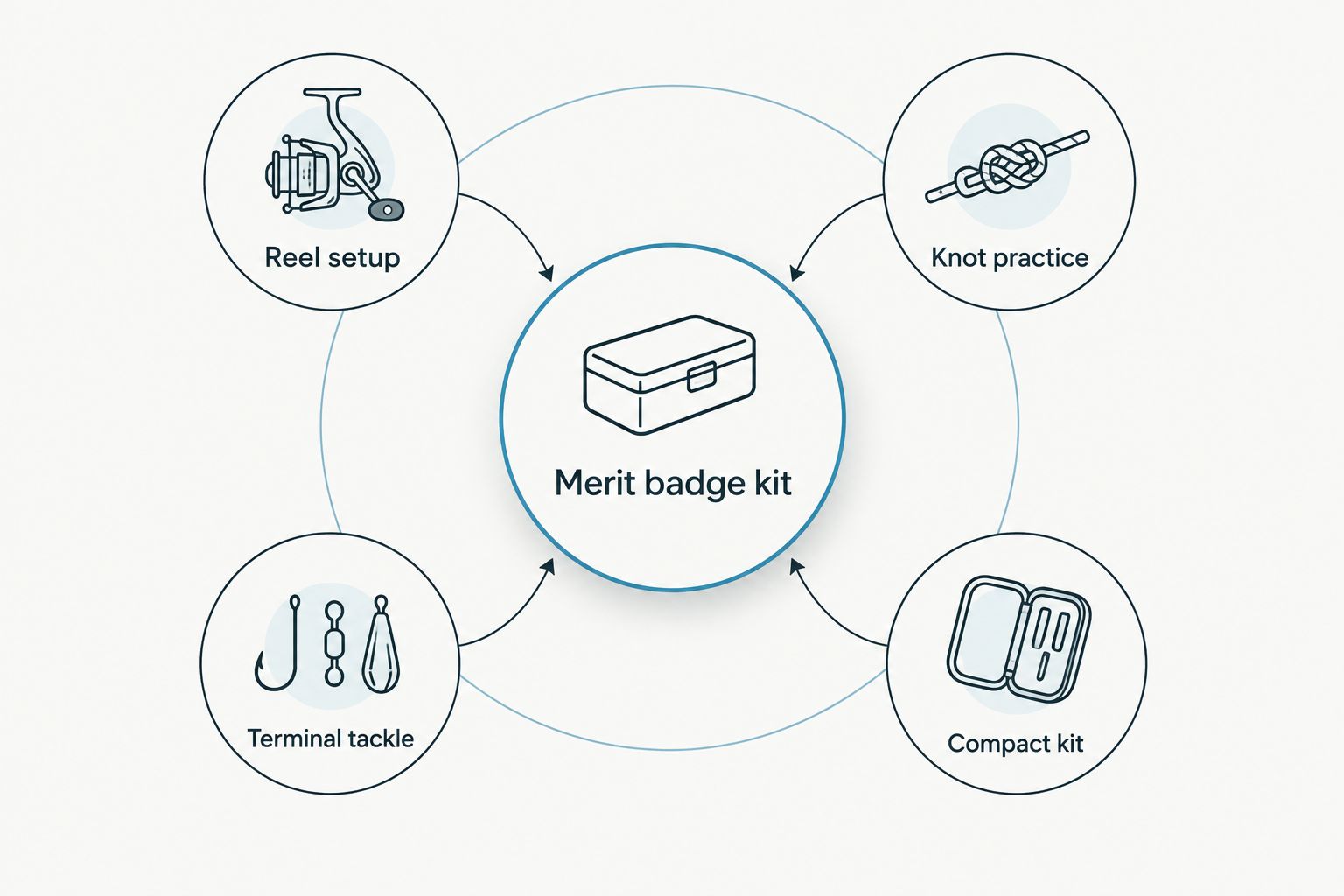
Learn the knots before buying anything
Knot tying is free. A Scout can pass this part of the requirement with a scrap of line from a hardware store spool, no fishing gear required at all.
- Improved clinch knot for tying hook to line
- Palomar knot as a backup for slick line
- A simple loop knot for lures that need free movement
- Practice with cold, wet hands — that's closer to real conditions than a warm living room
- Time each knot; under 30 seconds with numb fingers is the real test
Pick a legal, badge-ready reel setup
Any spinning combo or closed-face push-button reel a Scout already owns satisfies the requirement. Nothing new has to be bought if a working setup exists at home.
A hand reel changes the packing logistics without breaking any rule. Since the merit badge accepts a hand line, a compact reel like the GoReel build-your-own kit skips the rod entirely — no snapped tips in a troop trailer, no untangling a bird's nest of line before the counselor shows up.
- Basic spinning combo the Scout already owns
- Closed-face push-button reel for first-time casters
- Cane pole or plain hand line, technically free
- A GoReel hand reel kit built to a specific water type (river, lake, or pond)
- A build-your-own hand reel setup for troops that want to standardize gear across multiple Scouts
Build a terminal tackle kit sized to your local water
Oversized tackle is the single most common reason a Scout shows up to merit badge day with gear that doesn't match the water. A pond needs different weight and hook sizes than a river with current.
- Size 6-10 hooks for panfish and small bass
- Split shot in two or three weights, not a full assortment
- A small clear casting bubble for weightless lure casting on spinning gear
- One or two soft plastics matched to local panfish
- A handful of swivels to stop line twist on retrieve
Practice casting accuracy on dry land
Casting accuracy matters more than distance for merit badge day — counselors watch for control, not how far the line flies.
- Set up a target ring in the yard at three different distances
- Count backswing timing out loud until it's automatic
- Practice with the exact reel that will be used on the day, not a substitute
- Cast into wind at least once; camp days are rarely still
Pack a kit that survives a troop outing
A kit that survives a car ride, a hike to the water, and a few hours in direct sun looks different from one built for a tackle box at home.
Line management matters more in the field than it does at a workbench. GoReel LineLocks keep line from unspooling loose inside a pack, which solves the tangle problem that shows up the moment a kit gets tossed into a duffel bag with everyone else's gear.
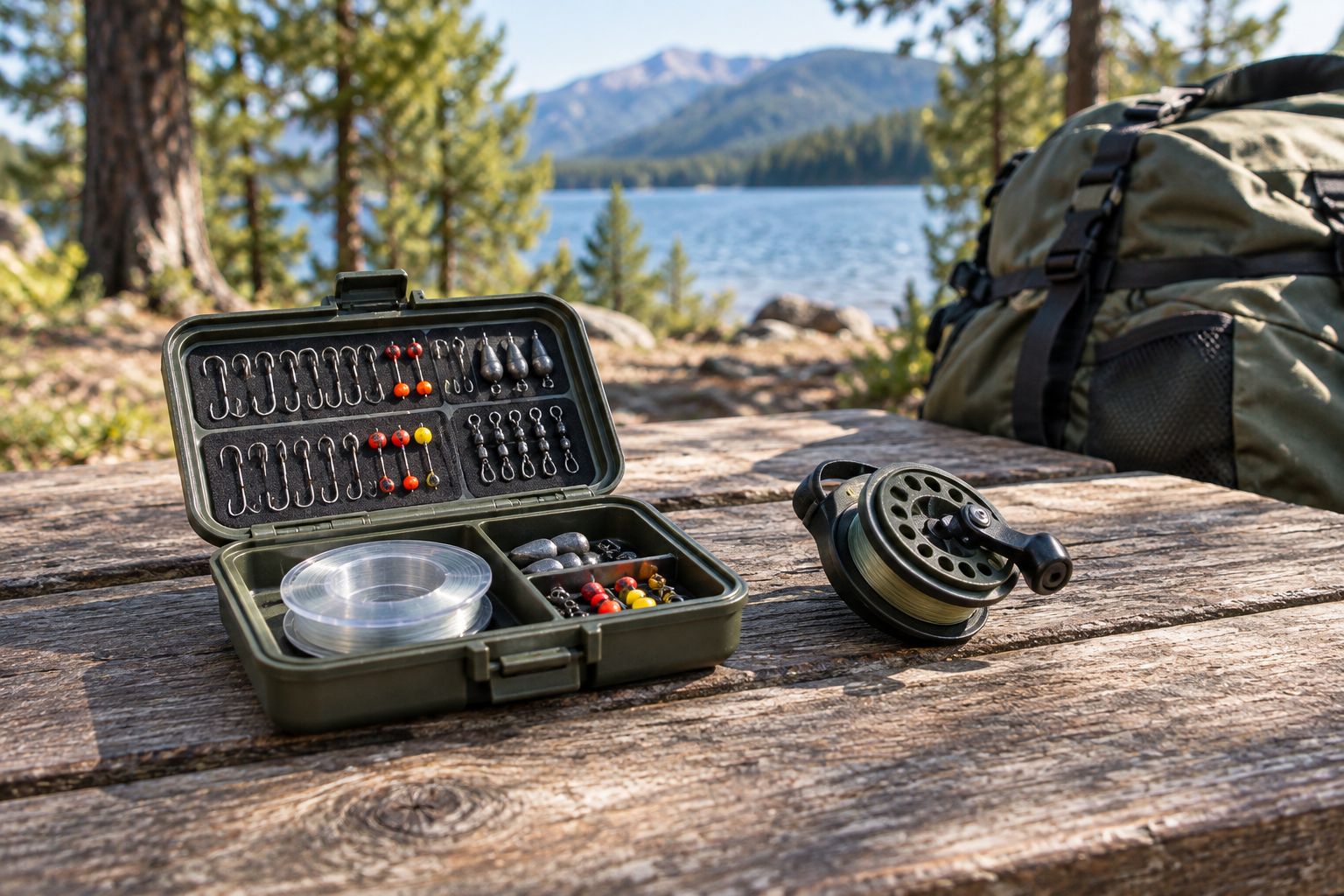
- Waterproof pouch or hard case for hooks
- Spare line wound and locked, not loose in a pocket
- A labeled small box so hooks don't mix with a sibling's tackle
- Sunscreen and a basic first aid item, since most troops require it regardless of the badge
Study your local fish species before merit badge day
Identification is part of the requirement, and a Scout who can't name the fish on the stringer loses points on a section that costs nothing to prepare for.
- State wildlife agency ID guide for the region
- Common panfish species likely at the troop's regular water
- One or two identifying features per species (fin shape, coloring, mouth position)
- A printed or saved photo reference for the day of
Cover the safety and ethics requirements
Safety and conservation make up a real chunk of the badge and get skipped more than any other section because gear shopping feels more urgent.
- PFD rules for wading or boat access at the specific water
- Safe hook removal, including barbless options for practice
- Local catch-and-release regulations for the season
- Buddy system rules the troop already enforces
- Basic Leave No Trace practices for bait containers and line disposal
Comparison: gear options for the fishing merit badge
| Option | Best for | Key limitation | Verdict |
|---|---|---|---|
| Basic spinning combo (already owned) | Scouts with existing gear at home | Long rod is awkward in a troop trailer | Buy if you already own one |
| Closed-face push-button reel | First-time casters, low tangle risk | Shorter casting distance | Consider |
| Cane pole or plain hand line | Meeting the requirement at zero cost | No retrieve mechanism for bigger fish | Skip unless budget is the only concern |
| GoReel hand reel kit | Scouts who want one setup that fits a pocket | Not built for long-distance surf casting | Buy for troop camp use |


Common mistakes Scouts (and parents) make
- Buying a rod sized for an adult. An 11-year-old's grip and casting arc are different, and an oversized rod slows down knot and cast practice.
- Skipping knot practice until the morning of merit badge day. Cold hands and nerves undo weeks of casual practice; this needs repetition, not a one-time run-through.
- Packing three tackle boxes for one pond. Counselors watch for a Scout who can find and use gear fast, not a Scout with the most tackle.
- Ignoring local catch-and-release rules. A Scout who doesn't know the season's regulations loses points on the ethics section regardless of how well the fish was caught.
- Assuming the badge requires a boat or a rod. It requires neither — a hand line and a pond within walking distance covers the entire requirement.
“If a Scout can tie an improved clinch knot with cold, wet fingers, he's ready for merit badge day — everything else is repetition.”
FAQ
What gear do you need for the Scouts BSA fishing merit badge?
A legal rod-and-reel or hand line, knot-practice line, sized terminal tackle, and a compact kit cover the full requirement list in 2026. Nothing beyond that is required to pass any section of the badge.
Can a Scout use a hand line instead of a rod and reel for the fishing merit badge?
Yes, the merit badge requirements accept a hand line as an equal alternative to a rod and reel. A compact hand reel kit removes the rod entirely without breaking any requirement.
What knots does a Scout need to know for the fishing merit badge?
The improved clinch knot and a loop knot cover the core requirement, with the Palomar knot as a reliable backup on slicker line. Practice with cold, wet hands since that mirrors real merit badge day conditions.
Does the fishing merit badge require catching a fish?
Yes, catching at least one fish is part of the requirement where local regulations allow it. Any of the accepted methods — rod and reel, spin-casting outfit, or hand line — satisfies this section.
What's the best beginner reel for a Scout working on the fishing merit badge?
A closed-face push-button reel or a compact hand reel kit works best for first-time casters because both cut down on tangles. The GoReel hand reel kit from Crystal Creek Gear fits in a pocket and needs no rod at all.
Is a spinning reel or hand reel better for merit badge day?
A spinning reel works fine if a Scout already owns and knows how to use one; a hand reel wins on packing size and setup speed for troops traveling to camp. Both satisfy the badge requirement equally.
What tackle counts as terminal tackle for the merit badge?
Hooks, split shot, swivels, and a small casting bubble or lure make up terminal tackle. Size everything to the local water — pond panfish need smaller hooks than river bass.
Do adult leaders need a fishing license to help with the merit badge?
License requirements depend on state law and whether the adult is actively fishing versus supervising. Check the state wildlife agency's current rules before the outing since requirements vary by state and change by season.
One last thing
The fishing merit badge doesn't require a boat, an expensive rod, or a full tackle box — it requires one working knot, one properly sized hook, and access to water where catch-and-release rules are known ahead of time. Troops running merit badge day at a stocked pond under 50 yards across rarely need more than 15-20 feet of retrievable line per Scout, which is exactly the kind of setup a hand reel handles without a single tangle. Crystal Creek Gear built the GoReel line around that exact problem: less gear, more time actually fishing before the counselor calls time.


