

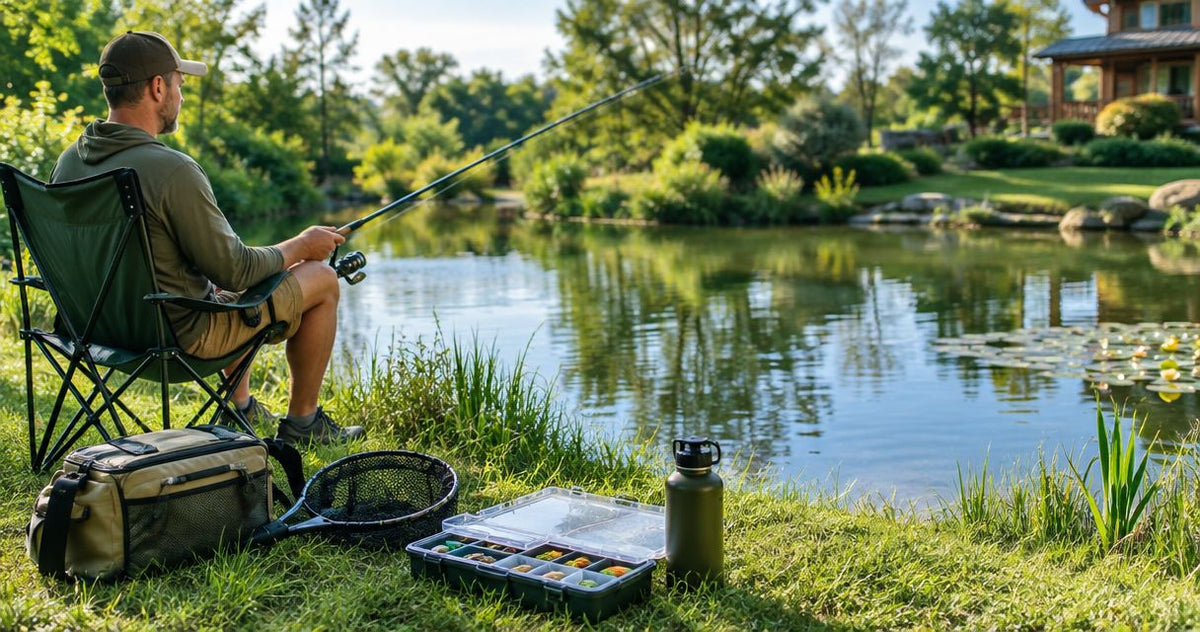
Fishing gear for backyard pond owners in 2026 comes down to one rule: skip the rod case and rig a pocket-sized hand reel kit built for panfish, bass, and catfish holding tight to the bank. A pond is not a lake or a river — the fish sit close to structure, the water warms fast, and most sessions last 20 minutes between chores, not a full afternoon. The GoReel Pond Fishing Kit is built around that exact reality: no rod to assemble, no tackle box to dig through, just a reel that fits in a back pocket and gets a line in the water before your coffee gets cold.
- Fishing gear for backyard pond owners in 2026 starts with a hand reel kit, not a full rod-and-reel combo, because pond fish sit close to the bank.
- The GoReel Pond Fishing Kit and GoReel Pond Refill Kit cover a season of bluegill, bass, and catfish without a tackle box.
- Ultralight spinning combos work but add setup time most pond owners don't need for a 20-minute session.
- Light line in the 4lb to 8lb range and small terminal tackle outfish heavy surf or boat gear on pond water.
- The single biggest mistake pond owners make is stocking gear built for open water instead of weed edges and docks.
Why fishing gear for backyard pond owners matters
Backyard ponds behave differently than a lake or river, and the gear has to match. Most farm and residential ponds run shallow, warm up quickly through spring and summer, and hold fish tight to docks, culverts, and weed lines rather than open water. That changes what "the right gear" looks like.
A pond owner doesn't need 200 yards of casting distance or a boat-rated reel. They need something that goes from the back door to the water in under a minute, works from a 10-foot bank, and doesn't require re-spooling every season. That's a narrower, cheaper, simpler gear list than a lake or river angler needs — and most retail "starter kits" ignore that difference entirely.
Match your reel to pond-sized fish
Pond fish rarely run large enough to need heavy tackle. Bluegill, crappie, small bass, and stocked catfish are the common catches, and a compact hand reel handles all of them without the bulk of a spinning combo.
- Pick a reel rated for panfish-to-bass weight, not saltwater or surf-rated gear
- Choose a hand reel over a rod-and-reel setup if your sessions run under 30 minutes
- Keep the reel pre-spooled so it's ready the moment you walk out the door
- Test the drag or line-out feel before the fish is on, not during the fight
- Store the reel somewhere dry between uses to keep line from degrading
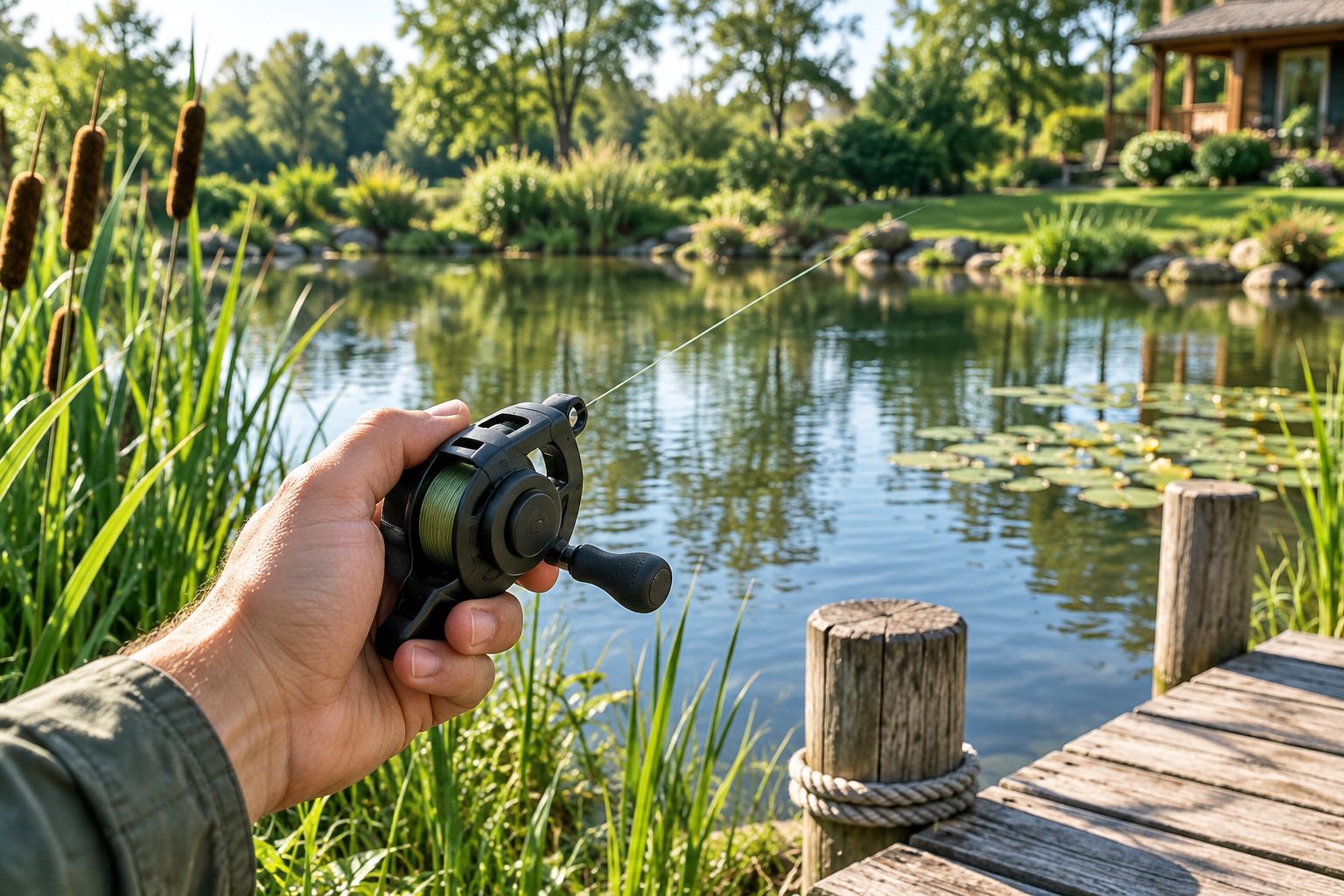
Stock tackle for warm, weedy water
Pond water warms faster than a lake and grows weed cover earlier in the season. That means your terminal tackle needs to handle snags and warm-water feeding patterns, not deep, cold, open water.
- Small jig heads in the 1/8oz range for bluegill and crappie around structure
- A handful of size 6-10 hooks for live bait fishing near the bank
- A few small bobbers to keep bait above weed lines instead of snagging bottom
- Light fluorocarbon leader for clear pond water where fish spook easily
- A weedless rig option for docks and lily pad edges
A GoReel Pond Refill Kit covers most of this list in one restock rather than buying each piece separately across three trips to the store.


Rig lines for structure, not distance
A pond doesn't reward casting distance the way a lake does — it rewards accuracy around docks, downed timber, and weed edges. Line weight and rig choice should follow that.
- Run 4lb to 8lb test for panfish and bass around cover
- Step up to 10lb-12lb only if the pond holds larger catfish
- Use a slip-bobber rig for suspending bait just off the bottom near weeds
- Skip heavy leader material meant for saltwater or surf casting
- Re-tie knots every few sessions since pond structure chews through line faster than open water
Build a grab-and-go kit you actually carry
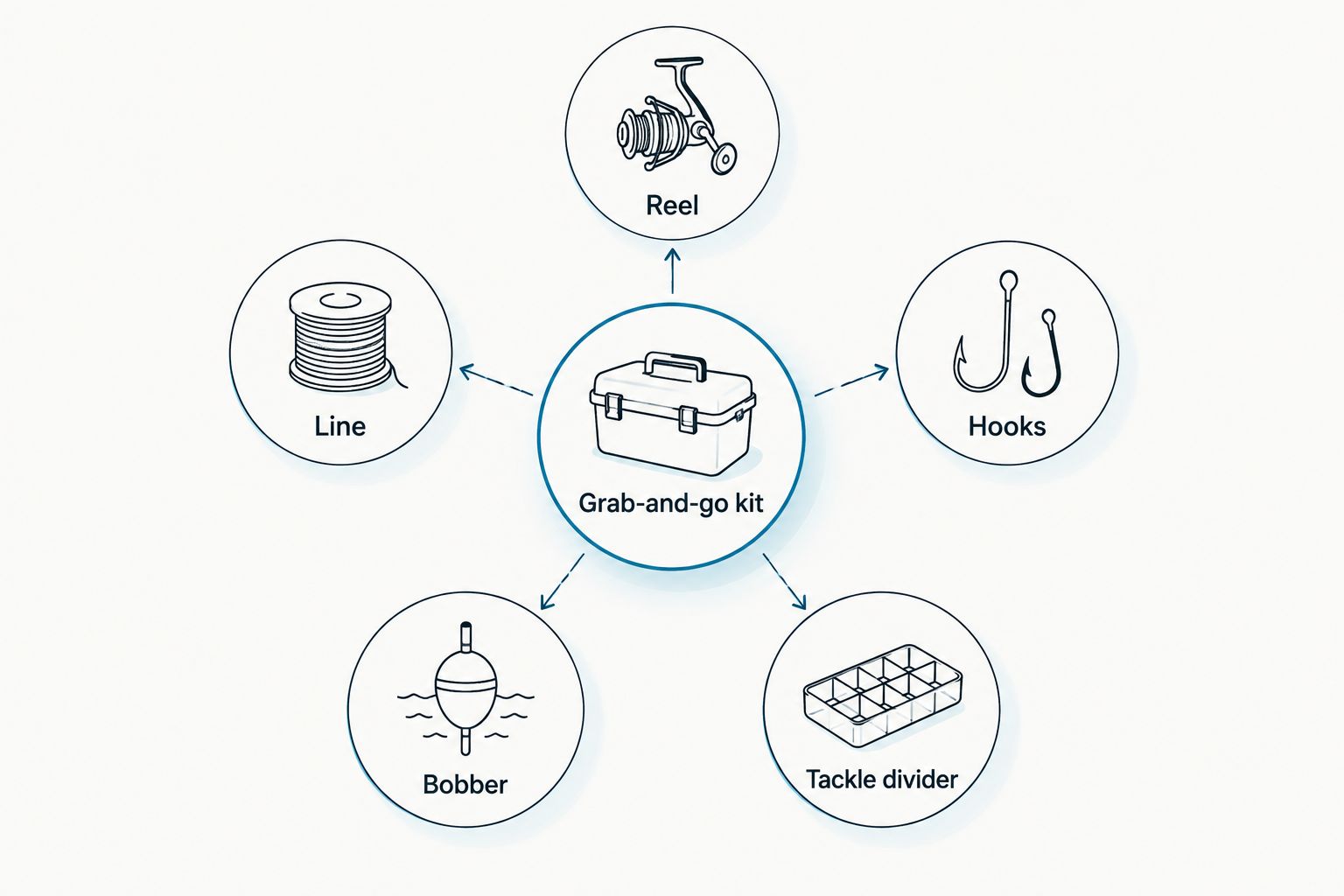
The entire point of pond fishing gear is speed. If the kit takes five minutes to assemble, it doesn't get used on a lunch break or between yard work. A hand reel kit solves this by keeping every piece — reel, line, hooks, and a few lures — in one container.
- Keep the kit near the back door or in a mudroom, not in a garage tote
- Limit it to one reel, one spool of line, and a small tackle divider
- Add a compact bobber for suspending bait without extra rigging
- Skip the tackle box entirely — a hand reel kit replaces it, not supplements it
- Re-check the kit each spring for line that sat unused all winter
Dress for backyard conditions, not expeditions
Pond fishing gear extends past the reel. Since sessions happen close to home and often in warm months, apparel needs differ from multi-day trip gear.
- Breathable layers for warm-season pond fishing in direct sun
- A hat with a brim for glare off flat pond water
- Closed-toe shoes near docks and rocky bank edges
- Quick-dry clothing for anyone fishing with kids near the water
Store and organize gear at the dock or shed
Gear that isn't organized doesn't get used consistently. A small storage system near the pond or in a shed keeps hooks, line, and reels ready without a search every time.
- Use a hook divider so hooks and jig heads don't tangle in one bag
- Keep line locks or clips on hand to secure loose line between trips
- Store reels somewhere dry to prevent line degradation over a season
- Group refill tackle separately from the main kit so restocking is a single swap
Teach kids and beginners on the same gear
Backyard ponds are where most anglers first learn to fish, and the gear should make that easy rather than technical. A hand reel removes the casting learning curve that stops a lot of kids from sticking with a rod and reel.
- Start with a pocket-sized kit that's simple to hold and cast underhand
- Use light line so small hands can feel a bite without heavy resistance
- Keep hooks small enough for panfish, which bite more often than bass
- Let beginners reel by hand rather than manage a drag system
Compare your pond fishing gear options
| Option | Best for | Key limitation |
|---|---|---|
| Hand reel kit | Fast, grab-and-go pond sessions near the bank | Shorter casting distance than a spinning combo |
| Ultralight spinning combo | Anglers who already own rod-and-reel gear | Slower to set up for short sessions |
| Cane pole or hand line | Simple bank fishing with kids | No retrieve mechanism for longer casts |
| Kids' spincast combo | Teaching casting mechanics | Bulkier to store and transport than a hand reel |
A GoReel Pond Fishing Kit wins for anyone fishing a backyard pond in short sessions in 2026 — it beats a spinning combo on setup speed and beats a cane pole on control near structure.
Common mistakes backyard pond owners make with fishing gear
- Buying surf or boat-rated tackle. Pond fish don't need 20lb line or heavy jig heads; it just reduces bites in clear, shallow water.
- Ignoring weed edges. Most pond fish hold at the weed line, not open water — gear rigged for casting distance misses the strike zone entirely.
- No dedicated storage. Loose hooks and tangled line in a junk drawer means half the kit doesn't make it out the door on a good evening.
- One-spot fishing. Ponds have multiple micro-habitats — dock shade, culvert inflow, weed points — and gear that only works from one bank spot limits the catch.
- Skipping the refill kit. Line and hooks wear out over a season; restocking piece by piece costs more trips than restocking once.
FAQ
What fishing gear do backyard pond owners actually need in 2026?
A compact hand reel kit with 4lb-8lb line, small hooks, a few jig heads, and a bobber covers most backyard pond fishing in 2026. A full rod-and-reel combo isn't necessary for bank fishing at close range.
Is a hand reel better than a spinning reel for pond fishing?
For short pond sessions, a hand reel is faster to deploy and easier to store than a spinning combo. A spinning reel still wins for longer casts on larger ponds or lakes.
What line weight works best for backyard pond fishing?
4lb to 8lb test covers bluegill, crappie, and small bass in most backyard ponds. Step up to 10lb-12lb only if the pond holds larger catfish.
Do I need a tackle box for pond fishing?
No — a hand reel kit with a small tackle divider replaces a full tackle box for backyard pond fishing. Keep it to one reel, one spool, and a handful of hooks and jigs.
What's the best bait for backyard pond fishing?
Small jigs and live bait like worms or crickets work well for bluegill and crappie near weed edges and docks. Match hook size 6-10 to the bait for the best hookup rate.
How do I teach a kid to fish on a backyard pond?
Start with a pocket-sized hand reel kit and light line so small hands can feel bites without managing a drag system. Panfish bite often, which keeps beginners engaged.
How often should I restock pond fishing tackle?
Restock hooks, line, and terminal tackle once per season, or sooner if fishing weekly through summer. A refill kit covers a full season in one restock instead of piecemeal trips.
What's the biggest mistake pond owners make with fishing gear?
Using tackle built for lakes or surf fishing — heavy line and large hooks reduce bites in the clear, shallow water most backyard ponds have.
One last thing
Most backyard pond owners overbuy on casting distance and underbuy on organization. The fish are 15 feet from the bank, not 60 yards out — the gear that wins in 2026 is the kit that's already rigged and sitting by the back door when you have ten free minutes, not the one buried in a garage tote with tangled line from last summer.


