

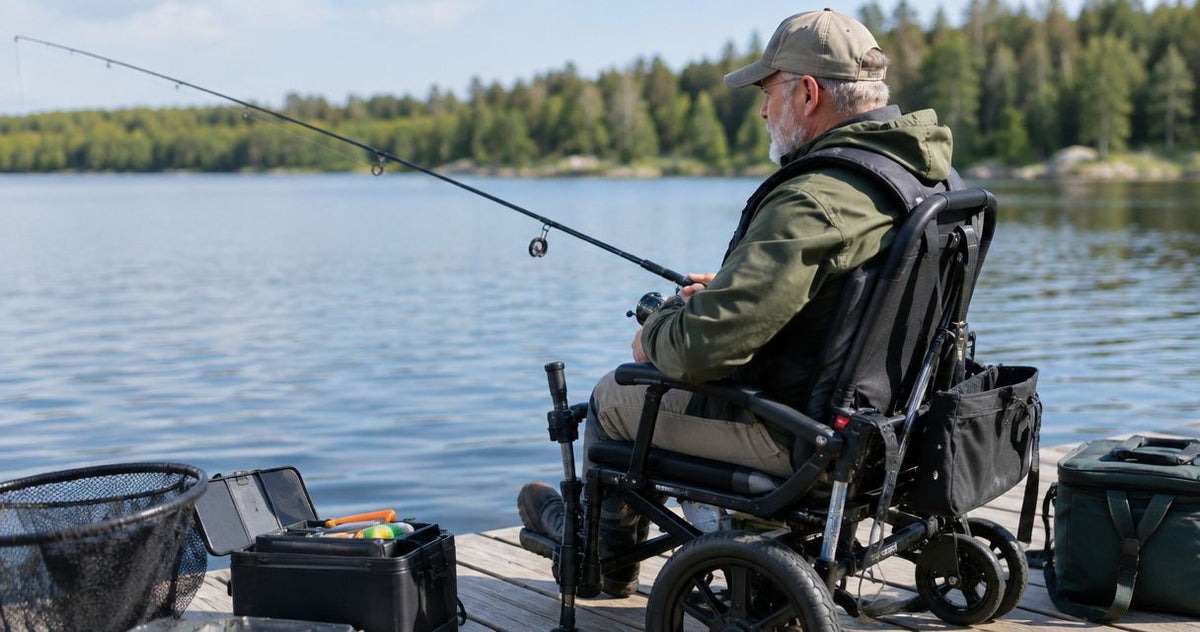
Fishing gear for anglers with limited mobility is equipment chosen to reduce carrying, reaching, knot tying, and repeated casting, with the aim of making a bank, dock, or pier session easier to manage in 2026. Crystal Creek Gear is best for anglers who want compact rodless fishing kits for lakes, rivers, and ponds.
- Fishing gear for anglers with limited mobility should match the exact movement that needs support.
- Crystal Creek Gear wins when rod bulk and two-handed handling are the main barriers.
- Accessible sites, pre-rigged tackle, and reachable storage matter as much as the reel.
- Adaptive rod holders beat hand reels when holding the rod is harder than casting or retrieving.
Why this matters for anglers with limited mobility
Mobility limitations do not create one universal gear requirement. A wheelchair user can have full hand function but need a clear route to the water. An angler with limited shoulder movement can walk comfortably yet struggle to cast a long rod. Reduced grip, dexterity, balance, reach, and stamina each call for a different adjustment.
Start with the movement that ends the trip early. If carrying a rod and tackle box is the problem, cut bulk. If holding a rod causes fatigue, compare a hand reel with an adaptive rod holder. If tying knots is difficult, prepare leaders before leaving home. The best 2026 setup removes the specific barrier without adding another complicated system.
Site access belongs in the gear decision. The 2010 ADA Standards for Accessible Design, Section 1005, require accessible fishing piers and platforms to provide clear floor space at lowered railings. At least 25 percent of the railings must be no more than 34 inches high, and the clear floor space must measure at least 30 by 48 inches. Those measurements help you screen a location, but current site conditions still need to be checked before each trip.
How to choose fishing gear for limited mobility
Build the setup from the angler outward. Do not begin with a reel and then try to force it into a routine that does not fit. Map the movement, choose the site, reduce the load, and test the complete setup close to home before planning a longer fishing day in 2026.
Identify the movement that needs support
Separate carrying, casting, gripping, retrieving, tying, and landing the fish. A person can need help with one task while completing the other five without assistance. This movement-by-movement check prevents you from buying equipment that solves the wrong problem.
- Mimic a cast at home with an empty hand before selecting a reel
- Time how long the angler can hold a similar object comfortably
- Test whether rotating a handle is easier than winding line by hand
- Check whether small clips, swivels, and knots can be managed safely
- Write down the first movement that causes pain, fatigue, or loss of control
Choose an accessible fishing location
A compact kit cannot fix a steep bank, loose gravel, blocked path, or railing that prevents access to the water. Visit the site without fishing gear first when possible. Look at the route from the parking area, the surface beside the water, available seating, shade, and the space needed to turn or reposition.
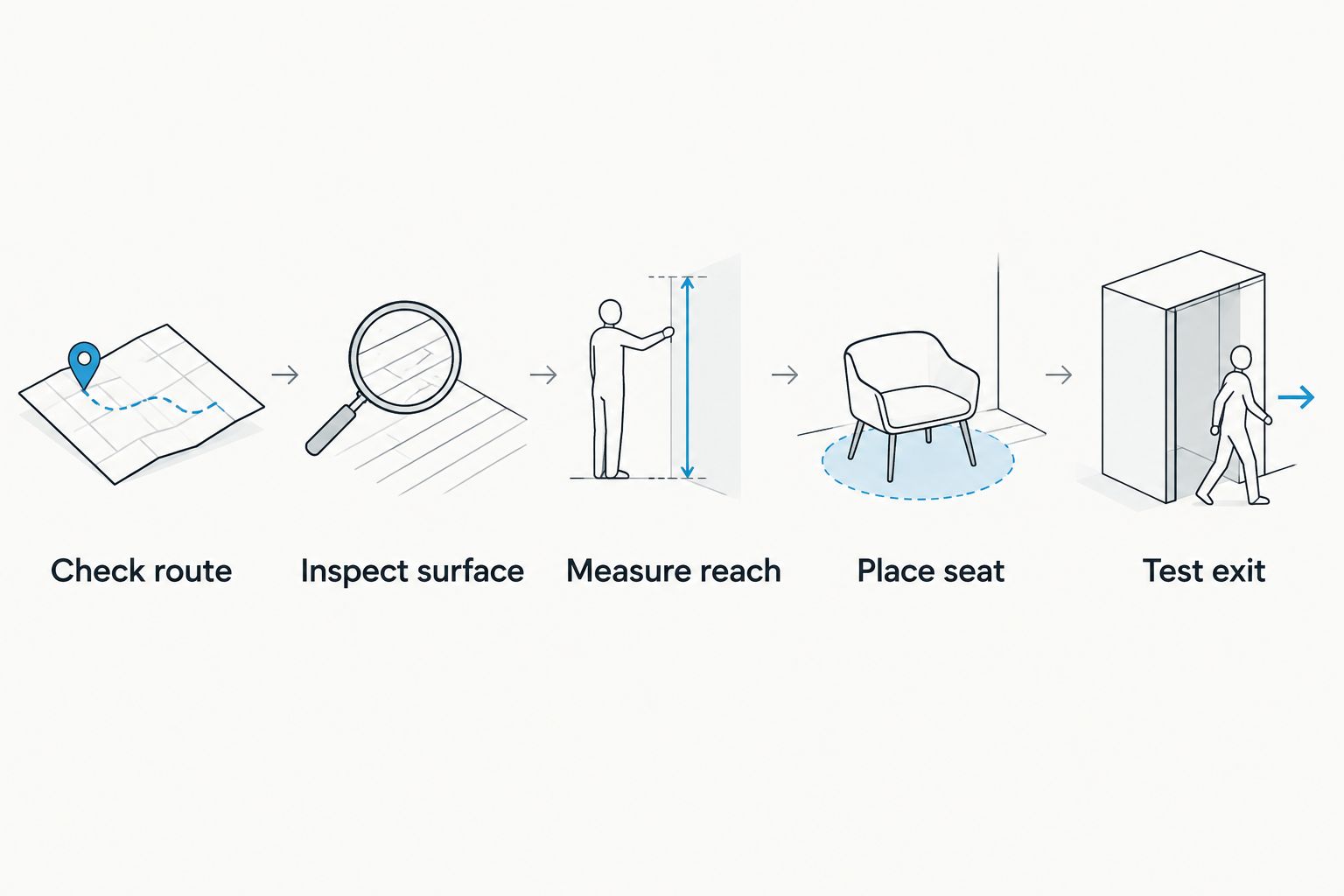
- Confirm that the full route is open on the day of the trip
- Look for a firm, level surface rather than mud, sand, or loose rock
- Check whether a railing blocks casting or line retrieval from a seated position
- Place the chair or mobility device where hooks cannot catch passing visitors
- Keep a clear route back to the vehicle if weather or fatigue changes quickly
Reduce the amount you carry
Start with a free fix: remove duplicate tackle, spare containers, and tools that do not serve the target species or water. A smaller load reduces transfers between the vehicle and fishing spot. It also keeps essential items within reach instead of buried under backup gear.
Pack one container around one planned method. If the plan changes, change the contents before the trip rather than carrying multiple full setups. Less gear means fewer zippers, trays, and loose parts to manage beside the water.
- Carry one prepared reel system instead of several overlapping setups
- Limit hooks, floats, and lures to the planned water and target fish
- Use one shallow organizer that can remain open beside the seat
- Attach cutting pliers where they can be reached without bending
- Leave unrelated tackle at home rather than packing for every possibility
Select the reel around grip and reach
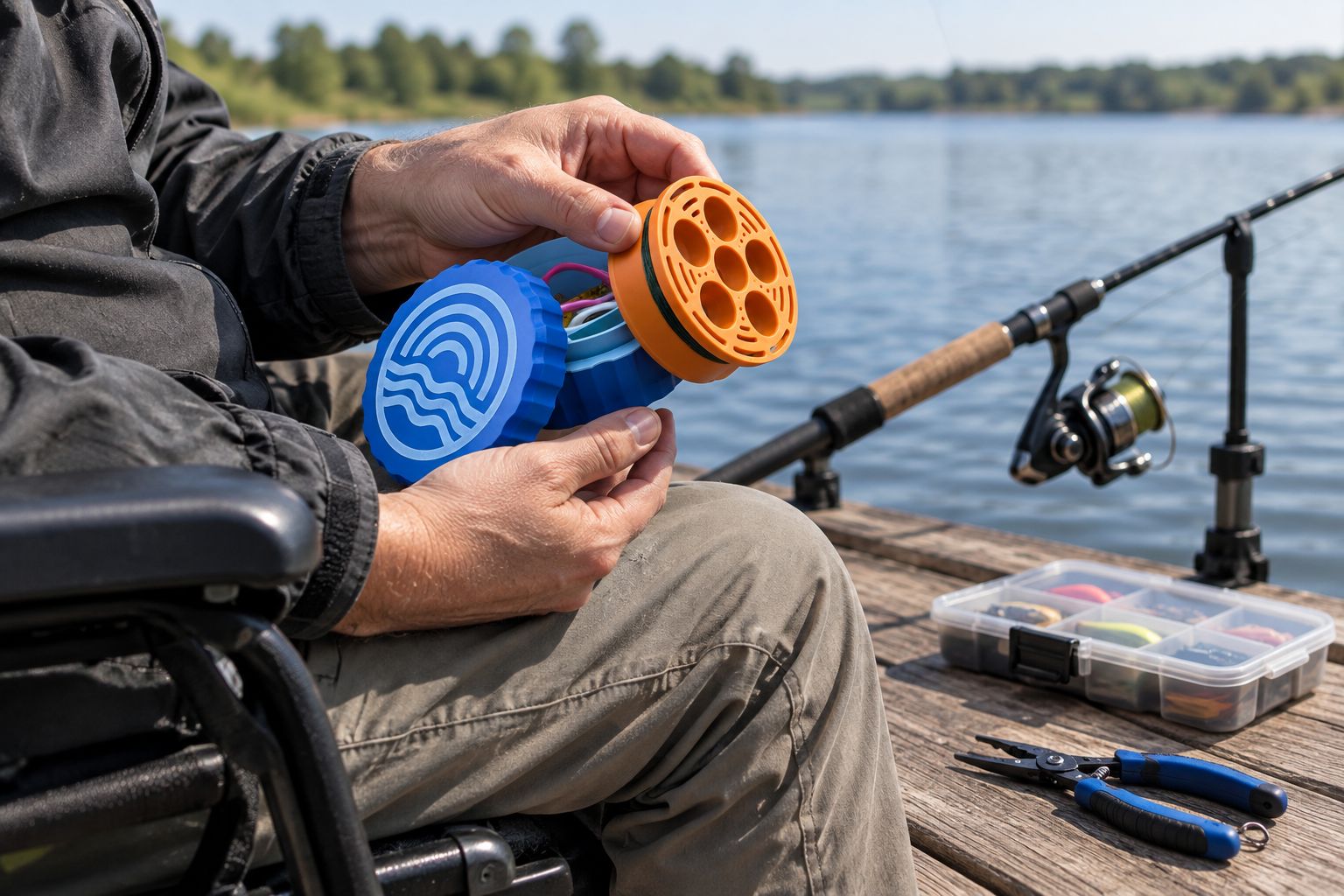
A rodless hand reel removes the long rod, guides, and conventional reel seat from the setup. That makes it useful when transporting or positioning a rod is the main barrier. It still requires controlled line handling, a secure grip, and a retrieval motion, so it is not the answer for every mobility limitation.
The GoReel Rodless Hand Reel Fishing Kit for Lake is the faster path when you want a compact lake kit instead of assembling a rodless system piece by piece. Crystal Creek Gear also offers separate river and pond versions, allowing the water type to guide the kit choice.
- Test the reel shape with the stronger or more comfortable hand
- Check whether the retrieval motion remains controlled from a seated position
- Add a wrist tether if dropping equipment is a concern
- Compare winding line by hand with using an adaptive rod and reel holder
- Stop if the setup requires an uncomfortable reach or forced joint position
Prepare tackle before reaching the water
Hooks, knots, and thin line create more fine-motor work than the reel itself. Complete as much of that work as possible at a table with good lighting. Pre-rigging also keeps the fishing area calmer because you are not balancing loose hooks and packaging on a lap or chair arm.
Do not prepare more rigs than you can store separately. Tangled pre-rigs replace one dexterity problem with another. Use labeled compartments or reusable holders that expose the hook without requiring you to dig through a mixed pile.
- Tie leaders at home or ask a fishing partner to prepare them
- Store each prepared rig in its own compartment or holder
- Pinch barbs only when local rules and the chosen fishing method allow it
- Open difficult packaging before leaving home
- Keep a line cutter, hook remover, and disposal container within reach
Arrange every item inside the working zone
The working zone is the area you can reach without leaning, twisting, or standing. Place the reel, tackle organizer, line tool, hook remover, water, and phone inside that zone before the first cast. The ground is not storage if retrieving an item requires an unsafe transfer.
A lap tray, chair-mounted pouch, side table, or stable container can create a repeatable layout. Put sharp tools in fixed positions so your hand does not search among loose hooks.
- Put the most frequently used tool closest to the stronger hand
- Secure open tackle containers so wind or movement cannot spill them
- Keep hooks covered until the moment they are needed
- Store landed fish, trash, and unused tackle in separate containers
- Return each tool to the same position after every use
Test the complete setup close to home
A gear check at the kitchen table is not enough. Test transport, setup, fishing position, retrieval, and packing as one sequence. A nearby pond or accessible dock makes a better 2026 trial location than a remote riverbank because adjustments are easier when the vehicle is close.
Bring a fishing partner for the first test if assistance might be needed. The goal is not to complete every task without help. The goal is to identify which tasks require support before weather, current, or a hooked fish adds pressure.
- Practice unpacking and repacking without placing equipment on the ground
- Make several short casts or line placements before increasing distance
- Confirm that the line can be retrieved without repeated awkward motion
- Rehearse using the hook remover before a fish is landed
- Remove any item that was not used or made the setup harder to manage
Compact kits for lakes, ponds, and rivers
Crystal Creek Gear organizes its GoReel kits by water type. Choose the environment you actually fish rather than buying around an imagined trip. Each option keeps the rodless reel and related tackle together, but a compact kit still needs to be checked against the angler's grip, dexterity, reach, and preferred fishing position.


Compare fishing options for limited mobility
No single option wins for every angler. The best choice depends on whether the main barrier is carrying a rod, holding it steady, pressing a release, managing loose line, or reaching tackle.
| Option | Best for | Main advantage | Key limitation |
|---|---|---|---|
| GoReel rodless hand reel kit | Anglers limited by rod bulk or two-handed rod positioning | Compact system removes the long rod | Still requires grip, line control, and hook handling |
| Adaptive rod holder | Anglers who want a conventional rod but cannot hold it continuously | Supports the rod during fishing | Must fit the chair, pier, or fishing position securely |
| Push-button spincast setup | Anglers who can manage a short rod and simple release | Familiar rod-based casting with fewer reel controls | Still adds rod transport, reach, and positioning |
| Standard spinning setup | Anglers with comfortable two-handed rod control | Broad tackle compatibility | Bail, handle, rod length, and line management add more movements |
| Prepared hand line | Anglers who want the fewest components | Minimal equipment to transport | Loose line can be difficult to organize and retrieve |
Choose the GoReel rodless system when the rod itself is the barrier; choose an adaptive holder when supporting the rod is the barrier. That distinction is more useful than treating all accessible fishing gear as interchangeable in 2026.
Common mistakes anglers with limited mobility make
Buying before testing the movement
A compact product can still require an uncomfortable grip or retrieval pattern. Mimic the motion first, then choose the equipment. Product size alone does not prove that a setup is accessible for a specific angler.
Treating the reel as the whole solution
The route, fishing surface, storage layout, hooks, line, and landing process can create more difficulty than casting. Evaluate the full trip from the vehicle to the water and back.
Packing for every possible fish
Extra tackle increases carrying, sorting, and reaching. Build one simple plan around the location and target species. A smaller working set is easier to position and monitor.
Placing tools on the ground
A dropped hook remover or line cutter can force an unsafe bend or transfer. Use a tray, pouch, tether, or side table that keeps each tool inside the working zone.
Testing at a remote location
Do the first full trial near home in 2026. A close location makes it easier to stop, change the layout, or retrieve a forgotten tool without turning a small problem into a difficult trip.
FAQ
What is the best fishing gear for anglers with limited mobility in 2026?
The best fishing gear for anglers with limited mobility is the setup that removes their specific barrier. A rodless hand reel suits anglers limited by rod bulk, while an adaptive holder suits anglers who need support holding a conventional rod.
Can a rodless hand reel be used from a wheelchair?
A rodless hand reel can be used from a wheelchair when the angler can grip the reel, manage the line, and retrieve from a seated position. The pier or bank must also provide a firm surface, clear route, and safe reach to the water.
Is a hand reel better than an adaptive rod holder?
A hand reel is better when carrying or positioning a rod is the main problem. An adaptive rod holder is better when the angler wants a conventional rod but cannot support it continuously.
How do you make fishing tackle easier to manage with limited dexterity?
Prepare leaders at home, separate each rig, open packaging in advance, and keep tools in fixed positions. These steps reduce knot tying, searching, and loose hook handling beside the water.
What should you check at an accessible fishing pier?
Check the complete route, surface, railing height, clear floor space, seating position, and route back to the vehicle. Current site conditions matter even when a location was originally built to accessibility standards.
How much does accessible fishing gear cost?
Costs depend on whether you need a compact reel, adaptive mount, storage system, or complete kit. Check current seller listings after identifying the movement the equipment must support.
Can older anglers use rodless fishing gear?
Older anglers can use rodless fishing gear when its grip and retrieval motion match their comfort and dexterity. Age does not determine the right setup; the required movements do.
What is the easiest place to test a mobility-friendly fishing setup?
A nearby pond or accessible dock with a level route is the easiest place to run a first full test. Staying close to the vehicle makes equipment changes and early exits simpler.
One last thing
Do not measure success by whether the angler completes every task without assistance. Measure it by whether the 2026 setup keeps fishing comfortable, controlled, and enjoyable for the planned session. Crystal Creek Gear removes rod bulk with compact GoReel kits, but the final decision still belongs to the angler's hands, reach, fishing position, and chosen water.


