

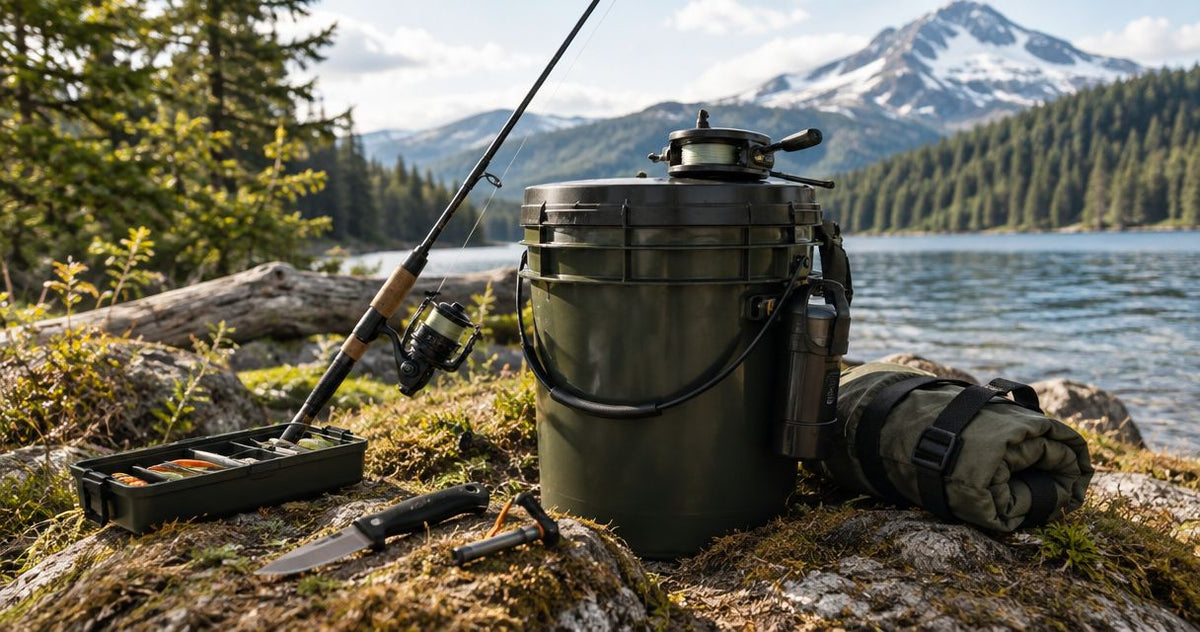
Pair the PNW Bushcraft Waxed Canvas Cedar Bucket with a GoReel hand reel and you get a bug-out fishing system that carries as one grab-and-go unit, no rod case, no tackle box, no assembly required at the water. This guide builds the whole rig step by step so it's ready before you need it, not while you're standing on the bank in 2026.
- The goreel bushcraft bucket survival system pairs a wound GoReel reel with the PNW Bushcraft Waxed Canvas Cedar Bucket as one carry unit.
- Wind and lock the line with a GoReel LineLock before loading hooks or leader into the bucket, or everything tangles.
- Match refill kits (river, lake, pond) to where you'll actually bug out to, not your regular fishing spot.
- A fixed-cache version of this build works for a vehicle or cabin instead of a pack.
- Rotate hooks and leader every few months in 2026 storage conditions; stagnant tackle fails faster than the reel does.
Why this matters
A bug-out bag punishes anything with moving parts and hard edges. A rod breaks down or it doesn't fit; a reel seat adds weight for a single function. The GoReel setup skips both problems by putting the entire reel in your palm, and the PNW Bushcraft Waxed Canvas Cedar Bucket gives that reel a fixed home instead of a loose pocket.
The system works because it separates into layers: a reel core that does the fishing, a fixed gear layer that never moves, and a refill layer you restock without touching the rest. That separation is the entire point of building it this way in 2026 instead of just tossing a hand reel and a bag of hooks into a stuff sack.
Before you start
- A GoReel unit - the GoReel Empty Kit if you're building custom, or a GoReel Pro in Gunmetal Gray, Forest Green, Blaze Orange, or Tidal Blue if you want a finished reel out of the box.
- The PNW Bushcraft Waxed Canvas Cedar Bucket to house the whole rig as one unit.
- A Hook Storage Tackle Divider and at least one refill kit matched to your likely water source.
- The gotcha: wind and lock your line onto the reel before anything else goes in the bucket. A loose reel riding next to loose hooks finds every barb in the kit inside a day of transport, and you'll spend your first ten minutes at the water untangling instead of fishing.
Build the core reel unit
- Start with either the GoReel Empty Kit or a GoReel Pro - Gunmetal Gray keeps a low profile if you want the kit to stay unnoticed, Blaze Orange makes it easy to find in a dark pack.
- Spool mainline onto the reel by hand, working straight off a refill kit's line spool so there's no slack.
- Clip a GoReel LineLock onto the loaded reel. This is the step people skip and regret.
Expected result: the reel sits flat, fully wound, with the line locked down and zero loose loops when you tip it upside down.
Load the bucket's fixed gear layer
- Drop the wound, locked reel into the main compartment of the bucket first.
- Slot the Hook Storage Tackle Divider in beside it, keeping hooks and jig heads in their own separated compartments away from the line lock.
- Add a Phantom Fluorocarbon Leader and a handful of Double Cross Jig Heads to the divider, coiled separately from the mainline.
Expected result: every hook has its own slot, the leader never touches the reel, and the lid closes without pressing down on the tackle.
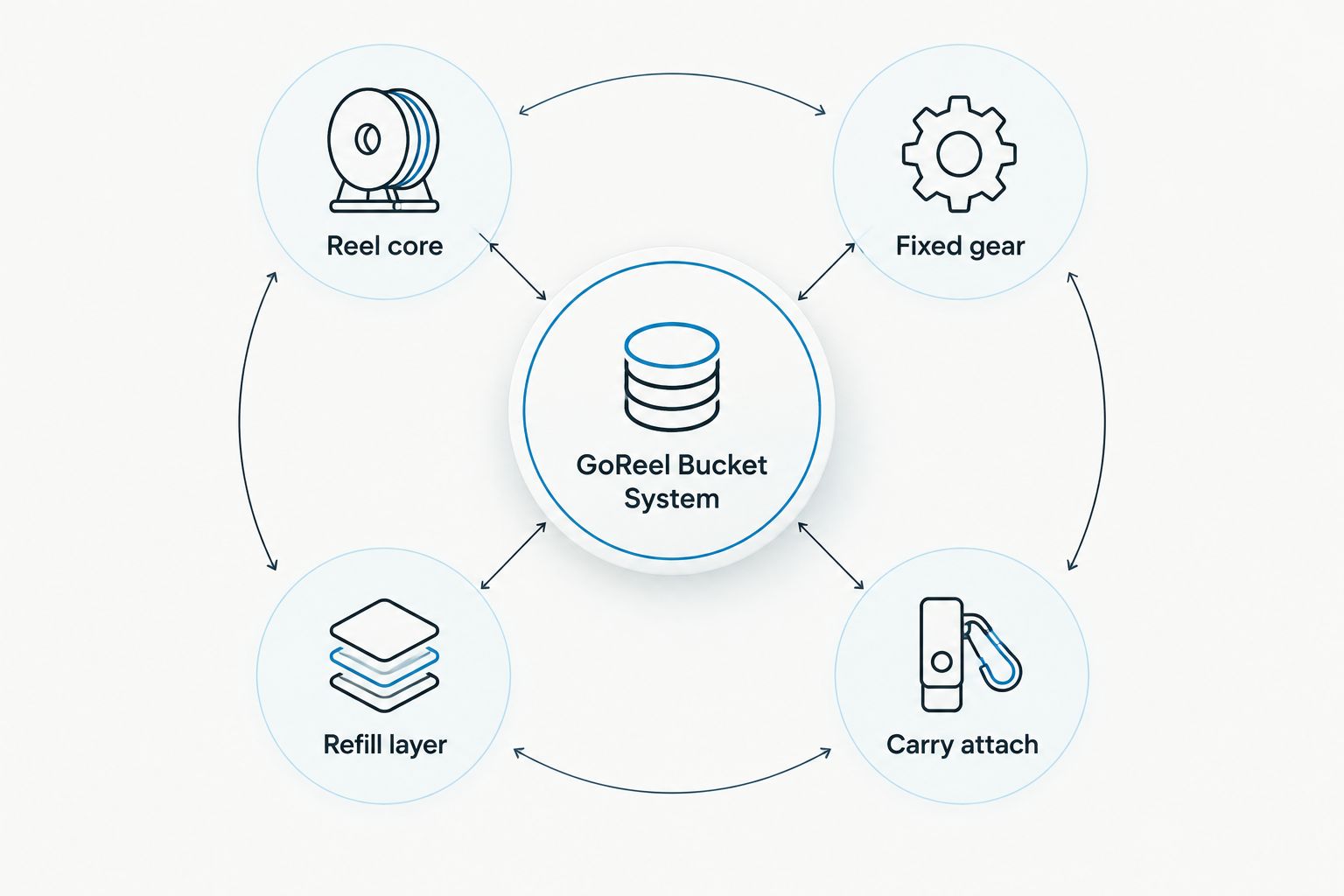
Stage the refill layer
- Pick refill kits matched to the water types on your actual bug-out route - river, lake, or pond, not whichever you fish on weekends.
- Store refills in the bucket's outer pocket, kept apart from the fixed gear layer so a restock never means opening the main compartment.
- Add an A-Just-A-Bubble Mini Clear if your route includes open water where you need casting weight without a rod.
Expected result: you can restock line or a jig head in under a minute without disturbing the reel or the divider.
Attach and carry
- Loop the bucket's handle or strap onto your pack, belt, or vehicle rig.
- Give it a light shake test to confirm nothing shifts or rattles before you move.
Expected result: the entire system rides as one sealed unit - no loose reel, no rattling hooks, no separate tackle bag to lose.


Building a fixed cache version instead of a carry rig
If the plan is a vehicle trunk or a cabin cache instead of a pack you wear, the build changes in one way: skip the strap-and-carry step and load the bucket for shelf storage instead. Swap in a Trout Magnet TNT Kit or a Trout Magnet Mop Drop Kit for stocked pond water near a fixed location, since you're optimizing for a known spot rather than an unknown route. Everything else - reel wound first, line locked, divider loaded, refills separate - stays identical.
The difference between a carry system and a cache system is where it lives, not how it's built.
Troubleshooting
- Line tangles inside the bucket. The LineLock wasn't clipped before loading. Unpack, rewind, lock it, reload.
- Hooks show surface rust after storage. Wet gear went into the bucket and the waxed canvas trapped the moisture. Dry everything before closing the lid, every time.
- The reel ends up buried under tackle. Load order matters - reel goes in first and stays on top, not at the bottom under the divider.
- A refill kit runs dry mid-trip. Carry two refill kits (river and lake, for example) since you can't always predict which water you'll reach first.
- The carry strap wears at one attachment point. Rotate which loop you clip to every few trips instead of using the same one every time.
Customize your setup
Once the core build works, the system scales with the trip. Swap refill kits seasonally, add a second GoReel Pro in a different color if two people are sharing the bucket, or drop in a casting bubble for open-water routes. For a broader look at what belongs in a kit built specifically for emergency scenarios, the guide on best emergency fishing kits for bug-out bags breaks down the tradeoffs by kit type in 2026.
FAQ
What is a goreel bushcraft bucket survival system?
It's a bug-out fishing kit built from a GoReel hand reel loaded into a PNW Bushcraft Waxed Canvas Cedar Bucket, combining the reel, tackle, and refill line into one carry unit. It skips the rod entirely and relies on a hand-wound reel for the fishing function.
Is a hand reel bucket system better than a pocket fisherman for bug-out bags?
For carry weight and setup speed, yes - a GoReel-based bucket system has no folding rod sections to assemble and stores tackle in fixed compartments instead of loose. A pocket fisherman still requires unfolding a rod before you can cast.
How much line should I carry in a bug-out fishing kit?
Carry a full spool on the reel plus at least one refill kit, since running out of line mid-trip means the whole system stops working. Two refill kits matched to different water types covers most unplanned routes.
Can I use the GoReel Empty Kit instead of a pre-built Pro model?
Yes - the GoReel Empty Kit gives you the same bucket-compatible footprint but lets you choose your own line, leader, and hook combination instead of using a fixed factory loadout.
Does the waxed canvas bucket protect gear from rain?
Waxed canvas resists water better than untreated fabric, but wet gear loaded before closing the lid will still trap moisture inside. Dry your tackle before you pack it, not after.
What size hooks work best in a survival fishing bucket kit?
Smaller hooks paired with a Phantom Fluorocarbon Leader and Double Cross Jig Heads cover panfish, trout, and most pond or river species you'd realistically target in an emergency scenario.
Should the reel or the tackle divider go into the bucket first?
Load the reel first so it stays on top of the tackle divider. Loading tackle first buries the reel and slows down access when you actually need to fish.
Can this system work as a fixed cache instead of something I carry?
Yes - store it in a vehicle or cabin instead of on a pack, and swap in a Trout Magnet kit suited to a known, stocked water source near that location.
One last thing
The part anglers underestimate isn't the reel or the line - it's load order. Reel first, divider second, refills last in a separate pocket. Get that sequence wrong once and you'll spend more time untangling gear at the water than actually fishing with it in 2026.


