

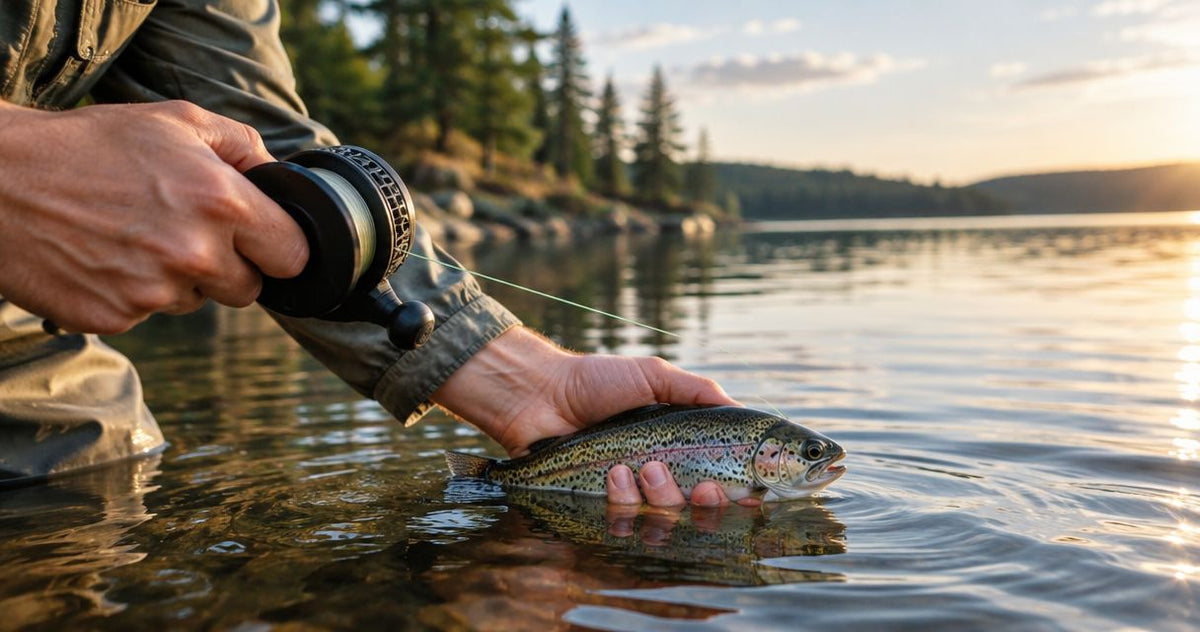
Yes, hand reel fishing is good for catch and release when you use suitable tackle, bring fish in without prolonged fighting, and unhook them with minimal handling. A hand reel does not automatically make release safer: hook placement, water conditions, and your ability to control the fish matter more than whether you carry a rod. Choose a fishing spot where you can land and release the fish at water level.
- Is hand reel fishing good for catch and release? Yes, when tackle, landing access, and fish handling suit the situation.
- Hand reels suit compact fishing trips; rod-and-reel setups offer rod flex and drag control during a fight.
- Keep fish wet, minimize air exposure, and prepare your unhooking tools before casting.
- Crystal Creek Gear hand reel fishing kits suit anglers seeking portable gear, not a shortcut around careful fish handling.
Is hand reel fishing good for catch and release?
Hand reel fishing works for catch and release, but the release depends on your technique—not the reel's size. You need enough control to bring the fish to a safe landing point without exhausting it or pulling the hook violently.
With a hand reel, you manage line directly rather than through a rod. That makes line handling an important skill, especially when a fish changes direction or pulls hard. If you're starting out, read is hand reel fishing hard to learn? before choosing a demanding fishing spot.
The comparison below separates portability from fish control. Neither setup guarantees a healthy release.
| Setup | Best for | Advantage | Limitation for catch and release |
|---|---|---|---|
| Hand reel | Anglers seeking compact gear at accessible water | Removes the need to carry a rod | You must manage line tension directly, without rod flex |
| Rod-and-reel setup | Anglers who need rod flex and adjustable drag | Provides tools for cushioning sudden pulls | Adds gear to carry and still requires careful landing and handling |
Choose the setup you can control confidently. If a hand reel makes you struggle to land the likely fish, portability is not a good enough reason to use it there.
Why this matters
Releasing a fish means more than putting it back. Excessive fighting, injury, air exposure, and rough handling all work against a healthy release.
A compact kit makes spontaneous fishing easier, but spontaneity should stop at the water's edge. Before your first cast, decide where you'll land a fish, how you'll remove the hook, and whether the conditions are suitable for fishing at all.
For your 2026 fishing trips, build the release plan into the packing plan. Less gear is useful; missing the tools you need to handle a fish safely is not.
How do you catch and release a fish with a hand reel?
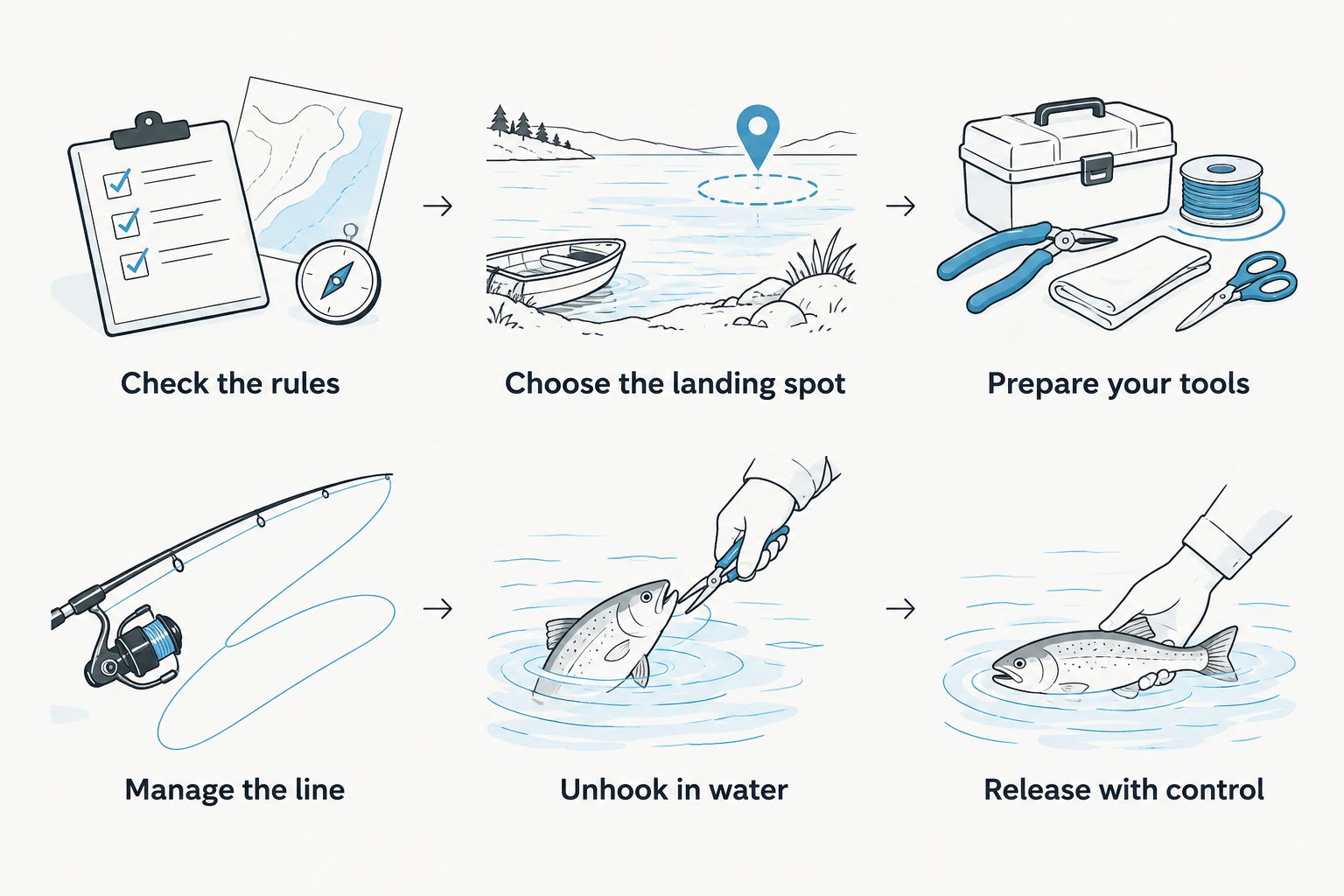
Follow this sequence before and during each catch. The goal is a controlled landing followed by as little handling as necessary.
Check the rules
Check the current regulations for the exact water you're fishing. Handline rules, permitted hooks, bait restrictions, seasons, and species-specific requirements vary by location.
Read the applicable 2026 regulations rather than relying on an old screenshot or a rule from a nearby lake. Catch and release does not exempt you from fishing restrictions.
Choose the landing spot
Pick a stable position with a clear route to the water. Avoid casting from a place where your only landing method would be hauling a fish up a steep bank or lifting it by the line.
Look beyond the casting space. A branch, rock ledge, or fence between you and the water becomes a problem once a fish is hooked.
Prepare your tools
Keep suitable hook-removal tools within reach and have a landing net ready when the situation calls for one. Use a smooth, fish-friendly net rather than treating rough bank surfaces as a landing area.
Put your phone away until the release is under control. You should not need to hold a fish while digging through a bag for pliers, a camera, or a place to set your reel.
Manage the line
Bring the fish toward your landing point with controlled tension. Avoid sharp yanks, and do not wrap fishing line around your fingers, wrist, or hand.
A sudden pull can tighten a line loop against your skin. Keep loose line clear of your feet and equipment so a tangle does not interrupt the landing.
Unhook in water
Keep the fish in the water whenever practical and safe. If you must touch it, wet your hands first, support its body, and avoid squeezing its belly or touching its gills.
Remove an accessible hook carefully. For a deeply embedded hook, follow species-specific fisheries guidance; that commonly means cutting the leader rather than tearing the hook out.
Release with control
Support the fish upright in the water and let it regain its balance. In flowing water, face it into gentle current without forcing it into strong flow.
Do not drag it backward and forward through the water. Release it when it can maintain its position and swim away under its own power.
Why catch-and-release outcomes vary
The same hand reel can produce very different releases in different situations. These factors explain why:
- Hook placement: A readily accessible mouth hook is different from a deeply swallowed hook. Your removal approach should reflect that difference.
- Fight length: Tackle and technique that prolong the fight increase exertion. Use equipment suited to the fish you expect.
- Water conditions: Warm water and low dissolved oxygen add stress. Follow local species-specific advice and restrictions.
- Landing access: A low, stable bank supports an easier release than a high ledge or an obstructed shoreline.
- Handling: Dry hands, squeezing, rough surfaces, and unnecessary air exposure add avoidable harm.
- Line control: Sudden pulls, tangles, and uncontrolled lifting undermine an otherwise careful landing.
Fix the limiting factor before you fish. Changing reels will not solve a steep landing spot, unsuitable conditions, or a hook-removal tool left at home.
Which hooks and line should you use?
Choose hooks and line for the species, presentation, and local rules—not simply because they fit inside a small kit. A compact setup still needs enough strength and control for the fish you expect to encounter.
Barbless hooks often make removal easier, but they do not prevent deep hooking or eliminate the need for careful handling. Where permitted, pinching a barb down is another way to simplify removal; check the result before fishing.
Circle hooks can reduce deep hooking in suitable bait-fishing applications when used correctly. They are not a universal replacement for every lure or technique, and some fisheries specify particular hook designs.
Avoid deliberately fishing underpowered tackle just to make the fight more exciting. You want enough control to land the fish efficiently without using brute force.
Inspect your line and knots before a 2026 outing and again after abrasion or a snag. Damaged line creates a preventable weak point, regardless of the reel you carry.
When should you choose a rod instead?
Choose a rod-and-reel setup when its control features better match the fish and the location. A rod provides flex, and an appropriate reel's drag lets line slip under tension instead of forcing you to absorb every pull directly.
That matters when the likely fish are powerful, the water has demanding current, or nearby cover makes line control difficult. A hand reel is not the right choice merely because it takes up less room in your bag.
Use the same standard for unfamiliar water. If you cannot predict how you'll control and land a fish, start with equipment and a location that give you a clearer margin for handling it safely.
A rod does not excuse careless releases, either. You still need appropriate tackle, accessible tools, and a landing plan that keeps the fish off dry ground.
Where does a compact hand reel fit?
Crystal Creek Gear hand reel fishing kits are best for anglers who prioritize compact, portable gear for lakes, rivers, and ponds. That is a portability verdict, not a claim that any particular kit improves fish survival.
The GoReel Hand Reel & Line Lock fits the compact hand reel approach described here. Its role is to simplify what you carry; you still need to select suitable tackle and bring the handling tools your fishing requires.
The trade-off is straightforward. A rodless setup removes the rod from your load, but also removes the rod's cushioning during a fight.
Treat a Crystal Creek Gear catch-and-release setup as a fishing system, not just a reel. Leave room for hook-removal tools and a suitable landing solution instead of trimming your bag down to casting gear alone.
Is hand reel fishing safe for trout you plan to release?
Hand reel fishing can be used for trout catch and release when tackle, conditions, and handling are appropriate. Trout fishing demands particular attention to water conditions and unnecessary handling.
Do not apply a single temperature cutoff to every trout fishery. Species, local conditions, and fisheries guidance differ; check the water's current advice before your 2026 trip.
If warm-water restrictions or advisories tell you to stop targeting trout, change your plans. A smaller reel does not make those conditions safer.
Should you photograph a fish before releasing it?
Take a photo only when it does not interfere with a controlled release. Have the camera ready before lifting the fish, and keep the fish supported close to the water.
There is no reason to hold a fish while someone adjusts a phone or searches for a better background. If the fish needs immediate release, skip the picture.
For your 2026 catch-and-release routine, make the photo optional and the landing plan non-negotiable. The best memory is not always the one you bring home on a screen.
What should you do if a fish swallows the hook?
Do not pull hard on a deeply swallowed hook. Keep the fish wet and follow the relevant species-specific release guidance, which commonly advises cutting the leader when removal would cause greater injury.
Hook position matters more than whether you used a hand reel or a rod. Avoid turning a difficult hook removal into a prolonged handling session.
Review your presentation afterward. If deep hooking keeps happening, reassess your hook choice, bait method, and bite response before continuing.
FAQ
Is hand reel fishing good for catch and release?
Yes, hand reel fishing is good for catch and release when you control the fight, use suitable tackle, and minimize handling. The reel alone does not guarantee a healthy release.
Is a hand reel better than a fishing rod for releasing fish?
A hand reel is not automatically better than a fishing rod for releasing fish. Choose the setup that lets you control and land the expected fish efficiently; a rod adds flex and an appropriate reel adds drag control.
Do I need barbless hooks for hand reel catch and release?
You need barbless hooks where local regulations require them, and they often simplify hook removal elsewhere. They do not eliminate deep hooking or replace careful handling.
Can I lift a fish out of the water by the fishing line?
Avoid lifting a fish by the fishing line for catch and release. Use a suitable landing net or support the fish at water level without putting its weight on the hook.
Should I wet my hands before touching a fish?
Yes, wet your hands before touching a fish you intend to release. Support its body gently and keep your fingers away from its gills.
What if I cannot remove the hook safely?
Do not force out a deeply embedded hook when removal would cause greater injury. Follow species-specific fisheries guidance, which commonly recommends cutting the leader in that situation.
Can I leave my landing tools behind to keep my kit small?
Do not leave necessary landing and unhooking tools behind just to reduce bulk. Crystal Creek Gear compact fishing gear suits portable trips, but your release plan still needs the tools appropriate to the fish and location.
One last thing
Choose your release spot before your casting spot. The most tempting opening along the bank is not necessarily the place where you can safely reach and unhook a fish.
Walk the shoreline first. If you cannot see a practical route from hooked fish to safe release, move—even when the water looks promising.


