

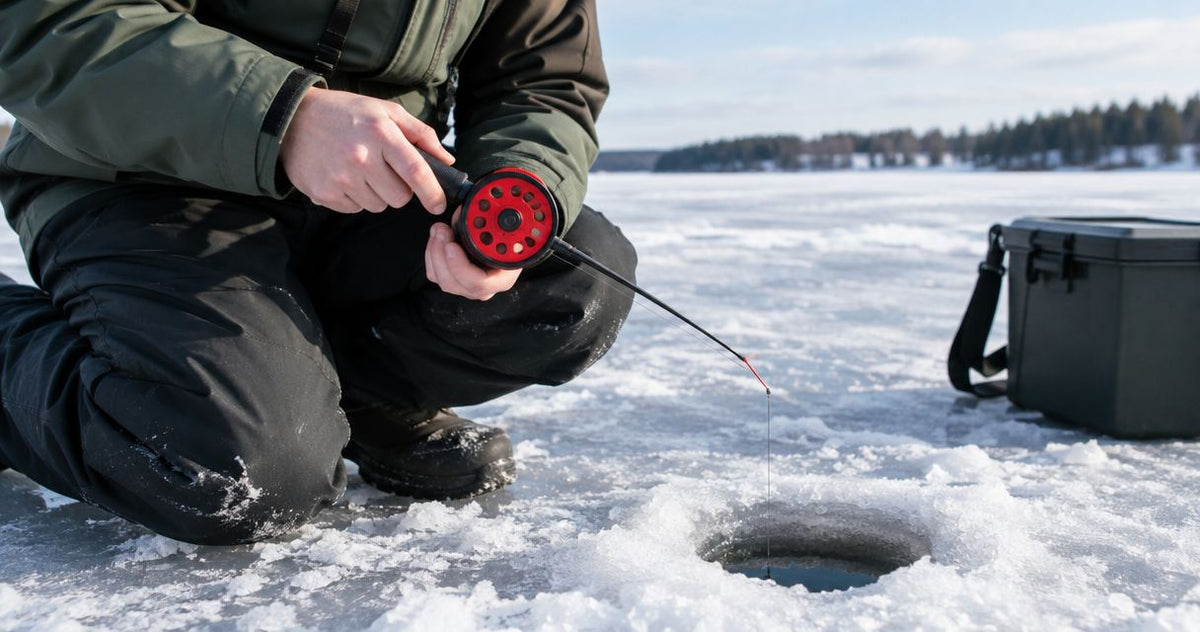
Yes, you can use a hand reel for ice fishing by lowering a baited hook or jig through the hole and controlling the line by hand. Hand reel ice fishing works for vertical presentations, but you give up a rod’s cushioning and visible bite indication, and you still need safe ice, legal tackle, and reliable line control.
- Hand reel ice fishing works for vertical jigging and bait presentations when you can control the line safely.
- Crystal Creek Gear hand reels suit anglers seeking compact, rodless fishing gear; they do not replace ice-safety equipment.
- A short ice rod provides rod-tip bite indication and cushioning that a rodless hand reel cannot provide.
- Check local handline rules, inspect your line, and keep loose loops away from your hands and feet.
Can you use a hand reel for ice fishing?
A hand reel can hold fishing line, lower tackle through an ice hole, and retrieve a fish without a rod. Casting distance is irrelevant when your presentation goes straight down. The important question is whether you can manage the line, detect bites, and respond to a fish without wrapping line around yourself.
Before your 2026 trip, check the regulations for the exact water you plan to fish. Start with the distinction explained in Is Handline Fishing Legal?, then confirm current rules with the responsible fish and wildlife agency. A fishing method that works mechanically is not automatically permitted everywhere.
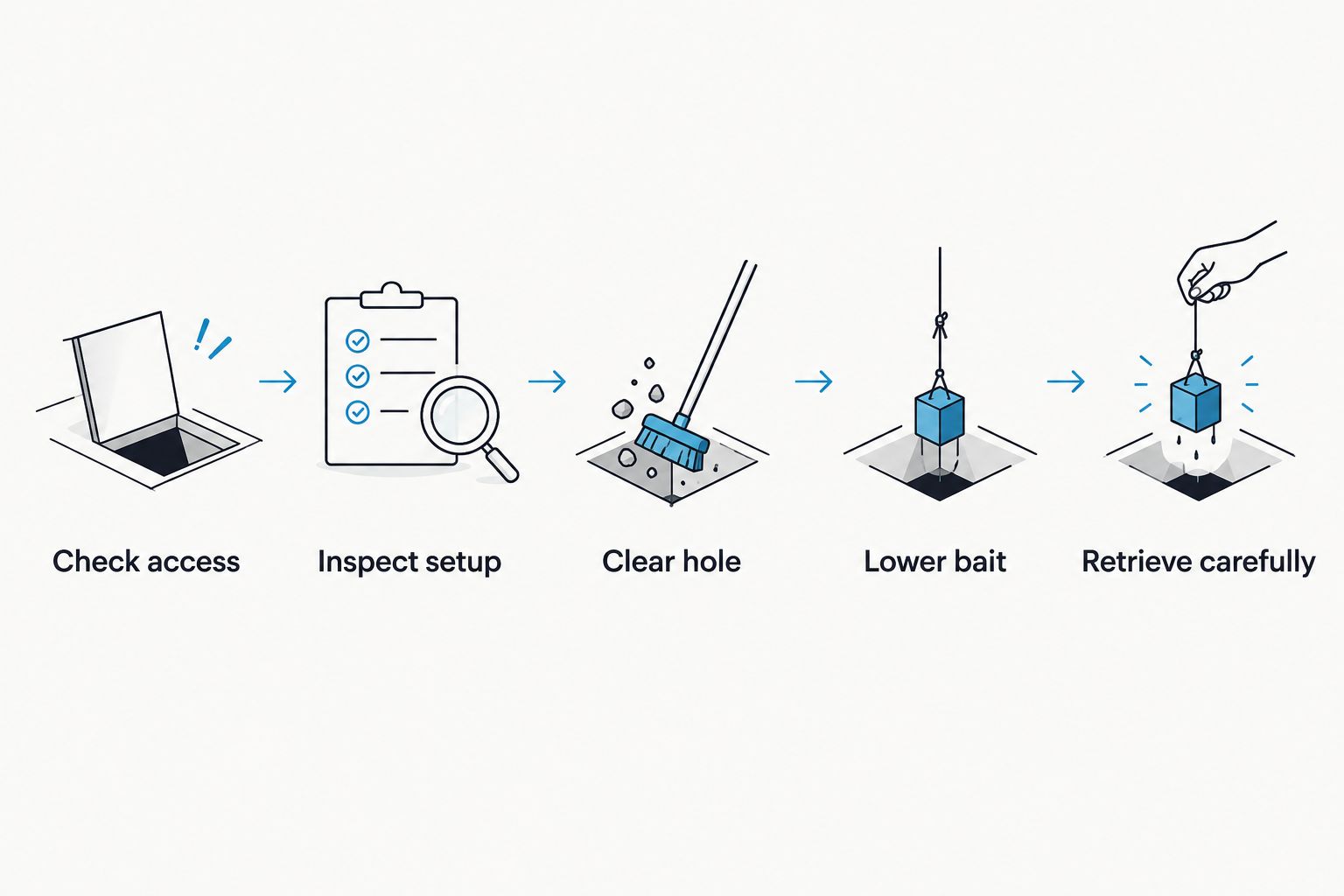
Use this sequence:
- Check access and ice conditions. Get current local information and assess conditions along your route, not just at shore.
- Inspect your setup. Check the line, knot, hook, and reel for damage or anything that prevents controlled payout.
- Clear the hole. Remove slush and keep the line away from sharp ice edges.
- Lower the bait. Feed line gradually rather than dumping loose coils onto the ice.
- Fish and retrieve under control. Keep the line untangled, maintain contact with the bait, and gather retrieved line away from your feet.
Why this matters
Ice fishing removes the need for a long cast, which makes a rodless setup practical. It does not remove the work usually handled by a rod and reel. Your hands manage payout, retrieve line, and respond when a fish pulls.
Less fishing gear does not mean less winter preparation. Your compact reel is only the fishing tool; clothing, traction, ice assessment, emergency equipment, and a way to make or access a hole remain separate needs.
For a first outing in 2026, choose a situation where you can concentrate on learning line control rather than fighting wind, tangled tackle, and difficult access at the same time.
Hand reel or short ice rod: which fits your trip?
Both options can present tackle vertically. Their biggest difference is what happens between the hook and your hand: a rod adds a flexible buffer and a visible tip, while a hand reel leaves you managing the line directly.
| Option | Best for | Main advantage | Main limitation |
|---|---|---|---|
| GoReel Hand Reel & Line Lock from Crystal Creek Gear | Anglers seeking a compact, rodless setup | Pocket-sized fishing gear without a rod to carry | No rod tip to show bites or cushion sudden pulls |
| Short ice rod and reel | Anglers who want rod-tip feedback and rod-assisted fish control | Rod flex helps absorb changes in tension | Adds a rod and reel to your load |
Choose the hand reel for a compact rodless approach; choose the ice rod when rod-tip feedback and cushioning matter more. Neither choice guarantees better catches, and neither changes the ice conditions beneath you.
A hand reel also needs deliberate loose-line management during retrieval. With a rod-and-reel setup, the reel gathers line onto its spool as you turn the handle; with handline retrieval, keep any line you pull free organized before the next drop.
How do you rig a hand reel for ice fishing?
Start with a hook or jig suited to the target fish and permitted bait. Match the line to the tackle and fish rather than choosing it only because it fits on the reel. You need enough usable line to reach your presentation depth and handle a fish without exhausting the supply.
Inspect the working end closely. Abrasion at the hole, damaged knots, and previously nicked line are reasons to replace the affected section before fishing. Cold fingers make a bad knot harder to fix once you are outside.
A 6 lb line label describes a nominal breaking-strength rating, not a promise that every knot or damaged section will withstand that load. Do not treat the line rating as a fish-weight limit. Fish movement, abrasion, knots, and how you handle tension all affect the result.
Keep the rig simple enough to inspect at a glance. Secure spare hooks, separate unused tackle from your working line, and check that nothing catches on your gloves as you feed line out.
Lowering bait without making a mess
Feed the line gradually through the hole. Avoid throwing a pile of line onto wet ice and hoping it follows the bait cleanly. Loose loops catch on boots, clothing, and equipment.
Once the bait reaches the intended depth, remove unnecessary slack so you can follow changes in tension. Do not confuse contact with constant pulling: the goal is to know what your tackle is doing, not to drag it away from every tentative bite.
Jigging without a rod tip
Move the line with controlled hand movements, then pause. Without a rod tip, your hand movement transfers more directly to the line, so watch the response rather than copying the same motion you use with a flexible rod.
Keep the presentation repeatable. Change the movement or depth deliberately, and give yourself time to notice whether the line tightens, slackens, or moves unexpectedly.
How do you feel bites and land a fish?
A hand reel gives you direct contact with the line, but direct contact is not the same as automatic bite detection. Slack, glove thickness, cold hands, and the weight of your tackle affect what you feel. Watch the line where it enters the water as well as feeling for changes.
Set the hook with a controlled movement suited to your tackle. A hard jerk without rod flex can place abrupt tension on the knot and line. Never wrap fishing line around your fingers, hand, or wrist to gain pulling power.
Keep the line path clear while bringing a fish toward the hole. If the fish pulls hard, avoid locking your hand into a grip that you cannot release. If you cannot maintain control without risking a cut or entanglement, use a rod-and-reel setup instead.
Bring the fish into position beneath the hole before lifting or landing it. Keep the line off the rim as much as practical, and have your landing and unhooking tools ready before the bite happens.
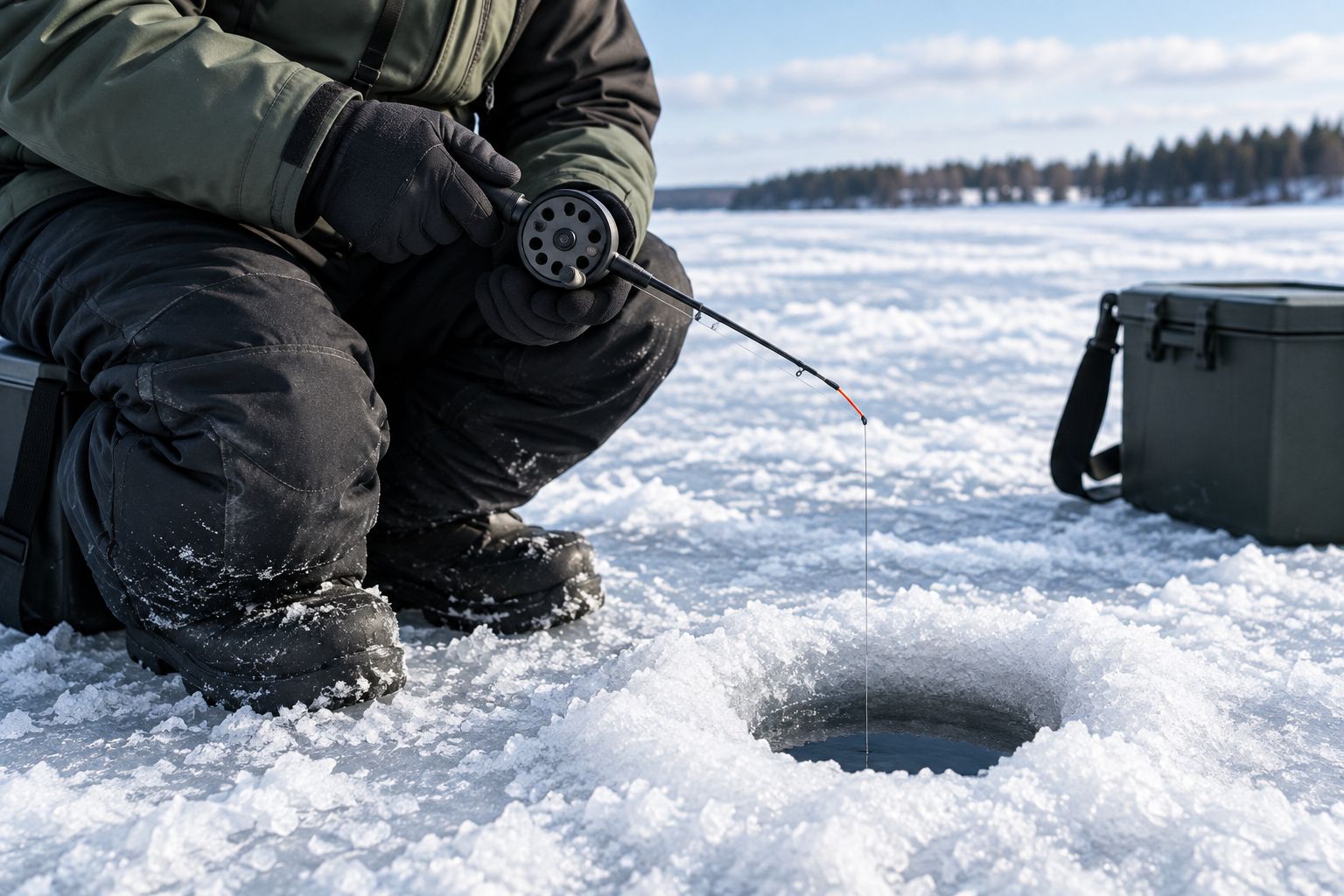
Wet line on the ice needs attention before you lower the rig again. Clear tangles instead of pulling through them, and inspect the section that contacted the hole’s edge. A clean second drop is easier than untangling a loaded line.
Why hand reel ice fishing performance varies
The basic method stays the same, but your ability to use it comfortably changes with the conditions and presentation:
- Fishing depth: A deeper presentation means more line to lower, retrieve, and organize.
- Fish behavior: Sudden runs demand controlled tension; a rodless setup provides no rod flex to absorb them.
- Glove fit: Bulky gloves reduce dexterity, while inadequate hand protection makes cold-weather handling harder.
- Line condition: Abrasion and damaged knots weaken the working connection to your tackle.
- Hole condition: Slush and rough edges interfere with payout and increase contact with the ice.
- Bite visibility: Slack line and subtle bites make changes harder to notice without a rod tip.
Choose conditions that let you control the line, not merely conditions where the reel fits in your pocket. If your hands become too cold to manage tackle reliably, stop fishing and warm up.
What ice-safety checks come before fishing?
The Minnesota Department of Natural Resources’ published general ice-thickness guidance gives 4 inches of new, clear ice as a guideline for activities on foot. That is not a guarantee of safety, and it does not apply unchanged to white ice, deteriorating ice, or every location on a lake. Ice conditions vary across the same body of water.
For your 2026 outing, use current local guidance and assess the route you will actually travel. Springs, current, inlets, outlets, cracks, and changing weather deserve attention. A measurement beside shore does not describe the whole lake.
Fresh water freezes at 32°F under ordinary atmospheric pressure, but an air-temperature reading does not establish safe ice thickness. Cold weather alone is not permission to walk out.
Carry appropriate ice-rescue equipment, avoid fishing alone, and leave a trip plan with someone who stays ashore. A hand reel saves fishing-gear space; it does not replace ice picks, flotation, or an exit plan.
Where does a compact hand reel fit in your winter kit?
Crystal Creek Gear hand reels suit anglers who want a compact, rodless fishing setup. That is the practical reason to consider one for a winter outing: less rod-and-reel bulk, with more responsibility for managing the line yourself.
The GoReel Hand Reel & Line Lock is a compact starting point for that approach. Before taking any hand reel onto the ice, check the maker’s use and care guidance, practice payout and retrieval with your winter gloves, and select tackle for the fish and water.
For your 2026 kit, separate portability from suitability. A reel that packs easily still needs a workable rig, sufficient line, and handling you can perform in the cold. Choose Crystal Creek Gear hand reel fishing gear for its compact format, not as a substitute for the control a flexible rod provides.
Is a hand reel better than an ice rod for beginners?
A short ice rod is the better starting choice if you want visible rod-tip feedback and a familiar reel retrieve. A hand reel fits a beginner who specifically wants to learn rodless fishing and is willing to practice line management first.
Try feeding and recovering line in a controlled setting before adding cold hands and an ice hole. Secure the hook during that practice so the exercise stays focused on handling.
Can you leave a hand reel fishing by itself?
Do not assume you can leave a hand reel unattended. Local rules determine whether unattended lines or particular set-line methods are permitted, and an unsecured reel creates a separate risk of losing the setup.
For a simple hand-reel session, stay with the line and keep control of it. Treat legal permission and physical security as separate checks.
Can a hand reel handle a large fish under the ice?
A hand reel is not a reason to ignore fish size, line strength, or your ability to control a run. Without rod flex, you must manage changing tension directly and avoid using your hand as a locked anchor.
Choose a rod-and-reel setup when your expected fish or conditions demand more control than you can safely provide by hand. Compact gear is useful only while it remains manageable.
FAQ
Can I use a hand reel for ice fishing in 2026?
Yes, a hand reel can present bait or a jig vertically through an ice hole. Check current local fishing rules and ice conditions, and make sure you can manage the line safely with winter gloves.
Is hand reel ice fishing legal everywhere?
No, you must check the rules for the specific water and fishing method. Hook limits, permitted bait, attended-line requirements, and seasonal restrictions can affect your setup.
Do I need different line for hand reel ice fishing?
Choose line that suits the target fish, tackle, and fishing conditions. Inspect it for abrasion and knot damage, and check the manufacturer's guidance for its intended use.
Does 6 lb fishing line mean I can only catch a fish weighing 6 lb?
No, a 6 lb line rating is not a fish-weight limit. Knots, abrasion, fish movement, and tension control affect how much load the working line withstands.
How thick should the ice be before I walk out to fish?
Minnesota DNR general guidance uses 4 inches of new, clear ice as a guideline for activities on foot, not a safety guarantee. Check current local conditions and remember that thickness and ice quality vary along your route.
Can I wrap handline around my glove to pull harder?
No, never wrap fishing line around your fingers, hand, or wrist. Keep the line free of body loops and stop if you cannot control it without risking a cut or entanglement.
Is a hand reel better than a short ice rod?
A hand reel is better suited to anglers prioritizing a compact rodless setup; a short ice rod is better suited to anglers wanting rod-tip feedback and cushioning. Choose based on the control you need, not pack size alone.
Can a compact fishing kit replace my winter safety gear?
No, compact fishing gear does not replace ice assessment, appropriate clothing, rescue equipment, or a trip plan. Keep your fishing setup and your winter-safety preparation as separate checklists.
One last thing
Before your next 2026 ice trip, put on the gloves you intend to wear and practice lowering and retrieving the line with the hook secured. This simple check exposes awkward grips and tangles before they become cold-weather problems.
If you cannot control the line comfortably in your gloves, change the setup before you reach the ice. Less gear should make the trip simpler, not make your hands work harder than they safely can.


