

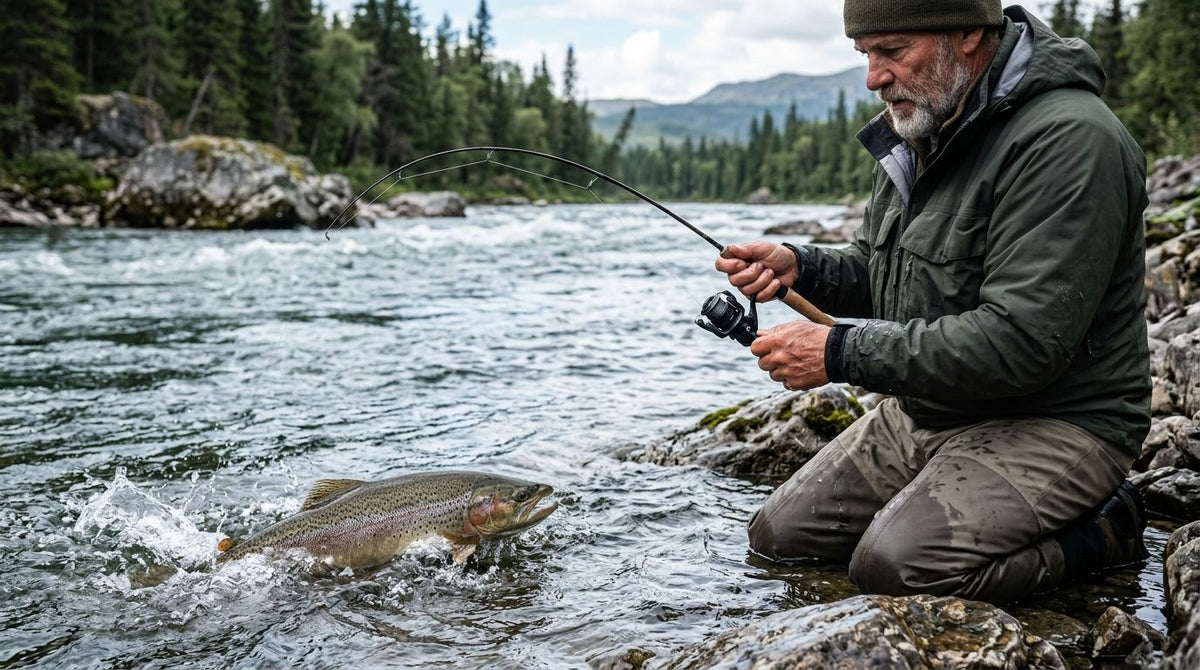
Yes, a pocket fishing reel can catch a big fish, but the reel’s size does not tell you what the line, hook, or your hands can handle. A hand reel gives you a direct connection to the fish; it does not give you a rod’s reach, bend, or line-control options. If a large fish runs toward cover or pulls in strong current, landing it becomes harder.
- Pocket fishing reel big fish verdict: a catch is possible, but line strength and control matter more than reel size.
- Crystal Creek Gear is best for anglers who want portable hand-reel fishing, not a substitute for a rod in every situation.
- Keep steady pressure, protect your hands, and avoid lifting a large fish by the line.
Why this matters
A pocket reel can get you fishing when carrying a rod feels like too much gear. That convenience changes how you fight a fish: your hands manage the line directly, and you cannot rely on a rod to absorb sudden movement. For a closer look at the format, start with this guide to handline fishing reels.
A big fish is a test of the whole setup, not proof that a small reel cannot work. In 2026, the useful question is not whether the reel fits in your pocket. It is whether you can keep tension on the fish, stay clear of hazards, and bring it within reach without damaging the line or hurting your hands.
Can a pocket fishing reel catch big fish?
Yes. A pocket hand reel holds line, and that line can connect you to a large fish. What happens next depends on the line and knots, the hook, the fishing spot, and how much pressure you apply. Neither the word pocket nor the size of the reel establishes a safe fish-weight limit.
A rod and reel gives you a flexible rod between your hands and the fish. With a hand reel, you feel each pull more directly and manage line without that bend. That simplicity is the appeal, but it also means a hard run needs your attention right away.
| Setup | Best for | Advantage | Trade-off with a big fish |
|---|---|---|---|
| Pocket hand reel | Short, simple fishing sessions where portability matters | Less gear to carry and a direct feel for the line | Less reach and no rod bend to help manage sudden pulls |
| Rod and reel | Casting farther or controlling fish around difficult cover | Rod reach and bend give you more control | More gear to carry and set up |
Choose the pocket hand reel when access and simplicity matter most. Choose a rod and reel when you need reach or expect to steer fish away from obstacles. Neither setup makes a weak knot or damaged line stronger.
What does catching a big fish actually require?
Hooking and landing are different jobs. A fish can take your bait on light, compact gear and still break free near the bank. Your setup has to stay connected through the run, the change in direction, and the final move to shore.
Before you fish in 2026, check the line for wear, tie a sound knot, and look at the water between you and the fish. A clear bank gives you room to follow a run. Branches, rocks, and steep edges take away that room. Do not step into unsafe water to recover a fish or save tackle.
Does the reel itself decide the fish size?
No. Reel size tells you little about the strength of the line attached to it. A pocket reel with unsuitable line is still an unsuitable setup, and a heavier line does not fix a poor knot or a snag-filled route to shore.
A product label also cannot promise a catch. The GoReel Pro Rodless Hand Reel is one of Crystal Creek Gear’s pocket-sized hand-reel options. Its practical appeal here is portability; do not treat the product name as a published fish-weight rating.
Why the result varies
No single fish-size cutoff follows from the information here. These are the factors you can assess before you cast or lower a line:
- Line and knots. Check the line you plan to use and retie knots that have been stressed or damaged. The setup is only as dependable as the connection you fish with.
- Water and cover. Open water leaves room to manage a run. Rocks, submerged branches, and other obstacles give a fish places to break the line or snag it.
- Your position. A low, accessible bank is easier to work from than a high ledge. Plan how you will reach the fish before you hook one.
- Pressure on the fish. Sudden jerks can strain a knot or line. Controlled, steady pressure gives you a better chance of keeping the connection intact.
- Hand protection. Moving line can cut or burn your skin. Never wrap it around a finger, hand, or wrist, especially when a fish can make another run.
- Landing method. Do not swing a large fish onto shore by its line. Bring it within safe reach and use a landing method suited to the location and fish.
These factors matter more than a dramatic claim about what a tiny reel once caught. A single successful catch does not establish what another line, hook, or fishing spot can handle.
How do you fight a bigger fish on a hand reel?
The aim is to keep contact without turning your hand into the weak point. You control line directly, so make deliberate moves instead of trying to win every pull at once.
- Keep your hands clear. Do not loop line around your body or grip a moving line so tightly that it cuts into your skin.
- Maintain steady pressure. Keep enough tension to stay connected while allowing for a hard pull. Avoid sharp, repeated yanks.
- Watch where the fish goes. If it turns toward cover, change your position only when the bank is safe. Do not follow it into fast water or unstable ground.
- Bring the fish close before landing. Work it toward an accessible spot rather than trying to lift it from a distance.
- Handle it with care. Support the fish rather than suspending it by the line. If you release it, minimize handling and return it to the water promptly.
In 2026, the best preparation is still the unglamorous part: inspect your line and pick a safe landing spot before the first cast. You cannot solve a frayed line or a steep bank once a fish is pulling hard.
A compact setup keeps the gear simple, not the judgment. If the fish heads somewhere you cannot safely follow, protect yourself first. Losing tackle is better than taking a fall or wrapping a loaded line around your hand.
Which pocket setup makes sense if fish size is uncertain?
Start with where you fish, then check what line and tackle you intend to use. Crystal Creek Gear sells GoReel hand reels and kits for pond, lake, and river fishing, but a location label is not a fish-size rating. If you need a particular line strength or hook, verify the current kit contents and choose your setup accordingly.
For anglers who want to assemble their own setup, a bare hand reel and a complete kit serve different purposes. The bare reel leaves tackle selection to you; a location-specific kit gives you a starting point for that setting. Best for anglers who already know their line and tackle choices: a hand reel you can rig yourself. Best for anglers who want a ready-made starting point: a location-specific kit. Neither removes the need to check the actual line before targeting a large fish.
One line listing illustrates why the label matters: Crystal Creek Gear carries S.O.S. Fishing Line (6lb), described as line built for light-line fishing. Its 6 lb designation is not a promise that every fish below or above a particular weight can be landed. If you expect hard runs or heavy cover, do not assume a light-line product fits that job simply because it fits a pocket kit.
The same caution applies to small tackle. A jig head marked 1/8 oz tells you its listed weight, not the size of fish your entire setup can land. Match tackle to the water and fish you are targeting, then assess the line, hook, and landing spot together. A compact reel is one part of that decision.
Is a pocket reel better than a rod for big fish?
No, not when reach and rod-assisted control are the priority. A pocket reel wins on what you carry; a rod gives you reach and bend while you manage the fish. Pick the tool for the bank, current, and cover in front of you, not just the one that takes up less room.
That does not make hand-reel fishing a fallback. Feeling the fight without a rod is exactly what some anglers want, especially when the alternative is leaving fishing gear behind. Crystal Creek Gear is best for anglers who want that portable, direct approach and accept the limits that come with it.
Can you use light line to catch a big fish?
Yes, but light line leaves less room for damage, poor knots, and abrupt pulls. The 6 lb designation on a line product describes the line, not a guaranteed fish size. Inspect it, fish within the conditions you can control, and avoid treating a surprising catch as a repeatable capacity claim.
Should you target big fish from a steep bank with a hand reel?
No, not if you cannot reach and land the fish safely. A reel that fits in your pocket does not solve the landing problem. Choose an accessible bank or a different setup rather than planning to haul a large fish upward by the line.
FAQ
Can a pocket fishing reel really catch a big fish?
Yes, a pocket fishing reel can catch a big fish, but landing it depends on the line, knots, fishing conditions, and your control of the fish. Reel size alone does not establish a safe fish-weight limit.
Is a hand reel strong enough for a large fish?
A hand reel’s size does not tell you the strength of the full setup. Check the line, knots, hook, and landing spot rather than assuming the reel determines what you can land.
Is a pocket hand reel better than a rod for big fish?
A rod is the better choice when you need reach and rod-assisted control. A pocket hand reel is better suited to anglers who put portability and direct line contact first.
Can I lift a big fish by the fishing line?
Do not lift a large fish by the line. Bring it within safe reach and support it during landing rather than risking a broken line or poor fish handling.
Should I wrap hand-reel line around my fingers for grip?
No, never wrap a loaded fishing line around your fingers, hand, or wrist. A fish can run suddenly, and moving line can injure your skin.
Does 6 lb fishing line set a maximum fish weight?
No, a 6 lb line designation is not a guaranteed maximum fish weight. Knots, wear, obstacles, and how you apply pressure all affect the outcome.
Where should I try a pocket reel if I might hook a large fish?
Choose an accessible spot with room to manage line and land a fish safely. Avoid steep edges and heavy cover when you cannot reach the water or follow a run.
One last thing
A fish can be too difficult to land at a spot even when your gear stays connected. Before you fish with a pocket reel in 2026, look for the place where you would bring a fish out of the water. If you cannot identify a safe one, move first. Less gear should give you more time at the water, not a reason to take risks at its edge.


