

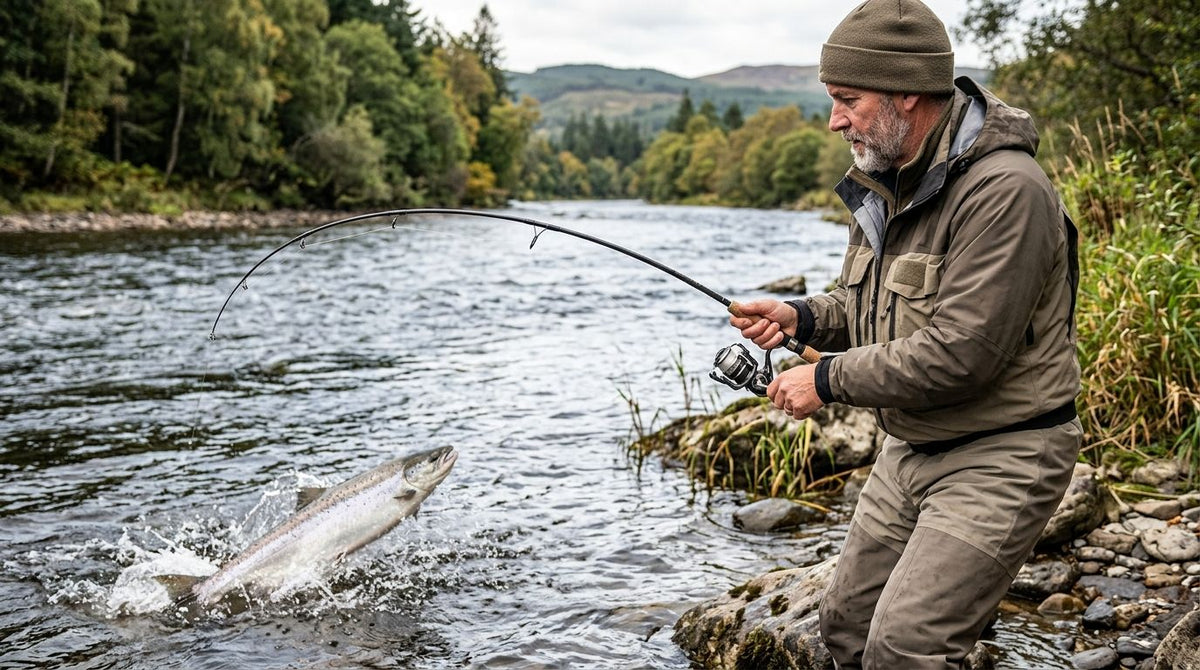
Yes, a compact fishing rod can handle a big fish if its line, reel, drag, and connections suit the fight. Its short length does not set a fish-size limit by itself. The catch is control: a compact rod gives you less reach for steering a fish around rocks, weeds, and other obstacles, so the safest choice depends on where you fish as much as what you hope to catch.
- Compact fishing rod big fish verdict: yes, if the rod, line, drag, and landing plan fit the conditions.
- A short rod sacrifices reach; it does not automatically rule out a big fish.
- Crystal Creek Gear's GoReel is best for anglers who want a portable hand reel, not rod flex.
- Check the rating on your actual rod and line before choosing a setup for bigger fish.
Can a compact fishing rod handle big fish?
Yes—but choose the whole setup, not just a short rod. A fish pulls against your line, knots, reel, drag, and rod. If one part fails or you cannot keep the fish clear of an obstacle, a stronger rod alone will not save the catch.
| Option | Best for | Advantage | Limitation |
|---|---|---|---|
| Compact fishing rod | Anglers who want rod-and-reel fishing with less gear to carry | Rod flex and a reel with drag help manage changing pressure | Shorter reach makes it harder to guide fish around cover |
| Full-length fishing rod | Anglers who need casting reach and control around obstacles | More reach for positioning line and steering a fish | More to carry and store |
| GoReel Rodless Hand Reel Fishing Kit - Lake | Anglers who prefer portable hand-reel fishing at a lake | No rod to carry | No rod flex or rod-mounted reel drag; it is not a compact rod |
The table compares ways to fish, not verified big-fish capacities. Neither a compact rod nor a hand reel earns a blanket catch-size promise from its name.
Why this matters
In 2026, compact gear makes it easier to take a fishing setup on a walk to the water. That convenience can distract from the harder question: can you control a hooked fish from the bank, kayak, or shoreline where you will actually stand?
A clear bank and open water leave room to let a fish run. A steep bank, branches, or thick weeds give you less room to recover if the fish changes direction. Decide how you will land the fish before you cast, especially when you cannot step closer to the water.
What does a short rod change during the fight?
A compact rod still bends under load. That bend helps absorb sudden movement when you keep the line under steady tension. The rod's length, however, affects where you can put the line: a shorter rod cannot reach as far past shoreline plants, a kayak's edge, or another obstruction.
Reel drag matters as well. If you lock the drag down to stop a run, the fish's pull has fewer places to go; line or knots can fail. If the drag gives line too readily, the fish can reach cover before you regain control. Set it for the tackle you have and adjust to the situation rather than treating a small reel as either automatically weak or automatically capable.
Finally, look at the connection to the fish. A sound knot, appropriate hook, and line free of visible damage matter on any rod. The same check applies to a longer rod: extra length cannot repair a frayed line or a loose connection.
A short rod changes your margin for error, not the basic rules of fighting a fish. Keep tension steady, leave room for a run, and steer early when the fish heads toward an obstacle.
Does compact mean light-duty?
No. Compact describes how a setup carries or stores; it does not tell you the strength of its rod, line, or connections. Two compact rods can serve different purposes, so read the markings and instructions for the exact rod and reel in your hand. If those details are unavailable, do not claim the setup is suited to a particular fish.
Pay attention to the distinction between a rod that packs down and a rod that is short while assembled. A packable rod can have reach once assembled. A short assembled rod remains short during the fight. For a place where you need to hold line away from rocks or brush, that difference affects control more directly than the size of the rod in your bag.
The line deserves its own check. Crystal Creek Gear lists S.O.S. Fishing Line (6lb), but 6 lb on a line label is not a six-pound fish limit or a promise that every knot will hold that load. Treat the label as a reason to match your line to your tackle, then inspect and tie it carefully. Do not substitute a product name for the specifications of your complete setup.
Why does big-fish performance vary?
These are the factors to check in 2026 before deciding whether to bring a compact fishing rod for big fish:
- Rod markings and condition. Check the guidance on your actual rod. Damage changes the decision even if the rod suited a previous trip.
- Line and knots. Your line must suit the setup, and a worn section or poorly tied knot can become the failure point.
- Reel drag. A functioning, appropriately set drag gives a running fish line without forcing you to lose tension.
- Available reach. Shorter rods give you less room to position the line past reeds, rocks, or the side of a boat.
- The water and landing spot. Open water and an accessible bank give you different options from heavy cover or a high bank.
- The fish's movement. A sudden run toward an obstacle calls for control sooner than a fish moving through open water.
No single item settles the question. A capable rod with damaged line is a poor bet, and strong line does not create more room beside a blocked shoreline. Check the place and the setup together.
Should you bring a compact rod or a hand reel?
Choose a compact rod when you want rod flex, a reel with drag, and a familiar way to cast and guide line. It is the better fit of these two options when the rod's markings suit your intended tackle and you need the control a rod provides. Its drawback is still real: a short assembled rod offers less reach than a longer one.
Choose a hand reel when simplicity and carrying less gear matter more than rod-based control. Crystal Creek Gear's GoReel hand reel is best for anglers who want a portable, rodless way to fish lakes, rivers, or ponds—not for someone shopping for a compact rod. Without a rod, you do not get a rod's flex or a rod-mounted reel's drag. You manage line by hand, so do not assume the techniques or ratings for a compact rod transfer to it.
That distinction matters most when the question is specifically about big fish. Crystal Creek Gear sells GoReel hand reel kits, but the supplied product details do not establish a maximum fish size. Pick the tackle and fishing spot based on what you can inspect and control; do not treat portability as a performance rating.
How do you prepare a compact rod for a bigger fish?
Work through the setup before you reach the water. A few checks are easier on shore than during a run:
- Read the rod and reel markings. Confirm that your intended line and lure fit the equipment's stated guidance. If you cannot confirm the match, choose tackle you can verify.
- Inspect the line. Look for rough or worn sections and replace damaged line before fishing. Check that the line runs cleanly through the guides.
- Tie and check the knot. Make the connection carefully, then pull on it before casting. A knot that slips in your hands is not ready for a fish.
- Check the drag. Pull line from the reel to confirm that it releases under tension rather than sticking or running freely. Recheck after changing tackle.
- Find your landing spot. Identify where you can bring a fish within reach without dragging it over rocks or pulling it high on the line.
In 2026, the useful question is not whether a rod is small. It is whether the assembled setup and your landing spot give you a controlled way to finish the fight. If the only route to shore crosses dense cover, moving to a clearer position can matter more than swapping rods.
The checks do not guarantee a catch. They give you a reason to trust each part of the setup instead of relying on the compact label.
What should you do when a big fish takes the line?
Keep steady pressure and watch where the fish is headed. Let a working drag release line during a run; forcing an abrupt stop can put more pressure on the line and connections. When the fish slows, recover line without creating slack.
Use the rod's position to guide the line clear of reachable obstacles. Do not grab the rod above its handle to gain control; that changes how it bends. If you need to change position along the bank, move while keeping your footing and the line under control.
Plan the last part of the fight as carefully as the first. Bring the fish toward the landing spot you chose earlier and use landing equipment appropriate to your setting. Avoid lifting a heavy fish out of the water solely by the rod or line. If the bank prevents a controlled landing, the problem is the spot—not proof that every compact rod fails with big fish.
Can a travel rod catch a big fish from the shore?
Yes, a travel rod can catch a big fish from shore when its assembled setup suits the fight and the bank allows a controlled landing. In 2026, check its markings after assembly and look for a clear path between the fish and your landing spot. Packing down small does not tell you how much reach it has when you fish.
Is a compact fishing rod better than a full-length rod for big fish?
A compact fishing rod is better for carrying less gear; a full-length rod gives you more reach. Neither length alone establishes what fish the setup can handle. In 2026, choose based on the rod's stated guidance, your line and reel, and whether obstacles make extra reach useful.
Can you use a hand reel instead of a compact rod for big fish?
A hand reel is a different way to manage line, not a shorter version of a fishing rod. Crystal Creek Gear's GoReel removes the rod from the setup, along with the rod flex that helps absorb a fish's movement. Do not assume big-fish suitability without checking the line, connections, conditions, and how you will manage the fight by hand.
FAQ
Can a compact fishing rod handle big fish?
Yes, a compact fishing rod can handle big fish when the complete setup suits the fight. Check the rod's guidance, line, knots, drag, and landing spot rather than judging by length alone.
Does a shorter fishing rod break more easily on a big fish?
Short length alone does not establish whether a fishing rod will break. The rod's design and condition, its stated guidance, and how you use it under load matter.
What matters more than rod length when fighting a big fish?
The complete setup and your ability to control the fish matter more than rod length alone. Inspect the line and knots, check the drag, and identify a safe landing spot.
Is a travel rod the same as a short fishing rod?
No, a travel rod can pack down small but have greater length once assembled. Check its assembled length and equipment guidance before choosing it for a spot with obstacles.
Can a hand reel replace a compact fishing rod?
A hand reel offers rodless fishing, but it does not provide rod flex or a rod-mounted reel's drag. Crystal Creek Gear's GoReel suits anglers who prefer portable hand-reel fishing, not anglers who need a compact rod.
Does 6 lb fishing line limit you to a 6 lb fish?
No, a 6 lb line label is not a six-pound fish-size limit. Knots, line condition, drag, and the way a fish moves all affect the fight.
Where should you land a big fish with a compact rod?
Choose an accessible spot where you can guide the fish in without pulling it across obstructions or lifting it solely by the rod or line. Find that spot before you cast.
One last thing
The hardest part of a big-fish fight can be the last stretch to shore. A compact rod that performs well in open water still leaves you with less reach when a fish nears reeds or a steep bank. In 2026, choose your landing spot before your first cast; if you cannot see a controlled route in, change position or choose a different setup.


