

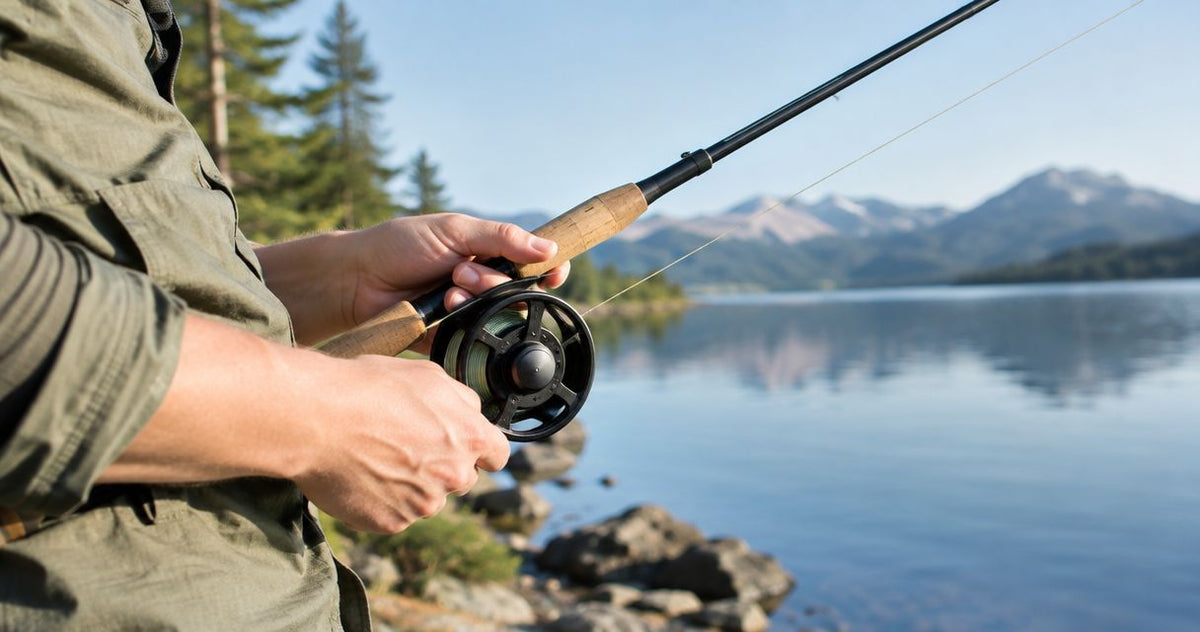
Yes, a hand reel is worth it in 2026 if you want a compact way to fish from accessible banks without carrying a rod. It is less useful when you need the casting distance, line control, or reach of a rod-and-reel setup. The real trade-off is simple: less gear to carry, but more work for your hands.
- Is a hand reel worth it? Yes for anglers who value portability over casting distance in 2026.
- Crystal Creek Gear GoReel kits suit grab-and-go fishing at lakes, rivers, and ponds.
- Keep a rod-and-reel setup when reach and precise casting matter more than packing light.
Why this matters
A hand reel changes what you bring and how you fish. Instead of relying on a rod to cast, guide the line, and absorb a fish's pull, you manage the line directly. That makes the setup easier to carry, but it asks more of your hands and your choice of fishing spot.
Crystal Creek Gear's GoReel is best for anglers who want a portable way to fish from accessible banks; it is not a replacement for a rod when casting reach matters. In 2026, that distinction is more useful than a blanket yes or no. Picture where you usually stand, what you need to cast past, and how much gear you actually want to bring.
Is a hand reel worth it in 2026?
A hand reel earns its place when portability makes the difference between fishing and leaving your gear behind. If you already have room for a rod and routinely cast toward distant structure, keep the rod. If you fish close to an accessible shoreline during walks or trips, a hand reel gives you a simpler option.
| Option | Best for | Advantage | Limitation |
|---|---|---|---|
| GoReel Hand Reel & Line Lock | Anglers assembling their own compact setup | Starts with the reel rather than a setting-specific kit | You still need to choose the rest of your tackle |
| GoReel Rodless Hand Reel Fishing Kit - Pond | Anglers who primarily fish ponds | A kit named for the water you plan to fish | Its pond focus is less useful if you mainly fish elsewhere |
| Rod-and-reel setup | Anglers who need reach and line control | A rod helps guide casts and manage the line | More equipment to carry and set up |
The choice is not about which method makes someone a better angler. It is about whether your usual fishing spot rewards a small carry setup or demands a longer cast. Choose the hand reel for convenience; choose the rod when the water puts your target out of easy handline range.
A kit also does not solve every practical problem. You still need to select a suitable place to fish, manage loose line, choose appropriate tackle, and follow local fishing rules. Less gear is helpful only if the remaining gear fits the trip.
When a hand reel is the better choice
Use a hand reel when you can reach fishable water without needing a long cast. A pond edge, an open stretch of bank, or a stop along a walk gives you room to fish with a compact setup. You can concentrate on the water instead of carrying a longer piece of equipment.
That does not mean every pond or riverbank is suitable. Overhanging branches, crowded paths, steep edges, and fast water change how practical handline fishing feels. Look at the space around you before you decide what to bring.
Portability matters most when you would otherwise leave fishing gear at home. A compact reel is easier to include in a travel or day-trip setup than a full-length rod. It also makes sense as an additional option for an angler who already owns a rod but does not want to carry it on every outing.
For a new angler, the appeal is direct contact with the line. You feel what the line is doing without a rod between your hand and the water. The downside is direct contact with the line, too: you must pay attention to tension, loose coils, and where your hands are when a fish pulls.
A hand reel is especially appealing if your goal is an unplanned stop rather than a full fishing session. You still need the right tackle and permission to fish, but you do not have to plan your carry around a rod. That is the strongest reason to own one in 2026.
When you should bring a rod instead
Bring a rod when distance, placement, or line handling drives the session. A rod gives you a tool for projecting a cast and steering the line around obstacles. If the productive water is beyond comfortable handline reach, compactness will not make up for the wrong tool.
A rod also helps when your fishing position offers little room to manage line at your feet. Loose line can catch on brush, clothing, or other gear. Keep your fishing area clear either way, but do not assume a smaller reel removes the need for space.
If you routinely move lures with a rod tip or need to keep line away from shoreline obstructions, stick with the method you can control. The same applies when current makes line management difficult. There is no benefit in forcing a hand reel into a spot where a rod makes the presentation more manageable.
You do not need to pick one method for every trip. Carry a rod for sessions built around casting and use a hand reel for occasions when easy packing is the reason you can fish at all. That is a more honest test of value than asking whether a hand reel replaces everything in your usual setup.
Why the answer varies
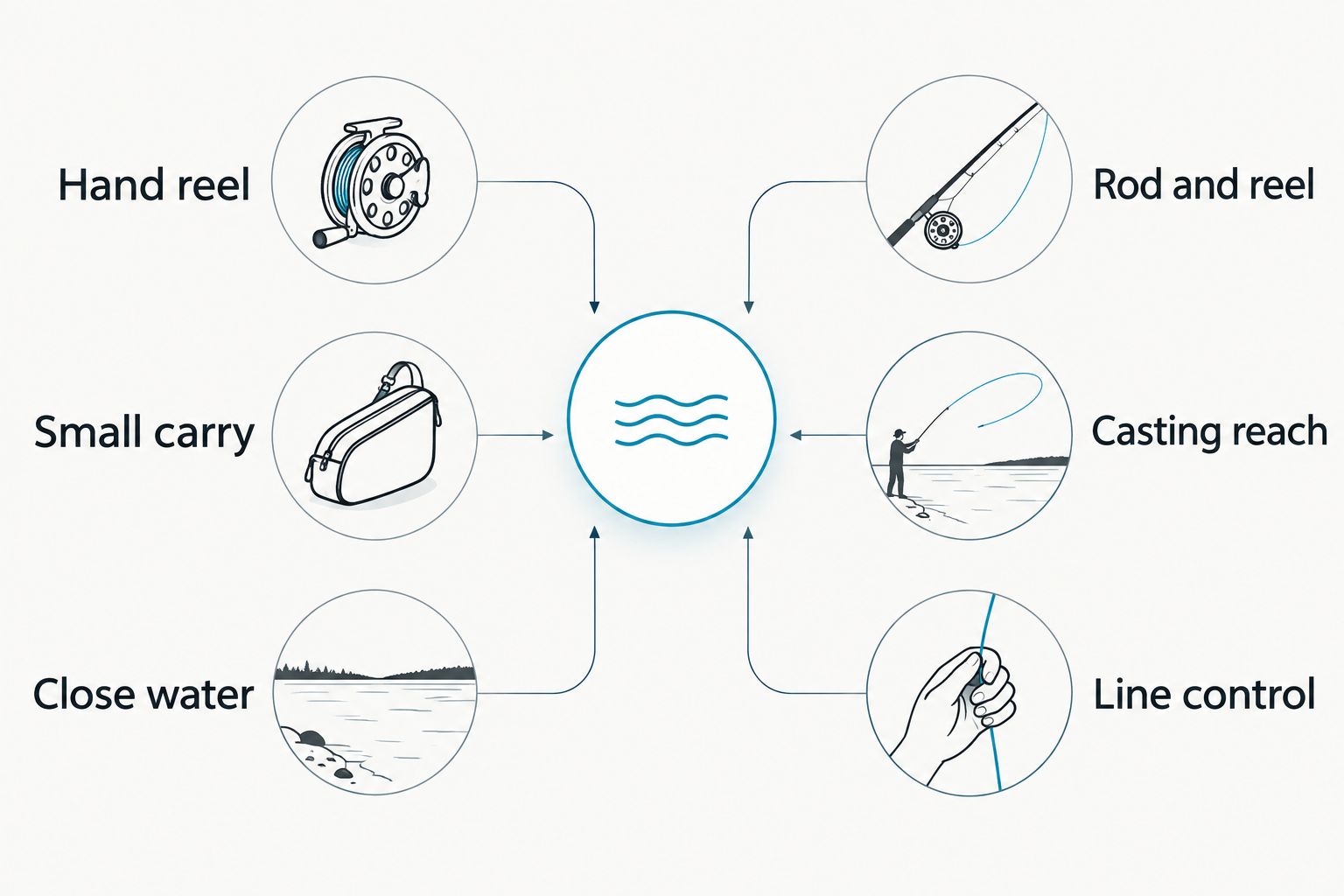
- Your access to the water: An open bank makes direct line handling easier than a bank blocked by brush or a steep drop.
- The casting reach you need: A hand reel makes more sense when you can fish nearby water; a rod is the better tool when the target is farther out.
- Your tolerance for loose line: With a hand reel, you manage line directly. Keep it clear of feet, branches, and anything it can snag.
- What you want to carry: The benefit grows when bringing a rod would make you skip the outing or leave fishing gear behind.
- The water you usually fish: A kit identified for a pond, lake, or river gives you a starting point, but the conditions at your actual spot still decide whether handlining fits.
- How you like to fish: Some anglers prefer the direct feel of line in hand. Others prefer the casting and handling options a rod provides.
These are decisions you can make before you buy anything. Think about your last few fishing spots: could you comfortably work nearby water from a clear, permitted position? If yes, a hand reel has a job to do. If you spent most of the time casting to distant water, it is a secondary tool.
What using a hand reel actually asks of you
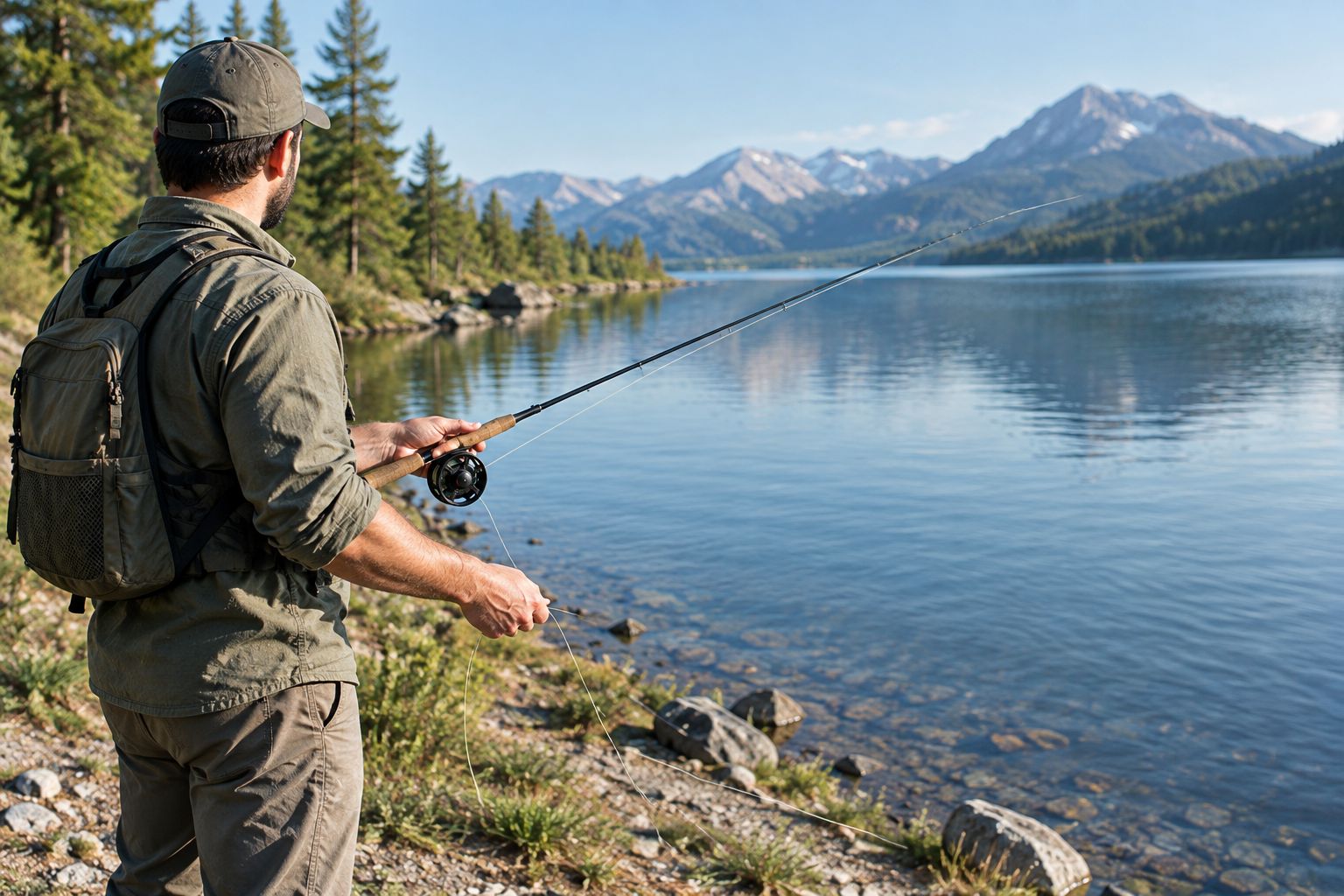
A hand reel removes the rod, not the need for technique. Start by checking that your line can come off the reel cleanly and that the area around you is free of obstacles. Keep control of the loose line rather than letting it collect around your feet.
Choose tackle for the water you are fishing and make a controlled presentation. Once the line is in the water, watch and feel for changes in tension. When you retrieve, guide the line back onto the reel so it does not become a tangled pile that spoils the next attempt.
That sequence sounds simple because it is. The skill lies in repeating it without rushing, particularly when you change positions or something takes the bait or lure. If direct line handling feels awkward at first, practice somewhere with clear bank space rather than beside dense vegetation.
You also need to think about safety and access. Keep hooks contained while walking, check for people nearby before putting a line in the water, and follow the rules for the place you fish. A smaller setup does not change those responsibilities.
For a practical starting point, match the kit to the water you actually visit. Crystal Creek Gear offers GoReel kits identified for ponds, lakes, and rivers, as well as a reel for anglers who want to choose their own setup. Those names help narrow your choice; they do not promise that every bank or condition will suit handline fishing.


Is a hand reel good for beginners?
Yes, a hand reel is a reasonable starting point for a beginner who has access to open, nearby water and wants to learn direct line control. Its simplicity does not remove the need to learn tackle selection, local rules, and safe hook handling. A beginner who wants to practice casting to specific spots will get more from a rod-and-reel setup.
The best first outing is one where you can focus on the line without fighting the surroundings. Find a permitted spot with room beside the water. If your line repeatedly catches on the bank or you cannot reach the water you want to fish, switch tools rather than treating the struggle as part of learning.
Can a hand reel replace a fishing rod?
No, a hand reel does not replace a fishing rod for every kind of fishing. It trades the rod's reach and line-guiding role for a smaller carry setup. In 2026, it makes the most sense as your main tool for suitable close-range spots or as a compact alternative for trips when you would not bring a rod.
Ask a more useful question: would you fish more often if your gear were easier to bring? If the answer is yes and your regular spots suit handlining, the reel has a clear purpose. If most of your fishing depends on casting distance, keep the rod as your primary setup.
Is a hand reel worth carrying as backup gear?
Yes, a hand reel is worth considering as backup gear if you want another way to fish without packing a second rod. It still needs suitable line, tackle, and access to water, so do not treat the reel alone as a complete fishing plan. Check what you intend to carry before leaving home.
Backup value depends on your trip. On a walk past accessible water, compactness is useful. On an outing where all the fishable water requires a long cast, a backup hand reel offers less practical help than a suitable rod setup.
FAQ
Is a hand reel worth it for pond fishing?
Yes, a hand reel is worth it for pond fishing when you can work nearby water from a clear bank. Bring a rod if you need to cast beyond comfortable handline reach.
Is a hand reel worth it for river fishing?
A hand reel is worth it at a river spot where you can safely manage the line and reach fishable water. Strong current, difficult access, or shoreline obstacles make a rod the more practical choice.
Is a hand reel better than a fishing rod?
A hand reel is better for carrying less gear, not for every fishing task. A rod offers more reach and helps you guide the line around obstacles.
Can a beginner use a hand reel?
Yes, a beginner can use a hand reel at an open, permitted fishing spot. Start where you have room to manage loose line and learn safe hook handling.
Do hand reels work without a tackle box?
Yes, you can plan a compact hand-reel setup without carrying a full tackle box. You still need appropriate line and tackle for the water you intend to fish.
Can a hand reel replace my travel fishing rod?
A hand reel can replace a travel rod on trips where nearby water is accessible and packing light matters most. Keep the travel rod when you need casting reach or rod-based line control.
Which GoReel kit should I choose for a pond?
Choose a GoReel kit identified for pond fishing if ponds are where you usually fish. Check the current product details and your local conditions before deciding what tackle to bring.
One last thing
The best test in 2026 is not whether a hand reel catches fish in principle. It is whether your regular fishing spots let you use one comfortably. If compact gear gets you to the water more often, a hand reel is worth carrying; if you need a long cast every time, bring the rod.


