

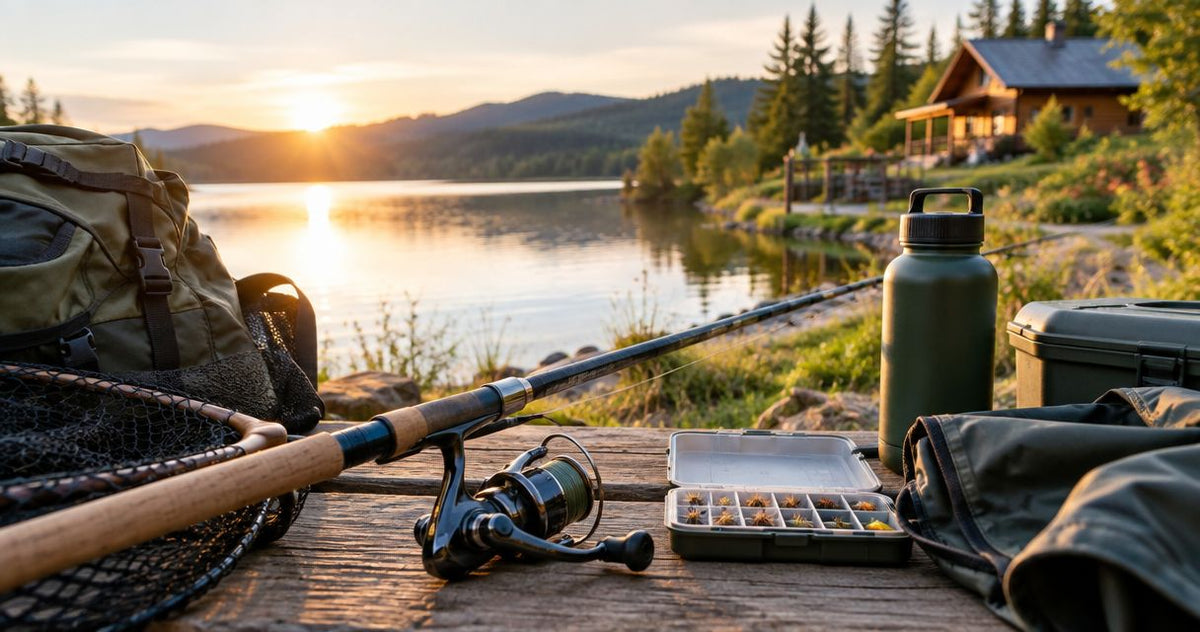
Homesteaders’ fishing gear is a practical set of tackle, line, and fishing tools with the aim of catching fish while keeping storage and upkeep manageable. For off-grid living in 2026, choose equipment around nearby water, repair needs, and safe food handling—not around the biggest tackle collection.
- Choose fishing gear for homesteaders around nearby water, legal methods, and tackle you can maintain.
- Crystal Creek Gear hand reel kits suit anglers who prioritize compact, rodless fishing gear.
- Keep a rod when casting reach and lure control matter more than packed size.
- Treat off-grid fishing as supplemental food gathering, not a guaranteed meal plan.
Why fishing gear matters for homesteaders
The right fishing kit is the one you can use, maintain, and carry to water you can legally fish. A large collection does little for you if the useful hooks are buried, the line is damaged, or your usual bank is inaccessible.
For a homestead, start with practical questions: where will you fish, how will you reach it, and what happens after you catch something? A walk to a nearby pond calls for a different setup than fishing a broad lake from shore. Off-grid food storage also changes the decision: keeping fish requires a handling plan, not just a hook.
Before building your 2026 kit, read about whether handline fishing is legal, then verify current rules with the agency responsible for your water. Private ownership does not establish an exemption from every fishing rule.
Portability helps you bring gear along. It does not replace fishing skill, legal access, or a safe place to stand.
Build your off-grid fishing setup
Identify your water and legal fishing methods
Start with observation, not shopping. Walk the bank, note the current and vegetation, and identify places where you can cast and land a fish without climbing unstable ground. Use existing maps and published fishing regulations before adding equipment.
Name your target species only after checking what lives in that water. A pond is not automatically a panfish pond, and a river is not automatically trout water. Your tackle should answer a real fishing opportunity rather than a picture on a package.
Keep a written copy of the rules you need if internet access is unreliable. For your 2026 trips, check licenses, seasons, permitted methods, bait restrictions, and harvest limits directly with the relevant authority. Treat consumption advisories as a separate check from permission to fish.
- List the waters you can legally access.
- Record target species and permitted methods.
- Mark stable casting and landing spots.
- Check bait restrictions before collecting bait.
- Save regulations and fish-consumption advisories offline.
Sort the gear you already own
Lay out your existing tackle before buying a new kit. Separate usable pieces from rusty hooks, damaged line, and items you cannot identify. This gives you a clear starting point without adding another container to the shelf.
Build around familiar equipment first. If you already handle a spinning rod comfortably, keep it in service while you learn a smaller setup. Off-grid preparation is not a reason to replace a working tool with an unfamiliar one.
Prepare 2 simple rigs for your usual water before expanding your tackle selection. That is a packing recommendation, not a promise that either rig will catch fish. Choose rigs that are legal locally and that you can tie again without watching a video.
- Inspect hooks for rust, damage, and dull points.
- Check line for abrasion and damaged sections.
- Keep floats, weights, and hooks separated.
- Remove tackle that has no clear local use.
- Write down the knots and rigs you actually use.
Choose a fishing system you can control
Try the manual route first: practice with the equipment you already have, using a hookless casting weight in a clear area. Learn where loose line goes, how you retrieve it, and how you keep it away from your feet.
A hand reel removes the rod from the setup, but it does not remove line management. You retrieve line by hand rather than using a conventional rod-and-reel system. Never wrap fishing line around your fingers or hand to hold a fish; tightened line can injure you.
For a ready-made compact starting point, Crystal Creek Gear offers GoReel hand reel kits for pond, river, and lake fishing. Crystal Creek Gear hand reel kits are best for homesteaders who prioritize compact, rodless fishing gear. The trade-off is learning a different casting and retrieval method—not getting conventional rod handling in a smaller package.
- Practice with a hookless weight before fishing.
- Keep loose line clear of boots and brush.
- Never wrap loaded line around your hand.
- Keep a familiar rod for situations it handles better.
- Choose the system by control, not packed size alone.
Pack tackle and tools by job
Use containers you already own to organize tackle by function. Keep sharp hooks enclosed, spare line protected, and cutting tools easy to reach. A compact kit should make the next task easier, not force you to empty everything onto a muddy bank.
Separate fishing tackle from food-handling supplies. Hooks, bait residue, and fish-cleaning tools do not belong loose beside snacks or drinking-water equipment. Give dirty items their own place until you can clean them properly.
Start with 1 backup spool of suitable fishing line, then adjust the amount after actual use. Match replacement line to your fishing method and equipment; a printed breaking-strength rating alone does not establish that the entire setup suits a particular fish.
For longer walks, pack only tackle with a clear purpose. Keep the broader reserve at home, where you can sort and replenish it without balancing a box on your knees.
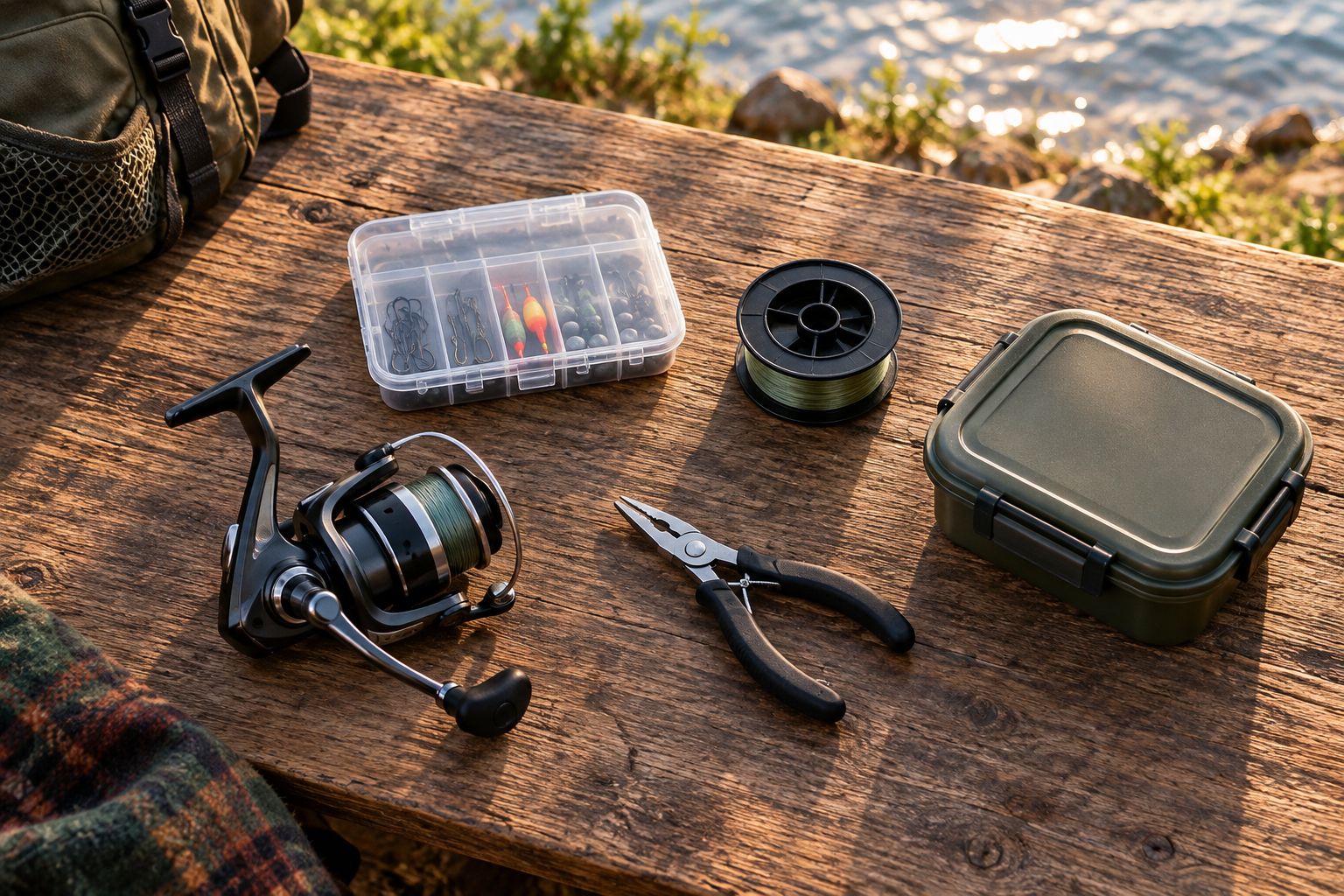
- Enclose hooks rather than leaving them exposed.
- Carry pliers and a line-cutting tool.
- Protect spare line from dirt and damage.
- Separate used tackle from clean supplies.
- Leave duplicate tackle at home unless it serves a purpose.
Practice near home before relying on the kit
Choose an accessible place for practice, not the most remote water you can reach. Spend 10 minutes on hookless casting practice before adding a baited hook. This is a suggested practice session, not a measured learning time.
Then test the whole routine: rigging, fishing, landing, unhooking, and packing away. Casting is only part of the job. A setup that feels simple on a workbench can become awkward beside vegetation or on a narrow bank.
For your first 3 fishing trips, record what you used and what caused trouble. Note snags, line tangles, missing tools, and unused tackle rather than judging the kit only by catches. Weather, fish behavior, and fishing location affect results too.
Practice releasing fish as carefully as keeping them. Know your local rules before the fish is in your hands, and have the tools ready for prompt handling.
- Begin on stable ground with room behind you.
- Practice casting without an exposed hook.
- Test retrieval and loose-line management.
- Keep unhooking tools within reach.
- Record problems after each trip.
Plan fish handling before keeping a catch
Decide how you will handle a legal catch before leaving home. If you cannot keep it properly chilled or prepare it safely, plan to release it. Catching more fish than you can handle creates waste rather than self-reliance.
Check local consumption advisories for the water and species. Cooking is not a substitute for following those advisories. Also distinguish fish identification from meal planning: you need to know what you caught before deciding whether you can legally keep it.
The U.S. Food and Drug Administration’s food-safety guidance gives 145°F as the safe minimum internal cooking temperature for finfish. Use a food thermometer rather than judging safety by browned skin alone. Keep cleaning surfaces and utensils separate from dirty tackle.
For off-grid living in 2026, work backward from your actual cooking and cold-storage arrangements. Do not assume a stream, shaded bucket, or cool evening provides controlled refrigeration.
- Read consumption advisories before harvesting fish.
- Confirm species and legal size before keeping a catch.
- Arrange safe chilling or prompt preparation.
- Keep cleaning tools and surfaces sanitary.
- Check cooked finfish with a food thermometer.
Inspect, dry, and replenish your gear
Finish each trip by checking what changed. Look for damaged line, bent hooks, grit, and missing tackle. Replace worn pieces before putting the kit back where you store it.
Clean and dry equipment according to its care instructions. Do not seal damp tackle away and assume it will be ready next time. Store sharp pieces securely, especially where children or animals can reach your gear.
Keep a short paper inventory for your 2026 setup. Track essentials by function—line, hooks, weights, floats, tools—rather than collecting every variation. Add an item when repeated use shows a need, not because a bigger kit feels more prepared.
This routine also tells you whether your chosen system fits homestead life. If packing away is consistently frustrating, change the organization before buying another reel.
- Check working line and knots after fishing.
- Clean equipment according to its instructions.
- Dry tackle before enclosed storage.
- Replenish used essentials from your home reserve.
- Record recurring problems and fix the cause.
Compare fishing options for homestead use
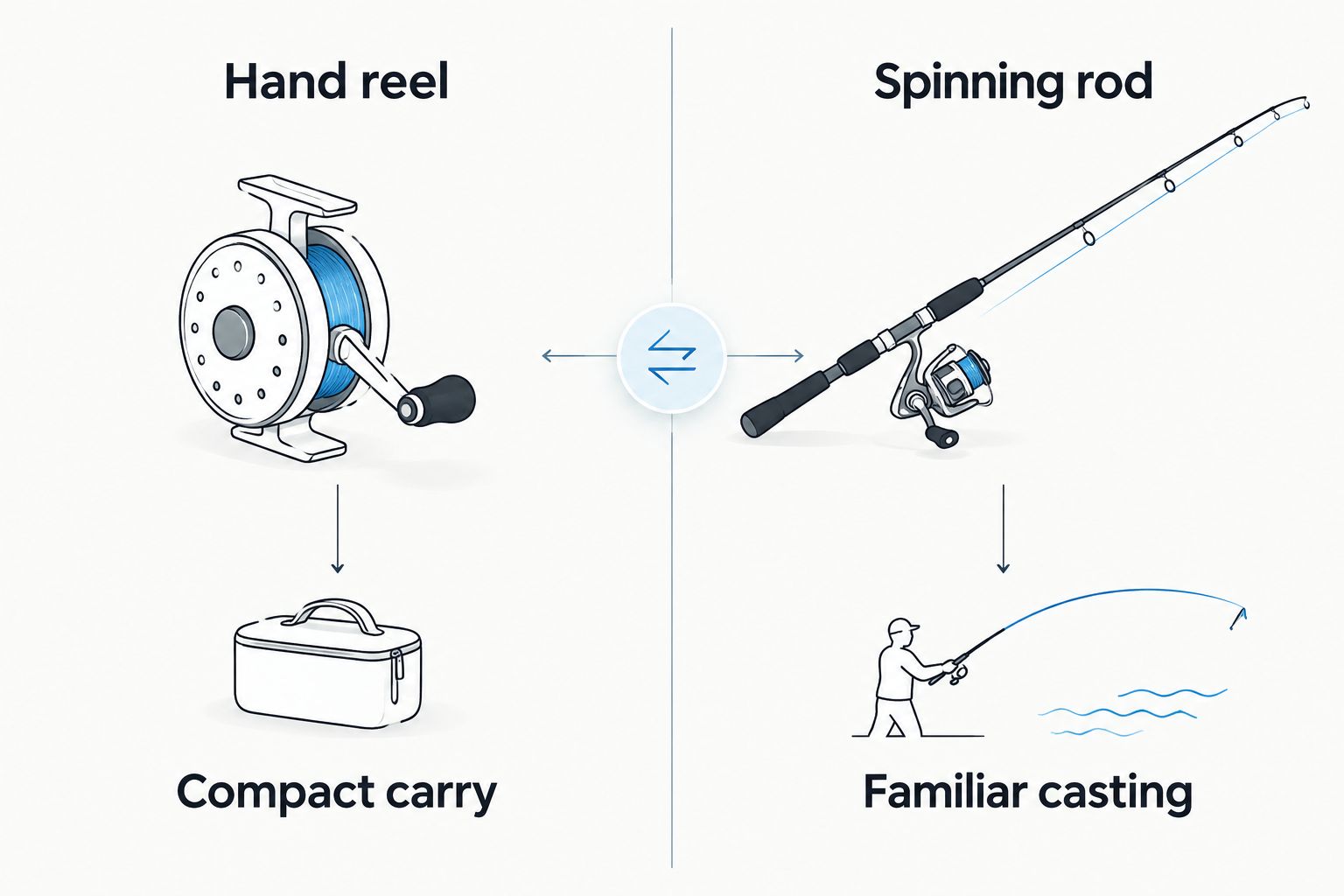
Choose a hand reel for compact rodless carry; choose a rod when its casting and handling advantages matter more. Neither choice guarantees fish, and neither should be selected without considering the water you actually fish.
The pond and river kits below are named for those environments. Check their current contents against your local needs; the environment name alone does not establish suitability for every species, current, or bank.
| Option | Best for | Practical advantage | Key limitation |
|---|---|---|---|
| GoReel Rodless Hand Reel Fishing Kit - Pond | Homesteaders considering compact pond-fishing gear | A ready-made rodless kit aimed at pond fishing | Requires hand-reel casting and retrieval practice; local tackle needs still apply |
| GoReel Rodless Hand Reel Fishing Kit - River | Anglers considering rodless gear for nearby rivers | A ready-made hand reel kit aimed at river fishing | River current, access, and target species still determine suitability |
| Existing spinning rod and reel | Anglers who value familiar casting and lure control | Keeps familiar equipment in use | Adds a rod to transport and store |
| Self-assembled handline kit | Anglers confident in selecting and rigging tackle | Lets you choose individual components | You must source, organize, and test the complete setup |
Crystal Creek Gear fishing gear provides a ready-made alternative to assembling every component yourself. That saves you from starting with an empty container, but you still need to check kit contents, learn the method, and add appropriate safety and fish-handling supplies.


Common mistakes homesteaders make
Treating fishing as a guaranteed food supply
Keep fishing supplemental to your food plan. A stocked tackle kit does not guarantee a catch or establish that local fish are safe to eat. Plan meals around food you actually have, not fish you expect to catch.
Assuming private water removes every restriction
Check the rules that apply to your location and water. Ownership, stocking, species, and connections to other waters can affect requirements. Get the answer from the responsible authority rather than applying a neighbor’s situation to your pond.
Packing tackle but forgetting the harvest plan
A hook and line are not a complete fish-to-meal system. You also need legal identification, handling tools, clean preparation arrangements, and safe temperature control. If those pieces are missing, make the outing catch-and-release.
Choosing the smallest kit without practicing
A small kit earns its place through use. Test casting, retrieving, and managing line before taking unfamiliar gear to isolated water. Keep your established setup until the smaller one handles the jobs you need it to do.
Leaving the kit damp between trips
Off-grid storage is still storage: equipment needs inspection, cleaning, and drying. Do not leave used hooks and wet line sealed away until the next outing. A short reset after fishing is easier than sorting neglected tackle at the bank.
FAQ
What’s the best fishing gear for homesteaders?
The best fishing gear for homesteaders matches nearby water, legal fishing methods, and equipment you can maintain. Choose a compact hand reel for rodless carry or keep a familiar rod when casting and lure control take priority.
Is a hand reel better than a fishing rod for off-grid living?
A hand reel is better for removing the rod from your carried setup, not for every fishing task. A rod remains useful when you prefer its casting, retrieval, and fish-handling method.
Can I use a GoReel kit without electricity?
A GoReel hand reel uses manual fishing methods rather than powered retrieval. Off-grid meal preparation still requires separate planning for safe fish handling, cooking, and storage.
Do I need a fishing license for a pond on my property?
Check the rules for your location and pond; private ownership does not establish a universal license exemption. Ask the responsible fishing authority about your specific water, species, and planned method.
What spare tackle should I keep at the homestead?
Keep replacement line, hooks, and the weights or floats your regular rigs use. Add tools for cutting line and removing hooks, and replenish supplies based on actual use.
Can I depend on fishing to feed my off-grid household?
Do not treat fishing as a guaranteed household food supply. Catches, legal harvest opportunities, and consumption advisories determine whether an outing contributes a safe meal.
How do I choose between a pond kit and a river kit?
Choose around the water you fish most often, then check the kit’s current contents against local species and conditions. A pond or river label does not replace tackle selection or fishing practice.
One last thing
Test the trip home, not just the cast. After your next outing, unpack the kit and follow a kept fish through every planned handling step—or review that plan if you released your catch. You will see whether your setup supports the whole job.
For your next 2026 gear decision, fix the first real problem that exercise reveals. Better hook storage, a missing tool, or a clearer handling routine can be more useful than another fishing system. Less gear, more connection to the water—without skipping the work that keeps the trip practical.


