

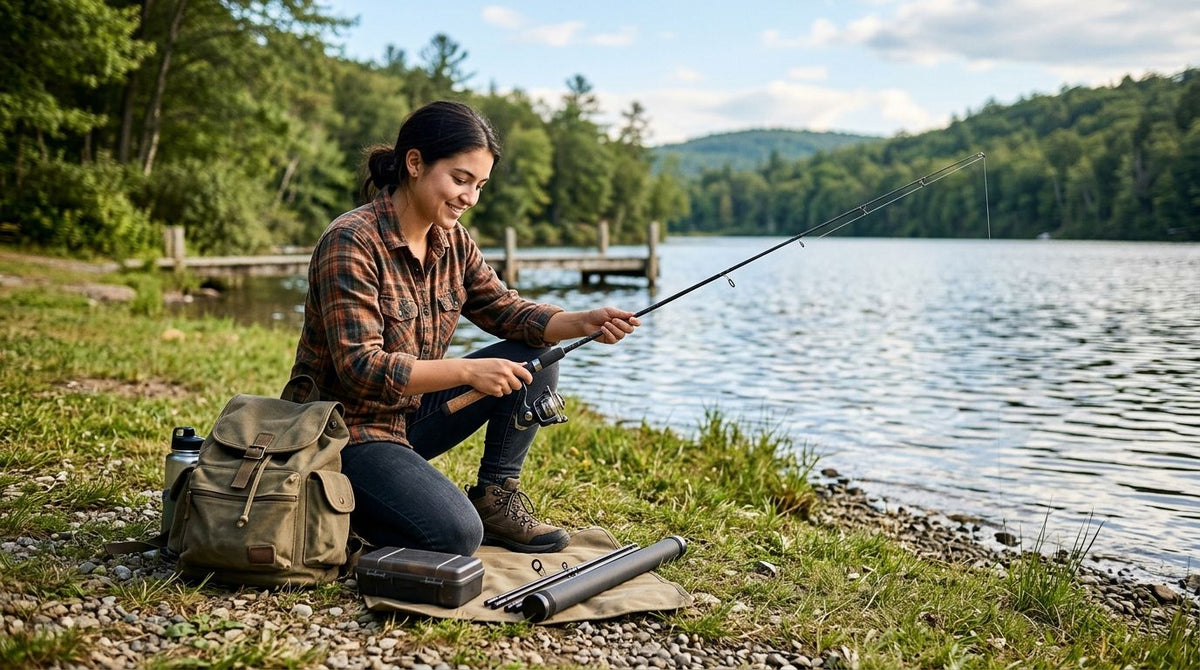
Compact fishing gear for college students is fishing kits small enough for a dorm drawer or a backpack side pocket, built so you can fish between classes without owning a truck, a rod case, or a tackle box the size of a suitcase. Dorm rooms don't have garages. Most students don't have a car on campus, and a free hour between classes isn't enough time to rig a rod, drive to a lake, and drive back. Gear built for this segment has to survive a backpack, cost less than a textbook, and set up in under a minute.
- Compact fishing gear for college students in 2026 means pocket-sized hand reel kits, not rods and tackle boxes.
- GoReel Pocket kits run $30 and fit in a backpack pocket or dorm drawer with zero rod case needed.
- A rodless setup lets you fish a campus pond in the 45 minutes between classes.
- Budget for one kit and a spool of line before spending on apparel or extras.
Why compact fishing gear matters for college students
A typical dorm room gives you one closet, one desk, and no garage. A 7-foot rod doesn't fit in any of those without becoming a tripping hazard, and most colleges ban fishing rods from move-in day storage lists anyway. Add in the fact that most students don't have a car on campus, and traditional gear becomes a logistics problem before it's ever a fishing problem.
Students also fish in short windows: a gap between classes, a study break, a Saturday morning before a shift starts. A GoReel Pond fishing kit or its river and lake counterparts solve for that window specifically, because there's no rod to assemble and no tackle box to dig through. The kit either fits your schedule or it doesn't, and a rod-and-reel combo rarely does on a Tuesday afternoon in 2026.
Pick a fishing spot you can reach without a car
Most campuses sit within walking or biking distance of a pond, retention basin, river, or lake, even if nobody's advertising it. Finding that spot is step one, before any gear decision.
- Check your campus map or a mapping app for blue space within 20 minutes on foot or bike
- Ask a campus outdoors club or intramural office about nearby fishing access
- Look for retention ponds near dorms and parking structures — they're stocked more often than people assume
- Confirm the water isn't on private or restricted land before you cast
- Note whether the spot has bank access or if you'll need waders
Get a license before you make your first cast
Most states require a fishing license for anglers 16 and older, and gear size doesn't change that rule. This is a five-minute task, not a barrier.
- Check your state's Department of Natural Resources site for resident vs. non-resident student rates
- Buy a short-term or annual license depending on how often you'll fish
- Save a screenshot or photo of the license on your phone
- Confirm any local rules for the specific pond or river you plan to fish
Ditch the rod and go rodless
A hand reel setup skips the rod entirely — you cast, retrieat, and fight the fish with a compact reel that fits in your palm. This is where compact gear actually starts solving the space problem instead of just shrinking it. A GoReel hand reel fishing kit works this way: no rod, no case, no assembly.
- Compare rodless kits against telescoping rods before buying either
- Test the retrieve motion in-store or via a demo video before committing
- Pick a kit matched to your water type — pond, river, or lake versions differ in line weight and included tackle
- Skip anything that still needs a separate rod tube for storage
Build a kit that fits in a backpack
Once you've settled on rodless gear, the next call is how much kit you actually need. Overbuying tackle is the fastest way to end up with a bag you don't want to carry to class.
- Start with one pre-built kit rather than assembling parts piece by piece
- If you already own line, hooks, or lures, a build-your-own GoReel kit lets you load only what you need
- Keep total kit weight under a pound so it doesn't change how your backpack sits
- Avoid kits that come with a hard case bigger than a lunchbox
Stock a minimal tackle setup
A compact kit fails if you cram it full of every lure you own. The goal is enough variety to fish two or three water types, not a full tackle shop.
- One spool of 6lb test line covers panfish and light bass in most campus ponds
- 3-5 jig heads in varied weights handle depth changes without extra gear
- A couple of casting bubbles help with lightweight lures on windy days
- Skip topwater lures unless your local water actually holds bass that hit surface baits
- Leave heavy tackle — big spinnerbaits, saltwater leaders — off the list entirely
Store your gear somewhere your RA won't flag
Dorm storage rules vary, but hooks and blades draw more scrutiny than a compact reel does. Plan storage before move-in, not after a room inspection.
- Store hooks in a closed divider rather than loose in a drawer
- Keep line and lures in the kit's own case, not spread across a desk
- Check your housing handbook for any restriction on knives or hook-based gear
- Store the reel itself somewhere dry — under-bed bins work better than a closet floor
Budget your gear across a semester
A compact setup should cost less than one textbook, not compete with rent. Sequence purchases so you're not buying everything the first week of the semester.
- Buy one hand reel kit first and fish with it for a few weeks before adding tackle
- Add a spool of line or a leader only when the original runs low
- Compare options using a resource like best compact fishing kits ranked by price before adding a second kit
- Hold off on apparel or accessories until the core kit is dialed in
Comparison: compact fishing options for college students
| Option | Best for | Starting price | Key limitation |
|---|---|---|---|
| GoReel Pocket Kit (Pond/River/Lake) | Dorm storage with zero closet space | $30 | Light line only — not built for big fish |
| GoReel Rodless Hand Reel Kit | Students who fish more than once a week | $45 | Still no rod, so casting distance depends on technique |
| Build-your-own GoReel kit | Students who already own some tackle | Varies by parts added | Requires knowing what to load first |
| Traditional rod-and-reel combo | Students with a car and a garage | Not applicable here | Doesn't fit dorm storage or a backpack |
Verdict: a GoReel Pocket Kit is the right first purchase for a student with no car and no storage room, and a rodless hand reel kit is the upgrade once you're fishing more than once a week.


Common mistakes college students make with compact fishing gear
- Buying a full tackle box before ever fishing once. Most students end up carrying gear they never touch — start with one kit, add tackle only after you've fished a few times.
- Ignoring housing rules on hooks and blades. A quick check of the handbook avoids a room inspection headache in week three.
- Skipping the license because the gear looks casual. License requirements apply to hand reels the same as they do to a full rod-and-reel setup.
- Fishing water you haven't confirmed is public. Campus ponds sit on a mix of public, private, and restricted land — confirm before you cast.
- Buying gear sized for a car trunk, not a backpack. A kit that doesn't fit in a bag side pocket defeats the entire point of going compact in 2026.
FAQ
What's the best compact fishing gear for college students in 2026?
A rodless hand reel kit like the GoReel Pocket series is the best starting point for college students in 2026 because it needs no rod case and fits in a backpack. Pond, river, and lake versions run $30 and cover the water types most students fish near campus.
Do I need a fishing license for a hand reel kit?
Yes — most states require a license for anglers 16 and older regardless of gear type. Check your state's DNR site for student or short-term rates before your first cast.
Is a hand reel better than a pocket rod for students?
A hand reel is generally more compact than a pocket rod because there's no rod segments to store or reassemble. For a dorm room with zero closet space, that difference matters more than casting distance.
How much does compact fishing gear cost for a student budget?
A GoReel Pocket Kit runs $30, and a full rodless hand reel kit runs $45 as of 2026. Tackle additions like line and leaders typically cost under $10 each.
Can I fish on campus without a car?
Most campuses have a pond, retention basin, or river within walking or biking distance. Check a campus map or ask an outdoors club before assuming you need to drive.
What tackle do I actually need for pond or campus fishing?
A spool of 6lb line, a handful of jig heads, and a casting bubble cover most panfish and light bass water. Skip heavy tackle built for saltwater or big bass unless your local pond actually holds them.
Will my dorm let me store fishing hooks?
Most dorms don't ban hooks outright, but many restrict blades and some flag loose hooks during inspections. Store them in a closed divider and check your housing handbook to be sure.
Is a build-your-own kit worth it for students?
A build-your-own kit makes sense if you already own line, hooks, or lures and just need the reel and case. If you're starting from zero, a pre-built kit is faster and cheaper to get fishing with.
One last thing
The gear isn't the hard part — the spot is. Most students overlook the retention pond three blocks from their dorm because it doesn't look like "real" fishing water, and it's usually the least-pressured spot on campus. Grab a GoReel kit, walk there between classes, and skip the rod entirely — that's the whole point of compact gear in 2026.


