

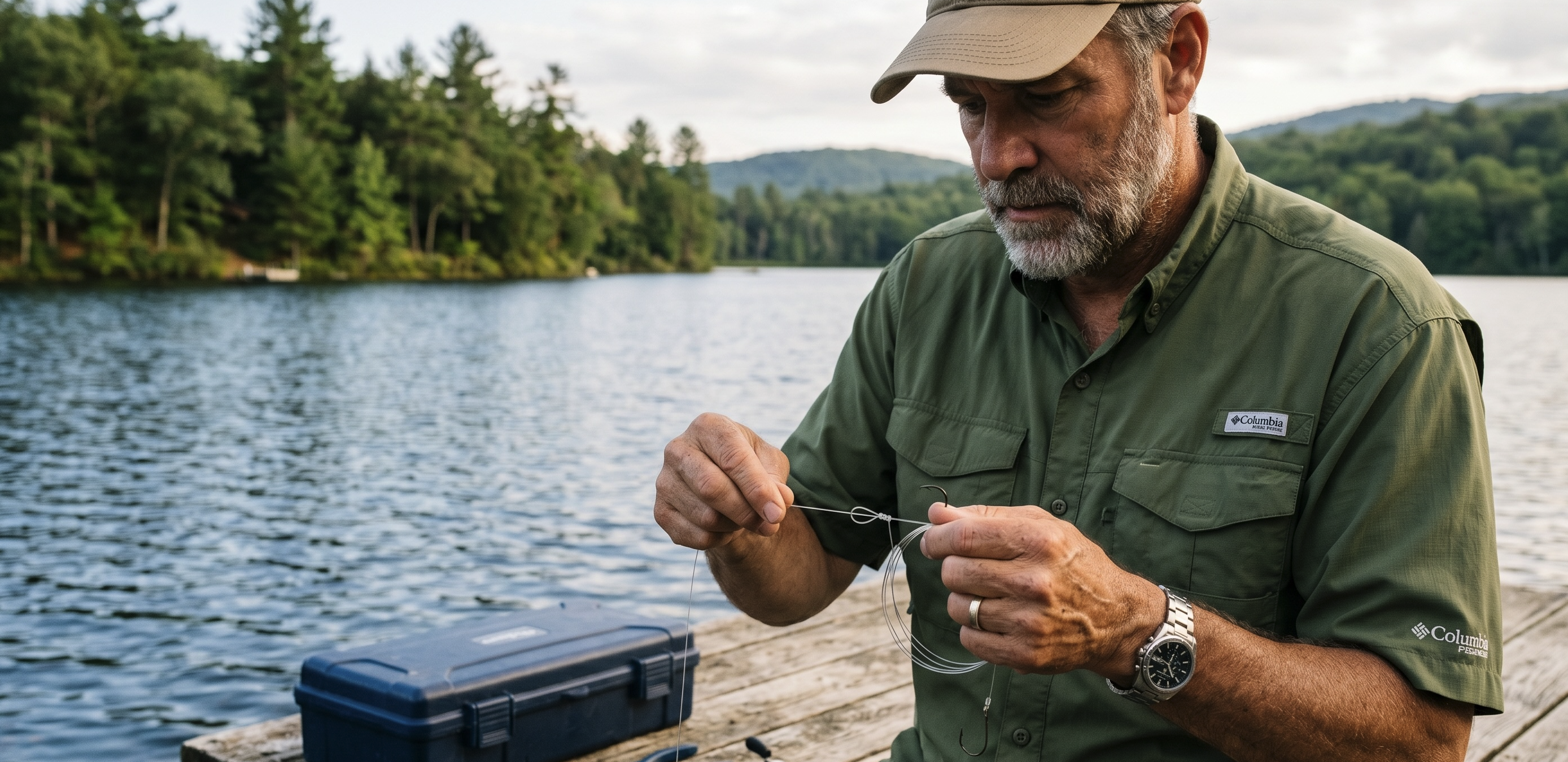
Handline fishing is a minimalist approach that challenges your skill and makes each catch feel rewarding. But even the most reliable kit needs a few key knots to help you reel in your catch confidently. From securing your line to the reel to tying on hooks, these simple and effective knots will make sure you’re ready for anything.
Looking for the perfect handline kit? Check out the GoReel River Handline Kit for a versatile setup that’s ready for any fishing trip.
1. Arbor Knot: Start by Securing Your Line to the Hand Reel

To set up your handline reel, you’ll want a strong, secure knot that will hold the line without slipping. The arbor knot is perfect for this, giving you a solid foundation for your line. Here’s how to tie it:
- Step 1: Wrap the end of the line around the hand reel.
- Step 2: Tie an overhand knot around the standing part of the line. This creates a basic loop on the reel.
- Step 3: Tie another overhand knot closer to the tag end to keep the line secure.
- Step 4: Pull on the standing part of the line until the two knots are tight and the line is firmly against the reel. Trim any excess.
With the arbor knot in place, your line won’t slip when pressure is applied, giving you a solid start for the rest of your setup.
2. Palomar Knot: A Strong and Versatile Knot for Hooks and Swivels

The Palomar knot is one of the most versatile and reliable knots, making it ideal for handline fishing. This knot is particularly useful when you need a simple way to tie on hooks, swivels, or lures without sacrificing strength.
- Step 1: Double about six inches of your line, forming a loop.
- Step 2: Pass the loop through the eye of your hook.
- Step 3: Tie an overhand knot with the loop, leaving a small loop hanging from the hook’s eye.
- Step 4: Pull the loop down and over the hook, then pull tight to secure. Trim the excess.
The Palomar knot is known for its strength, making it a great choice for handline fishing, where every inch of line matters.
3. Improved Clinch Knot: A Classic Knot for Securing Hooks

The improved clinch knot is a classic that works well with lighter lines and smaller hooks, making it a staple for handline fishing kits. It’s easy to tie and holds up under pressure, making it a perfect choice for beginners.
- Step 1: Pass the line through the eye of the hook, then wrap the tag end around the standing line about five times.
- Step 2: Thread the tag end back through the small loop near the hook’s eye.
- Step 3: Now, pass the tag end through the large loop that was just created.
- Step 4: Moisten the knot, then pull tight, sliding it down to the eye of the hook. Trim the tag end.
The improved clinch knot is secure and easy to learn, providing a quick and effective way to get your hook on the line without much hassle.
4. Dropper Loop Knot: For Adding Extra Hooks or Bait

If you’re fishing in waters where multiple bait points are beneficial, the dropper loop knot allows you to create extra loops on your line. This way, you can add extra hooks or sinkers, maximizing your chance for a catch.
- Step 1: Form a loop in the line where you want to add the dropper.
- Step 2: Twist the loop five or six times, holding the crossover point to maintain the loop shape.
- Step 3: Pull the center of the loop through the twists, forming another loop.
- Step 4: Hold the knot and pull both ends of the line to tighten it. Trim if needed.
This knot is especially helpful if you want to vary your bait or add more attractors to your handline setup.
5. Surgeon’s Loop Knot: Great for Adding Weight to Your Line

The surgeon’s loop knot is a simple yet effective knot for creating a loop at the end of your line, perfect for attaching weights. This knot is quick to tie and holds up well, ensuring your line stays balanced.
- Step 1: Double the line and form a loop.
- Step 2: Tie a double overhand knot in the doubled line, passing the loop through twice.
- Step 3: Moisten the knot and pull it tight to secure.
This knot is ideal for balancing your line when adding weights, keeping your handline steady in varying currents.
Pro Tips for Handline Fishing Success
With these knots mastered, you’ll be ready to set out with confidence. Here are a few extra tips to make sure you’re fully prepared:
- Keep a Small Knife or Clippers Handy: To keep your knots clean, always trim the ends with a small knife or clippers. This reduces tangles and helps your setup look neat and professional.
- Practice Makes Perfect: These knots may seem tricky at first, but practice them before you hit the water. The more comfortable you are tying them, the faster you can adjust or replace your setup when needed.
- Know Your Fishing Environment: Different environments and fish species may call for slight adjustments in your handline setup, so don’t be afraid to experiment with hook placement and bait options.
Wrapping Up: Perfecting Your Handline Fishing Knots
Mastering these knots is a solid step toward becoming a confident handline angler. Start with the arbor knot to secure your line to the reel, and then add knots like the Palomar and improved clinch to complete your setup. With each knot, you’re building a system that’s as reliable as it is efficient.
Ready to take your skills to the water? Gear up with the GoReel Lake Handline Kit for a straightforward setup built to handle any adventure!


