

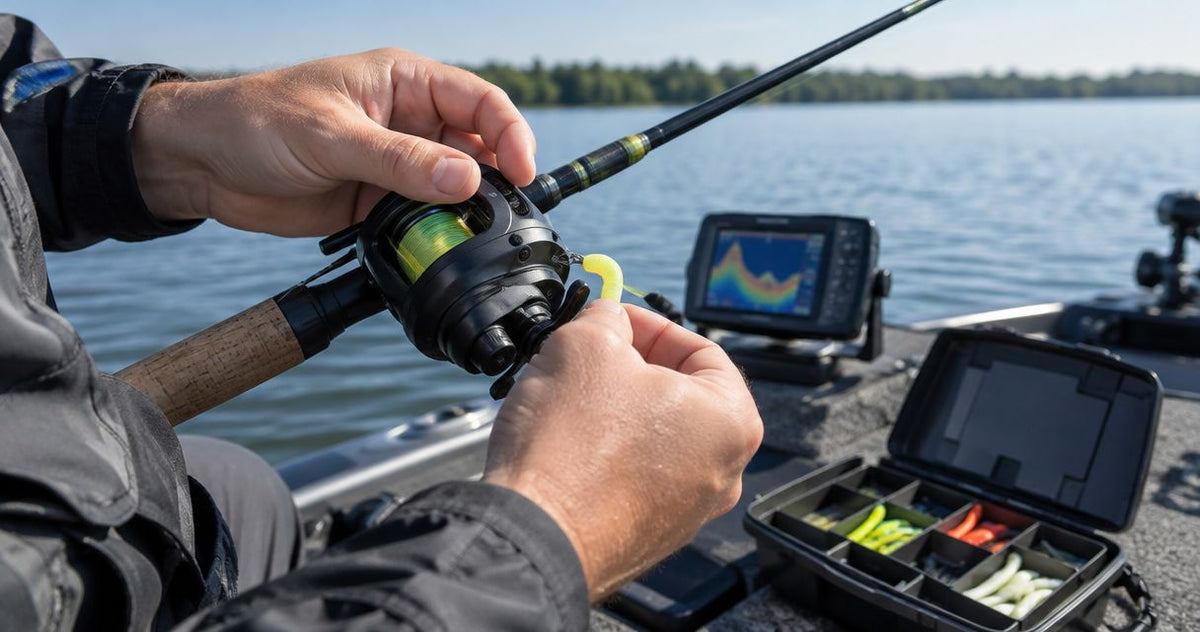
Instead of rebuilding a tangled panfish rig at the water, set up the GoReel, line lock, and Crappie Magnet Fin Commander components at home so the line pays out cleanly and the lure enters the water correctly. A Crystal Creek Gear hand reel paired with the Fin Commander kit is best for anglers who want a compact crappie setup without carrying a rod in 2026.
- A GoReel Crappie Magnet Fin Commander setup works best when the line leaves the reel without crossing itself.
- Tie the selected Fin Commander component directly to the line for the simplest compact rig.
- Use 6 lb line when you want a known replacement option for a Crystal Creek Gear hand reel.
- Add a casting bubble when you need controlled depth or more casting weight.
- Inspect the knot, hook, body, and line lock before every 2026 fishing trip.
Why this matters
A hand reel puts the line directly in your fingers. There is no rod tip to show a bite, manage slack, or keep the line away from your hands, so line control matters as much as the lure.
The GoReel Hand Reel & Line Lock provides the core of a custom setup. Pairing that Crystal Creek Gear hand reel with the Fin Commander kit keeps the system focused on a reel, line, and the terminal tackle you choose from the kit.
This guide covers the physical workflow rather than assuming every Fin Commander package contains the same components. Read the labels on your package, select the jig head or terminal component intended for your presentation, and follow any component-specific directions printed by the manufacturer.
Before you start
Gather everything before feeding line through a small hook eye:
- A GoReel with its line lock fitted correctly
- Fishing line already wound onto the reel
- Your Crappie Magnet Fin Commander kit
- Line cutters or fishing pliers
- A container for unused hooks and small tackle
- An optional casting bubble for the second setup
The easy-to-miss problem is line direction. If loose line crosses under an earlier wrap on the reel, it can bind when you cast or lower the rig. Fix crossed wraps before tying on a hook; pulling harder only tightens the bind.
Also inspect the selected hook before rigging. Store any hook with a damaged point, open eye, or bent shank instead of tying it onto the line. Your 2026 setup should begin with intact components and a clean section of line.
Choose your Fin Commander setup
Both configurations use the same GoReel, but they solve different presentation problems.
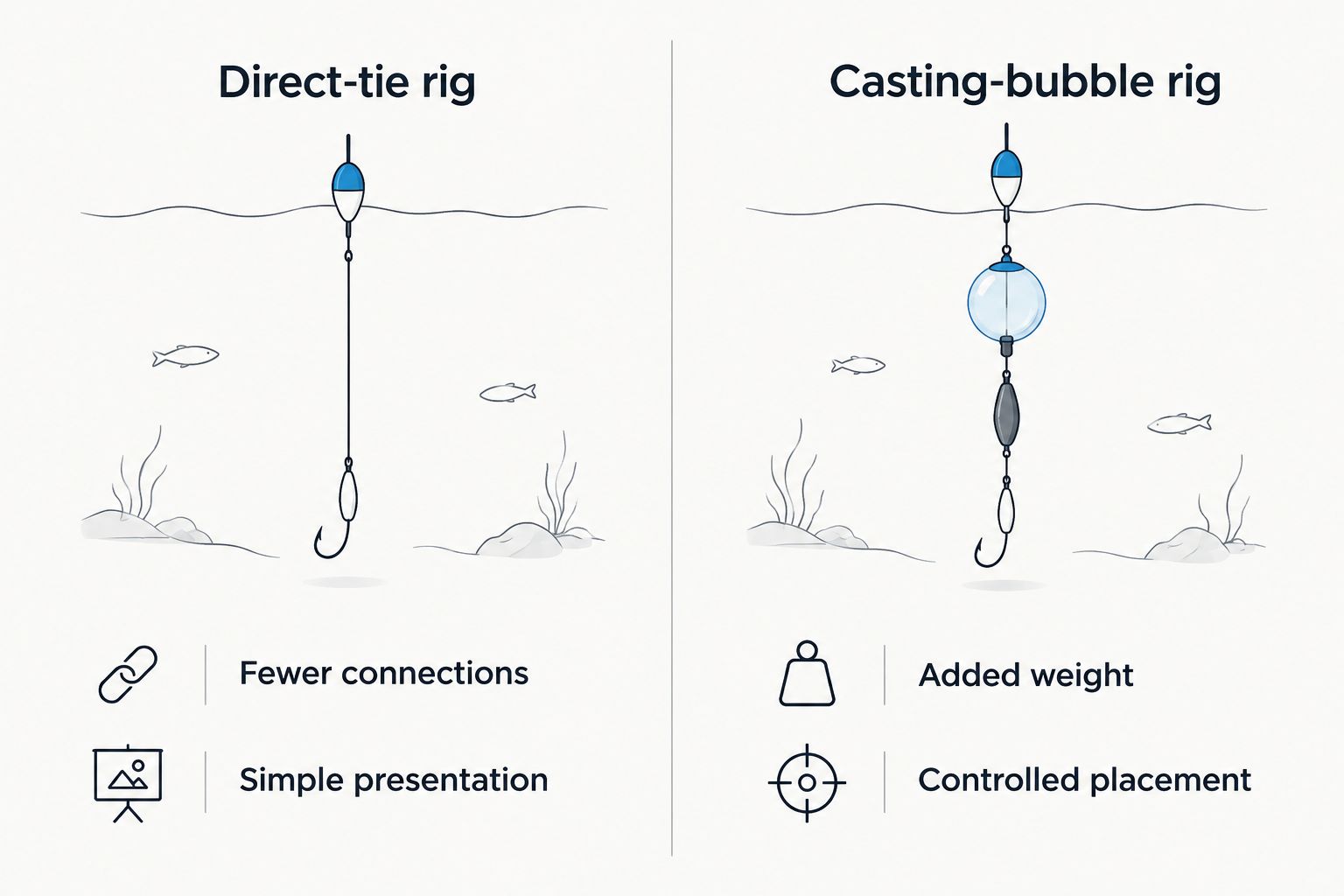
| Configuration | Best for | Pros | Cons |
|---|---|---|---|
| Direct-tie rig | Short, simple presentations around visible cover | Fewer connections and less tackle to manage | Offers no separate visual strike marker |
| Casting-bubble rig | Presentations that need added casting weight or controlled placement | Adds weight and can help you track the rig | Adds another component that can tangle |
Start with the direct-tie rig. It has fewer connections to inspect and makes it easier to learn how line leaves and returns to the hand reel. Move to the casting-bubble variant when the water or presentation gives you a clear reason to add it.
Set up the GoReel and line lock
- Inspect the line. Pull off enough line to expose the section that will hold the knot. Cut away any visibly frayed, flattened, or sharply kinked section.
- Check the wraps. Confirm the line lies in orderly wraps around the reel rather than crossing beneath itself.
- Test the line lock. Place the line in the lock as designed, close it, and pull gently on the working end. The line should stay secured until you intentionally release it.
- Create a clear work area. Set the Fin Commander kit beside the reel and return every unused hook to its container immediately.
- Release the working line. Pull out enough line to tie comfortably without resting the hook against your fingers or lap.
Do not wind a loose hook around the outside of the reel while you work. Keep the hook on the ground, a stable surface, or in your pliers until the knot is finished.
Expected result: the line releases without catching, the lock holds when tested, and the working end reaches your hands without crossing another wrap.
Crystal Creek Gear sells the GoReel as compact fishing gear, but compact does not mean every component should occupy the same space. Hooks need a defined storage position so they cannot snag the line, clothing, or your hand when you open the kit.
Configure the Fin Commander terminal tackle
- Select one presentation. Choose the Fin Commander component that matches the method you plan to fish. Leave every unused component in its original package or tackle compartment.
- Read the package directions. Confirm how the selected body, hook, or jig head is intended to fit together. Do not force a soft body past a keeper or collar when the package shows a different orientation.
- Thread the line through the eye. Pass a clean line end through the hook or jig eye. If the line end has flattened, trim it and try again rather than pushing it toward your hand.
- Tie your usual fishing knot. Follow the complete sequence for a knot you already know and can inspect. Wet the knot before tightening when that knot requires lubrication.
- Seat the knot. Pull the standing line and tag end in the directions required by the knot, then examine the finished connection from both sides.
- Trim the tag. Cut away the excess without touching the knot or damaging the standing line.
- Attach the body. If your selected Fin Commander presentation uses a separate body, install it according to the package directions and align it with the hook shank.
A knot should look orderly, sit against the eye, and resist a steady pull. If wraps overlap unexpectedly or the tag begins slipping, cut the knot off and retie it. Do not treat a questionable knot as good enough for one cast.
Expected result: the terminal tackle hangs from a fully seated knot, the body follows its intended orientation, and a steady hand pull does not move the connection.
Load a known line option
The target catalog identifies S.O.S. Fishing Line 6 lb as a specific replacement-line option. Use the line rating printed on your spool as the source of truth rather than estimating line strength by diameter or appearance.
- Remove the old line and place it in a container instead of leaving loose coils outdoors.
- Secure the new line to the reel with the attachment method intended for the reel.
- Wind the line under light, steady tension so each wrap lies beside the previous wrap.
- Stop before the wraps crowd the reel edge or interfere with the line lock.
- Pull out a working length and check whether the line leaves the reel without digging under earlier wraps.
Expected result: the 6 lb line lies in even wraps, moves through the line lock, and pays out without lifting a bundle of line from the reel.
The number printed on the spool identifies line strength; it does not replace knot inspection. A damaged section still needs to be removed before you connect the Fin Commander tackle.
Fish the direct-tie version
- Hold the GoReel securely with the line positioned where it can leave the reel without crossing your fingers.
- Check that the area beside and behind you is clear of people, branches, and loose equipment.
- Release only the amount of line you can control.
- Deliver the rig using a smooth hand-reel motion rather than an abrupt snap.
- Keep contact with the line as the terminal tackle settles.
- Retrieve the line in orderly wraps, watching for debris or damage before it reaches the reel.
The direct-tie setup keeps the Fin Commander component connected to the main line without a bubble between them. That makes it the cleaner starting point for anyone learning hand-reel line control in 2026.
Expected result: the line leaves in a controlled path, the terminal tackle enters the water without wrapping around the main line, and the retrieve returns to the reel in even wraps.
Add a casting-bubble variant
A casting bubble creates a second workflow when you need added casting weight or a visible reference on the water. Install it according to the directions supplied with that specific bubble because attachment methods vary.
- Remove the direct-tied terminal tackle by cutting the line above the knot.
- Inspect the newly exposed line and trim away any damaged section.
- Add the bubble in the position and orientation shown by its manufacturer.
- Tie the Fin Commander terminal tackle below the bubble using a connection you can inspect.
- Hold the completed rig away from your body and check that the bubble, line, and hook hang separately.
- Make a short test presentation before increasing distance.
A bubble adds another connection and another place for line to wrap, so slow the first few casts. If the hook catches the main line, shorten the motion and separate the components before trying again.
Expected result: the bubble and terminal tackle travel without colliding, the line remains outside the reel wraps, and the bubble is visible after the rig settles.
Compare the GoReel starting points
Crystal Creek Gear offers two relevant ways to begin a custom Fin Commander build.
| GoReel option | Best for | Advantage | Limitation |
|---|---|---|---|
| GoReel Hand Reel & Line Lock | Anglers who need the reel core | Starts with the central reel-and-lock components | You must plan storage for the remaining tackle |
| GoReel Empty Kit – Build Your Own Setup | Anglers organizing a custom system | Provides a foundation for arranging selected gear | You still choose the fishing components |
Neither option determines how the Fin Commander tackle should be assembled. The component package remains the authority for its hook, body, or jig-head orientation.


Troubleshooting
The line catches during release
Stop pulling and inspect the reel. A line wrap has probably crossed beneath another wrap or become trapped near the line lock. Back the line out until the crossed section is free, then rewind it under steady tension.
The terminal tackle returns tangled
Separate the hook, line, and any bubble before casting again. Use a smoother delivery and control the amount of line released. With the bubble setup, confirm that each connection matches the bubble manufacturer's instructions.
The knot moves during the pull test
Cut it off and retie with fresh line. A slipping knot is not fixed by pulling it tighter after its wraps have crossed or failed to seat correctly.
The body sits crooked on the hook
Remove it carefully and reinstall it according to the Fin Commander package directions. Replace a torn body instead of repeatedly pushing it onto the hook, since damage can prevent it from holding its intended position.
The line is visibly frayed near the hook
Cut above the damaged section and tie again. Check the hook or jig eye for a rough or damaged surface before reconnecting it. That inspection is especially useful when reopening a compact kit for the first trip of 2026.
Customize your workflow
Once the basic setup releases and retrieves cleanly, change one component at a time. Switching the line, terminal tackle, bubble, and retrieve all at once makes the source of a new tangle harder to identify.
A separate 1/8 oz Double Cross Jig Head 5 Pack appears in the Crystal Creek Gear catalog for anglers considering another jig-head option. Treat it as a separate configuration: confirm that the body you select fits the head, follow its package directions, and test the completed knot before fishing.
Use the empty kit to assign each item a home. Keep unused hooks enclosed, separate line cutters from soft bodies, and store the rig only after drying the components. The goal is less gear in your hands, not loose gear sharing one compartment.
FAQ
How do you rig a GoReel with the Crappie Magnet Fin Commander kit?
Inspect the GoReel line, test the line lock, select one Fin Commander presentation, and tie its terminal component to a clean section of line. Follow the Fin Commander package directions when fitting any separate body to its hook or jig head.
Can you tie Fin Commander tackle directly to a GoReel line?
Yes, a direct tie is the simplest GoReel Crappie Magnet Fin Commander configuration. It removes the extra connection used by a casting-bubble rig and gives you fewer parts to manage.
Should I use a casting bubble with a GoReel?
Use a casting bubble when you need added casting weight or a visible reference on the water. Install the bubble according to its own directions because bubble attachment methods differ.
What line can I use for this GoReel setup?
Crystal Creek Gear lists S.O.S. Fishing Line 6 lb as a replacement-line option. Check the rating printed on your spool and remove every visibly damaged section before tying on terminal tackle.
Why does my GoReel line tangle during a cast?
Crossed reel wraps, uncontrolled slack, or terminal tackle catching the main line cause common hand-reel tangles. Unwind the crossed section, rewind under steady tension, and make a short test presentation.
How do I know whether the knot is secure?
A finished knot should sit neatly against the eye and resist a steady pull without slipping. Cut off any knot with crossed wraps, visible line damage, or a moving tag end.
Is the GoReel direct-tie rig better than a bubble rig?
The direct-tie rig is better for simplicity, while the bubble rig is better when the presentation needs added weight or a visible reference. Start direct, then add the bubble only when conditions call for it.
How should I store a Fin Commander rig after fishing?
Remove debris, dry the components, enclose exposed hooks, and rewind the line in orderly wraps. Never leave a loose hook where it can catch the line or your hand when the kit opens.
One last thing
Take a photo of the finished rig before the first cast of 2026. That picture gives you a quick reference for the line path, knot position, and component order when you rebuild the setup later.
A compact system stays useful only when you can reopen it without finding crossed line and loose hooks. End each trip by inspecting the working line and returning every component to its assigned place.


