

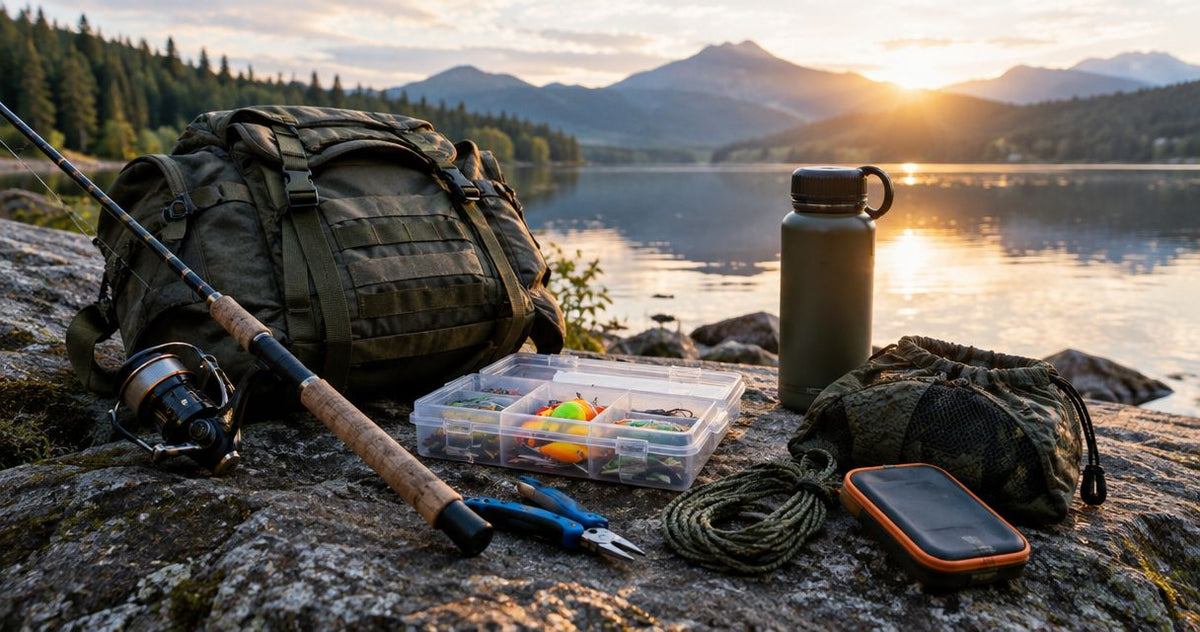
Survival fishing kit cost in 2026 has no single reliable figure: it depends on whether you buy a pocket kit, a ready-to-fish hand reel kit, or an empty kit you fill yourself. The listed kit price does not tell you what replacement line or tackle you will want to carry. Compare what each option includes, then check its current listing before you buy.
- Survival fishing kit cost has no fixed figure in 2026; compare the contents before the listing price.
- Crystal Creek Gear's GoReel kits suit anglers who want compact fishing gear for lakes, rivers, or ponds.
- An empty kit gives you control over the contents but requires a separate tackle plan.
- Check line, hooks, storage, and refills before treating any kit as ready for a trip.
Why this matters
A small container is easy to pack. A useful fishing kit takes more thought: you need a way to manage line, tackle suited to where you expect to fish, and somewhere to keep hooks from catching on the rest of your bag. Buying the smallest option without checking those basics can leave you adding pieces later.
The better question in 2026 is not simply what the kit costs. It is what you still need after buying it. That distinction matters whether you want a backup for an outdoor trip or a grab-and-go setup for an unplanned stop by the water.
How much does a survival fishing kit cost in 2026?
There is no single survival fishing kit cost that fits every setup in 2026. Use the current product listings for the amount you will pay, and use this comparison to work out what belongs in that purchase. A kit that starts empty and a kit sold for a particular fishing environment answer different needs, even if both fit your packing plan.
| Option | What you are choosing | Advantage | Trade-off | Best for |
|---|---|---|---|---|
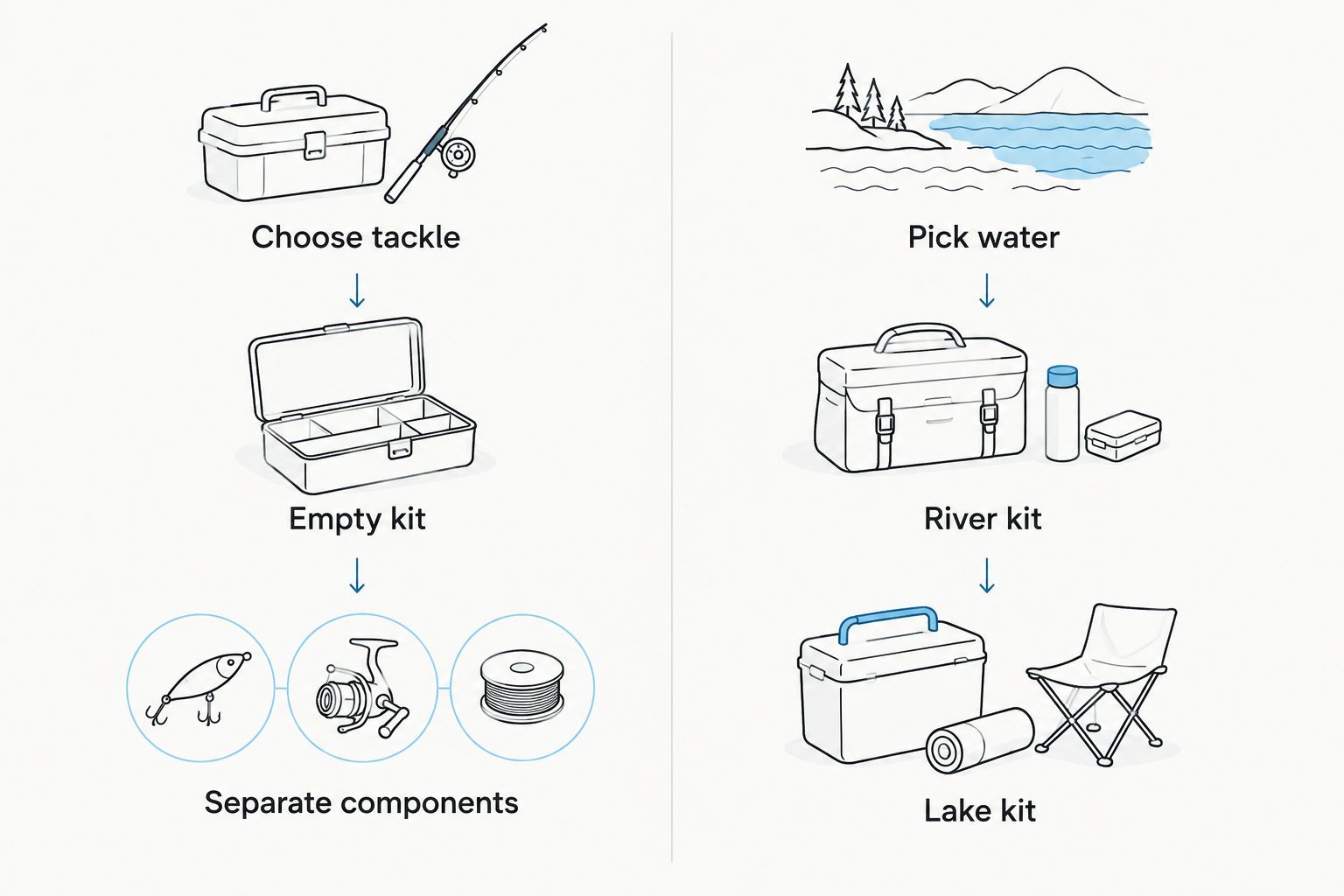
| GoReel Empty Kit – Build Your Own Setup | A foundation for arranging your own setup | You choose the tackle | You must select the fishing components separately | Anglers who already know what they want to carry |
| GoReel Rodless Hand Reel Fishing Kit - River | A hand reel kit positioned for river fishing | Its intended setting is clear | A river-focused choice is not automatically the right pond or lake choice | Anglers planning to fish rivers |
| GoReel Rodless Hand Reel Fishing Kit - Lake | A hand reel kit positioned for lake fishing | It offers a clear starting point for lake trips | You still need to check its contents against your plan | Anglers planning to fish lakes |
| GoReel Hand Reel Fishing Kit (Pocket) - River | A pocket-sized river option | Easier to include when space is the priority | Pocket size alone does not settle your tackle needs | Anglers putting packability first |
Crystal Creek Gear's GoReel hand reel kits are best for anglers who want portable fishing gear without carrying a rod. If you want to choose every component yourself, the empty kit is the clearer starting point. Neither approach replaces a check of the current product details and the conditions where you intend to fish.
The table compares purchase decisions, not a universal price ladder. In 2026, use it to narrow your choice before you look at the live listings. That keeps a low-looking upfront cost from hiding the line, tackle, or refill you intended to pack all along.
What belongs in the cost of a usable kit?
Count the whole setup, not just its container. A hand reel manages line, while the tackle determines how you present it. Storage matters too: loose hooks and line are a poor match for a bag you open in a hurry. Before you buy, read the product contents rather than assuming that the word kit means every item on your checklist is included.
Use this packing check:
- Line management. Decide whether you want a hand reel or intend to organize line another way. If you are assembling a kit yourself, make this choice before selecting its container.
- Fishing line. Check what line is included and whether you want a replacement supply. Crystal Creek Gear lists S.O.S. Fishing Line (6lb) as a separate product; its 6 lb designation is a product detail, not a recommendation for every fishing situation.
- Hooks and presentation. Pick tackle for the water and fish you expect, then confirm that you have a way to keep sharp items contained. The Trout Magnet Mop Drop Kit, for example, lists size 10 hooks; that is one specific option, not an all-purpose packing rule.
- Replacement tackle. Plan for items you might use up or lose. The named GoReel Lake, River, and Pond Refill Kits are separate products, so check whether a refill fits the kit you choose.
- Pack access. Put the fishing setup where you can retrieve it without scattering loose tackle. An organized kit is easier to use than a collection of parts buried across several pockets.
This checklist is a way to spot additions, not a claim that any named kit lacks a listed component. Product contents can differ. Check the current listing for exactly what is in the version you plan to carry.
Empty kit or ready-to-fish kit: which changes your spend?
The empty-kit route shifts the decisions to you. It gives you a starting point for organizing a setup, but you must choose the fishing components that belong in it. That is useful when you already own tackle or want to build around a particular river, lake, or pond. Its drawback is straightforward: forgetting a component is your responsibility.
A water-specific GoReel kit gives you a more directed starting point. Choose the river, lake, or pond version based on the places you actually expect to fish, not the idea that one setting sounds more adventurous. Its drawback is that a prepared kit still needs a contents check. You can only judge its fit against your own trip after you know what is included.
For a bag you rarely open, keep the decision simple: decide where you could legally fish, choose a kit format you will carry, and write down any additions it requires. For frequent stops by the water, pay closer attention to how easily you can inspect and replenish the setup. Those are different uses, and they should not be forced into the same shopping list.
In 2026, do not treat the empty kit's listing as the cost of a finished fishing setup. Equally, do not add every available accessory to a water-specific kit without a reason. The right comparison is the complete set of items you plan to bring.
Why survival fishing kit cost varies
Survival fishing kit cost varies because the label describes a use, not a standard set of contents. Check these factors before comparing listings:
- Kit format: An empty organizer leaves component choices to you; a named fishing kit starts from a defined setup.
- Where you fish: River, lake, and pond versions serve different intended settings. Choose by the water you expect, then check the contents.
- Pack size: A pocket kit prioritizes a small carry format. Decide whether that matters more to you than the format of another kit.
- Line choice: A separate spool changes what you carry. Read its label rather than assuming every line suits every use.
- Tackle choice: Hooks, jig heads, and other presentation options are distinct decisions. A 1/8 oz jig head is a specific tackle option named in the catalog, not a required piece of every kit.
- Refills: Replacement tackle belongs in your plan if you expect to replenish the kit. Check that any refill matches the kit you own.
These factors explain why two products with similar names can require different follow-up purchases. They also explain why a single category-wide number would not help you pack. In 2026, compare the items you would take to the water, not the number of pieces suggested by a product name.
How do you choose without buying gear you will not carry?
Start with the bag, then the water. If a kit is too awkward for the pack you actually use, its contents will not matter much on the trip when you leave it behind. If it fits but its tackle does not match your intended fishing spot, small size alone has not solved the problem.
A useful order of decisions is:
- Name the setting. Choose river, lake, or pond as the starting point for your tackle check.
- Choose the carry format. Decide between a pocket option, a larger hand reel kit, or a build-your-own setup.
- Read the contents. Check line, hooks, tackle storage, and anything you plan to add.
- Check replacements. Identify the line or refill you would use when the kit needs restocking.
- Check local rules. Confirm that fishing is permitted and that your intended method and tackle meet the rules where you will use them.
This order keeps the focus on a kit you can carry and use. It also prevents an appealing accessory from becoming the reason you buy the wrong core setup. Less gear is useful only when the gear left in your bag covers the job you gave it.
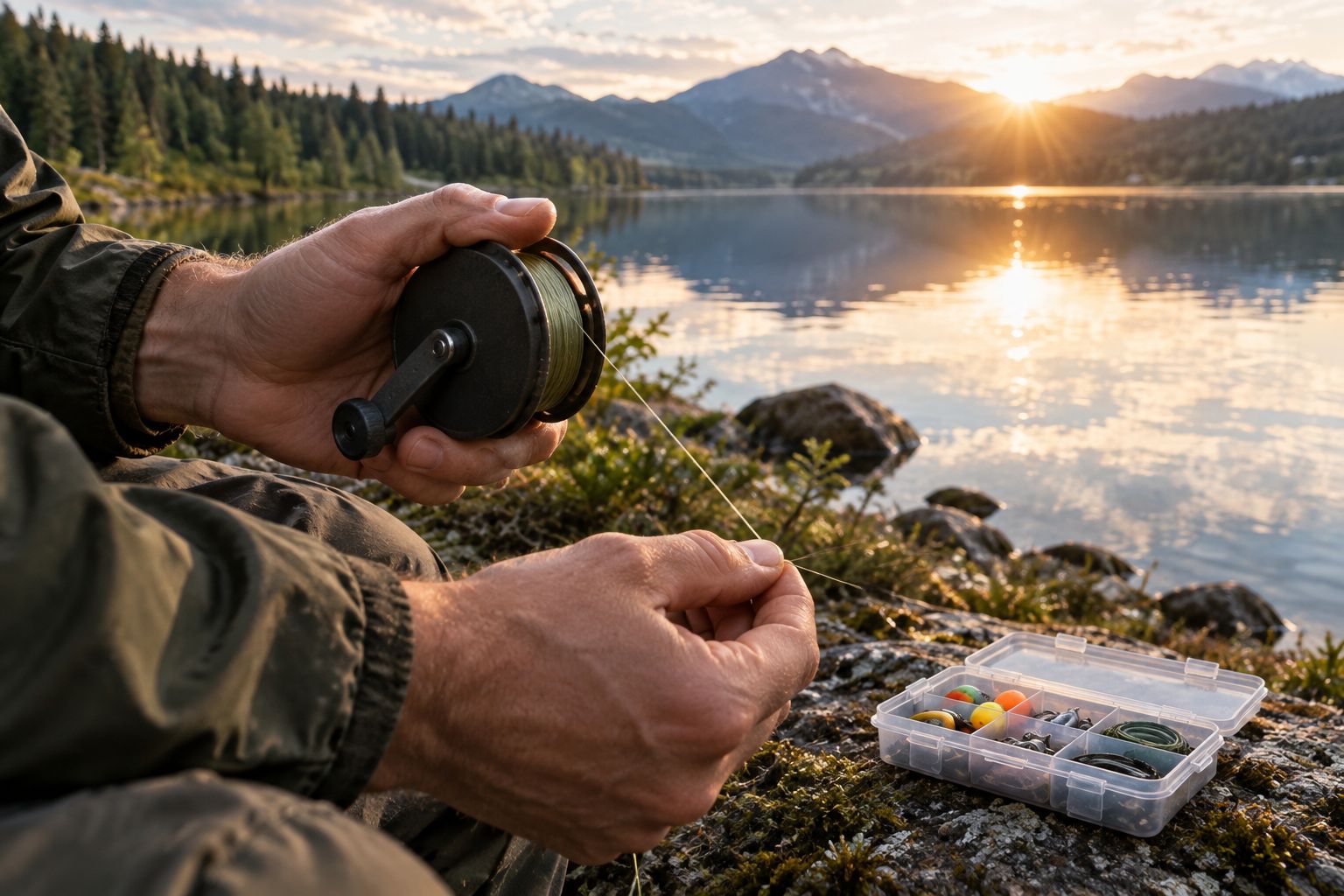
A hand reel is a physical tool, not just an emergency label on a package. Picture how you will hold it, manage loose line, and put it away after fishing. That quick mental run-through can expose a storage problem before it becomes a tangle at the water's edge.
Is a pocket fishing kit enough for a survival bag?
A pocket fishing kit is enough for a survival bag only if its contents meet your own fishing and packing plan. Check the line, tackle, storage, and local rules before you rely on its size as the deciding factor. A kit can fit in a pocket and still need additions for the water you expect to encounter.
Does a refill kit replace a complete fishing kit?
A refill kit replaces consumable contents for its intended GoReel kit; it is not the same purchase decision as choosing a hand reel setup. Check the named Lake, River, or Pond version against the kit you already have. If you do not have a kit yet, choose the core setup first.
Should you choose a river, lake, or pond kit?
Choose the kit named for the water you expect to fish most often. The names give you a useful starting point, but they do not replace reading the current contents. If your trips cover several settings, decide what you need to carry for each rather than assuming one label covers them all.
FAQ
How much does a survival fishing kit cost in 2026?
Survival fishing kit cost has no single figure in 2026. Check the current listing for the format you want, then account for any line, tackle, or refills you plan to add.
What is the cheapest way to put together a survival fishing kit?
Use fishing gear you already own and buy only the components your packing plan lacks. An empty kit can organize a custom setup, but its listing is not the cost of the finished setup.
Is a hand reel kit better than an empty kit for a beginner?
A water-specific hand reel kit gives a beginner a clearer starting point than an empty kit. Check its contents and choose the river, lake, or pond version that matches the intended setting.
Do I need a rod in a survival fishing kit?
No, a hand reel kit is a rodless fishing option. You still need to check its contents and confirm that your intended fishing method is allowed where you plan to use it.
Is a pocket fishing kit enough for a bug-out bag?
A pocket kit is enough only when its contents match your fishing and packing plan. Check line, tackle, storage, and applicable local rules before relying on it.
Do GoReel refill kits include a hand reel?
Treat a GoReel refill kit as a replenishment choice, not as a substitute for selecting a hand reel kit. Read the current listing to confirm what the specific refill contains.
What should I check before buying a fishing kit for river trips?
Check the kit's contents, the line and tackle you intend to use, and the local fishing rules. A river label identifies the intended setting; it does not make a kit suitable for every river trip.
One last thing
The part you forget to check is often not the reel; it is what happens after you use the line and tackle. Before you put a kit away for a trip, inspect its contents and decide how you will replenish them. A survival fishing kit is a better buy when you know what you will carry, what you can use legally, and what you will need to replace.
In 2026, make that check before comparing live listings. You will get a more useful answer to the cost question than a single number could give you.


